.jpg)
3 min walk
Bridge of Peace
- Must see
- Activity
Language · 11 published
Nature site · Tbilisi
რიყის პარკი
Reviewed by Elena Voss · Roavina Travel Editor
| Monday | 00:00 – 23:59 |
|---|---|
| Tuesday | 00:00 – 23:59 |
| Wednesday | 00:00 – 23:59 |
| Thursday | 00:00 – 23:59 |
| Friday | 00:00 – 23:59 |
| Saturday | 00:00 – 23:59 |
| Sunday | 00:00 – 23:59 |
Checked 2026-08-31 · Source
Read from the OpenStreetMap access tags; anything not listed has no tag recorded.
Set the group type to family in the planner and the day window contracts to about three quarters of a solo day.
This place is a Park. It was established in 2010.
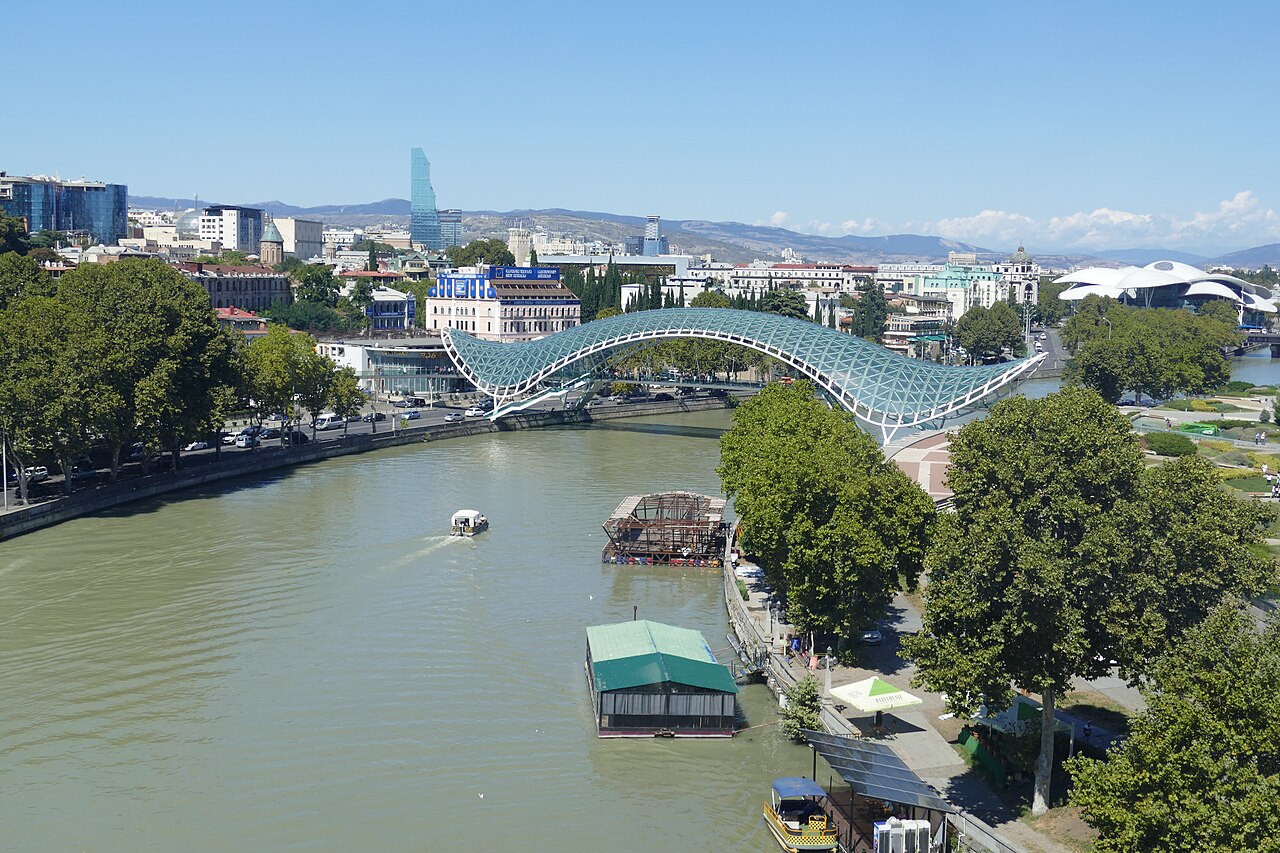
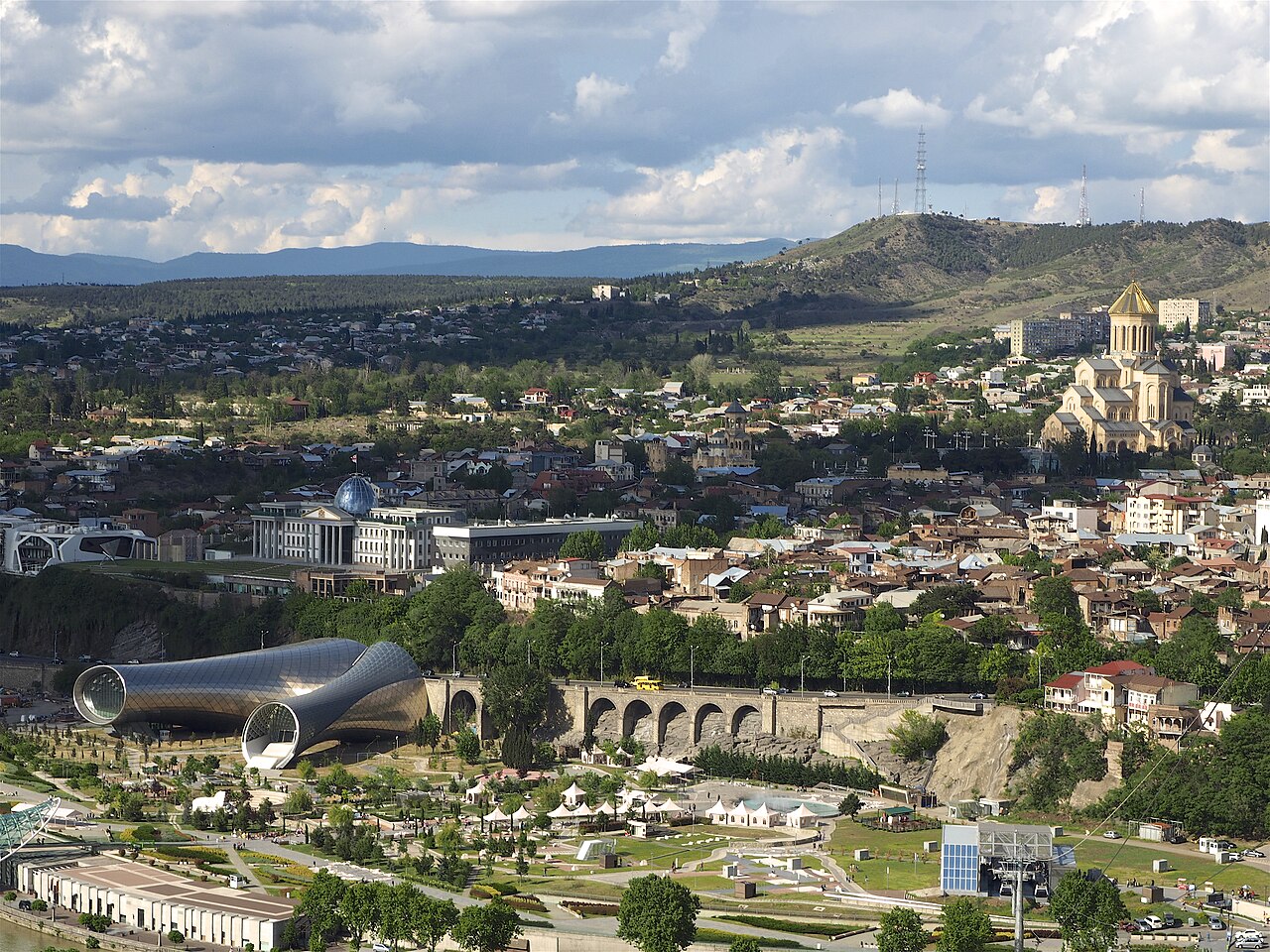
Rike Park is a central riverfront public space beside the Mtkvari River in Tbilisi. Its pedestrian paths and open gathering areas connect several important parts of the city: the Bridge of Peace, the lower station of the aerial tramway, the old town, and Avlabari. The park is most useful as both a destination and a route. Visitors come for the riverside setting, contemporary urban design, and views, then continue naturally into older neighbourhoods and hillside landmarks. It offers an easy way to experience the contrast between Tbilisi's modern civic spaces and historic cityscape.
Checked 2026-08-26 · Source
The park contains lawns, walking paths, open gathering areas, and the lower station for the aerial tramway toward Narikala Fortress and the Sololaki district. The Bridge of Peace crosses the Mtkvari at the park and provides a direct pedestrian link with the old town. Contemporary landscaping sits beside views of historic buildings, riverbanks, and the surrounding hills. Rather than following an indoor sequence, explore the park by moving through its connections: begin at the river, cross the bridge, look toward the tramway, and continue into Avlabari or the old city according to your route.
Checked 2026-08-26 · Source
A brief crossing and viewpoint stop can take around thirty minutes, while a relaxed visit may last up to two hours. Add time if you plan to photograph the Bridge of Peace, wait for the aerial tramway, sit beside the river, or continue into the old town and Avlabari. Because Rike Park functions as a connector, its duration is often determined by the surrounding itinerary rather than by the park alone. It works equally well as a short urban pause and as the opening section of a longer walking route.
Checked 2026-08-26 · Source
Rike Park is an outdoor public space, so comfort depends on temperature, wind, rain, and the amount of shade along your route. Pleasant weather makes the riverfront and bridge especially enjoyable, while summer visitors may prefer morning or late afternoon for a more comfortable walk. Evening brings a different atmosphere as the Bridge of Peace becomes a strong illuminated subject. The park connects several busy attractions, so choose a time that matches your purpose: daylight for walking and orientation, or evening for city lights and reflections along the river.
Checked 2026-08-26 · Source
Entry to Rike Park and passage across the Bridge of Peace are free public experiences. The aerial tramway is a separate transport attraction, and its journey is not included in walking through the park. If you plan to ride, treat the tramway as its own part of the outing and allow time for the station queue and hillside destination. The park itself needs no ticket, which makes it an easy addition to a day focused on Tbilisi's old town, riverfront, or Avlabari streets.
Checked 2026-08-26 · Source
Rike Park lies beside the Mtkvari at the eastern edge of Tbilisi's old town. Walk across the Bridge of Peace from the old-town side, or approach from Avlabari and the river embankment. Avlabari metro station provides a nearby public-transport connection, while buses, taxis, and ride-hailing services serve the central districts. The park is easy to combine with a route toward the aerial tramway, Narikala Fortress, or historic streets. Use the river and bridge as visual landmarks when orientating yourself in the centre.
Checked 2026-08-26 · Source
The park and bridge can become busy around tramway boarding areas and during pleasant tourist periods. Keep to the pedestrian flow, especially when stopping for photographs, and leave clear space near station entrances. Riverside paving can be uneven in places, while summer sections may offer limited shade. Supervise children near the river and around transport infrastructure. After dark, stay on active, well-lit paths and keep personal belongings close in crowded areas. The park is straightforward to explore, but its many connections make it worth pausing to check your direction before continuing uphill or across the bridge.
Checked 2026-08-26 · Source
The Bridge of Peace is the park's signature subject, offering strong lines across the Mtkvari and a modern contrast with Tbilisi's historic buildings. Include the aerial tramway cables and hillside background for a wider sense of the city, or move closer to capture the bridge's curved canopy and structural details. Morning light gives calmer reflections, while evening illumination creates a more dramatic riverfront scene. The open lawns provide space for wider compositions, but crowded paths require considerate tripod placement. Photograph the bridge from both park and old-town sides to show how the river links the two halves of the route.
Checked 2026-08-26 · Source
Yes. Rike Park is a public space without an admission charge.
Yes. The Bridge of Peace gives pedestrians a direct route between the park and the old town.
The lower station of Tbilisi's aerial tramway is in the park, with a route toward Narikala Fortress and Sololaki.
Avlabari is connected to the park by paths and nearby city transport, while the old town is reached across the Bridge of Peace.
Allow thirty minutes for a short visit and up to two hours when combining the park, bridge, tramway, and nearby streets.
The Bridge of Peace is the principal subject, especially when framed with the Mtkvari River, hills, and old-city buildings.
Loading the interactive map…
The interactive map could not be loaded.
Last updated:
Source: OpenStreetMap contributors, Wikidata ·