
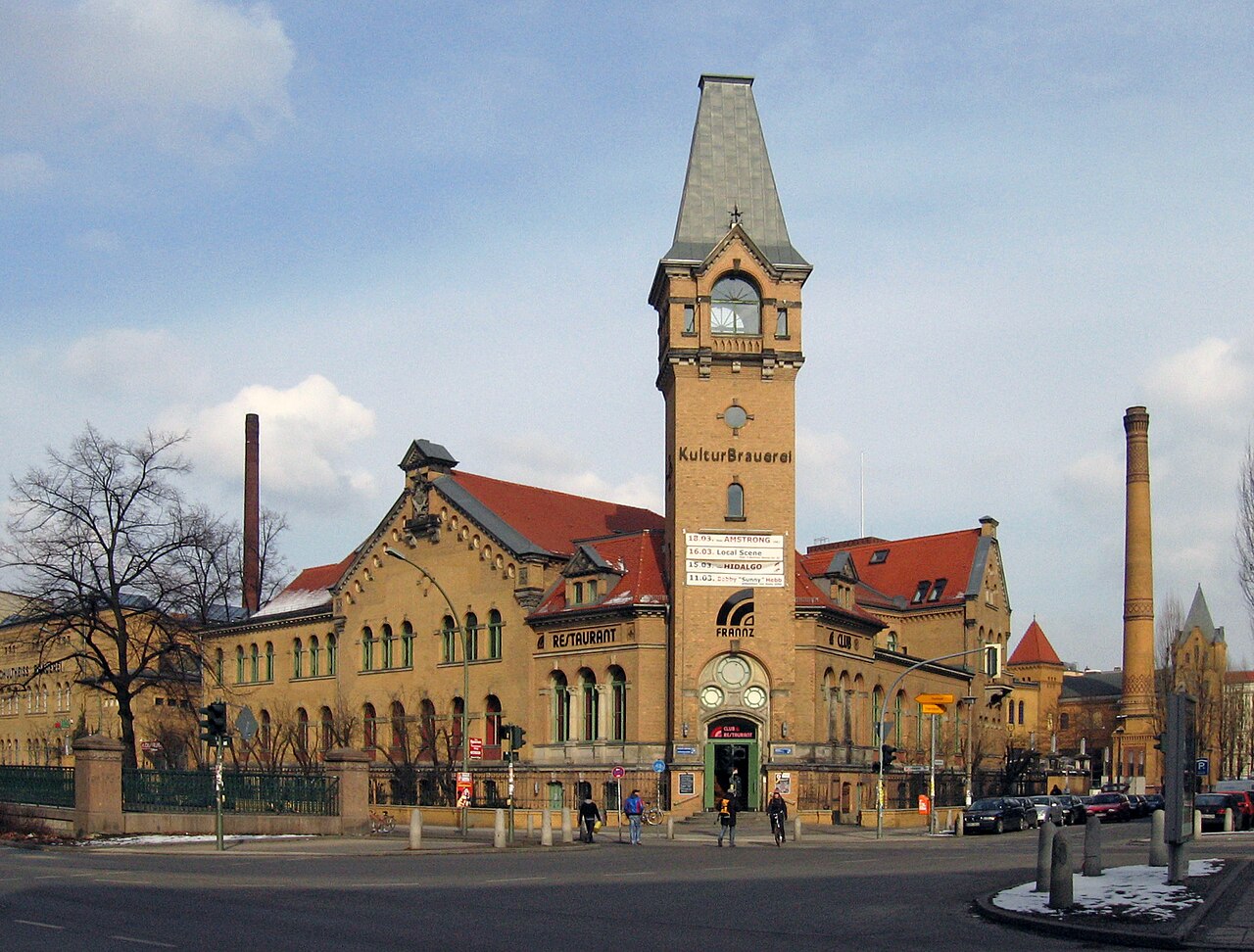
6 min walk
Kulturbrauerei
- Must see
- Entertainment venue
Language · 11 published
Place of worship · Berlin
Synagoge Rykestraße
Reviewed by Elena Voss · Roavina Travel Editor
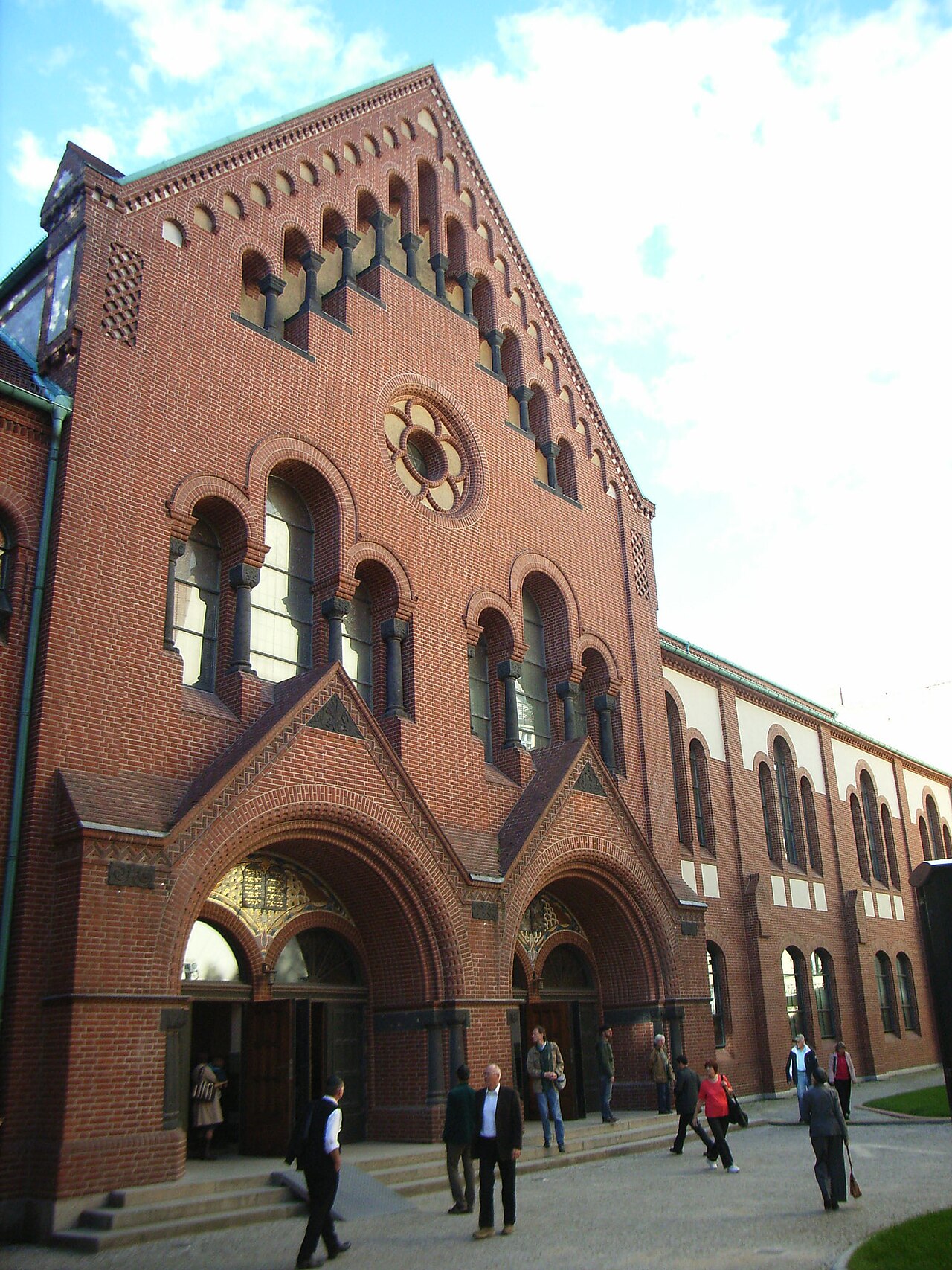
This place is a Place of worship. It was established in 1904. It was built in the Romanesque Revival architecture style. It carries the Kulturdenkmal heritage designation.
Rykestrasse Synagogue is an active Jewish house of worship on Rykestraße in Prenzlauer Berg, Berlin. Its red-brick architecture and substantial scale make it a prominent landmark in the neighbourhood. The building belongs to Berlin’s living Jewish community rather than functioning as a conventional museum. For travellers, the most meaningful experience begins with recognising the site as a religious place whose community use takes priority over sightseeing. Exterior viewing connects the synagogue with Prenzlauer Berg’s dense streets, cafés, residential buildings, and layered twentieth-century history. Rykestrasse Synagogue, known locally as Synagoge Rykestraße, is a Jewish house of worship located in Berlin's Prenzlauer Berg district. The building stands as one of the largest synagogues in Germany by seating capacity. Constructed in the early twentieth century, it survived the Nazi era with damage and was later restored. Public tourist access is limited as this remains an active place of worship. Visiting possibilities depend on religious services, community programmes, and administrative discretion. Direct contact with the synagogue or Jewish community organisations is necessary to determine current access arrangements.
Checked 2026-08-26 · Source
The synagogue contains the principal elements associated with Jewish worship, including an ark for Torah scrolls, a bimah for reading scripture, and extensive congregational seating. The prayer hall is designed for a large community, with a traditional interior arrangement rather than a museum display. Because the building remains a working synagogue, the inside is not simply an exhibition space. Treat any interior visit as participation in a community setting, and give priority to the dignity, privacy, and religious practice of people using the building.
Checked 2026-08-26 · Source
A short exterior stop can fit comfortably into a Prenzlauer Berg walk, giving you time to view the red-brick façade and understand the synagogue’s position within the surrounding streets. An interior visit connected with a service or community event requires the length of that occasion and should not be treated like a timed museum visit. Allow extra time for respectful arrival, security procedures, and quiet departure. The synagogue pairs naturally with a wider neighbourhood walk rather than a rushed standalone photo stop.
Checked 2026-08-26 · Source
Visit the exterior in daylight, when the red brick and architectural details are easiest to read from the public street. Interior access is tied to religious services and community activity, so a casual arrival does not guarantee entry. Friday evening through Saturday evening is especially sensitive because of Shabbat, and Jewish holidays can change normal routines. Plan this stop around the character of the district, leaving room for a calm walk through Prenzlauer Berg instead of building a rigid sightseeing schedule around the synagogue.
Checked 2026-08-26 · Source
There is no ordinary museum-style ticket experience described for Rykestrasse Synagogue. Religious worship is distinct from paid tourist admission, while special cultural events or organised activities can follow their own arrangements. If you are invited into the building for a service or community occasion, approach the visit as a religious encounter rather than as a commercial attraction. A voluntary contribution may be appropriate in a community context, but the central value of the visit is respectful presence, not a purchased sightseeing product.
Checked 2026-08-26 · Source
Rykestrasse Synagogue stands on Rykestraße in Prenzlauer Berg, an urban district well suited to combining public transport with walking. Use the synagogue’s mapped position to orient the final approach through the neighbourhood streets. Once nearby, continue on foot and keep the entrance area clear for worshippers. The surrounding district offers many opportunities to extend the outing with cafés, shops, and local architecture. A walking-based visit gives more context than treating the building as an isolated point on a citywide route.
Checked 2026-08-26 · Source
Dress and behaviour should reflect the synagogue’s religious purpose. Choose modest clothing, keep your voice low, and never enter during worship without permission. Men may be expected to cover their heads, and security procedures can be part of visiting a Jewish institution in Berlin. Do not photograph worshippers, entrances, security equipment, or interior activity without clear consent. The site carries significance connected with Jewish life, persecution, survival, and renewal, so avoid treating it as a backdrop detached from the people who use it.
Checked 2026-08-26 · Source
The exterior can be photographed from the public street, with ordinary consideration for pedestrians, residents, and the synagogue’s security. Interior photography should take place only when expressly permitted, and never during prayer or community activity unless permission is unmistakable. Keep cameras and phones discreet near the entrance. Avoid capturing identifiable worshippers or security arrangements. The strongest architectural images usually come from a respectful street-level viewpoint that shows the red-brick building in relation to Rykestraße and the surrounding Prenzlauer Berg townscape.
Checked 2026-08-26 · Source
It is an active Jewish synagogue and community place of worship in Berlin’s Prenzlauer Berg district, not a conventional museum.
The red-brick exterior and the building’s substantial scale make it a distinctive landmark on Rykestraße.
The interior includes traditional worship features such as an ark for Torah scrolls, a bimah, and congregational seating.
The synagogue is in Prenzlauer Berg, a lively inner-city district known for residential streets, cafés, and historic urban fabric.
Wear modest clothing, speak quietly, respect worship, and enter only with permission because the building remains an active religious site.
Street-level exterior photography is suitable, while interior photography and images of worshippers require clear permission.
Loading the interactive map…
The interactive map could not be loaded.
Last updated:
Source: OpenStreetMap contributors, Wikidata ·