
2 min walk
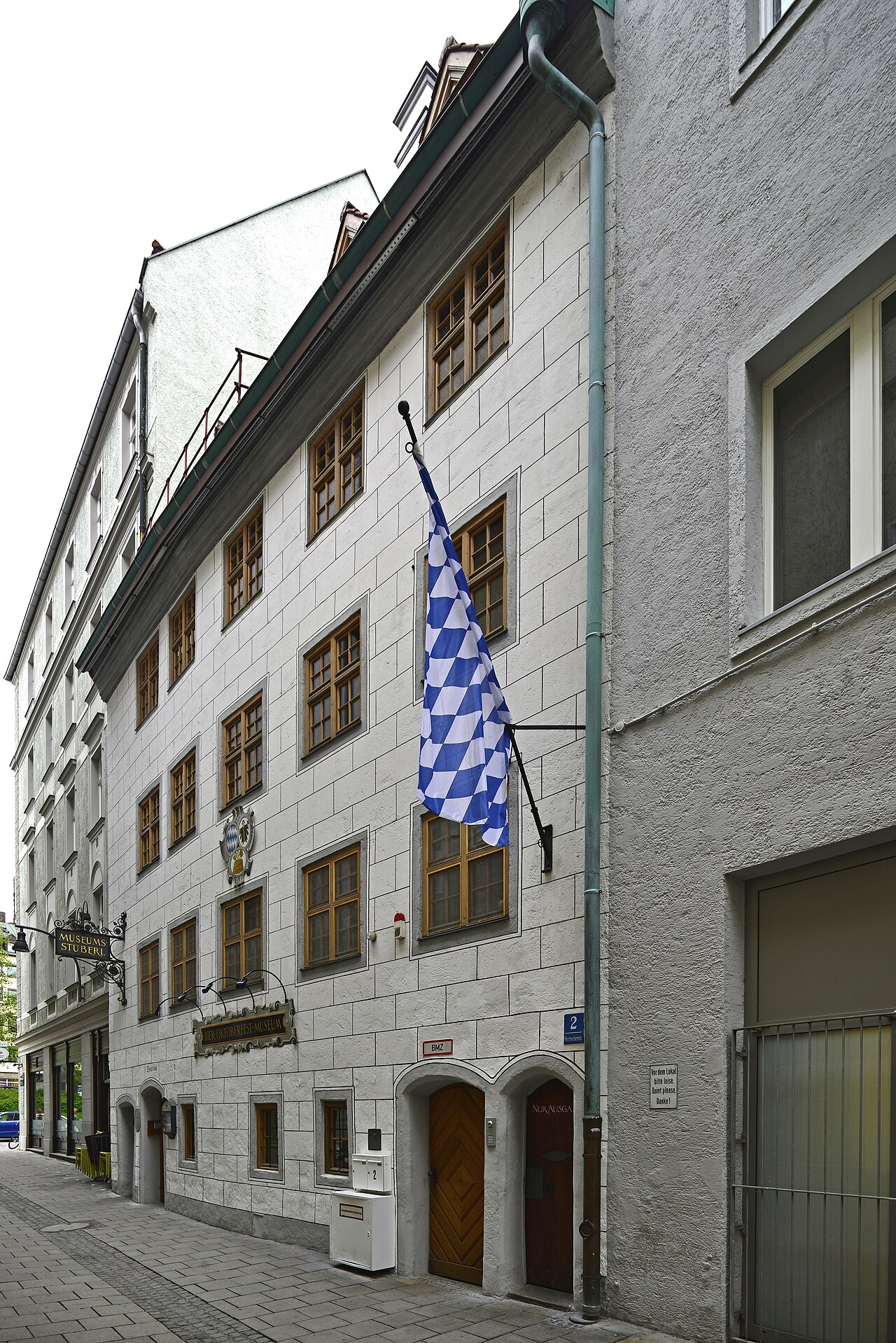
Beer and Oktoberfest Museum
- Must see
- Museum
Language · 11 published
Historic monument · Munich
Reviewed by Elena Voss · Roavina Travel Editor
| Monday | 11:00 – 18:00 |
|---|---|
| Tuesday | 11:00 – 18:00 |
| Wednesday | Closed |
| Thursday | 11:00 – 18:00 |
| Friday | 11:00 – 18:00 |
| Saturday | 11:00 – 18:00 |
| Sunday | 10:00 – 18:00 |
Checked 2026-08-31 · Source
Read from the OpenStreetMap access tags; anything not listed has no tag recorded.
Set the group type to family in the planner and the day window contracts to about three quarters of a solo day.
It was established in 1337. It carries the architectural heritage monument in Bavaria heritage designation.
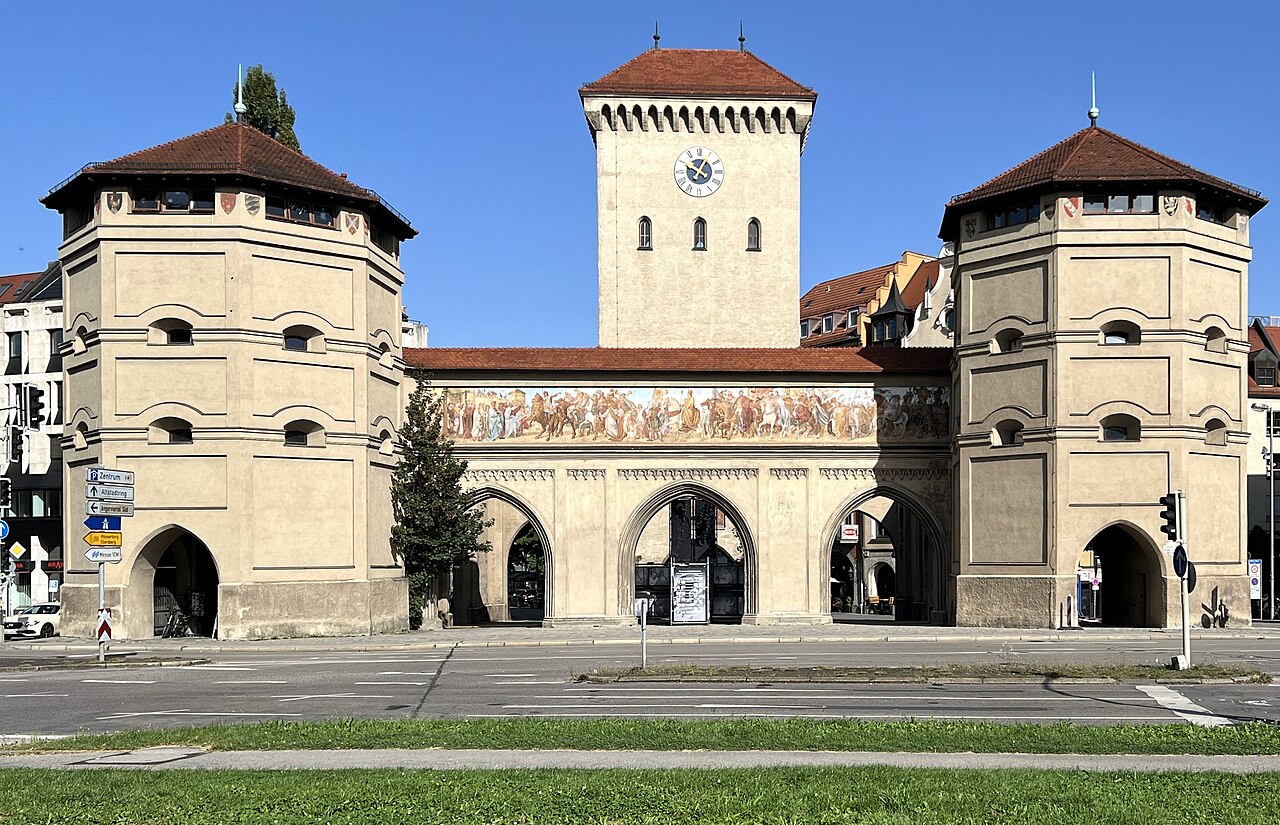
Isartor is one of Munich's surviving medieval city gates and marks the eastern edge of the historic Altstadt. Built as part of the city's second fortifications in the late fourteenth century, it preserves the memory of Munich as a walled medieval town. Its tall central tower, pointed roof, clock face, and connected gate buildings make it a distinctive urban landmark. Today the monument is integrated into active city streets, so visitors encounter history alongside traffic, shops, public transport, and everyday movement. Isartor is one of four remaining medieval city gates of Munich, originally constructed as part of the second city fortifications during the late 14th century. The gate stands at the eastern edge of the historic Altstadt-Lehel district, marking the former boundary of Munich's walled medieval core. Its distinctive tall tower with pointed roof and decorative clock face makes it a prominent landmark. Publicly documented information does not confirm regular interior tower access. The structure contains commercial tenants at ground level.
Checked 2026-08-26 · Source
Isartor is best understood from the outside. The visible structure includes the pointed arch passage, tall tower, clock feature, and decorative architectural details. Commercial spaces occupy parts of the ground level and adjoining buildings, while the upper areas are not presented as a regular museum exhibition. Walk around the gate to see how its medieval form meets the modern street network. The monument's most accessible story is written into its silhouette, passageway, location, and survival within Munich's changing centre.
Checked 2026-08-26 · Source
Allow fifteen to thirty minutes for a dedicated look at Isartor, including exterior views, the gate passage, and photographs from different approaches. The monument can also serve as a waypoint in a longer Altstadt walk, in which case your total time in the area will be much greater. Walking from Marienplatz adds useful context because the route follows Tal through the historic commercial district. Travelers visiting Munich's surviving medieval gates can treat Isartor as one stop in a wider urban circuit.
Checked 2026-08-26 · Source
Isartor is an open-air urban landmark, so the best moment depends on the experience you want. Early morning usually gives a calmer setting for architectural photographs and clearer views of the gate, while evening light changes the character of the tower and clock face. The monument remains part of a busy central neighbourhood, and pedestrian activity rises as the day develops. Include it in a daytime walking route when you want to compare medieval architecture with Munich's contemporary city life.
Checked 2026-08-26 · Source
Viewing Isartor from the public streets is free. There is no gate-specific admission process for the exterior monument, making it an easy addition to a Munich itinerary between Marienplatz, the river, and the eastern Altstadt. Commercial businesses inside or beside the structure are separate destinations with their own purchases. Plan spending for the surrounding neighbourhood rather than for entry to the gate itself. The value of the stop is architectural and historical, not a ticketed interior exhibition.
Checked 2026-08-26 · Source
Isartor is served directly by the S-Bahn station of the same name, located beside the monument. Tram and bus services also connect the surrounding central streets. From Marienplatz, the gate is about five hundred metres east along Tal, making it a straightforward walk through Munich's historic commercial core. Its position at a major intersection makes the tower easy to use as a navigation point. Approach carefully, since the landmark is surrounded by active streets rather than a pedestrian-only square.
Checked 2026-08-26 · Source
The archway remains part of an active transport environment, with vehicles, bicycles, and pedestrians moving through and around it. Pause on safe pavements and use care at the nearby crossings. Historic paving can be uneven, while the intersection creates noise and changing sightlines. Commercial activity and modern station infrastructure sit directly beside the medieval monument. At night, street lighting gives the area a different atmosphere, but daytime is better for examining fine architectural details and understanding the gate's relationship with the surrounding streets.
Checked 2026-08-26 · Source
The west-facing approach along Tal offers a strong frontal view of Isartor, with the clock face and pointed roof creating a clear vertical composition. The archway can frame views toward the historic centre, while wider photographs can show the gate embedded in modern Munich. Morning light favours the main facade, and evening illumination changes the mood. Keep tripods and camera positions clear of traffic and pedestrian paths. Decide whether to include the S-Bahn entrance and commercial signs as evidence of the monument's living urban setting.
Checked 2026-08-26 · Source
Isartor is a surviving medieval city gate on the eastern edge of Munich's historic Altstadt, built as part of the second city fortifications in the late fourteenth century.
Yes. Exterior viewing from the public streets is free, with no gate-specific admission process.
Allow about fifteen to thirty minutes for exterior viewing, the archway, and photographs.
The S-Bahn station named Isartor stands beside the gate, and tram and bus services connect the surrounding central streets.
Isartor is approximately five hundred metres east of Marienplatz, reached by walking along Tal through the historic commercial district.
The pointed roof, clock face, frontal facade, archway passage, and the meeting of medieval architecture with modern streets are the main subjects.
Loading the interactive map…
The interactive map could not be loaded.
Last updated:
Source: OpenStreetMap contributors, Wikidata ·