
2 min walk
Herzlilinblum Museum
- Must see
- Museum
Language · 11 published
Museum · Tel Aviv
היכל העצמאות
Reviewed by Elena Voss · Roavina Travel Editor
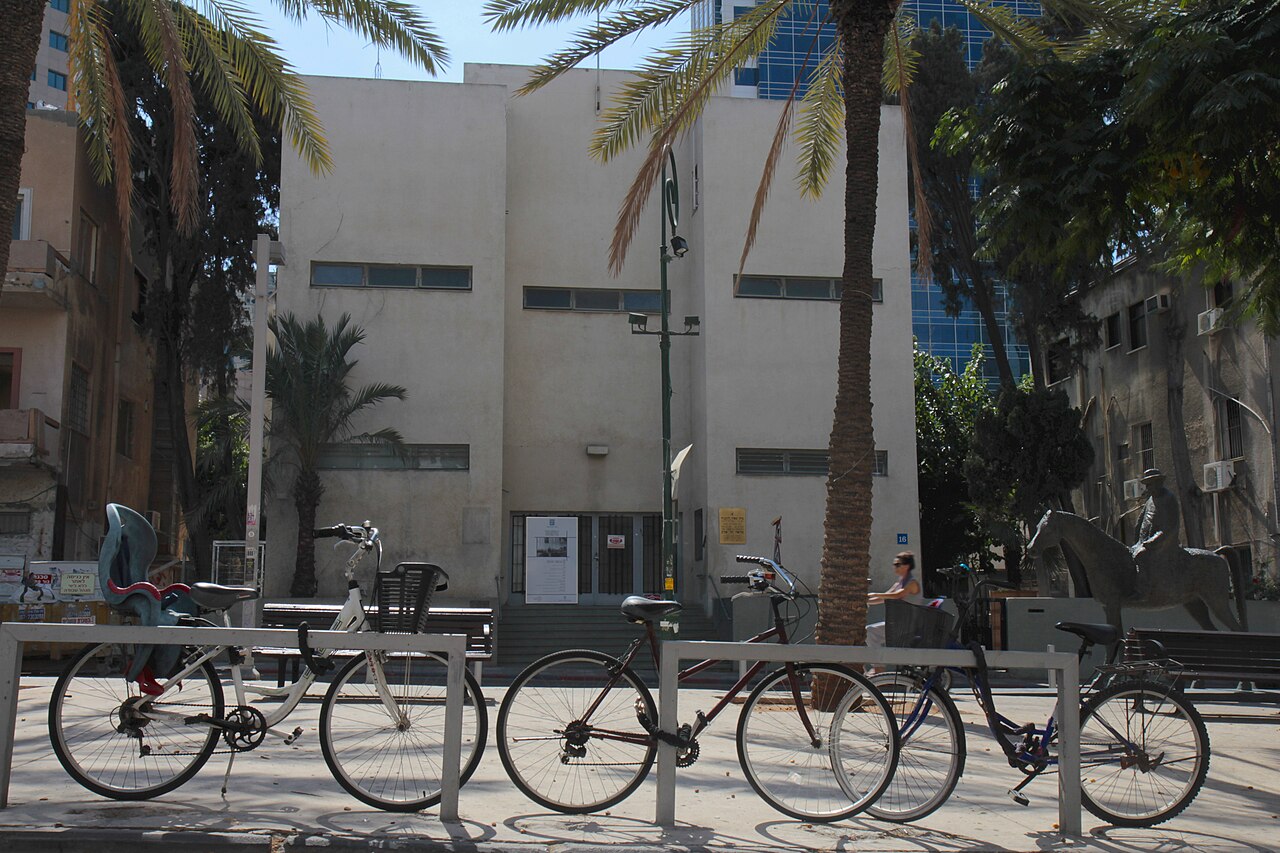
This place is a Museum. It was established in 1978. It carries the heritage site in Israel heritage designation.
Independence Hall, also known as Beit Ha’atzmaut, is the Tel Aviv building where David Ben-Gurion proclaimed the establishment of the State of Israel on 14 May 1948. The building began as the home of Meir Dizengoff, Tel Aviv’s first mayor, and later served as the original Tel Aviv Museum of Art. Its importance comes from the preserved connection between the building, the declaration and the city’s early civic history. Independence Hall, known locally as Beit Ha'atzmaut, is the historic building where David Ben-Gurion proclaimed the establishment of the State of Israel on May 14, 1948. Originally constructed in 1910 as the home of Meir Dizengoff, Tel Aviv's first mayor, it later became the Tel Aviv Museum of Art. The hall preserves the exact configuration from that pivotal ceremony, offering visitors direct encounter with a foundational moment of modern Israeli history. The site stands on Rothschild Boulevard in the heart of Tel Aviv's White City area. Yes, the building contains the specific hall where David Ben-Gurion read the declaration of independence on May 14, 1948.
Checked 2026-08-26 · Source
The centrepiece is the ceremonial hall associated with the 1948 declaration, preserved with its historic arrangement. You can focus on the room itself, then use the surrounding documentary material, photographs and objects to place the ceremony in the political setting of the period. The visit is intimate rather than sprawling: the value lies in standing in a specific historic interior and connecting the preserved furnishings with the event that took place there. The interior maintains the ceremonial hall where the declaration took place, including the original furnishings and arrangements from 1948. Visitors can observe the table, chairs, and artifacts present during the historic gathering. Exhibits document the events leading to independence and the figures who participated. The space contains documentary materials and historical photographs contextualizing the declaration within the broader narrative of Jewish statehood. The preservation approach emphasizes authenticity, presenting the room substantially as witnesses experienced it during the founding ceremony.
Checked 2026-08-26 · Source
Plan roughly forty-five minutes to one hour for a focused visit. That gives you time to see the ceremonial hall, read the historical material and pause over the photographs without turning the experience into a hurried stop. Visitors deeply interested in the 1948 declaration or Tel Aviv’s early institutions may spend longer with the displays. The compact scale makes Independence Hall easy to pair with a walk along Rothschild Boulevard.
Checked 2026-08-26 · Source
Choose a time that leaves room for a concentrated indoor history visit and a walk through central Tel Aviv afterward. The Rothschild Boulevard setting places the hall in an active urban area, where traffic, city events and public gatherings can affect the approach. Tel Aviv’s summer heat makes the museum interior a welcome midday stop, while the surrounding boulevard is more comfortable for walking in the morning or later afternoon.
Checked 2026-08-26 · Source
Treat Independence Hall as a focused heritage-museum visit rather than an open public room. The historic hall and its displays form a defined visitor experience, and the building’s significance means you should leave enough time for the interior rather than only photographing the exterior. Its central location makes it straightforward to combine with Rothschild Boulevard and the surrounding White City architecture during the same part of the day.
Checked 2026-08-26 · Source
Independence Hall stands on Rothschild Boulevard in central Tel Aviv, within walking reach of the White City’s Bauhaus streets. Walking from nearby central districts is a practical way to connect the visit with surrounding architecture. City buses serve the wider centre, while driving into central Tel Aviv can involve dense traffic and difficult parking. Build the hall into a broader central-city route instead of making it a distant standalone journey.
Checked 2026-08-26 · Source
This is a historic building, so the interior may feel more constrained than a modern museum, with preservation taking priority over spacious circulation. The subject is emotionally and politically significant, and the declaration hall rewards quiet attention. The surrounding boulevard remains a busy city environment, with vehicles, bicycles and public gatherings. Allow time to absorb the exhibits, and follow any security or photography instructions given inside.
Checked 2026-08-26 · Source
The building’s strongest photographic subject is the preserved declaration hall and its historic arrangement. Exterior images can place Independence Hall within Rothschild Boulevard and the White City streets, while interior images should follow the institution’s rules. The room’s importance calls for a restrained approach: avoid flash where prohibited, keep clear of other visitors and give the furnishings priority over posed, disruptive pictures.
Checked 2026-08-26 · Source
David Ben-Gurion proclaimed the establishment of the State of Israel there on 14 May 1948.
The preserved ceremonial hall associated with the 1948 declaration is the main focus of the visit.
Meir Dizengoff, Tel Aviv’s first mayor, originally lived in the building.
It was the home of Meir Dizengoff and later became the original Tel Aviv Museum of Art.
It is on Rothschild Boulevard in central Tel Aviv, near the White City’s Bauhaus architecture.
Most visitors can allow approximately forty-five minutes to one hour for the hall and historical displays.
Loading the interactive map…
The interactive map could not be loaded.
Last updated:
Source: OpenStreetMap contributors, Wikidata ·