
2 min walk
Uffizi Gallery
- Must see
- Museum
Language · 11 published
Museum · Florence
Museo Galileo - Istituto e Museo di Storia della Scienza
Reviewed by Elena Voss · Roavina Travel Editor
| Monday | 09:30 – 18:00 |
|---|---|
| Tuesday | 09:30 – 13:00 |
| Wednesday | 09:30 – 18:00 |
| Thursday | 09:30 – 18:00 |
| Friday | 09:30 – 18:00 |
| Saturday | 09:30 – 18:00 |
| Sunday | 09:30 – 18:00 |
Checked 2026-08-31 · Source
Read from the OpenStreetMap access tags; anything not listed has no tag recorded.
Set the group type to family in the planner and the day window contracts to about three quarters of a solo day.
This place is a Museum. It opened in 1927. It carries the Italian national heritage heritage designation.
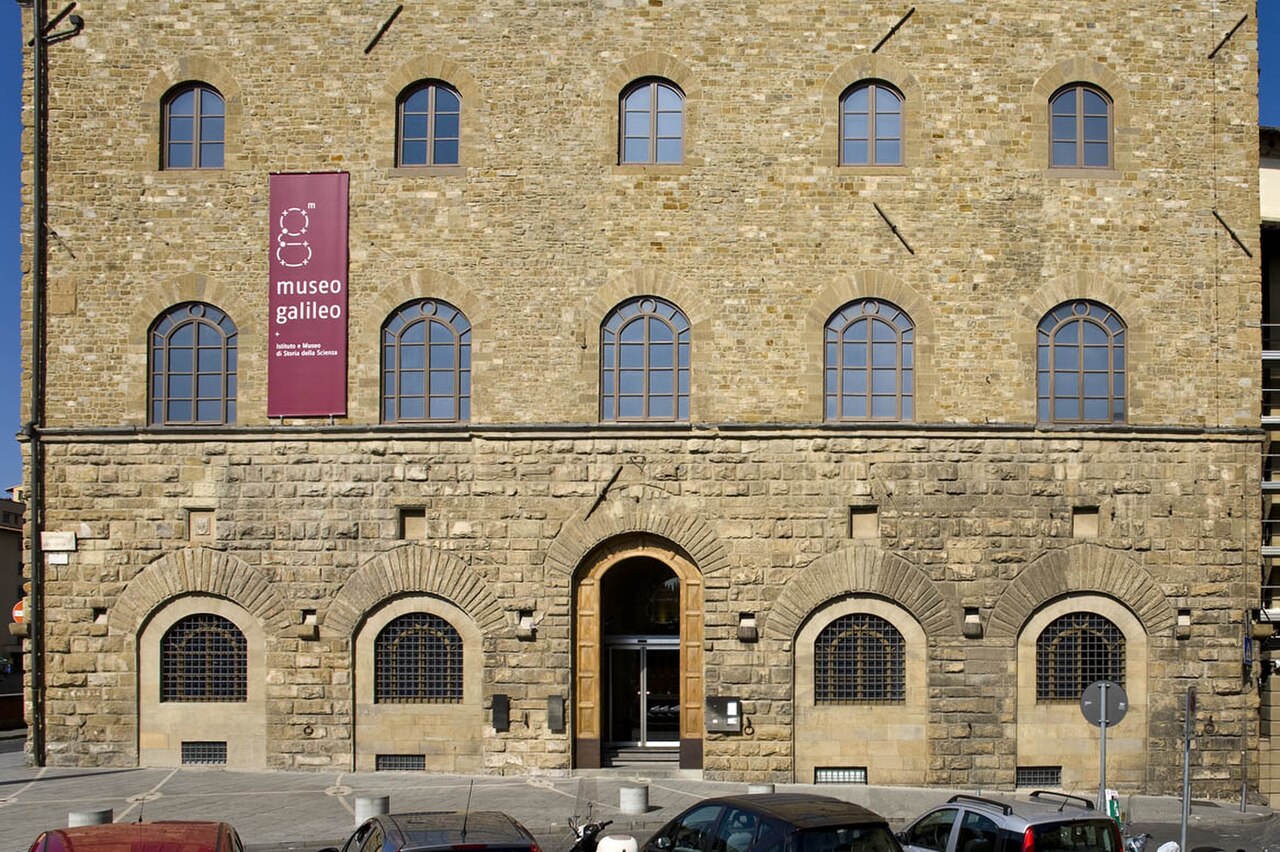
Museo Galileo occupies a historic position near the Arno River in Florence, housed in the Palazzo Castellani. The institution operates under its full designation Museo Galileo - Istituto e Museo di Storia della Scienza. It stands as a museum dedicated to the history of science, with particular emphasis on the instruments and legacy associated with Galileo Galilei. The museum's location in one of Italy's most culturally significant cities places it within easy reach of other major landmarks. Its collections reflect centuries of scientific development, particularly the period of the Scientific Revolution when Florence played a notable role in advancing knowledge.
Checked 2026-08-31 · Source
The museum preserves and displays scientific instruments of considerable historical significance. Its holdings include telescopes, armillary spheres, globes, and mathematical instruments that document the evolution of scientific inquiry. Many artifacts relate directly to Galileo and his contemporaries, illustrating the methods by which early modern scholars observed and measured the natural world. The collections extend beyond Galileo's era to encompass broader developments in astronomy, navigation, and experimental physics. Visitors encounter original instruments alongside explanatory materials that contextualize their use. The displays aim to make the history of scientific practice accessible, showing how material culture shaped the emergence of modern scientific understanding.
Checked 2026-08-31 · Source
Most visitors allocate between one and two hours for exploring the museum's galleries. The compact nature of the exhibition spaces allows for a focused visit without excessive physical demands. Those with deep interest in the history of scientific instruments may wish to extend their stay to examine individual objects more carefully. The museum's layout permits efficient circulation through thematic displays. Visitors combining this destination with nearby attractions in the historic center should consider their overall itinerary. The density of information presented in the exhibitions rewards attentive observation, suggesting that a measured pace enhances the experience rather than rushed passage through the rooms.
Checked 2026-08-31 · Source
Monday 09:30–18:00; Tuesday 09:30–13:00; Wednesday–Sunday 09:30–18:00. Closed January 1 and December 25. Ticket sales end 30 minutes before closing. Visitors should consult the museum's official communication channels before planning their arrival. Florence experiences substantial tourist traffic during summer months, which may affect comfort and ease of movement in the historic center generally. Morning visits to museums in the city often prove less crowded than afternoon periods. The museum's indoor setting provides shelter from seasonal weather variations, making it viable across months. Consideration of local event calendars may inform timing, as Florence hosts numerous cultural activities that can influence accommodation availability and urban congestion. Advance verification of operational status remains essential.
Checked 2026-08-31 · Source
General adult admission: €14.00. Those eligible for reductions typically include students, seniors, and residents of the European Union within specified age ranges, though precise terms require direct confirmation. Group arrangements may be available. Visitors should verify current fee structures through official sources prior to arrival. Some museums in Florence participate in combined ticketing schemes or city cards that include multiple attractions, though specific affiliations of this institution need confirmation from authoritative channels.
Checked 2026-08-31 · Source
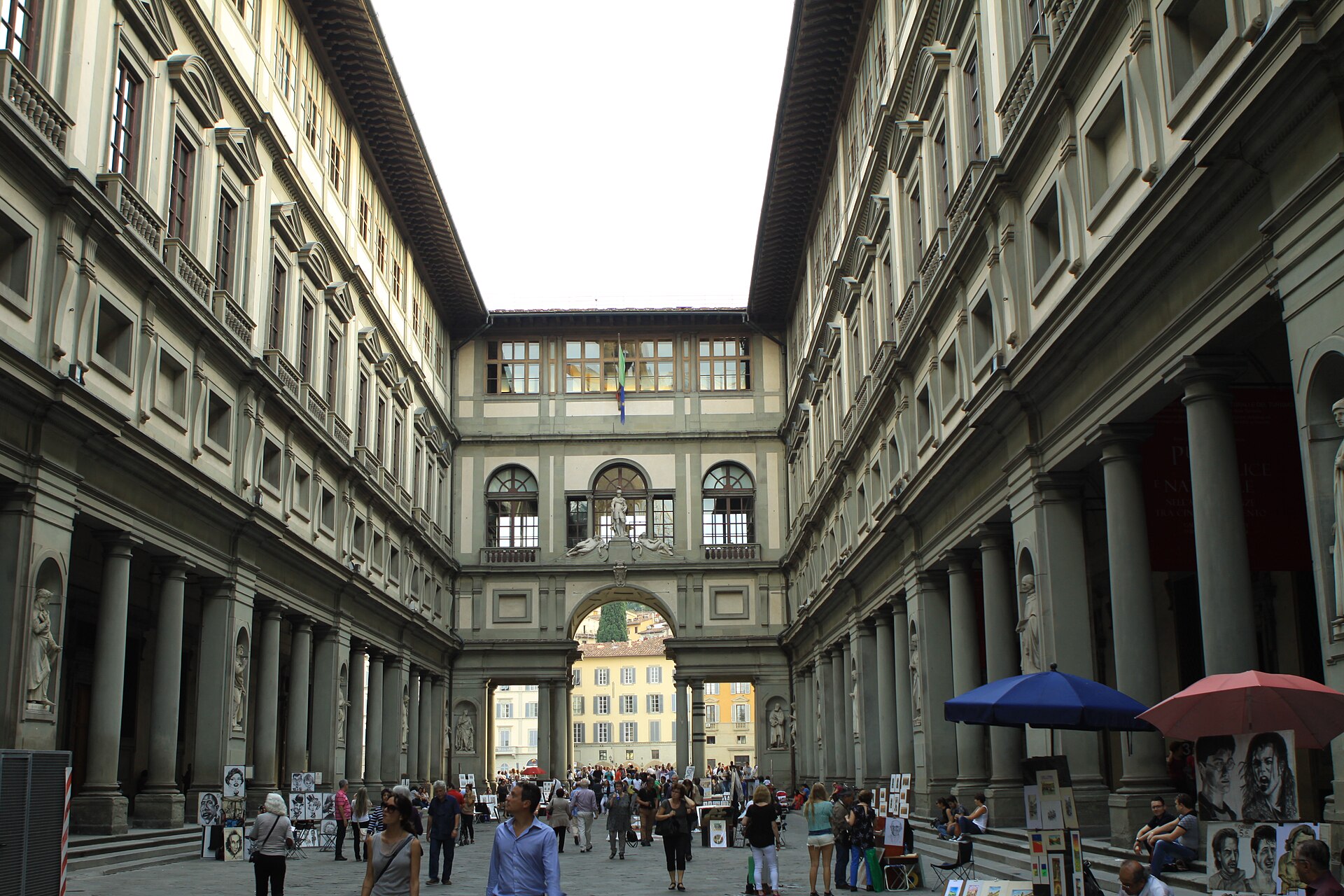
The museum is at Piazza dei Giudici 1. Autolinee Toscane line C1 serves the named Galleria degli Uffizi stop when travelling from Parterre toward Santa Maria Soprarno/San Giusto della Calza; the museum is beside the Uffizi complex. The museum occupies a central position in Florence's historic district, accessible on foot from numerous landmarks. Proximity to the Arno River places it within the area commonly traversed by visitors moving between the Duomo complex, the Uffizi, and the Palazzo Vecchio. The city's compact historic center generally favors walking over motorized transport. Public buses serve peripheral areas, though vehicle access in the centro storico faces restrictions. Taxis and ride services may approach nearby drop-off points.
Checked 2026-08-31 · Source
The step-free entrance is at Lungarno Anna Maria Luisa de’ Medici 2; use the intercom to request staff assistance. Two elevators and two stairlifts provide wheelchair access to every floor; the stairlifts accommodate wheelchairs up to 325 kg. A manual wheelchair is available to borrow on request. Accessible toilets are available on every floor. Tactile maps, Braille and large-print guides, an audio guide for the tactile route, and tactile models are available. Guide dogs are permitted on a leash. The historic building housing the museum may present accessibility challenges characteristic of structures predating modern standards. Visitors with mobility considerations should inquire about specific provisions. The concentration of tourists in central Florence necessitates awareness of personal belongings and surroundings. Summer heat can intensify in the city, making hydration advisable even during indoor visits.
Checked 2026-08-31 · Source
Photography policies at Italian museums vary considerably, with many institutions restricting or prohibiting image capture to protect sensitive collections. Visitors should seek explicit guidance from museum staff upon entry rather than assuming permission. Flash photography typically faces prohibition due to potential damage to artifacts and disturbance to other visitors. Tripods and professional equipment generally require special authorization. Mobile phone photography may be treated differently from dedicated camera use. Any permitted photography should respect the experience of others and avoid obstructing pathways through exhibition spaces. Commercial or publication use of images involves separate permissions beyond casual visitor photography.
Checked 2026-08-31 · Source
Ticket sales end 30 minutes before the museum closes.
Yes. School and non-school groups of at least 15 people must book, including groups visiting without a guide; the booking charge is €1.00 per ticket.
Yes, for private non-commercial use, but flash, tripods and selfie sticks are prohibited.
Yes. Free keyed lockers are available for bags and bulky items, with larger storage boxes provided for group backpacks.
Yes. A changing table is available in one of the second-floor toilets.
Yes. The Museo Galileo app is free, and the museum provides free Wi-Fi; visitors need their own earphones for audio.
Loading the interactive map…
The interactive map could not be loaded.
Last updated:
Source: OpenStreetMap contributors, Wikidata ·