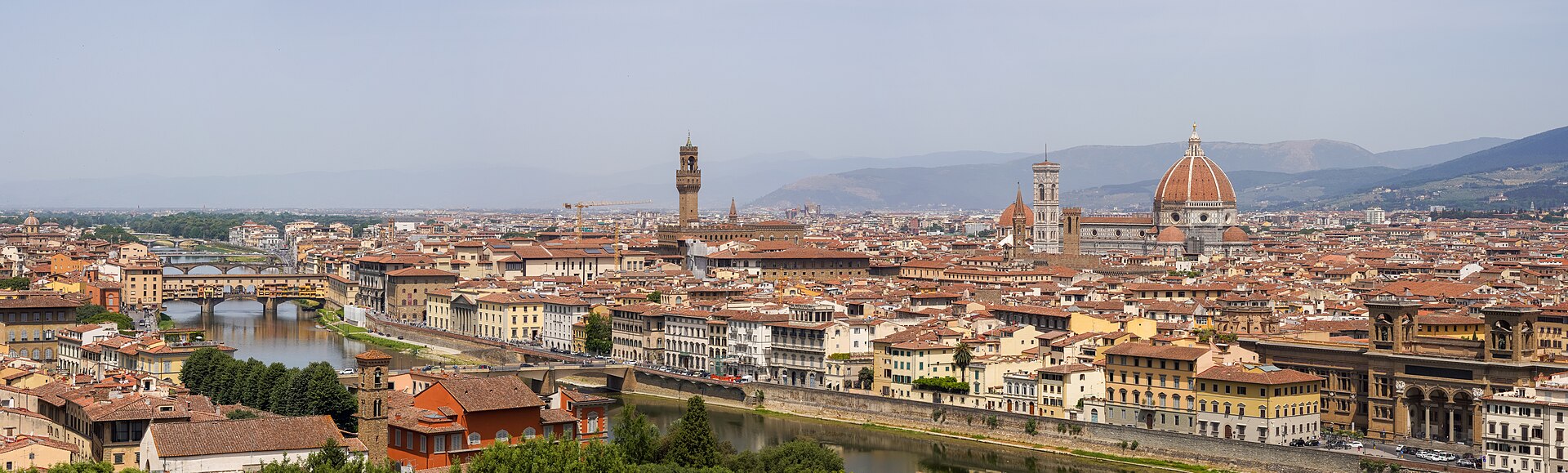
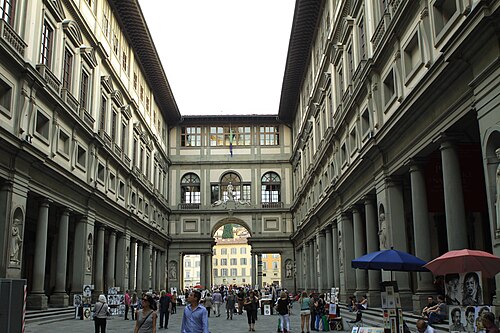
A photograph of Florence

City guide · Italy

Florence

Florence has a compact, largely pedestrian historic centre on both sides of the Arno. The Duomo, Piazza della Signoria, Uffizi and Santa Croce form the main nor...

Photograph · Wikibusters · CC BY-SA 4.0

3,075 Places
Suggested stay
Not recorded
Getting around
Walking, tram and bus

Turn this list into a plan

Set your days, your pace and the hours you actually want to be out. The planner works around closing days and travel time, and leaves room to eat.

Plan Florence

Reviewed by Elena Voss · Roavina Travel Editor

Florence has a compact, largely pedestrian historic centre on both sides of the Arno. The Duomo, Piazza della Signoria, Uffizi and Santa Croce form the main north-bank cluster; the Oltrarno begins across the river around Santo Spirito and Palazzo Pitti. Santa Maria Novella station lies northwest of the centre, while hilltop viewpoints and Fiesole require a separate climb or transport leg.

Checked 2026-08-26

Practical information

Language spoken
Italian
National practical orientation; regional and minority languages may also be used
Dialling code
+39
International calling code; local area and mobile prefixes still apply
Currency
Euro (EUR)
Use the official local currency; card acceptance varies by place
Emergency number
112
Use only for an emergency; tourist assistance may use a separate number
Plug type
Type C, F and L · 230 V
Check that chargers support the recorded voltage before using an adapter
Tap water
Not recorded
No verified nationwide visitor statement was recorded

Planning a visit

September · September balances a 26.7°C mean high and 14.4°C mean low in Florence with 79.6 mm of normal rain across 6.2 rain days.

  1. January: viable with meaningful trade-offs
  2. February: good time to visit
  3. March: good time to visit
  4. April: good time to visit
  5. May: best time to visit
  6. June: best time to visit
  7. July: viable with meaningful trade-offs
  8. August: viable with meaningful trade-offs
  9. September: best time to visit — current month
  10. October: good time to visit
  11. November: viable with meaningful trade-offs
  12. December: viable with meaningful trade-offs

Sources

Top things to see

Ranked by importance — sitelinks, pageviews and heritage status, not editor preference.

  1. Galleria dell'Accademia Galleria dell'Accademia
    02 1 hr 30 min

    Galleria dell'Accademia

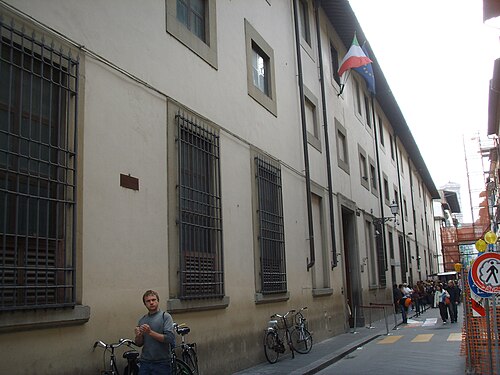
    The Galleria dell'Accademia di Firenze is a state museum on Via Ricasoli, ten minutes' walk north of the Duomo, and it exists in its present form because of one statue.

    • Must see
    • Museum
  2. Medici Chapels Medici Chapels
    03 1 hr 30 min

    Medici Chapels

    Cappelle Medicee

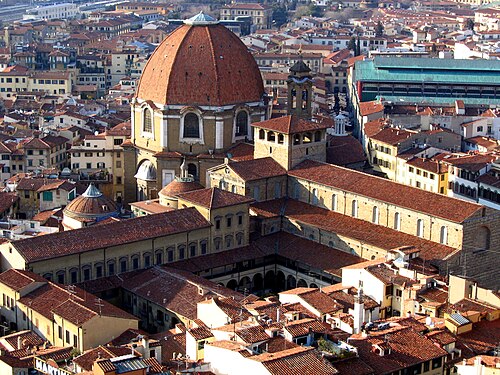
    The Medici Chapels, known locally as Cappelle Medicee, constitute a significant mausoleum complex in Florence.

    • Must see
    • Museum
  3. Bargello National Museum Bargello National Museum
    04 1 hr 30 min

    Bargello National Museum

    Palazzo del Bargello

    The Bargello National Museum occupies the Palazzo del Bargello, a medieval fortress palace in central Florence. Built from 1255, it served as the city podesta residence and later as a prison and police headquarters.

    • Must see
    • Museum
  4. Museo Galileo Museo Galileo
    05 1 hr 30 min

    Museo Galileo

    Museo Galileo - Istituto e Museo di Storia della Scienza

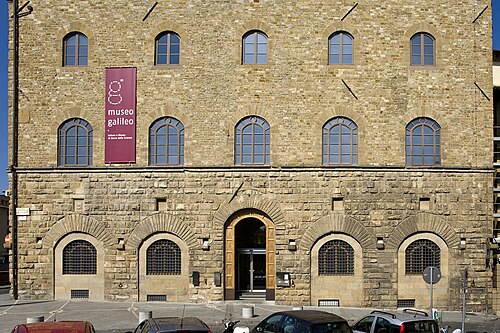
    Museo Galileo occupies a historic position near the Arno River in Florence, housed in the Palazzo Castellani. The institution operates under its full designation Museo Galileo - Istituto e Museo di Storia della Scienza.

    • Must see
    • Museum
  5. Museum of San Marco Museum of San Marco
    06 1 hr 30 min

    Museum of San Marco

    Museo di San Marco

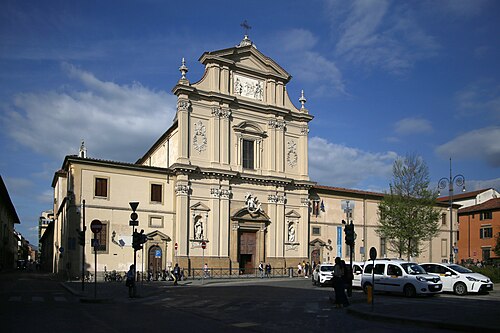
    The Museum of San Marco occupies a former Dominican convent in central Florence, Italy. The complex holds significant importance for its architectural history and its association with prominent figures of the Italian Renaissance.

    • Must see
    • Museum

Source: OpenStreetMap contributors, Wikidata ·

How the city is laid out

The cathedral is the clearest central landmark. Piazza della Signoria and the Uffizi lie south toward the Arno, Santa Croce lies east, and Santa Maria Novella lies west near the main station. Cross Ponte Vecchio for the Oltrarno, Palazzo Pitti and the Boboli Gardens. Piazzale Michelangelo sits above the river and should be treated as a separate uphill destination rather than part of a flat centre walk.

Checked 2026-08-26

Getting around

Walk for most journeys inside the historic centre. Visit Tuscany describes Florence as relatively small and largely pedestrianised, with buses and trams serving places beyond the walking core. The tram also connects selected outer districts and the airport corridor. Restricted traffic zones make driving impractical for many visitors, so use public transport for outlying stops and keep central days on foot.

Checked 2026-08-26

Common questions

How many days should I spend in Florence?

A fixed duration is not recorded. Plan by clusters: the cathedral and civic centre, Santa Croce, Santa Maria Novella, the Oltrarno and any hilltop or day-trip destination.

Is Florence easy to explore on foot?

Yes. The historic centre is compact and largely pedestrianised. Most major central sights can be linked on foot, while outer districts and uphill destinations may need transport.

Which sights are south of the Arno?

The Oltrarno contains Palazzo Pitti, the Boboli Gardens and Santo Spirito. Reach it across the central bridges and treat it as a separate neighbourhood cluster.

Does Florence have trams and buses?

Yes. Florence uses buses and a tram network for journeys outside the pedestrian core, including selected outer districts and the airport corridor.

Should I drive in central Florence?

Public transport and walking are usually more practical. The historic centre has restricted traffic areas, narrow streets and a layout designed for short pedestrian journeys.