

2 min walk
Palazzo del Credito Italiano
- High · Heritage site
- Historic monument
Historic monument · Milan
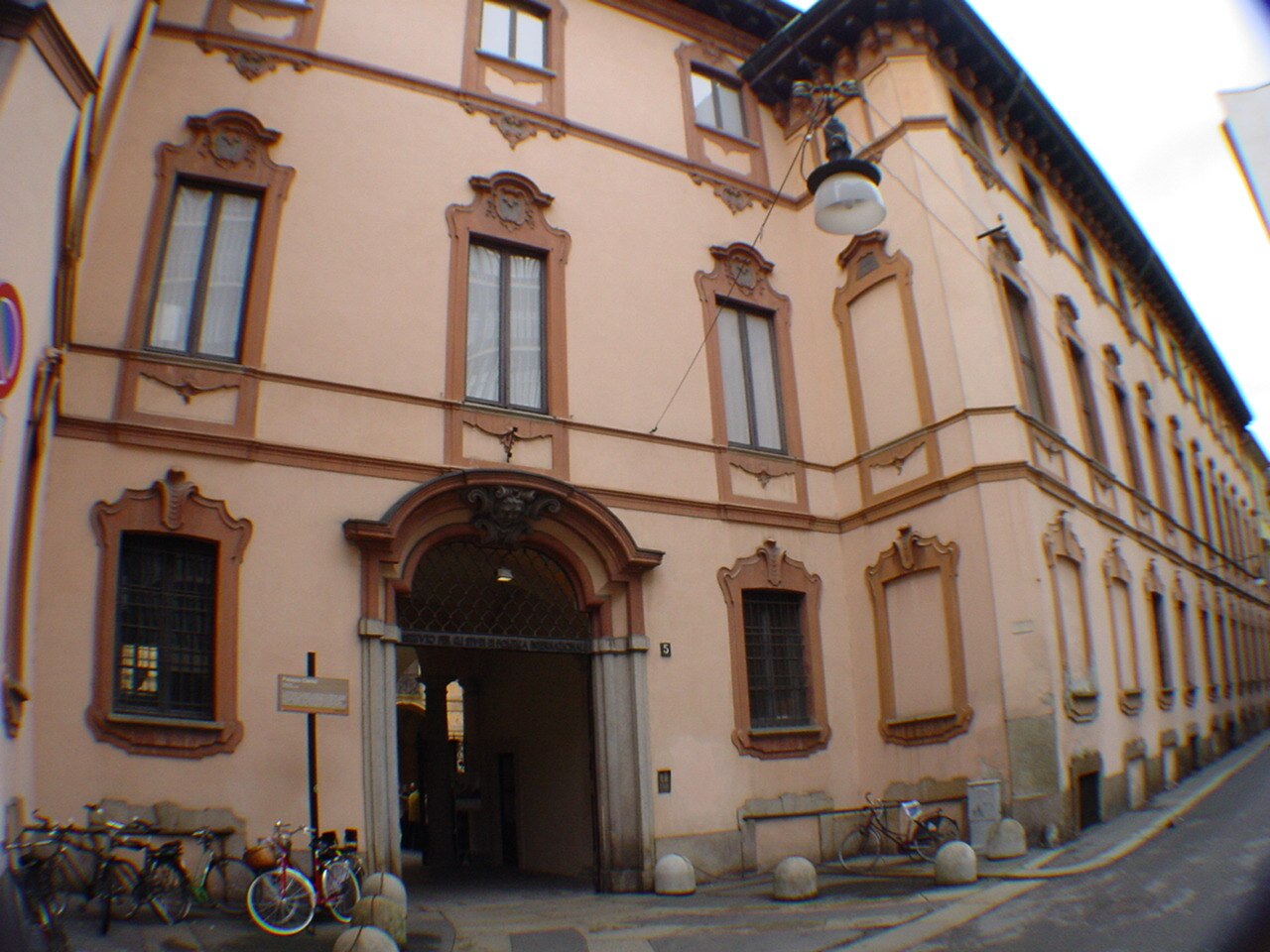
Palazzo Clerici
Clerici Palace is a Milanese aristocratic residence associated with the Clerici family, set within the city’s historic centre. It is not presented here as a purpose-built museum, but as a noble urban building whose identity comes from the relationship between household, architecture and streetscape. That makes the palace a precise stop for travellers tracing Milan’s aristocratic fabric: the interest is in how a private residence expressed status and cultural life within the compact central city. Read alongside the surrounding streets, Clerici Palace connects the Clerici name with the historic urban setting that gave the residence its public presence.
Checked 2026-09-02 · Source
The palace’s historic role points to aristocratic rooms intended for ceremonial reception, domestic life and the cultural world of the Clerici household. The available visitor information does not establish a permanent museum display or a guaranteed interior circuit. If an authorised cultural opportunity provides entry, the rooms and areas available will depend on that arrangement. The building is therefore best understood through its residential identity: formal rooms, household status and urban representation, rather than an assumed collection, fixed exhibition route or ordinary museum sequence. Interior access should be treated as a specific opportunity, not as an automatic extension of seeing the palace from the street.
Checked 2026-09-02 · Source
Allow about fifteen to thirty minutes for an exterior-focused stop, enough time to examine the palace frontage, absorb its position in Milan’s historic centre and place it within the surrounding streets. This makes Clerici Palace a useful pause in a longer walking circuit rather than a separate half-day attraction. An authorised interior visit may take longer, depending on the rooms and programme included. Keep the stop flexible when several central landmarks compete for the same part of your day, reserving extra time only for a confirmed interior opportunity. The compact visit length works well between major central sights and leaves room for a slower architectural walk nearby.
Checked 2026-09-02 · Source
Daylight is the practical choice for examining the exterior and its relationship with the surrounding historic streets. The central setting suits a daytime route linking Milan landmarks on foot, while an exterior stop remains useful even when the building is not offering interior access. Any authorised interior opportunity depends on a particular appointment or cultural programme, so it cannot be planned from a regular public opening pattern. Fit such access around confirmed arrival instructions and programme details, keeping nearby sights as alternatives within the same central circuit. Morning or afternoon therefore matters less than having enough light and a flexible route through the centre.
Checked 2026-09-02 · Source
No standard admission price is recorded for Clerici Palace, so there is no ticket amount to include in an ordinary visit plan. This does not establish free entry, paid entry or inclusion in a Milan tourist pass. If a cultural programme, guided visit or special opening provides interior access, use the access conditions published for that specific opportunity. Plan the palace as an exterior heritage sight unless a specific invitation or booking confirms otherwise; an unlisted tariff should not be turned into a promise about event pricing. Budgeting is therefore unnecessary for the exterior stop, but interior arrangements should be treated separately when explicitly announced.
Checked 2026-09-02 · Source
Clerici Palace is in central Milan, where the integrated underground, tram and bus network makes public transport a sensible approach. Walking from the Duomo area is feasible as part of a central-city circuit. Cycling and ride-sharing are possible, while driving is less convenient because congestion, restricted traffic zones and limited parking complicate a dedicated vehicle stop. Arriving after another central landmark gives the palace useful architectural context. A walking route is especially effective because its interest depends on the residence’s place within Milan’s historic streets. Public transport and walking also make it easier to combine the palace with other central stops without reorganising the day around parking.
Checked 2026-09-02 · Source
The main planning issue is access uncertainty: a historic palace is not automatically an open visitor attraction. Interior entry may depend on an authorised appointment or organised cultural opportunity, and a regular public opening pattern is not established. The entrance, internal route and permitted rooms are unspecified. Expect busy pedestrian movement and central-city traffic around the building. Limited step-free access is recorded, but its route and scope are not described. Keep an exterior visit as the dependable plan when no named organiser has confirmed interior access. Visitors who need step-free movement should regard the exterior and interior as separate access questions, because central arrival does not prove circulation inside.
Checked 2026-09-02 · Source
Exterior photography should respect signs, privacy and neighbouring occupants because Clerici Palace stands within central Milan’s working urban environment, not an isolated museum campus. If an authorised interior visit takes place, follow the organiser’s rules on flash, tripods and commercial use. Avoid photographing private areas or identifiable people without permission. Frame the palace with its surrounding streets to preserve the architectural context and show how the former noble residence fits into the dense cityscape. A wider street-level composition can communicate its urban setting better than a tightly cropped façade image. Photographing from the public realm keeps the building connected to the active centre that forms part of its significance.
Checked 2026-09-02 · Source
Regular tourist entry is not established for Clerici Palace. Treat it primarily as a heritage property whose interior access may depend on an appointment, an organised cultural programme or a special opening. Do not build your Milan itinerary around walk-in entry; an exterior-focused visit is the dependable option unless a specific organiser has confirmed access for your date.
No pass inclusion is established for Clerici Palace. Because no standard admission tariff or regular public visitor operation is recorded, do not treat a general Milan tourist pass as covering the palace. If it is listed in a particular cultural programme, use that programme’s own access conditions rather than assuming that the pass provides entry.
A regular guided-tour programme is not established for Clerici Palace. An appointment or special cultural event could include guided access, but no recurring tour offering is recorded. Treat a guided visit as available only when the responsible organiser has confirmed the date, group conditions and language for the opportunity you intend to attend.
A current or regular temporary-exhibition calendar is not established for Clerici Palace. The palace may form part of an occasional cultural programme, but no specific exhibition is recorded for planning purposes. Treat an exhibition as a reason to visit only when a named organiser has published the date, access arrangement and any booking requirement.
Only limited step-free access is recorded for Clerici Palace, while the entrance, internal route and accessible rooms are not described. Visitors with mobility limitations should request precise access information for the particular opening or event, including whether stairs, thresholds or restricted areas are involved. The central location and public transport options help with arrival, but they do not establish step-free movement throughout the palace.
Clerici Palace is a useful stop for travellers interested in Milan’s aristocratic urban fabric and the Clerici family’s association with that setting. Its practical distinction is that regular public access, pricing and interior programming are not established. Choose it for a central architectural circuit when its exterior character or a separately confirmed opening matches your route, rather than ranking it by an unverified museum offer.
Loading the interactive map…
The interactive map could not be loaded.
Last updated:
Source: OpenStreetMap contributors, Wikidata ·