
2 min walk
Galleria Vittorio Emanuele II
- Notable
- Historic monument
Historic monument · Milan
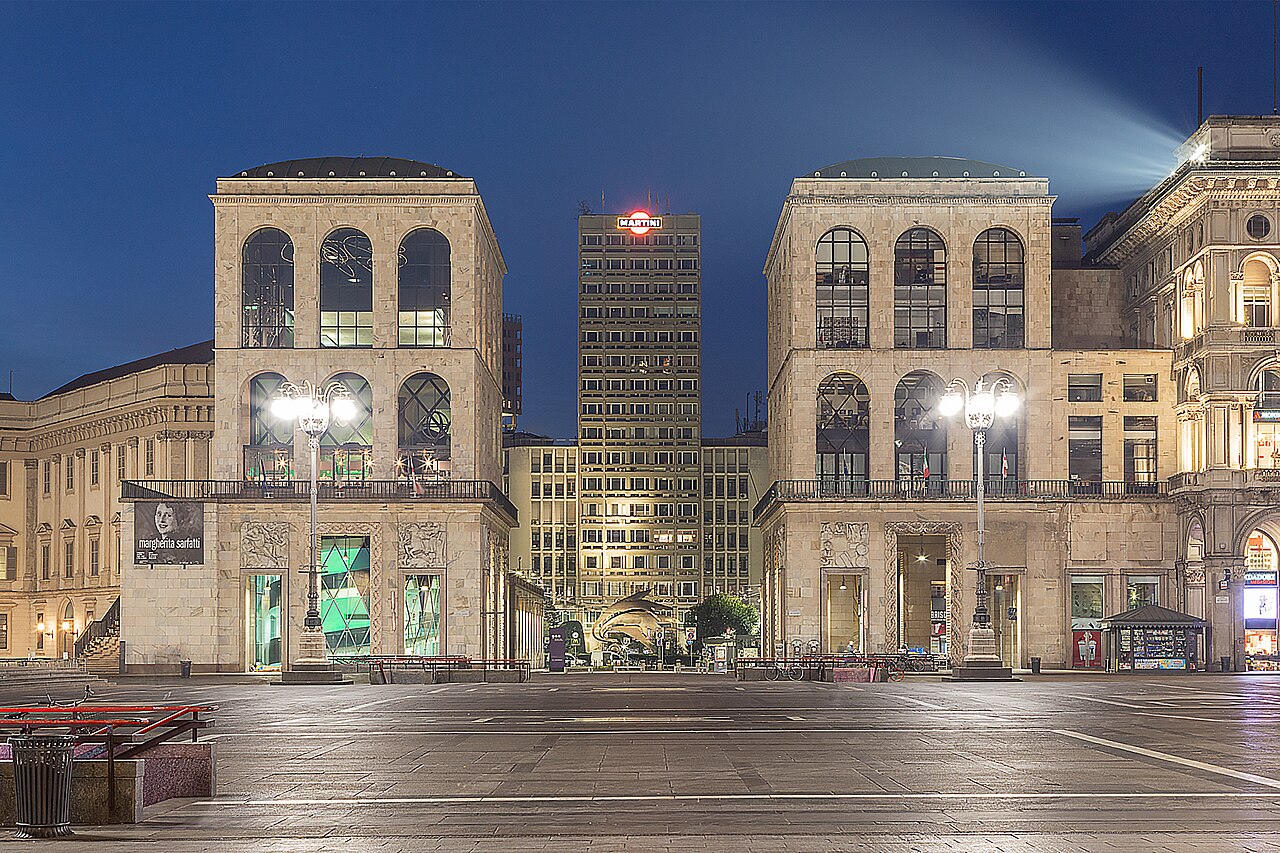
Palazzo dell'Arengario is a historic building complex in Milan, Italy, situated on the Piazza del Duomo facing the cathedral. The structure consists of two symmetrical buildings connected by an aerial walkway. Constructed in the early twentieth century, it represents significant civic architecture from the Fascist era. The complex originally served administrative and governmental functions. Its name derives from the medieval arengario, a place for public assemblies. The building's prominent position in Milan's central square makes it a notable landmark.
Checked 2026-08-28
The Palazzo dell'Arengario houses the Museo del Novecento, a museum dedicated to twentieth-century art. The collection features Italian modern art movements including Futurism, Spatialism, and Arte Povera. Visitors can view works by major Italian artists across multiple floors. The building's interior includes exhibition spaces, a bookshop, and a restaurant with views of the Duomo. The connecting walkway between the two structures offers a distinctive architectural experience and panoramic perspectives of the piazza below. Palazzo dell'Arengario also earns time in a milan itinerary because its setting and role differ from the surrounding ranked stops. Compare the place with the nearby streets before deciding how it fits the day.
Checked 2026-08-28
A thorough visit to the Museo del Novecento within Palazzo dell'Arengario typically requires approximately two to three hours. Art enthusiasts examining individual works closely may extend their stay. The museum's layout across multiple floors necessitates walking and stair navigation. Visitors should allocate additional time for the rooftop spaces and walkway. Those with limited interest in modern art may complete a cursory tour more quickly. Planning for half a day allows comfortable pacing without rushing through exhibitions.
Checked 2026-08-28
Visitors should consult official museum channels before planning their trip. Milan experiences peak tourist seasons during summer months and major holidays when central locations become crowded. Winter visits generally offer quieter conditions. Morning arrivals typically provide less congested entry. The building's position on Piazza del Duomo means surrounding activity varies considerably throughout the day and week. Evening approaches may offer atmospheric exterior views when the Duomo is illuminated. A flexible visit keeps attention on what is distinctive at Palazzo dell'Arengario without treating one room, viewpoint or photograph as the whole experience. Conditions on arrival should decide the final pace. Check the operator's own site for the travel date before relying on a schedule or fare.
Checked 2026-08-28
Visitors must verify current admission fees through official museum websites or contact points. The Museo del Novecento may participate in European museum discount schemes or offer reduced rates for specific visitor categories. Combination tickets with other Milan cultural institutions might be available. Free entry periods for museums occasionally occur on designated days, though these require confirmation. Budget-conscious travelers should research options before arrival rather than assuming pricing structures. The useful approach is to connect Palazzo dell'Arengario with the rest of the area while leaving enough time for the next stop. This works for both a focused first visit and a slower return. Check the operator's own site for the travel date before relying on a schedule or fare.
Checked 2026-08-28
Palazzo dell'Arengario occupies the Piazza del Duomo in central Milan, accessible via multiple transport options. The Duomo metro station serves lines M1 and M3, emerging directly into the piazza. Numerous tram and bus routes converge nearby. Walking from other central attractions is feasible given its prominent location. Driving presents difficulties due to restricted traffic zones and scarce parking. Visitors arriving by train can reach the site from Centrale or Cadorna stations via metro connections. The building's iconic position makes navigation straightforward.
Checked 2026-08-28
The Piazza del Duomo attracts significant crowds, requiring vigilance against pickpocketing common in major European tourist zones. Street vendors and petition collectors may approach visitors. The building's multiple levels include staircases potentially challenging for mobility-impaired guests. Queue formations for museum entry can extend during busy periods. Surrounding cafes and restaurants command premium prices reflecting their location. Weather exposure affects the open piazza substantially. Visitors should secure belongings, confirm accessibility needs beforehand, and maintain awareness of their surroundings throughout the visit.
Checked 2026-08-28
Photography policies within the Museo del Novecento require verification at entry, as restrictions commonly apply to art collections. The exterior architecture and Piazza del Duomo offer unrestricted photographic opportunities. The connecting walkway provides exceptional vantage points for cathedral photography. Natural lighting varies significantly throughout the day, affecting interior and exterior shots. Tripod use may face restrictions in crowded public spaces. Visitors seeking specific photographic outcomes should scout locations across different times. The building's symmetrical facade suits centered compositions from across the piazza.
Checked 2026-08-28
The Palazzo dell'Arengario is the historic building that contains the Museo del Novecento. The building predates the museum and has served other functions.
Yes, the connecting walkway and certain interior spaces offer views of the Duomo. The building's position directly facing the cathedral enables this.
Accessibility features are not recorded in available sources. Visitors with mobility requirements should contact the museum directly before visiting.
Booking requirements are not recorded. Visitors should check official museum channels for current entry procedures, especially during busy periods.
The building represents early twentieth-century civic architecture constructed during the Fascist era in Italy, featuring symmetrical twin structures with a connecting aerial walkway.
The building contains a restaurant with views of the Duomo, though specific details about cuisine or operating status are not recorded.
Loading the interactive map…
The interactive map could not be loaded.

Last updated:
Source: OpenStreetMap contributors, Wikidata ·