


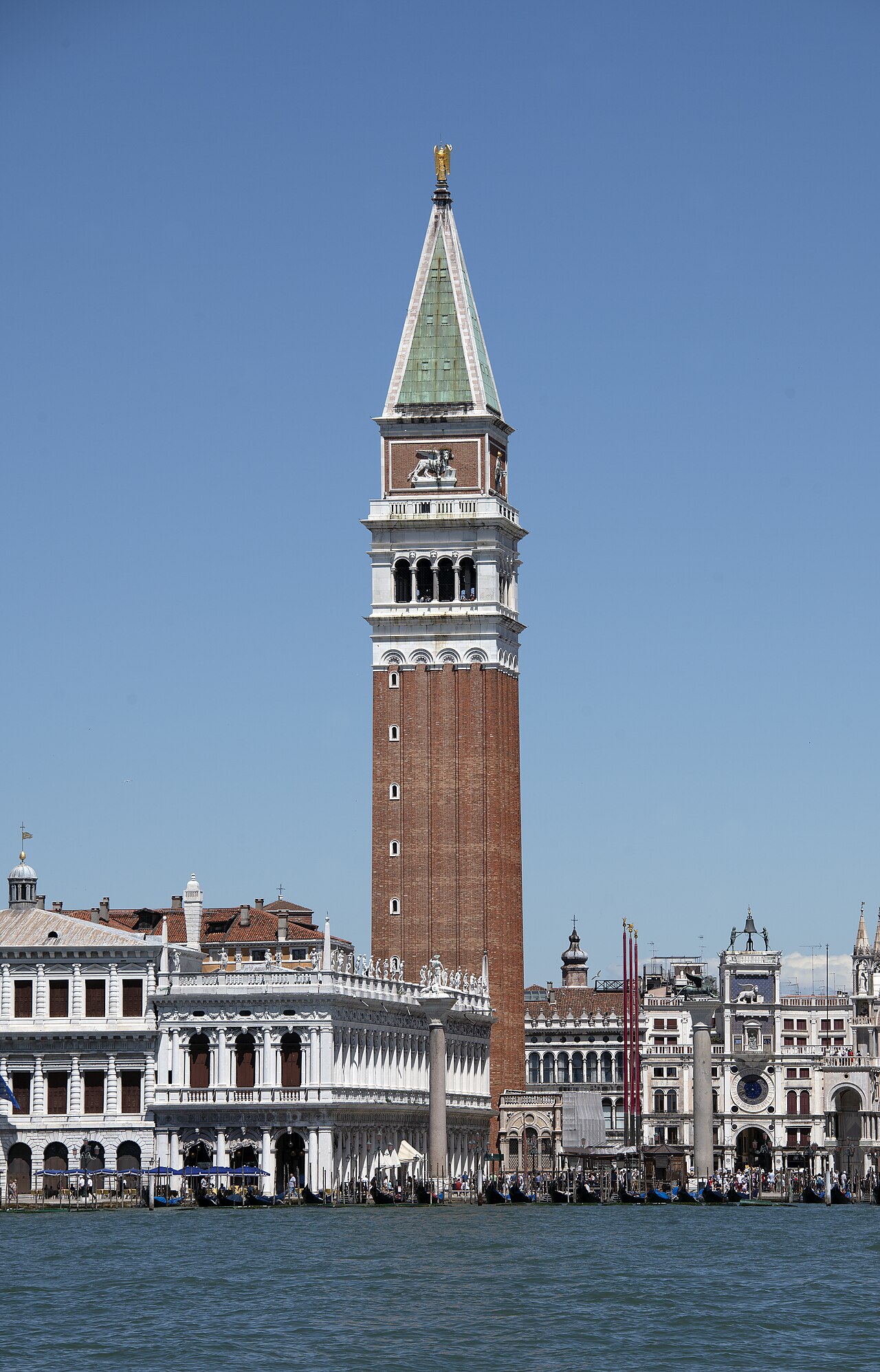
1 min walk
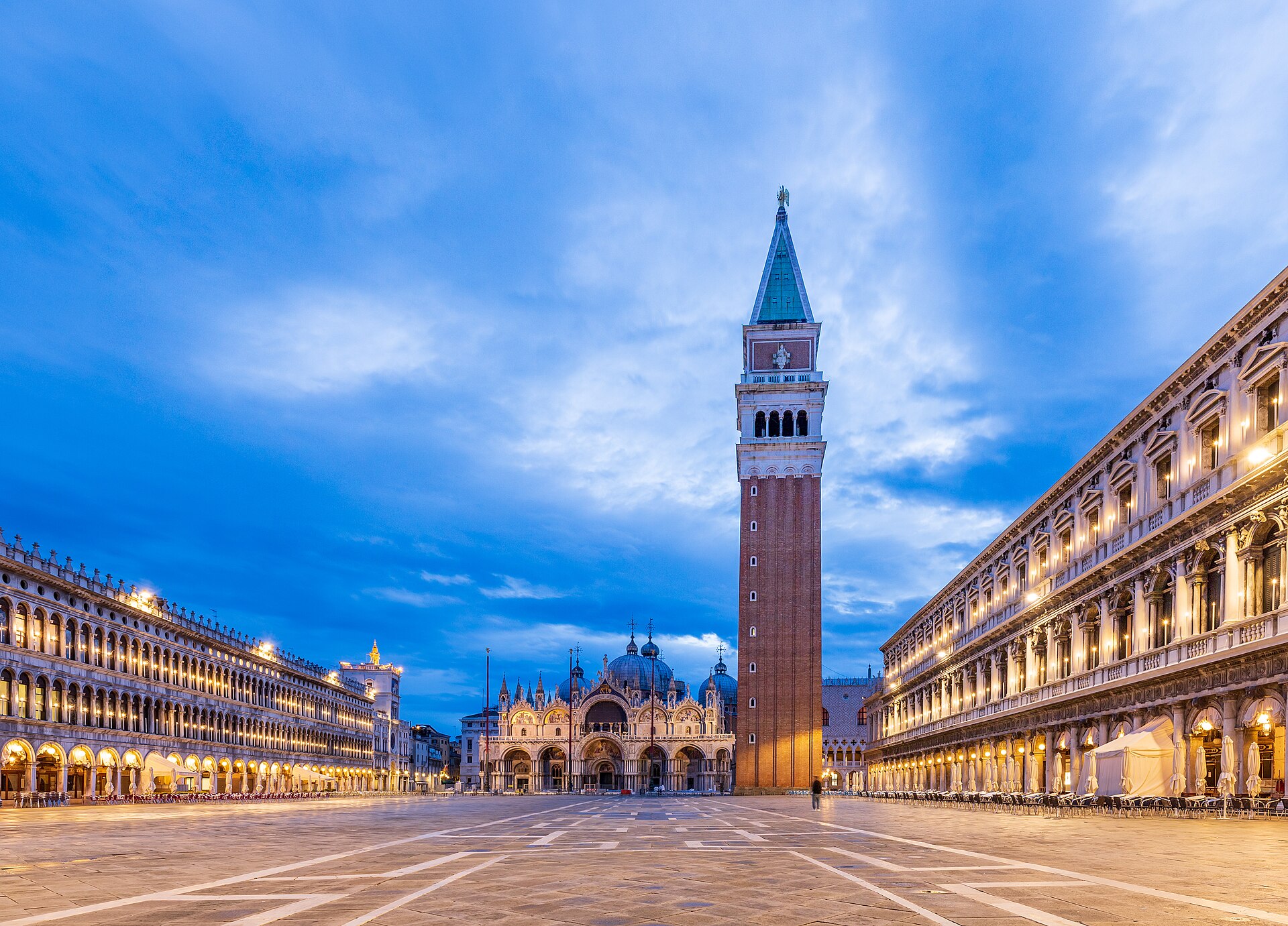
St Mark's Campanile
- Must see
- Viewpoint
Historic monument · Venice
Closed today, Sunday. Next open Monday at 08:00 — the planner will not place a stop here on a Sunday.
Plan around it| Monday | 08:00 – 19:00 |
|---|---|
| Tuesday | 08:00 – 19:00 |
| Wednesday | 08:00 – 19:00 |
| Thursday | 08:00 – 19:00 |
| Friday | 08:00 – 19:00 |
| Saturday | 08:00 – 13:30 |
| Sunday | Closed |
Parsed from OpenStreetMap opening hours on 2026-09-09.
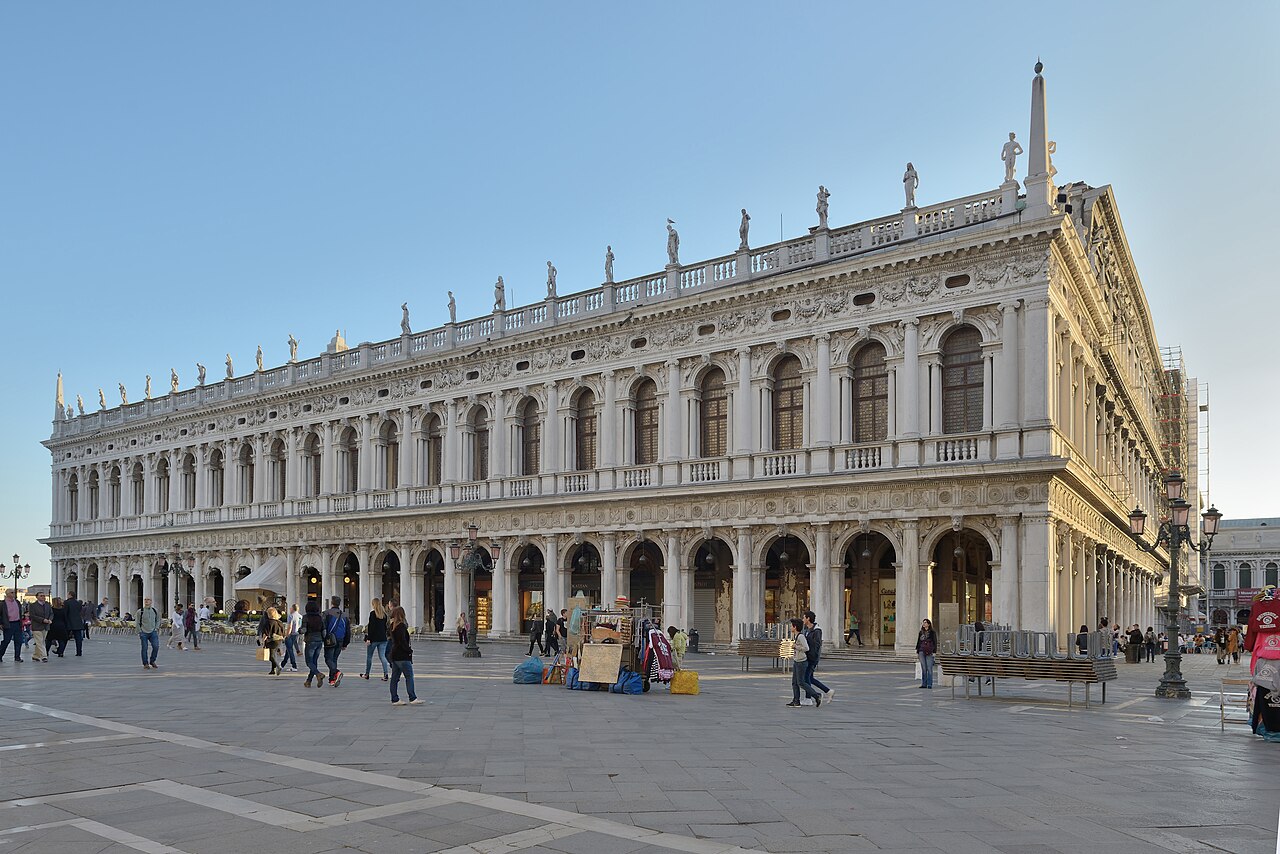
The Biblioteca Nazionale Marciana is a historic library in Venice, Italy, located in the Piazzetta San Marco near the Doge's Palace. Founded in the 16th century, it houses one of Italy's most important collections of classical manuscripts and texts. The building itself, designed by Jacopo Sansovino, represents a significant example of Renaissance architecture in Venice. The library was originally established to preserve Greek and Latin manuscripts bequeathed by Cardinal Bessarion. It serves as both a public research institution and a monument of cultural heritage, reflecting Venice's historical role as a center of Mediterranean learning and commerce. Access varies. The building functions primarily as a research library. Some spaces may be accessible to visitors, but restrictions apply. Verify current policies before visiting.
Checked 2026-08-26 · Source
The library contains extensive holdings of manuscripts, incunabula, and rare printed books. Its collections include classical Greek and Latin texts, medieval manuscripts, and works related to Venetian history. The building features ornate reading rooms and decorative spaces with historical furnishings. Visitors can observe the architectural details of Sansovino's design, including the grand staircase and elaborately decorated ceilings. The library's holdings encompass cartography, music, and Venetian patrician archives. The institution maintains its role as a research library with restricted access to certain materials for scholarly purposes.
Checked 2026-08-26 · Source
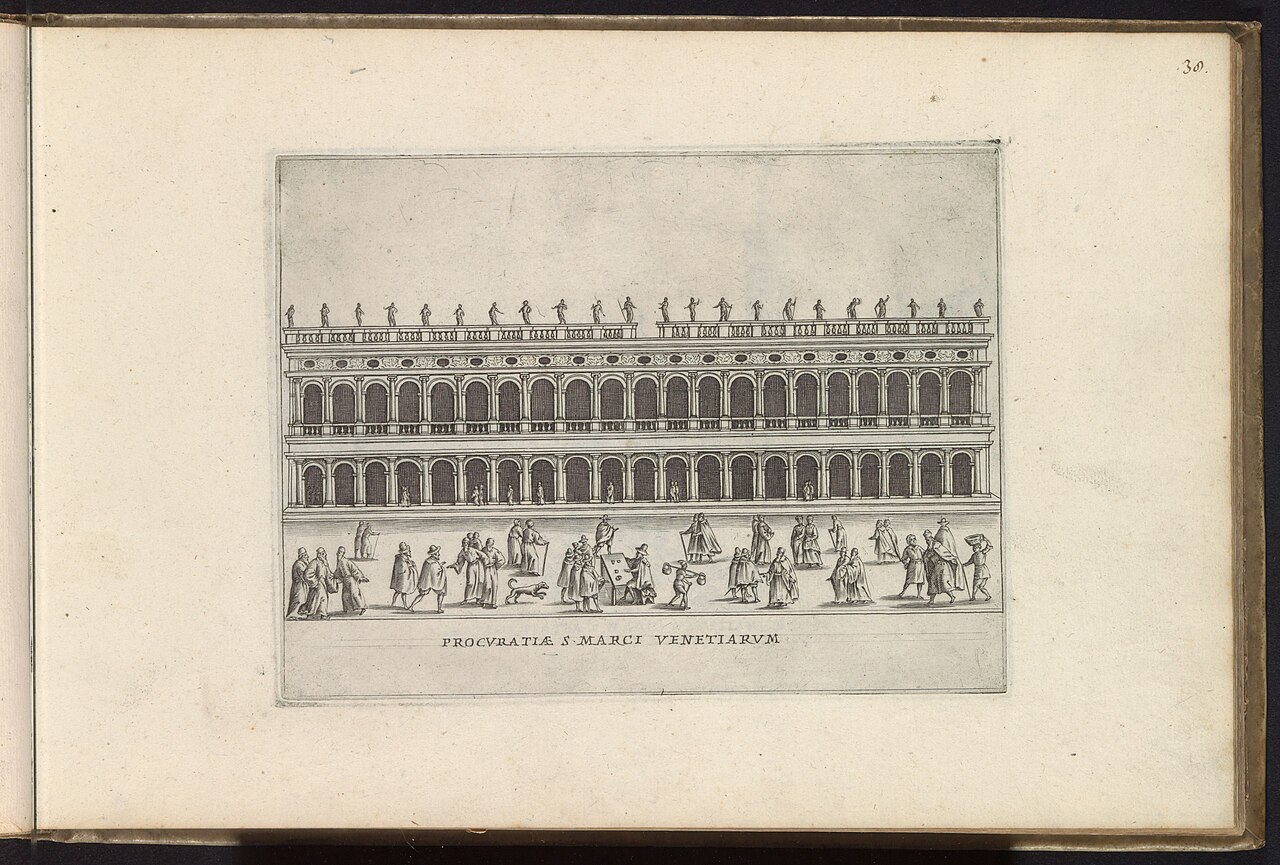
A visit to the Biblioteca Nazionale Marciana typically requires careful planning due to its dual function as a working research library and historic site. Most visitors spend approximately one to two hours exploring the accessible areas, including the monumental staircase and exhibition spaces. Those with specific research interests may require extended time, subject to library regulations. The duration depends on whether temporary exhibitions are open and which rooms are accessible to the public at the time of visit. Visitors should verify current access policies before planning their itinerary, as research library operations may limit tourist access during certain periods.
Checked 2026-08-26 · Source
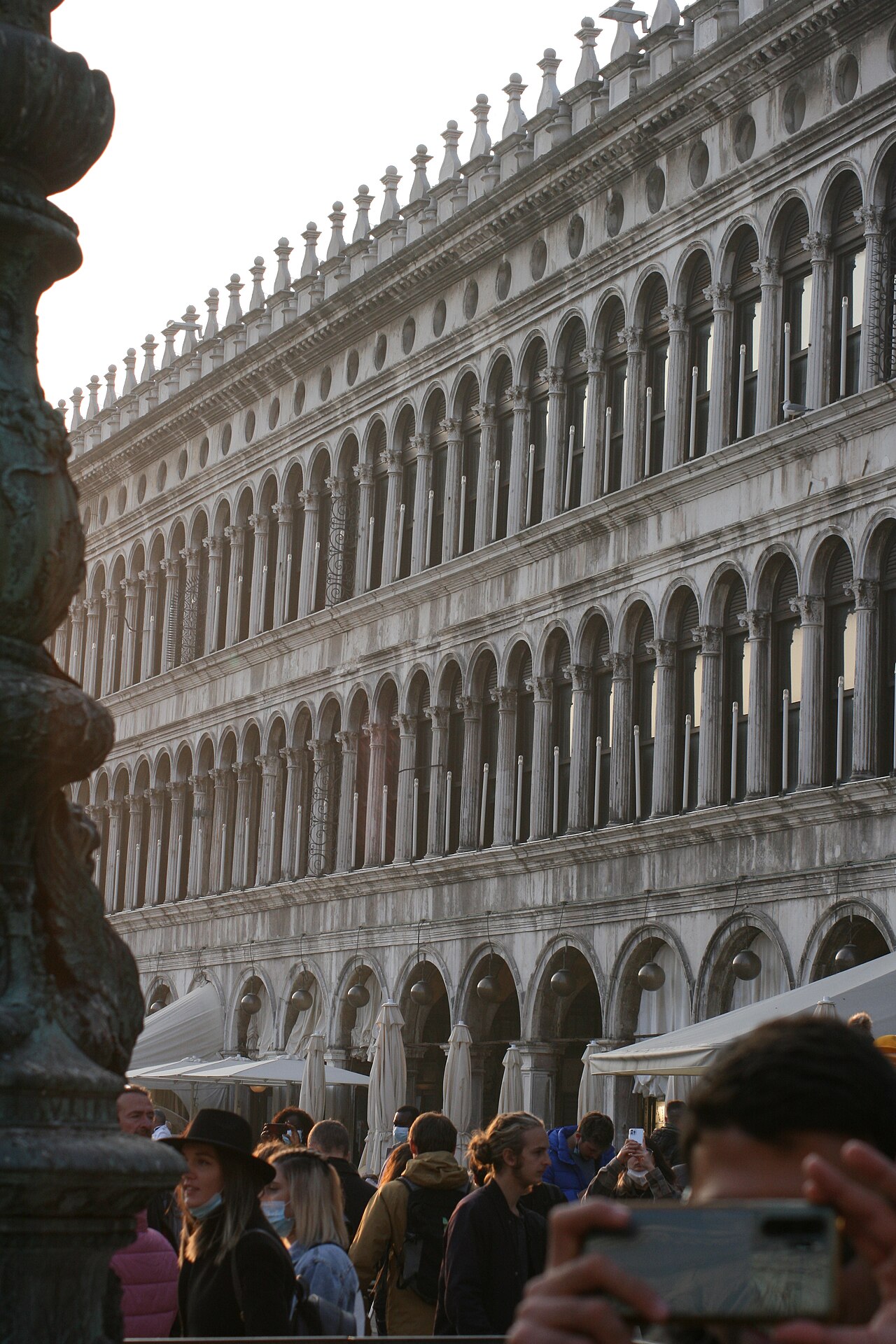
The library's accessibility for visitors varies due to its primary function as a research institution rather than a conventional tourist attraction. Seasonal considerations for Venice generally apply, with summer months bringing larger crowds to the Piazza San Marco area. Morning visits may offer a quieter experience in the surrounding Piazzetta. The proximity to major monuments means the area remains busy throughout the year. Advance verification of public access hours is essential for any planned visit.
Checked 2026-08-26 · Source
Admission policies for the Biblioteca Nazionale Marciana depend on the purpose of visit and areas accessed. Research access typically requires academic credentials and advance arrangement. Tourist access to certain spaces may involve separate ticketing or combined museum passes for Venice cultural sites. The Venezia Unica city pass system includes various museum and church combinations, though specific library inclusions are not confirmed. Visitors should verify current admission requirements and any applicable fees through official channels before arrival, as policies may differ for exhibition spaces versus reading room access.
Checked 2026-08-26 · Source
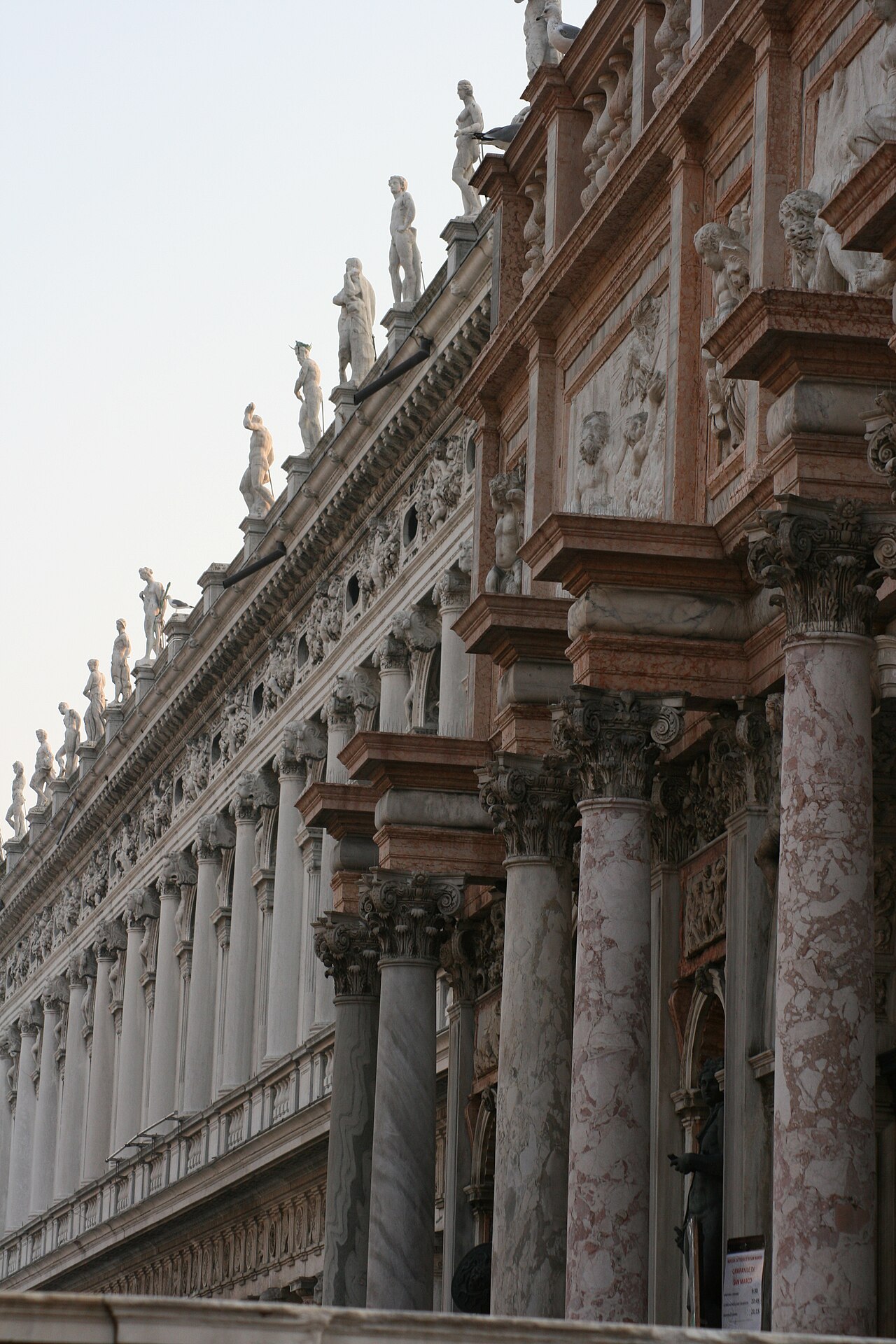
The Biblioteca Nazionale Marciana occupies a prominent position in the Piazzetta San Marco, between the basilica and the waterfront. Vaporetto services stop at San Marco Vallaresso or San Zaccaria, requiring a short walk to the Piazzetta. From the Rialto Bridge, pedestrians can follow signposted routes through Venice's calli. The location is central and walkable from most San Marco district accommodations. Water taxis can access nearby landing points. Visitors should note that Venice's pedestrian navigation involves bridges and narrow passages, making wheeled luggage impractical. The area is heavily trafficked and well-signposted from major arrival points.
Checked 2026-08-26 · Source
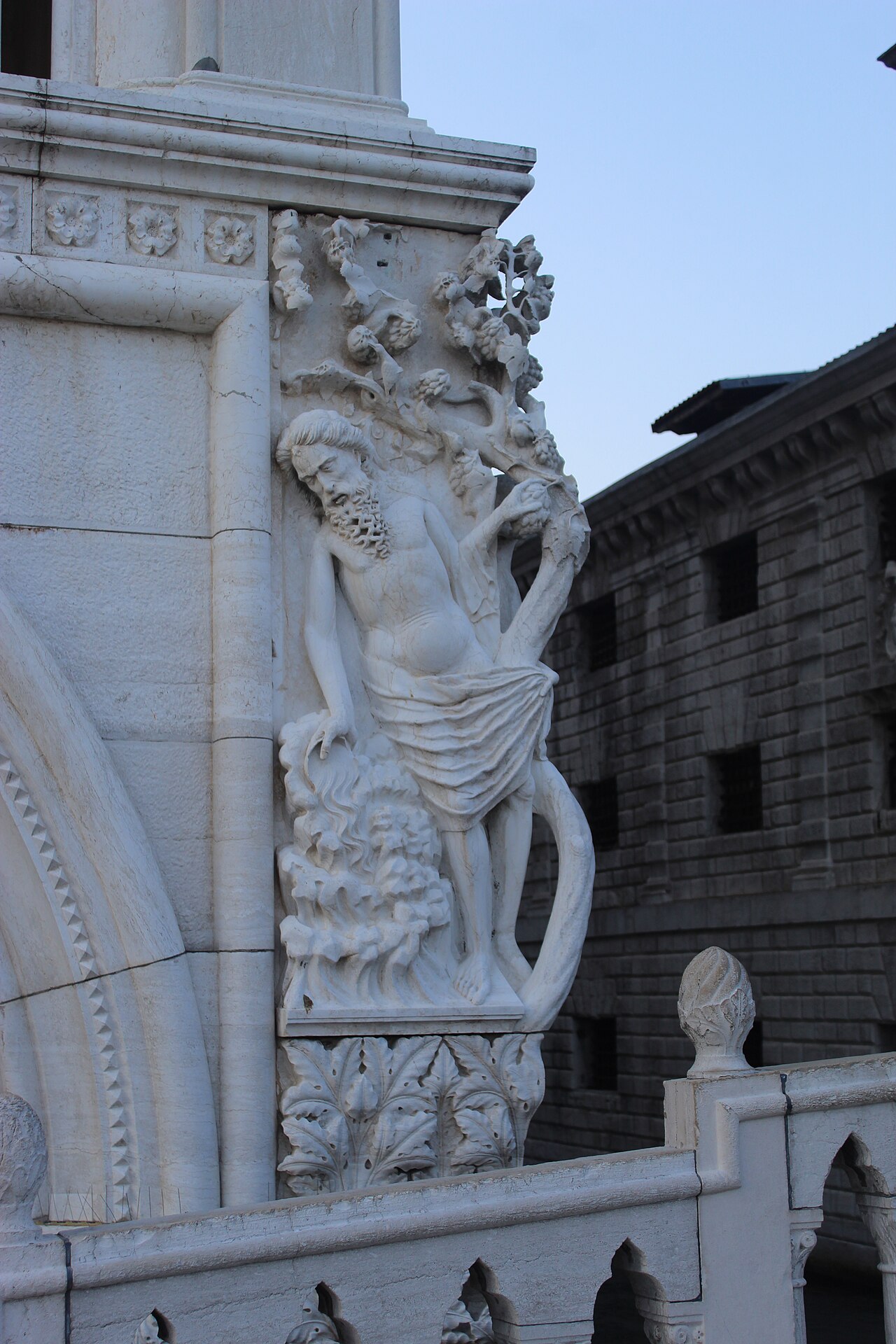
Visitors should respect the library's active research function and maintain appropriate quiet behavior. Bag size limitations may be enforced for security and preservation reasons. The Piazzetta location means persistent pigeon activity and crowded conditions, particularly during peak tourism periods. Acqua alta flooding can affect ground-level access during autumn and winter months. Nearby cafe and restaurant prices in Piazza San Marco are notably elevated compared to less central districts. Visitors should verify access permissions in advance, as unannounced closures for academic or conservation purposes may occur without public notice.
Checked 2026-08-26 · Source
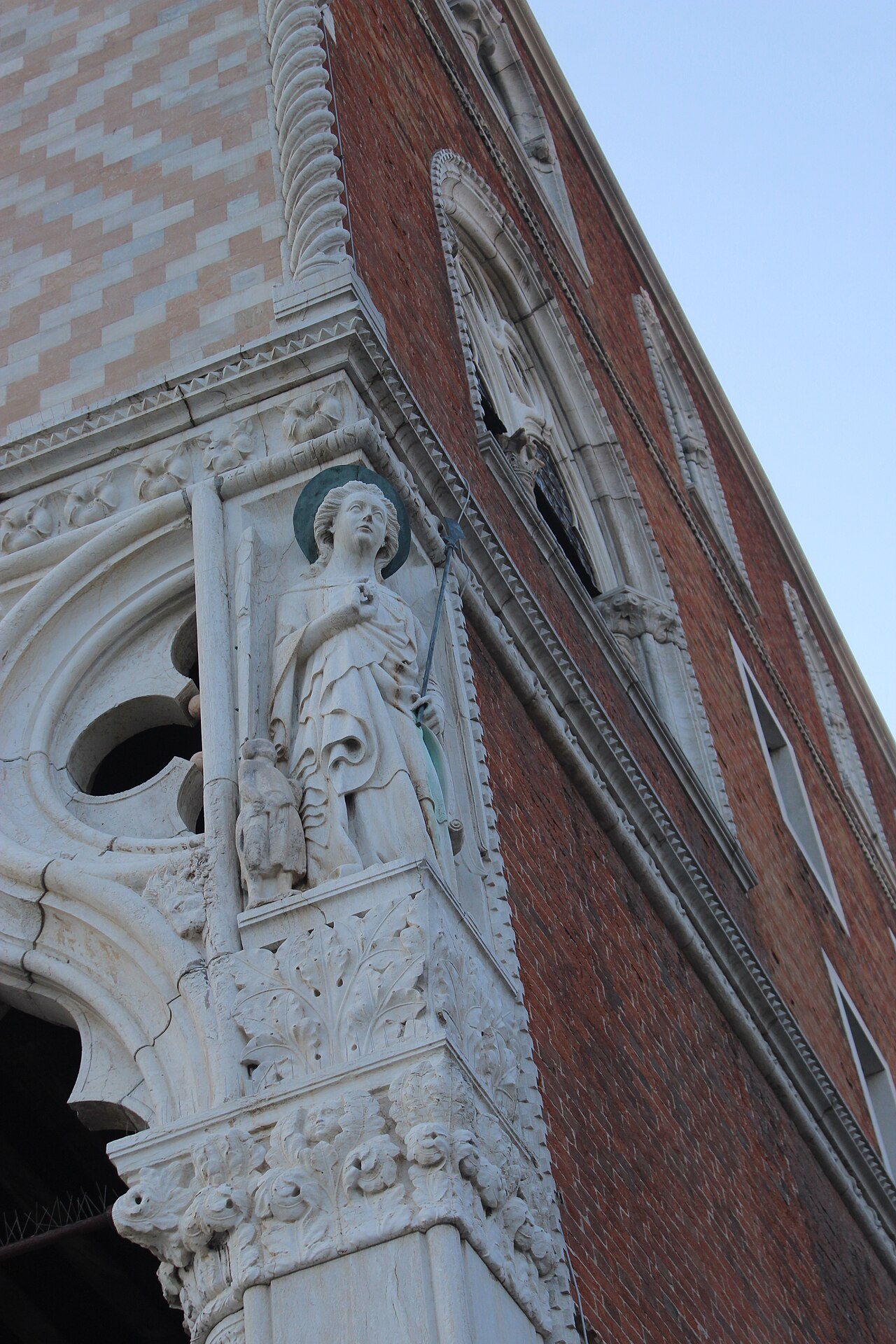
As a research library housing rare and fragile materials, restrictions on flash photography, tripods, and image capture in manuscript areas are standard practice for comparable institutions. The exterior Renaissance facade and Piazzetta setting offer unrestricted photographic opportunities. The interplay of light on the stone architecture varies throughout the day. Visitors must observe any posted signage regarding photography and respect staff instructions, particularly in spaces where preservation concerns or researcher concentration require limitations.
Checked 2026-08-26 · Source
Access varies. The building functions primarily as a research library. Some spaces may be accessible to visitors, but restrictions apply. Verify current policies before visiting.
Direct manuscript access requires academic credentials and advance arrangement as a registered researcher. General visitors do not have handling privileges.
The Venezia Unica system offers various combinations. Verify whether library access is included in purchased passes.
The institution's primary function is research rather than tourism. Specialized tours may be arranged for academic groups.
Venice's historic buildings often present challenges. Contact the institution directly regarding current access provisions.
Serious researchers typically require demonstrated project relevance. Advance inquiry to library administration is recommended.
Loading the interactive map…
The interactive map could not be loaded.
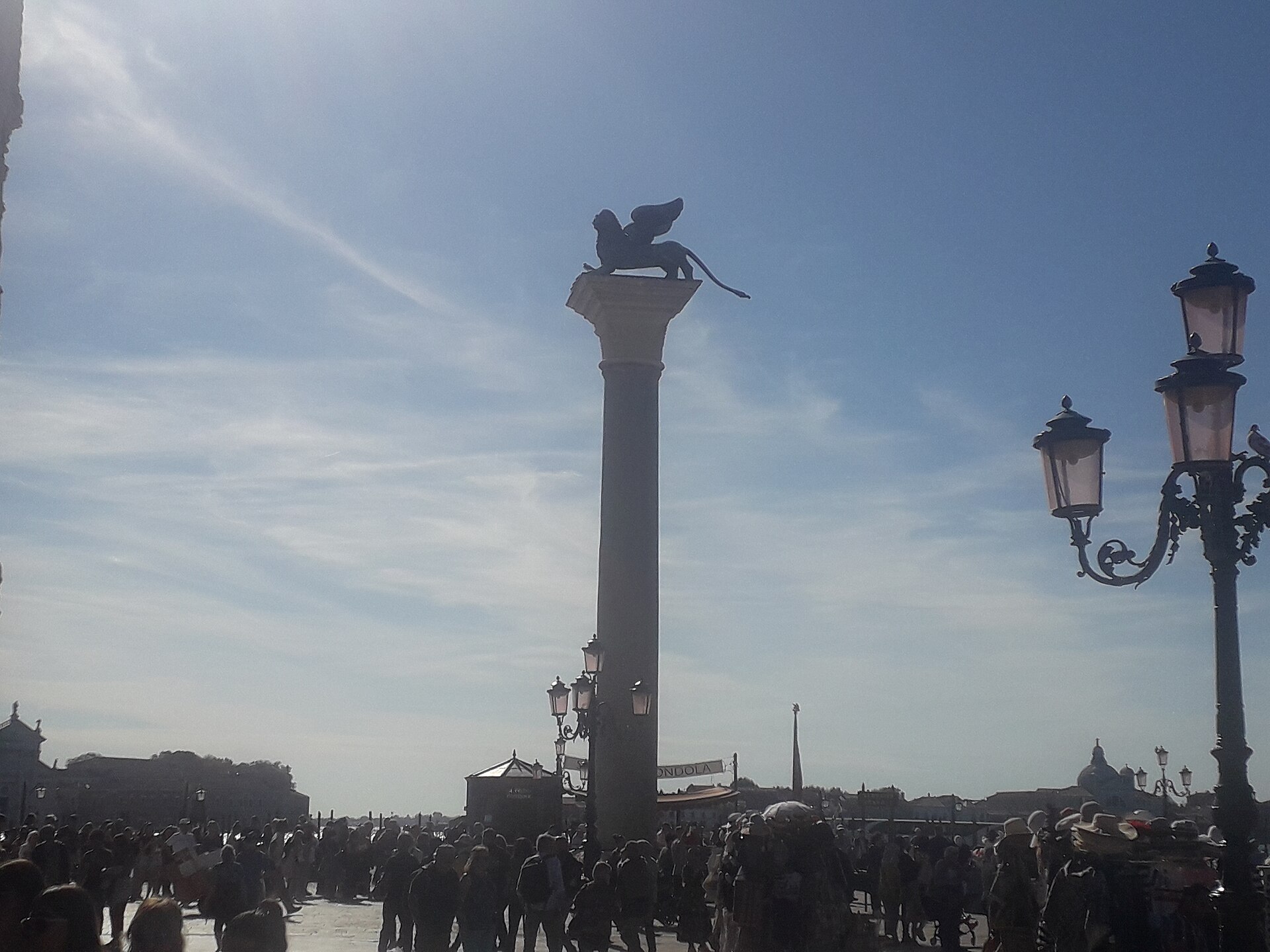
Last updated:
Source: OpenStreetMap contributors, Wikidata ·