

2 min walk
Monument to Victor Emmanuel II
- High
- Historic monument
Language · 11 published
Place of worship · Venice
Chiesa di San Zaccaria
Reviewed by Elena Voss · Roavina Travel Editor
| Monday | 09:00 – 19:30 |
|---|---|
| Tuesday | 09:00 – 19:30 |
| Wednesday | 09:00 – 19:30 |
| Thursday | 09:00 – 19:30 |
| Friday | 09:00 – 19:30 |
| Saturday | 09:00 – 19:30 |
| Sunday | 09:00 – 19:30 |
Checked 2026-08-31 · Source
Read from the OpenStreetMap access tags; anything not listed has no tag recorded.
Set the group type to family in the planner and the day window contracts to about three quarters of a solo day.
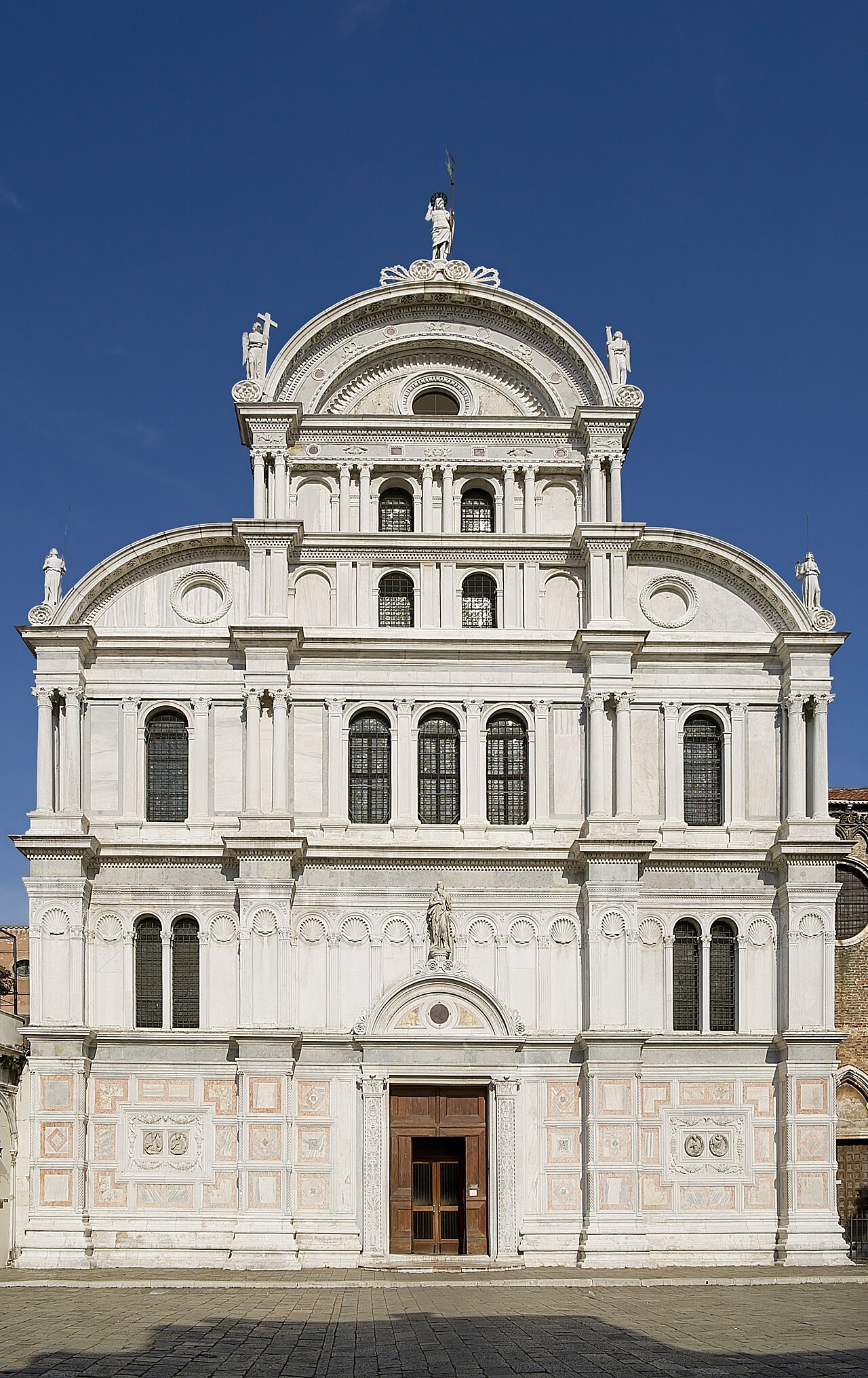
This place is a Attraction. It was built in the Renaissance architecture style. It was designed by Antonio Gambello. It is built of brick.
San Zaccaria, also called Chiesa di San Zaccaria, is a historic church near Venice’s waterfront, east of Piazza San Marco. It stands in the Castello sestiere and reflects a transition between Gothic and Renaissance architecture. The church was connected with a Benedictine convent of noblewomen, giving the site both religious and civic importance. Its facade and position near the Riva degli Schiavoni make it a memorable stop in eastern San Marco. San Zaccaria is a historic church in Venice, located near the waterfront east of Piazza San Marco. Its local name is Chiesa di San Zaccaria. The building represents a significant architectural transition, combining Gothic and Renaissance elements across its construction phases. The church was historically connected to a Benedictine convent of noblewomen. It stands as a prominent religious monument in the Castello sestiere, with a facade that attracts architectural interest. The structure occupies an important position in Venice's ecclesiastical heritage. Visitors should verify current opening arrangements through official sources before visiting.
Checked 2026-08-26 · Source
The interior brings several periods of Venetian art and architecture together. Look for the contrast between Gothic structure and Renaissance decoration, then spend time with the paintings and chapels. Works attributed to Giovanni Bellini are among the church’s artistic highlights. The crypt and other historic elements add depth to the visit, while decorative details reward visitors who move slowly through the space rather than viewing it only from the entrance. The interior contains notable artworks and architectural features that reflect its long construction history. Visitors encounter spaces showing the evolution from Gothic to Renaissance design. The church houses paintings by prominent Venetian artists, including works attributed to Giovanni Bellini. The crypt and various chapels preserve historical elements. Decorative details and structural components demonstrate the craftsmanship of multiple periods. The combination of artistic treasures and architectural significance makes the interior worthy of attentive exploration by visitors interested in Venetian cultural heritage.
Checked 2026-08-26 · Source
Allow enough time to see both the architectural layers and the artworks without rushing. A concise visit can cover the main interior efficiently, while visitors interested in Renaissance painting, Venetian religious buildings or the crypt will benefit from a longer pause. San Zaccaria works well as part of a walking route around Piazza San Marco and the Castello waterfront, where the surrounding streets add context to the church. A visit to San Zaccaria typically requires moderate time for meaningful appreciation. Visitors should allow sufficient duration to observe the architectural transitions and examine the artworks without rushing.
Checked 2026-08-26 · Source
San Zaccaria lies in one of Venice’s busiest sightseeing areas, so the approach around Piazza San Marco and the Riva degli Schiavoni can be crowded. An early or late visit can create a calmer setting for looking at the paintings and architecture. Build the church into a day that includes eastern San Marco or Castello, and leave flexibility around religious use of the building.
Checked 2026-08-26 · Source
San Zaccaria is a functioning religious building, and entry arrangements can form part of the visit experience. Treat the church as a place of worship as well as a historic monument. If you are combining it with other Venetian churches, keep your route flexible because the surrounding religious sites may have different access arrangements. Dress and behaviour should remain respectful throughout the interior.
Checked 2026-08-26 · Source
The church is within walking distance of Piazza San Marco. The San Zaccaria vaporetto stop provides a direct waterbus arrival point, with the waterfront helping you orient yourself after landing. From the square, walk east through the Venetian calli toward the Riva degli Schiavoni. The prominent church and campanile make the destination easy to identify among the dense historic streets and nearby monuments.
Checked 2026-08-26 · Source
San Zaccaria remains a religious site, so choose clothing and conduct suited to worship. Venice’s busy waterfront can make the entrance area congested, and historic flooring may be uneven. Lighting changes across chapels and interior spaces. Keep voices low, follow posted instructions and give priority to religious activities. Photography rules can differ within the church, particularly around artworks and devotional areas.
Checked 2026-08-26 · Source
San Zaccaria’s facade, campanile and waterfront setting provide strong subjects from public paths. Inside, treat photography as conditional: flash, tripods and filming may be restricted, especially near artworks or worship areas. Read signs and follow staff directions as soon as you enter. If photography is permitted, keep equipment unobtrusive and avoid interrupting prayer, services or other visitors’ quiet appreciation of the church.
Checked 2026-08-26 · Source
San Zaccaria is in the Castello sestiere near the Riva degli Schiavoni, east of Piazza San Marco and close to the waterfront.
Use the San Zaccaria vaporetto stop, which sits beside the waterfront and places the church within the eastern San Marco walking area.
The church combines Gothic and Renaissance elements, reflecting its construction across different periods of Venetian architectural history.
Paintings attributed to Giovanni Bellini are among the church’s notable artistic features and contribute to its importance in Venetian art history.
Wear clothing respectful of a functioning church, with shoulders and knees covered as a practical standard for visiting the sacred interior.
Yes. The church includes a crypt and other historic spaces that add another layer to its architectural and religious character.
Loading the interactive map…
The interactive map could not be loaded.

Last updated:
Source: OpenStreetMap contributors, Wikidata ·