

4 min walk
Palazzo Grimani di Santa Maria Formosa
- Must see · Heritage site
- Museum
Language · 11 published
Place of worship · Venice
Basilica dei santi Giovanni e Paolo
Reviewed by Elena Voss · Roavina Travel Editor
| Monday | 09:00 – 18:00 |
|---|---|
| Tuesday | 09:00 – 18:00 |
| Wednesday | 09:00 – 18:00 |
| Thursday | 09:00 – 18:00 |
| Friday | 09:00 – 18:00 |
| Saturday | 09:00 – 18:00 |
| Sunday | 12:00 – 18:00 |
Parsed from OpenStreetMap opening hours on 2026-09-09.
This place is a Attraction. It was built in the Gothic architecture style. It is built of brick. It carries the part of UNESCO World Heritage Site heritage designation.
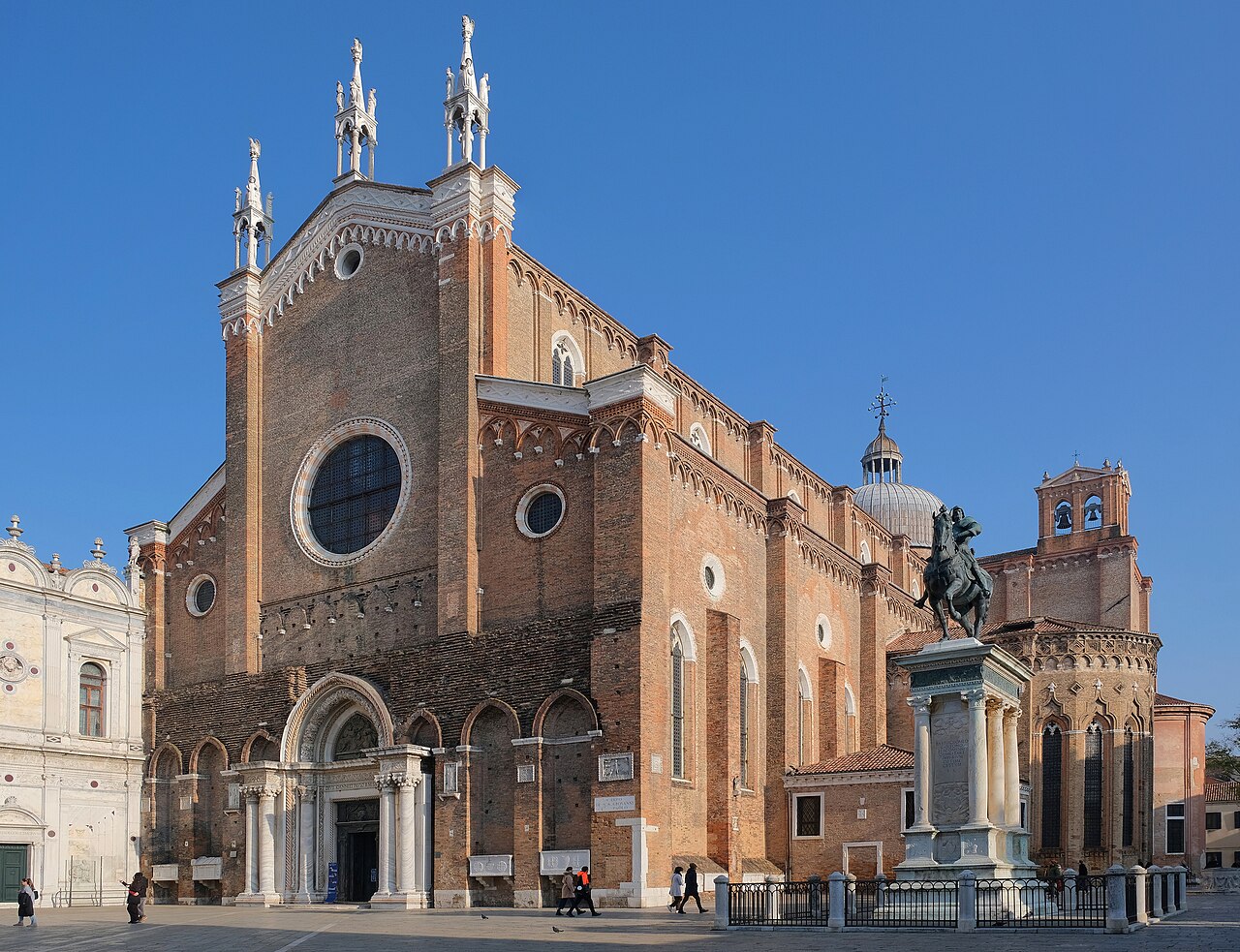
Basilica dei Santi Giovanni e Paolo is one of Venice’s major Gothic churches, standing in the large Campo Santi Giovanni e Paolo in Castello. Venetians also call the basilica San Zanipolo. The Dominican church is known for its imposing brick facade, broad interior and concentration of Venetian doge tombs, which has earned it the nickname “the Pantheon of Venice.” Construction began in the 14th century and continued over many years, giving the building a strong connection to the medieval and later history of the city. The basilica is both a religious building and a place of art, sculpture and civic memory. Its position beside a spacious campo makes the exterior part of the experience: step back to understand the scale of the facade, then enter for the monuments, chapels and paintings. This is a substantial Castello landmark for travelers who want Venetian history presented through architecture, worship and memorial art.
Checked 2026-08-26 · Source
The interior is best known for funerary monuments to Venetian doges and other prominent citizens. Tombs, sculpture and inscriptions turn the nave and side chapels into a record of the republic’s political and artistic life. Notable work includes the monument to Doge Andrea Vendramin by Tullio Lombardo, while paintings by Giovanni Bellini and Lorenzo Lotto add a major Renaissance dimension. The Rosary Chapel has a decorated ceiling and provides a more intimate counterpoint to the basilica’s vast nave. Look upward and across the full width of the church to understand why Dominican architecture favored spacious preaching environments. The chapels also preserve religious imagery, relics and memorial commissions connected with the Dominican order and Venetian families. The building rewards a slow circuit: begin with the overall Gothic volume, then move toward individual tombs, paintings and chapel details. The contrast between the monumental scale and the precise carving is central to the visit.
Checked 2026-08-26 · Source
Allow thirty minutes to one hour for the basilica itself. A quick visit can take in the brick Gothic interior, the principal doge monuments and the overall scale of the nave. Travelers interested in Renaissance sculpture, Venetian painting, Dominican history or funerary art should allow longer for the chapels and individual tombs. Spend a few minutes outside in Campo Santi Giovanni e Paolo as well: the open space makes the basilica’s facade easier to appreciate than it is from a narrow street. The nearby Scuola Grande di San Marco stands across the campo, creating a natural pairing for an architectural and historical walk. A slower visit helps distinguish the layers of civic memory inside the church, where political authority, family commemoration and religious practice occupy the same building. Keep the visit flexible because worship and local activity can change how much of the interior can be explored at a given moment.
Checked 2026-08-26 · Source
Morning can provide a calmer setting for examining the tombs and paintings, especially before the busiest walking routes fill. The basilica remains an active Dominican church, so religious services can affect visitor access and the atmosphere inside. Plan for quiet movement and allow the building’s worship function to take priority. The spacious campo is available as an exterior viewpoint even when interior activity limits sightseeing. Outside the busiest summer periods, Castello can feel more relaxed, making it easier to combine the basilica with neighboring streets and landmarks. Different daylight conditions change the appearance of the brick facade and the open square, while the interior depends on the available church lighting. The most rewarding timing is therefore the part of your day when you can visit respectfully, pause at the major monuments and continue through Castello without rushing between distant districts.
Checked 2026-08-26 · Source
The basilica is a distinct church visit within a Castello itinerary. The available guide information does not establish a current admission price, concession arrangement or combined ticket, so no fare is stated here. Treat the church separately from nearby landmarks and from any transport ticket used to reach Castello. If you are planning a full day around Venetian churches, keep time and funds available for each individual site rather than assuming that one entry covers another. The value of this stop lies in the monuments, paintings, chapels and architecture, so a rushed entrance offers little advantage over a properly planned visit. Religious use remains part of the building’s identity, and visitor access can be shaped by services as well as by any entrance arrangement. The open campo can still be appreciated as an exterior setting, allowing you to understand the facade and urban scale even when the interior visit is brief.
Checked 2026-08-26 · Source
Basilica dei Santi Giovanni e Paolo stands prominently in Campo Santi Giovanni e Paolo in Castello. Walk from San Marco through the eastern network of calli and bridges, using the large campo as the final navigation landmark. Vaporetto connections around Fondamente Nove or Rialto can shorten the approach from other parts of Venice, but both require a walk after leaving the water. The distinctive brick facade becomes easier to identify as you approach the open square. Venice’s pedestrian routes are indirect, and bridge crossings add effort for travelers carrying luggage or using a pushchair. A map with the destination saved offline helps when lanes branch around canals. Water taxis offer a more direct water approach for travelers who prioritize convenience. Once at the basilica, the broad campo makes it easier to orient yourself and continue toward the Scuola Grande di San Marco or deeper into Castello.
Checked 2026-08-26 · Source
The basilica is an active place of worship, so silence, modest clothing and respectful movement matter. Services can interrupt sightseeing, and crowded areas may form around the most elaborate doge tombs. Stone floors and the paving in Campo Santi Giovanni e Paolo can be uneven or slippery, especially after rain. Interior light varies across the nave and chapels, making small details easy to miss if you move too quickly. Photography rules can differ by space and may be limited during worship. Venice’s acqua alta can affect outdoor movement in parts of the historic center, while the approach itself includes bridges and changing surfaces. Keep valuables secure in busy public areas and leave room for other visitors near the monuments. The basilica is large enough to reward an unhurried circuit, but its religious purpose should remain visible in the way you plan the visit.
Checked 2026-08-26 · Source
The facade is easiest to photograph from the open campo, where you can step back and include the full Gothic composition. Inside, the doge tombs, chapel ceilings, paintings and long perspective of the nave provide different kinds of subjects. Work with the available light and avoid disturbing worshippers or blocking narrow circulation points. Follow posted rules and staff directions concerning photography, flash and equipment. The monument details reward close framing, especially where sculpture and inscription meet, while a wider view communicates the basilica’s scale. Exterior light changes the warmth of the brick facade during the day, and the square offers several angles without forcing you into the pedestrian flow. A respectful camera practice is essential: pause away from congregants, keep equipment compact and treat the church as a functioning religious space as well as a historic interior.
Checked 2026-08-26 · Source
Yes. San Zanipolo is the Venetian name commonly used for Basilica dei Santi Giovanni e Paolo, dedicated to Saints John and Paul.
The basilica is known for its brick Gothic architecture, Venetian doge tombs, Renaissance sculpture, paintings and Dominican religious heritage.
Important features include the Andrea Vendramin monument by Tullio Lombardo, paintings by Giovanni Bellini and Lorenzo Lotto, and the decorated Rosary Chapel ceiling.
Yes. It remains an active Dominican church, so worship and religious services can affect visitor access and the atmosphere inside.
The basilica stands in Campo Santi Giovanni e Paolo in Venice’s Castello district, near the Scuola Grande di San Marco.
Allow thirty minutes to one hour for the main interior, with additional time for detailed study of the tombs, chapels, paintings and surrounding campo.
Loading the interactive map…
The interactive map could not be loaded.
Last updated:
Source: OpenStreetMap contributors, Wikidata ·