
,_05.jpg)


1 min walk
Piazza San Marco
- Must see
- Historic monument
Language · 11 published
Historic monument · Venice
Torre dell'orologio
Reviewed by Elena Voss · Roavina Travel Editor
This place is a Attraction. It was built in the Renaissance architecture style. It was designed by Mauro Codussi. It carries the Italian national heritage heritage designation.
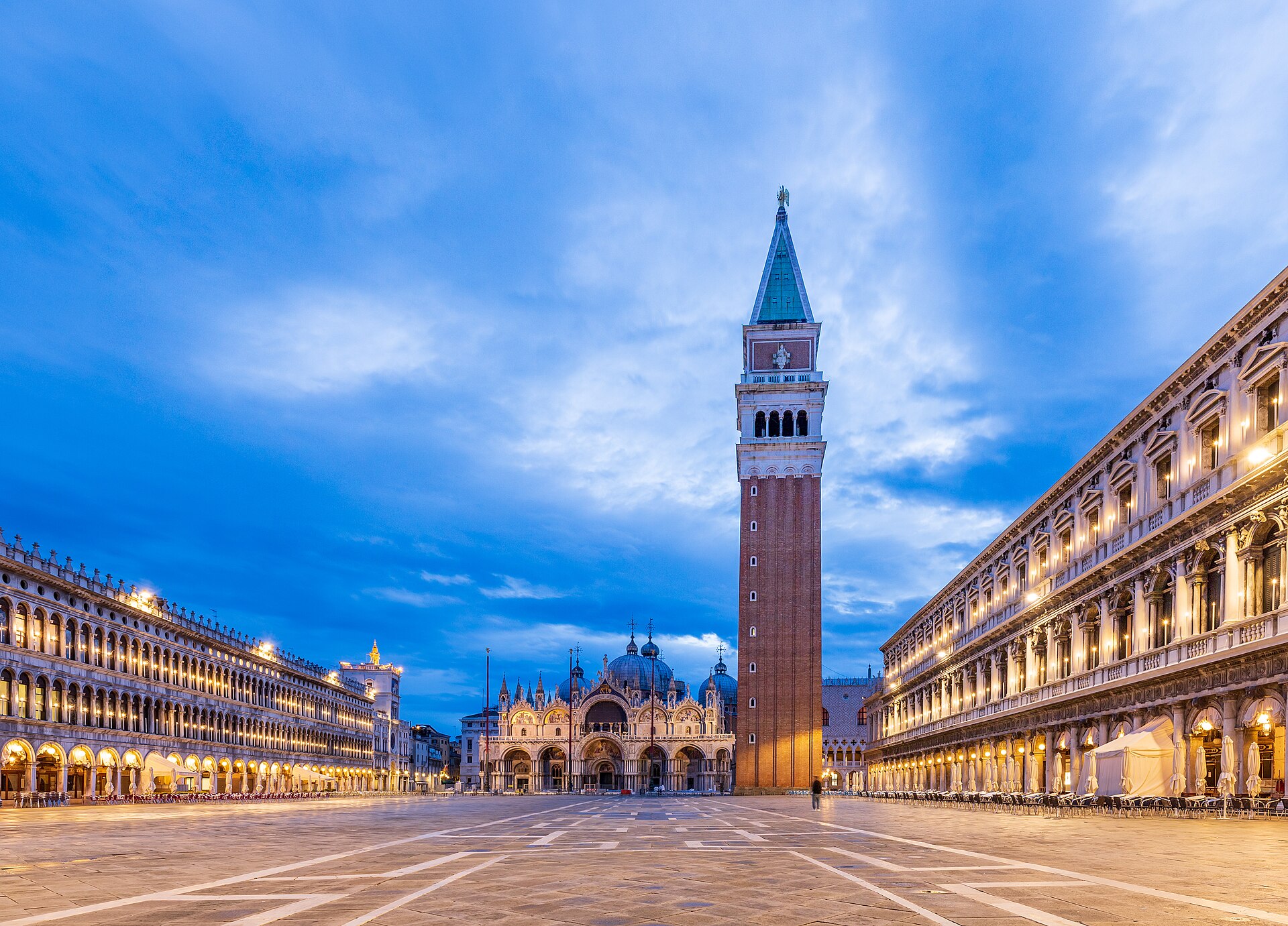
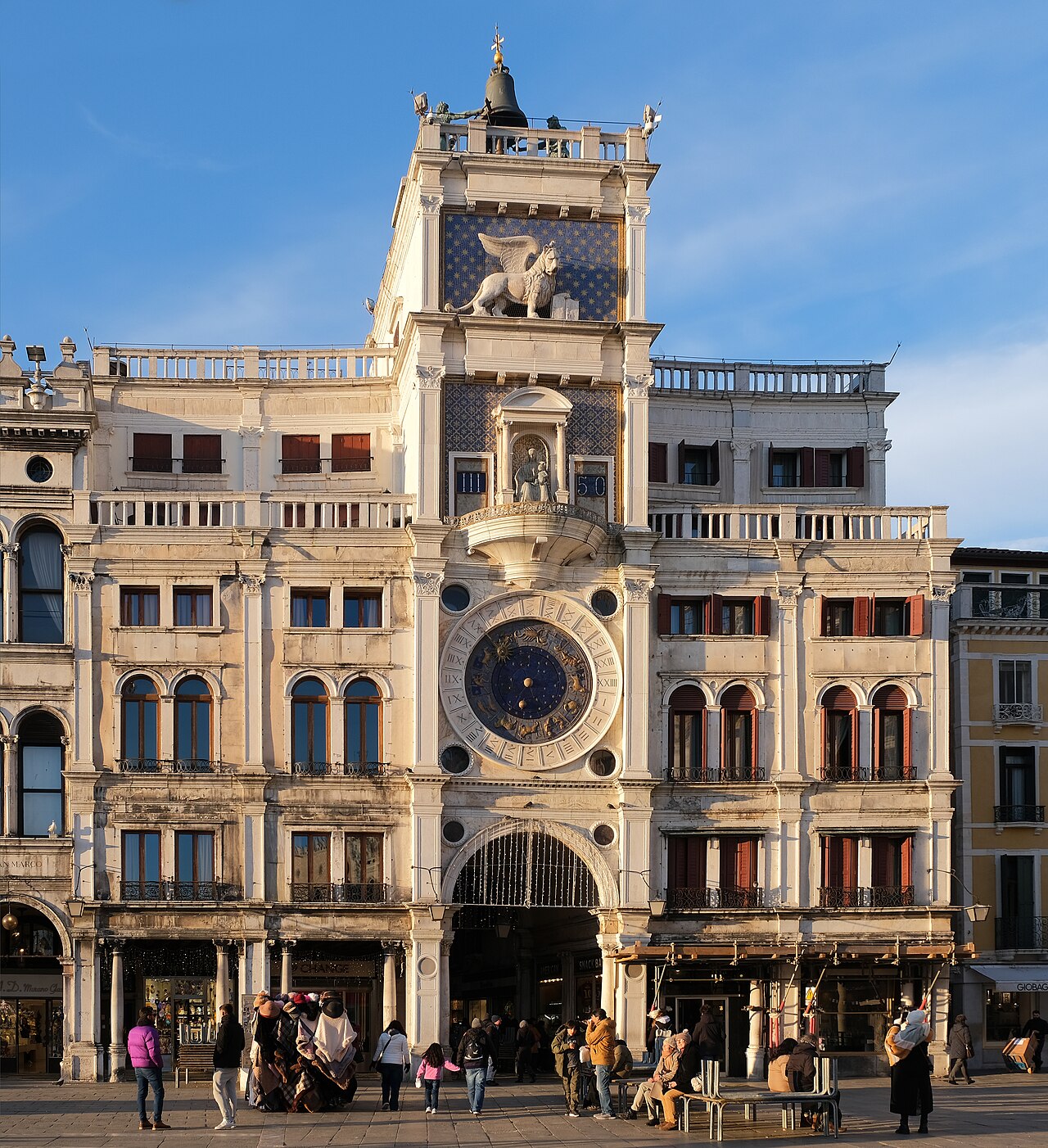
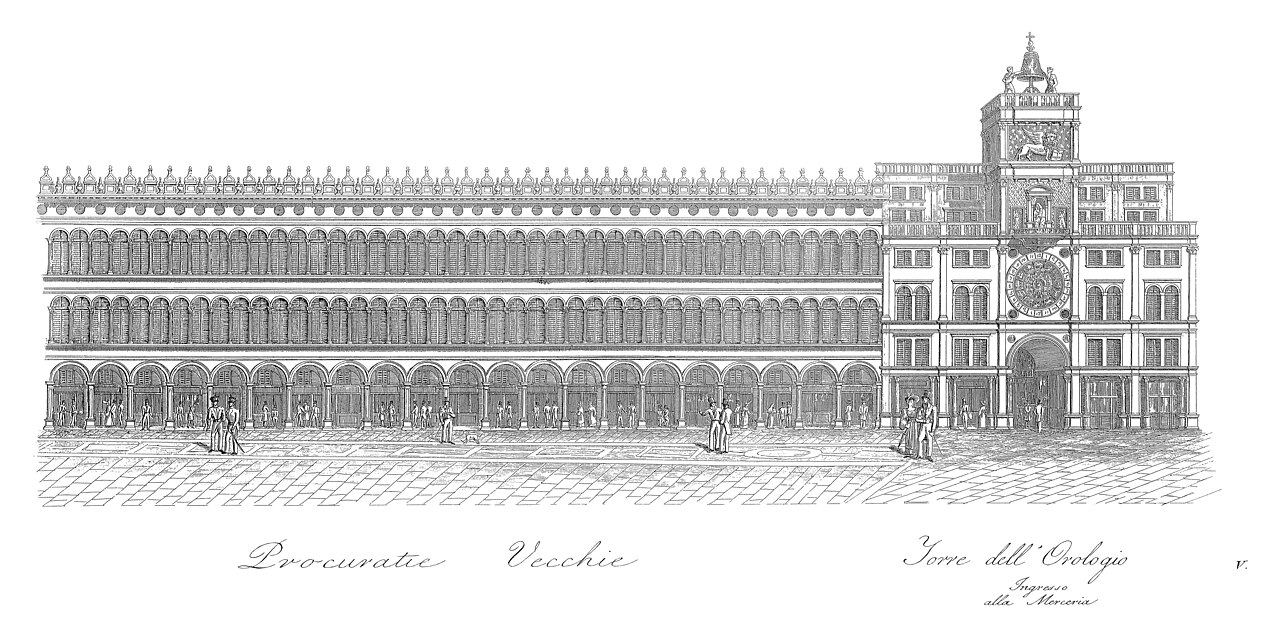
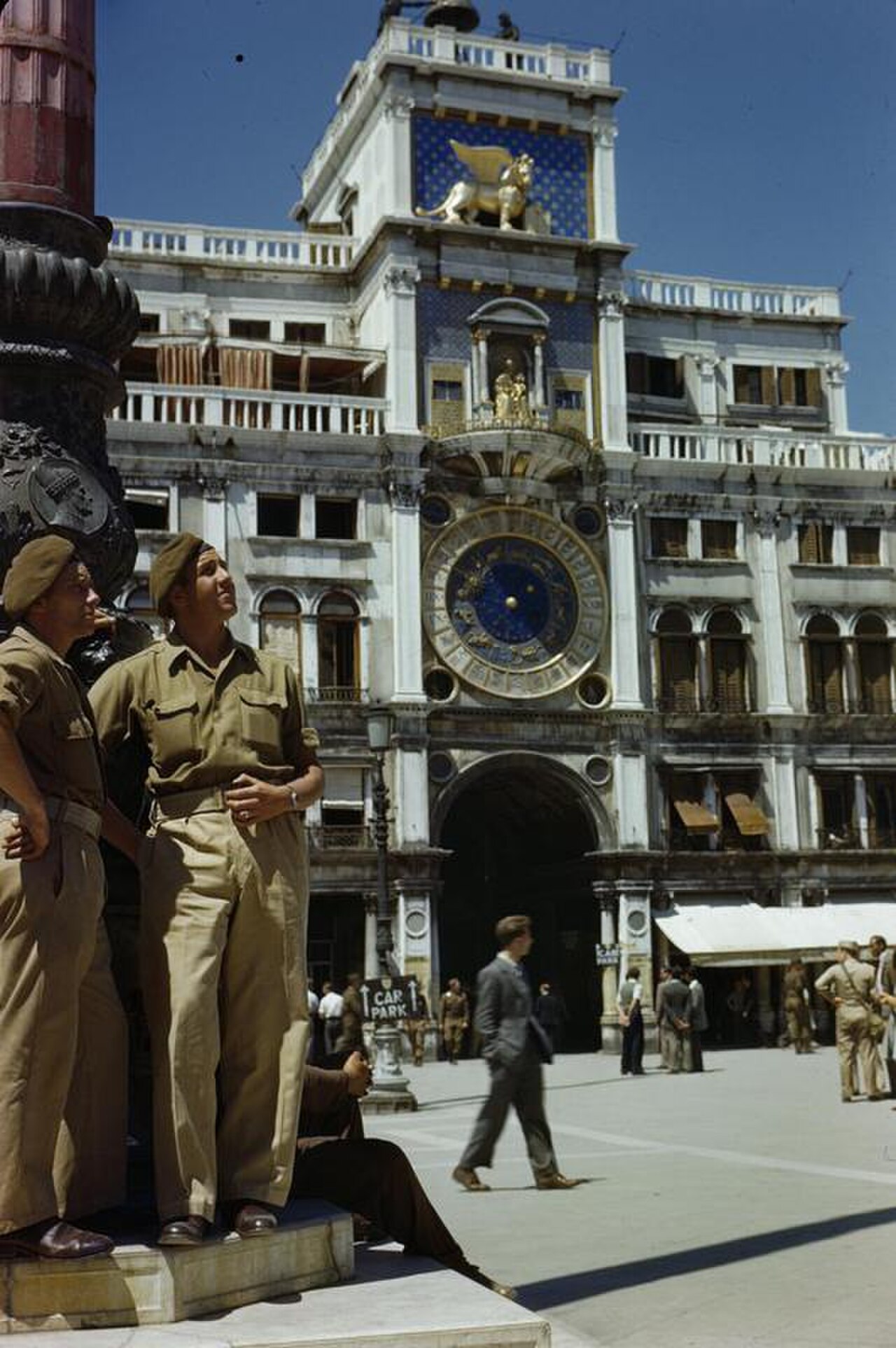
St Mark's Clocktower, or Torre dell'Orologio, is a Renaissance landmark on the north side of Piazza San Marco. Its astronomical clock displays the hours, moon phases and zodiac signs, while two bronze figures strike the bell above. The tower also forms an ornate gateway between the square and the Mercerie streets. Even without entering, it rewards close attention: study the clock face, sculptural details and relationship between the tower, the piazza and the surrounding Procuratie buildings. St Mark's Clocktower, known locally as Torre dell'Orologio, stands prominently on the north side of Piazza San Marco in Venice. This Renaissance structure dates from the late fifteenth century and serves as both architectural landmark and functional timepiece. The tower features a complex astronomical clock displaying hours, phases of the moon, and zodiac signs. Two bronze figures strike the bell at the top of each hour. The clock mechanism represents significant medieval and early modern engineering achievement. The building connects to the Procuratie Vecchie through an ornate archway spanning the principal pedestrian route into the square. Visitors should verify current procedures through official channels before arrival.
Checked 2026-08-26 · Source
An interior visit reveals the mechanical clock movement and astronomical apparatus behind the celebrated facade. Upper levels include the clock mechanism, with gears, weights and escapements arranged across several floors, and a terrace offering elevated views over Piazza San Marco and the lagoon. The interior is reached through a historic structure rather than a modern gallery, so the ascent and confined rooms are part of the experience. The mechanism is the central attraction, while the terrace adds a broader view of Venice.
Checked 2026-08-26 · Source
Allow five to ten minutes for an exterior look from the piazza, especially if you want to watch the bronze figures strike the bell. An interior visit with the mechanism and terrace fits comfortably into roughly thirty to sixty minutes, depending on the ascent, viewing time and photography. The clocktower works well as part of a half-day around Piazza San Marco, where the surrounding monuments can turn a short architectural stop into a longer visit through Venice's most monumental district.
Checked 2026-08-26 · Source

The facade can be viewed from the public square throughout the day. Early morning is the calmest period for examining the entrance and photographing the details before the square becomes crowded. The hourly bell striking creates a natural moment to pause, although the area can gather people quickly. Evening lighting gives the tower a different character. Spring and autumn generally bring comfortable conditions for walking, while summer is busier and winter may bring acqua alta around Piazza San Marco.
Checked 2026-08-26 · Source
Viewing the clocktower from Piazza San Marco is free because the exterior stands on the public pedestrian route. Entering the tower is a separate experience and uses specific arrangements rather than ordinary access to the square. The interior may be available through advance arrangements or guided participation, with limited capacity in the historic upper levels. Treat the free piazza view and the paid or reserved interior experience as two different ways to visit the same landmark.
Checked 2026-08-26 · Source
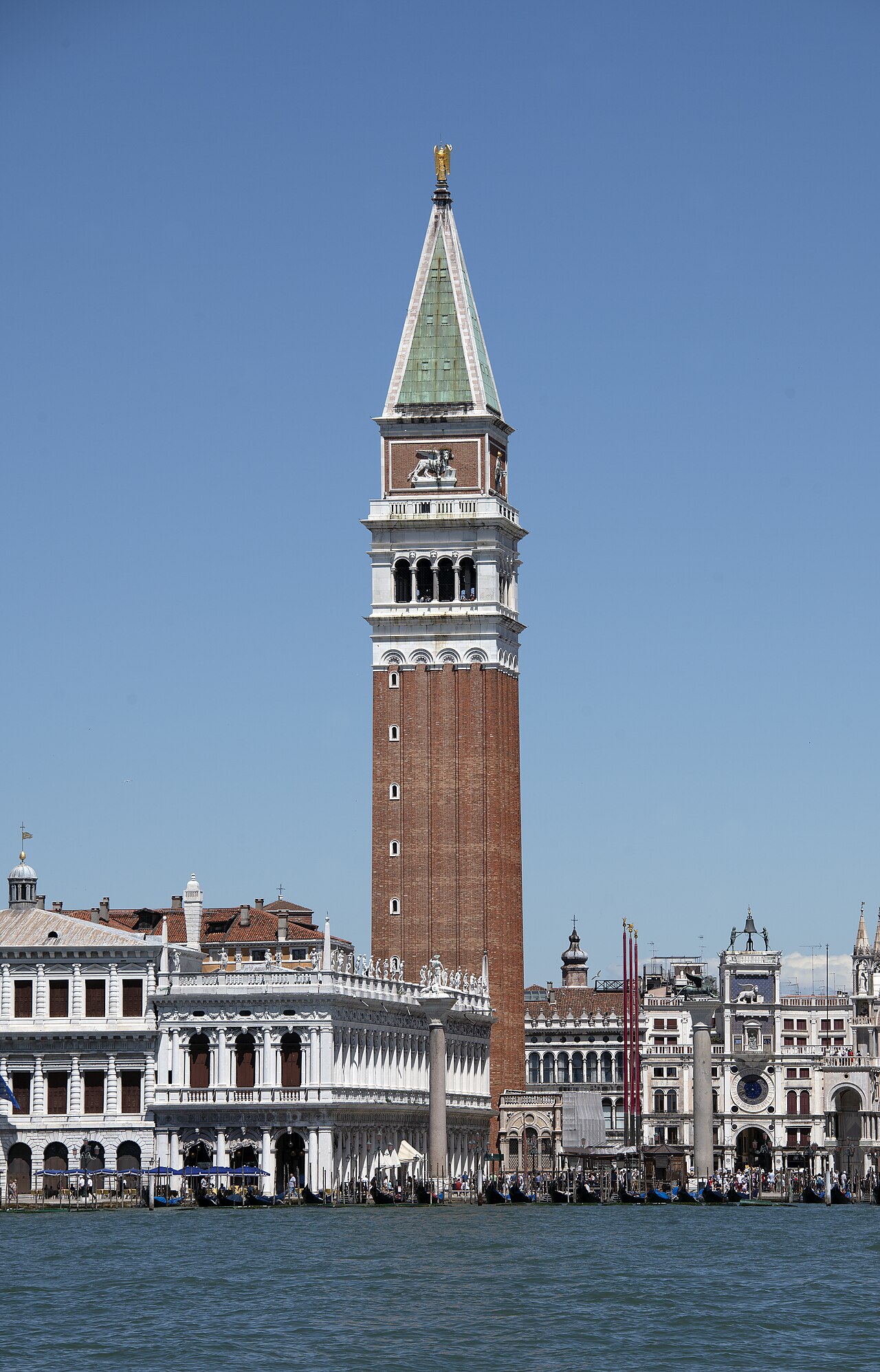
The clocktower stands at the northern edge of Piazza San Marco, directly over the passage leading into the Mercerie shopping streets. Walk there through Venice's pedestrian network, allowing time for bridges, paving and crowded lanes. Vaporetto passengers can use the San Marco Vallaresso or San Zaccaria area and continue on foot across the square. Central Venice has no vehicle access, so comfortable walking shoes are more useful than trying to reach the tower by road.
Checked 2026-08-26 · Source
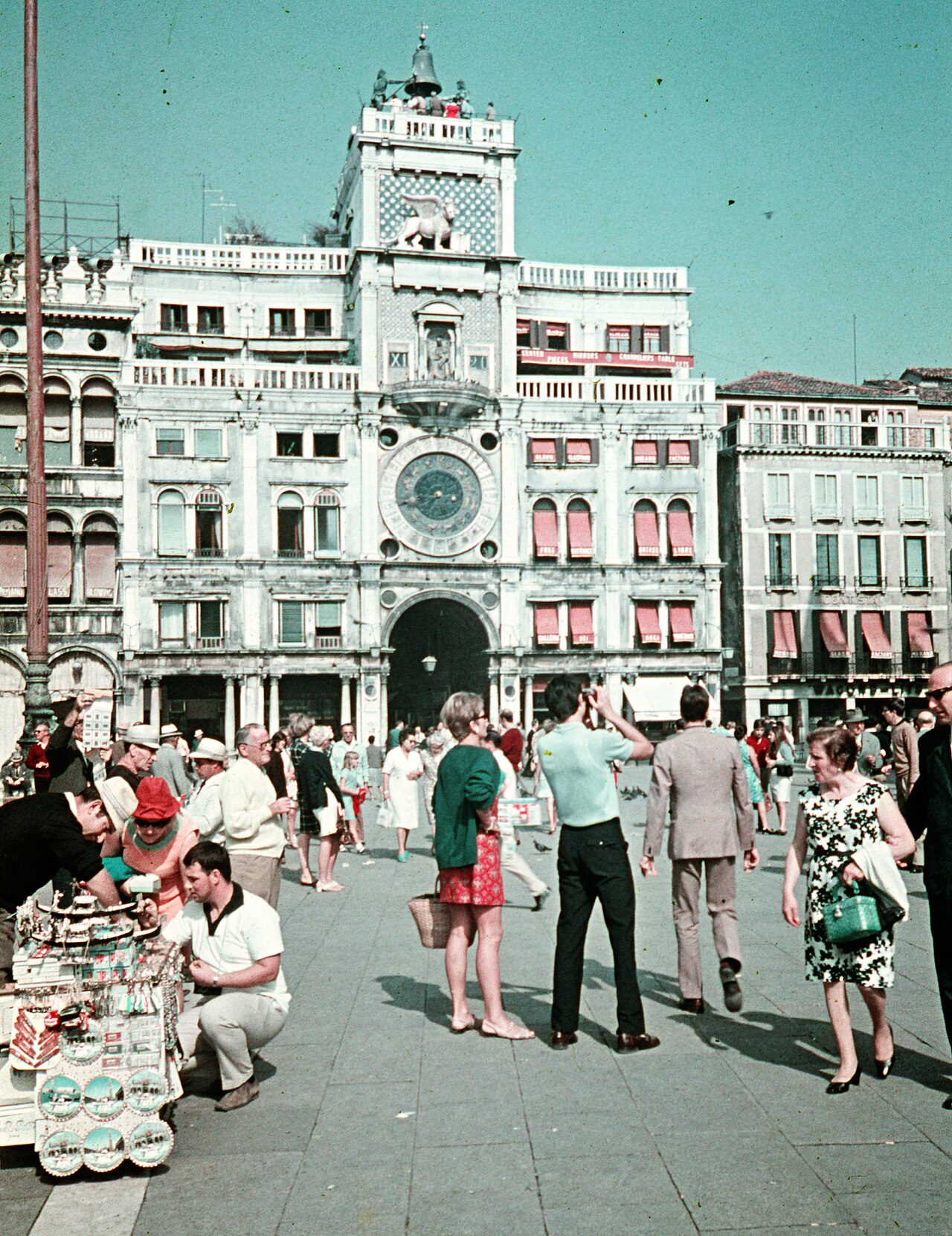
Expect heavy pedestrian traffic beneath and around the tower, particularly where the archway funnels people between Piazza San Marco and the Mercerie. Keep belongings secure in the crowd and leave room for others when the hourly figures attract spectators. Upper-level access involves narrow historic stairs, which can be difficult for visitors with limited mobility. Acqua alta can affect the square and lower approaches. Strong glare may reduce visibility of the clock face at some times of day.
Checked 2026-08-26 · Source
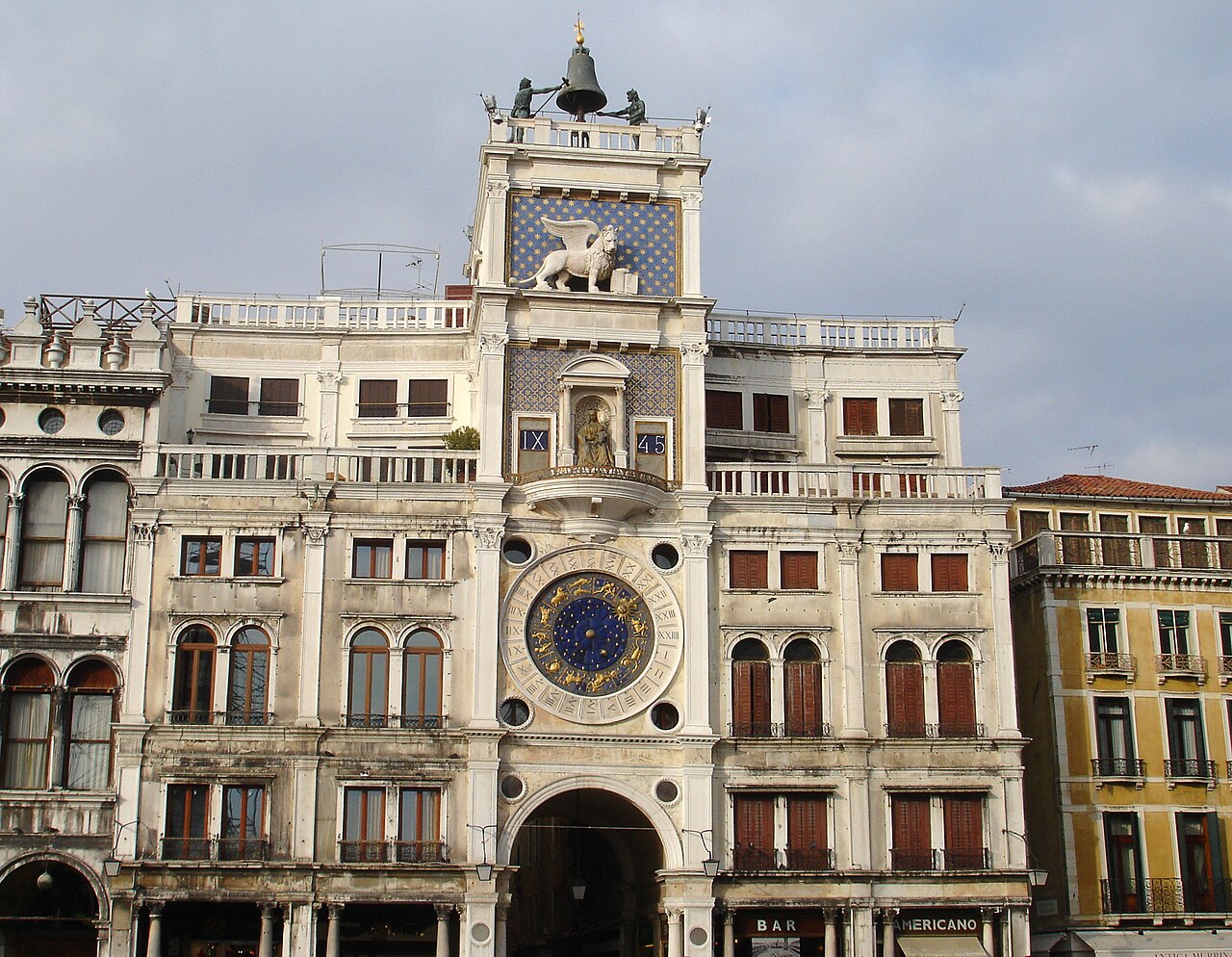
The piazza gives you unrestricted opportunities to photograph the clocktower facade, the astronomical clock and the hourly automaton display. Morning light can bring out the relief and stonework, while evening illumination suits wider compositions of the gateway and square. A wide-angle lens helps from the close viewing position, but a tripod is awkward in the busy pedestrian flow. From inside, frame the mechanism and terrace views with consideration for other visitors in the confined spaces.
Checked 2026-08-26 · Source
You can see the Renaissance facade, the astronomical clock with its hour, moon-phase and zodiac displays, the bronze bell-striking figures, the mechanical movement and an elevated terrace view when interior access is available.
It stands on the northern side of Piazza San Marco, above the archway connecting the square with Venice's Mercerie shopping streets.
Exterior viewing takes about five to ten minutes. An interior visit with the clock mechanism and terrace generally takes about thirty to sixty minutes.
The two bronze figures strike the bell at the top of each hour, creating a brief spectacle in the square.
Walk through Venice to Piazza San Marco. From the San Marco Vallaresso or San Zaccaria vaporetto areas, continue on foot across the square to the tower.
Early morning offers fewer people and clearer views of the facade. Evening illumination highlights the architecture and creates a different composition of the tower and piazza.
Loading the interactive map…
The interactive map could not be loaded.
Last updated:
Source: OpenStreetMap contributors, Wikidata ·