Roavina

City guide · Japan

Osaka

A photograph of Osaka
Photograph · Martin Falbisoner · CC BY-SA 4.0

Osaka is a large but legible city whose visitor areas follow several rail hubs. Kita centres on Osaka and Umeda stations, Minami gathers around Namba, Shinsaibashi and Dotonbori, and Tennoji anchors the southern core. Osaka Castle lies east of the centre, while the bay area contains major family attractions. Plan each area as a separate walking cluster connected by rail.

Reviewed by Elena Voss · Roavina Travel Editor

Practical information

Language spoken
Japanese
National practical orientation; regional and minority languages may also be used
Dialling code
+81
International calling code; local area and mobile prefixes still apply
Currency
Japanese yen (JPY)
Use the official local currency; card acceptance varies by place
Emergency number
110 police · 119 fire and ambulance
Use only for an emergency; tourist assistance may use a separate number
Plug type
Type A · 100 V
Check that chargers support the recorded voltage before using an adapter
Tap water
Safe from the mains
JNTO states that tap water is safe to drink

Turn this list into a plan

Set your days, your pace and the hours you actually want to be out. The planner works around closing days and travel time, and leaves room to eat.

Plan Osaka

Planning a visit

Suggested stay
Not recorded
Getting around
Metro, rail and walking
  1. January: viable with meaningful trade-offs
  2. February: viable with meaningful trade-offs
  3. March: good time to visit
  4. April: best time to visit
  5. May: best time to visit
  6. June: good time to visit
  7. July: viable with meaningful trade-offs
  8. August: recurring difficult conditions
  9. September: viable with meaningful trade-offs — current month
  10. October: best time to visit
  11. November: good time to visit
  12. December: viable with meaningful trade-offs
  • Best time
  • Good time
  • Viable with trade-offs
  • Difficult conditions

Sources

Top things to see

Ranked by importance — sitelinks, pageviews and heritage status, not editor preference.

  1. 吹田市文化会館 メイシアター 吹田市文化会館 メイシアター
    02 1 hour

    吹田市文化会館 メイシアター

    Suita City Cultural Hall Meishiya Theater is a municipal performing-arts venue in Suita City, Osaka Prefecture. It supports the area’s cultural life through theater, music, dance, and community events.

    • Must see
    • Art and culture venue
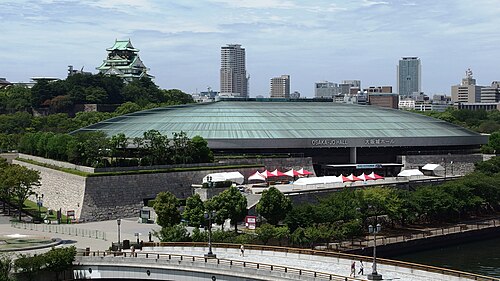
  2. Osaka-jō Hall Osaka-jō Hall
    03 1 hour

    Osaka-jō Hall

    大阪城 ホール

    Osaka-jō Hall is a large indoor arena set within Osaka Castle Park, where the setting is part of the experience even though the building itself is devoted to events.

    • Must see
    • Art and culture venue
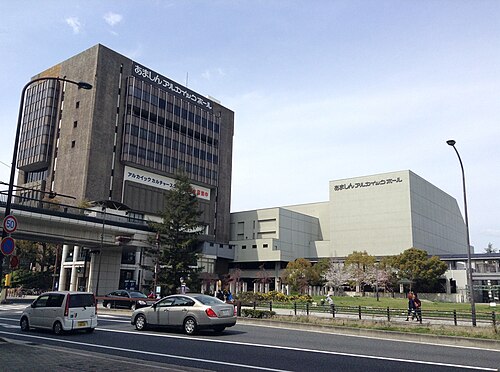
  3. Amagasaki Cultural Center Amagasaki Cultural Center
    04 1 hour

    Amagasaki Cultural Center

    尼崎市総合文化センター

    Amagasaki Cultural Center, known locally as 尼崎市総合文化センター, is a municipal cultural facility serving Amagasaki in Hyogo Prefecture, within the greater Osaka metropolitan area. The center brings public performance, arts activity, and community gathering into one civic venue.

    • High
    • Art and culture venue
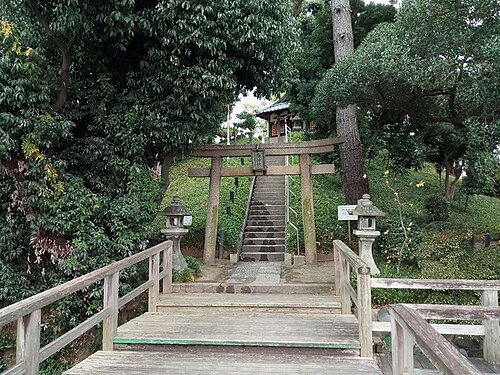
  4. Gogazuka Kofun Gogazuka Kofun
    05 1 hour

    Gogazuka Kofun

    御願塚

    Gogazuka Kofun, also known locally as 御願塚, is an ancient burial mound in Osaka. The site belongs to Japan’s kofun tradition, a form of monumental tomb construction associated with the Kofun period from roughly the third to seventh centuries.

    • High
    • Art and culture venue
  5. 10W Gallery
    06 1 hour

    10W Gallery

    • Notable
    • Art and culture venue

Source: OpenStreetMap contributors, Wikidata ·

How the city is laid out

Kita is the northern commercial and transport centre around Umeda. Minami is the southern entertainment and shopping centre around Namba and Shinsaibashi, with Dotonbori between them. Tennoji and Shinsekai extend the sightseeing axis farther south. Osaka Castle forms its own eastern cluster, and the waterfront attractions sit west around the bay. The Osaka Loop Line and subway connect these distinct zones.

Checked 2026-08-26

Getting around

Use Osaka Metro for travel between Kita, Minami and the central sightseeing districts, then walk within each cluster. The Osaka Loop Line connects major rail interchanges and provides transfers to private and regional railways. Buses cover gaps in the rail network, while water buses offer selected river journeys. Check the official route information for the destination rather than assuming every attraction is on one line.

Checked 2026-08-26

Common questions

How many days should I spend in Osaka?

A fixed duration is not recorded. Allocate time by cluster: Kita, Minami, Osaka Castle, Tennoji and the bay area each work best as distinct blocks.

What is the difference between Kita and Minami?

Kita is the northern centre around Osaka and Umeda stations. Minami is the southern centre around Namba, Shinsaibashi and Dotonbori, with a stronger concentration of nightlife and shopping.

What is the easiest way to get around Osaka?

Use the subway for most visitor journeys and walk within each district. The Osaka Loop Line is useful for transfers between major rail hubs and onward regional services.

Is Osaka Castle near Dotonbori?

No. Osaka Castle forms an eastern sightseeing cluster, while Dotonbori is in Minami. Treat them as separate stops linked by metro rather than one continuous walk.

Should the Osaka bay area have its own itinerary block?

Yes. The bay attractions sit west of the central districts and are best grouped together, reducing repeated transfers between the waterfront and the Kita-Minami axis.