A photograph of Osaka

City guide · Japan

Up to 1 hour in Osaka, Japan — page 4

Osaka is a large but legible city whose visitor areas follow several rail hubs. Kita centres on Osaka and Umeda stations, Minami gathers around Namba, Shinsaiba...

Photograph · Martin Falbisoner · CC BY-SA 4.0

11,587 Places
Suggested stay
Not recorded
Getting around
Metro, rail and walking

Turn this list into a plan

Set your days, your pace and the hours you actually want to be out. The planner works around closing days and travel time, and leaves room to eat.

Plan Osaka

Reviewed by Elena Voss · Roavina Travel Editor

Osaka is a large but legible city whose visitor areas follow several rail hubs. Kita centres on Osaka and Umeda stations, Minami gathers around Namba, Shinsaibashi and Dotonbori, and Tennoji anchors the southern core. Osaka Castle lies east of the centre, while the bay area contains major family attractions. Plan each area as a separate walking cluster connected by rail.

Checked 2026-08-26

Practical information

Language spoken
Japanese
National practical orientation; regional and minority languages may also be used
Dialling code
+81
International calling code; local area and mobile prefixes still apply
Currency
Japanese yen (JPY)
Use the official local currency; card acceptance varies by place
Emergency number
110 police · 119 fire and ambulance
Use only for an emergency; tourist assistance may use a separate number
Plug type
Type A · 100 V
Check that chargers support the recorded voltage before using an adapter
Tap water
Safe from the mains
JNTO states that tap water is safe to drink

Planning a visit

September · September remains hot and wet in Osaka at 29.5°C by day, 21.9°C at night and 152.8 mm rain.

  1. January: viable with meaningful trade-offs
  2. February: viable with meaningful trade-offs
  3. March: good time to visit
  4. April: best time to visit
  5. May: best time to visit
  6. June: good time to visit
  7. July: viable with meaningful trade-offs
  8. August: recurring difficult conditions
  9. September: viable with meaningful trade-offs — current month
  10. October: best time to visit
  11. November: good time to visit
  12. December: viable with meaningful trade-offs

Sources

Top things to see

Ranked by importance — sitelinks, pageviews and heritage status, not editor preference.

  1. Nagasu Tenmangu Nagasu Tenmangu
    76 30 min

    Nagasu Tenmangu

    長洲天満宮

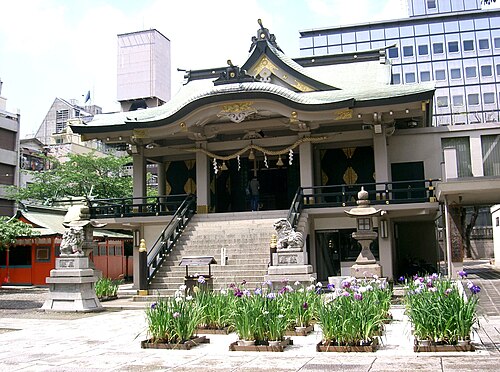
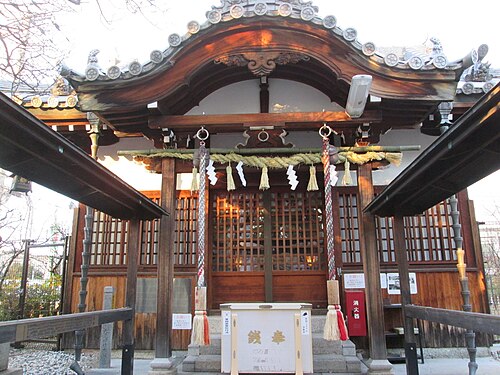
    Nagasu Tenmangu, written 長洲天満宮, is a Shinto shrine in Osaka devoted to Tenjin. Tenjin is the deified scholar Sugawara no Michizane, widely associated with learning and academic success.

    • Notable
    • Place of worship
  2. Hankyu Nishinomiya Gardens Hankyu Nishinomiya Gardens
    77 45 min

    Hankyu Nishinomiya Gardens

    阪急西宮ガーデンズ

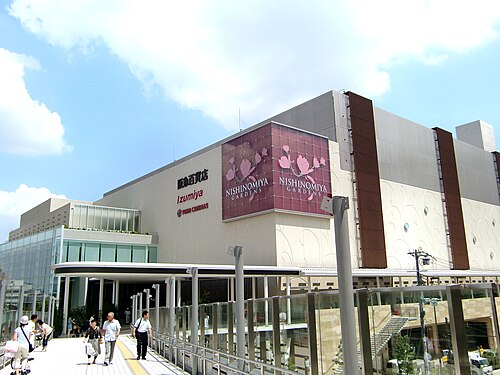
    Hankyu Nishinomiya Gardens is a large commercial complex in Nishinomiya, Hyogo Prefecture, within the wider Osaka metropolitan area. The development brings shopping, dining, entertainment and landscaped outdoor areas together in one destination.

    • Notable
    • Market
  3. Namba Shrine Namba Shrine
    78 30 min

    Namba Shrine

    難波神社

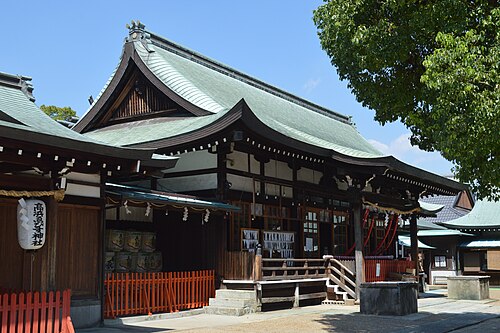
    Namba Shrine is a Shinto shrine in Osaka's Namba district, where traditional religious architecture stands among shopping, dining and entertainment streets. Known locally as 難波神社, it offers a quieter cultural pause within one of the city's most active urban areas.

    • Notable
    • Place of worship
  4. Gantoku-ji Temple Gantoku-ji Temple
    79 30 min

    Gantoku-ji Temple

    願得寺

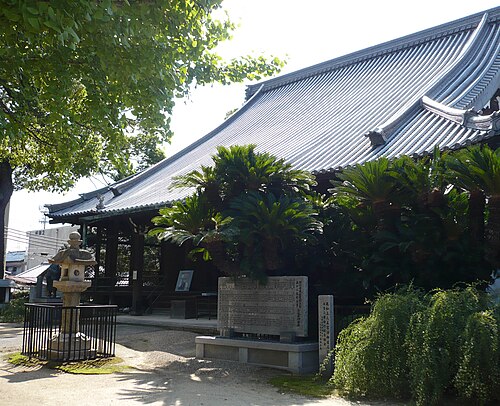
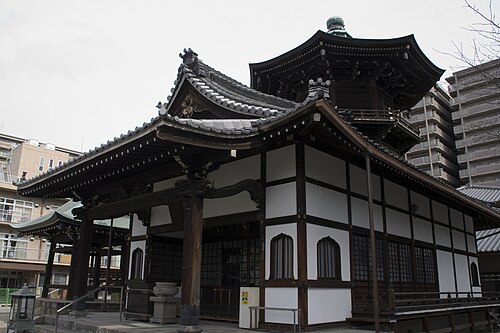
    Gantoku-ji Temple, known locally as 願得寺, is a Buddhist religious site in Osaka. It forms part of the city's quieter spiritual landscape, where neighborhood temples continue to serve local communities amid dense metropolitan surroundings.

    • Notable
    • Place of worship
  5. Takahama Shrine (Suita) Takahama Shrine (Suita)
    80 30 min

    Takahama Shrine (Suita)

    高浜神社

    Takahama Shrine is a Shinto shrine in Suita City, Osaka Prefecture, known locally as 高浜神社. It serves as a place of worship and community gathering in the northern Osaka metropolitan area.

    • Notable
    • Place of worship
  6. Kakuman-ji Temple Kakuman-ji Temple
    81 30 min

    Kakuman-ji Temple

    鶴満寺

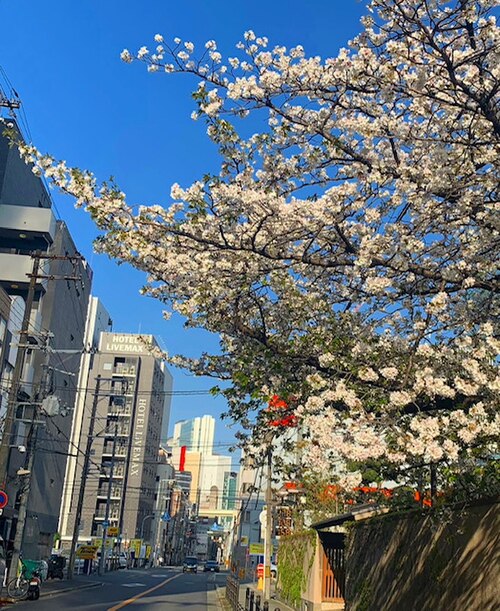
    Kakuman-ji Temple, known in Japanese as 鶴満寺, is a named Buddhist temple in Osaka. The mapped way identifies a specific local place of worship, not a generic category label.

    • Notable
    • Place of worship
  7. 龍渕寺 龍渕寺
    82 30 min

    龍渕寺

    Ryūen-ji, written 龍渕寺, is a Buddhist temple in Osaka. It is a functioning place of worship rather than a museum or commercial attraction.

    • Notable
    • Place of worship
  8. Grand Cathedral of the Virgin Mary of Osaka Grand Cathedral of the Virgin Mary of Osaka
    84 30 min

    Grand Cathedral of the Virgin Mary of Osaka

    カトリック玉造教会

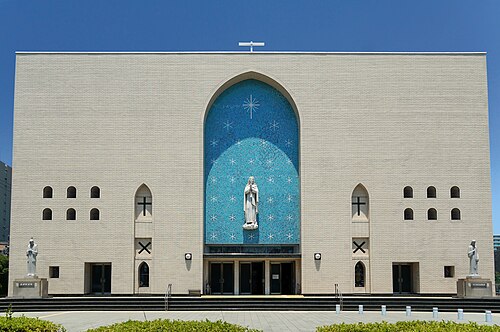
    Osaka-Takamatsu Cathedral St. Mary’s is the cathedral of the Catholic Archdiocese of Osaka-Takamatsu and the home of Tamatsukuri Catholic Church. The present cathedral was designed by Eikichi Hasebe and dedicated on 21 March 1963.

    • High
    • Place of worship
  9. 10W Gallery
    85 1 hour

    10W Gallery

    • Notable
    • Art and culture venue
  10. The Garden Oriental Osaka
    86 1 hour

    The Garden Oriental Osaka

    ザ・ガーデンオリエンタル・大阪

    • Notable
    • Restaurant or café

Source: OpenStreetMap contributors, Wikidata ·

How the city is laid out

Kita is the northern commercial and transport centre around Umeda. Minami is the southern entertainment and shopping centre around Namba and Shinsaibashi, with Dotonbori between them. Tennoji and Shinsekai extend the sightseeing axis farther south. Osaka Castle forms its own eastern cluster, and the waterfront attractions sit west around the bay. The Osaka Loop Line and subway connect these distinct zones.

Checked 2026-08-26

Getting around

Use Osaka Metro for travel between Kita, Minami and the central sightseeing districts, then walk within each cluster. The Osaka Loop Line connects major rail interchanges and provides transfers to private and regional railways. Buses cover gaps in the rail network, while water buses offer selected river journeys. Check the official route information for the destination rather than assuming every attraction is on one line.

Checked 2026-08-26

Common questions

How many days should I spend in Osaka?

A fixed duration is not recorded. Allocate time by cluster: Kita, Minami, Osaka Castle, Tennoji and the bay area each work best as distinct blocks.

What is the difference between Kita and Minami?

Kita is the northern centre around Osaka and Umeda stations. Minami is the southern centre around Namba, Shinsaibashi and Dotonbori, with a stronger concentration of nightlife and shopping.

What is the easiest way to get around Osaka?

Use the subway for most visitor journeys and walk within each district. The Osaka Loop Line is useful for transfers between major rail hubs and onward regional services.

Is Osaka Castle near Dotonbori?

No. Osaka Castle forms an eastern sightseeing cluster, while Dotonbori is in Minami. Treat them as separate stops linked by metro rather than one continuous walk.

Should the Osaka bay area have its own itinerary block?

Yes. The bay attractions sit west of the central districts and are best grouped together, reducing repeated transfers between the waterfront and the Kita-Minami axis.