
2 min walk
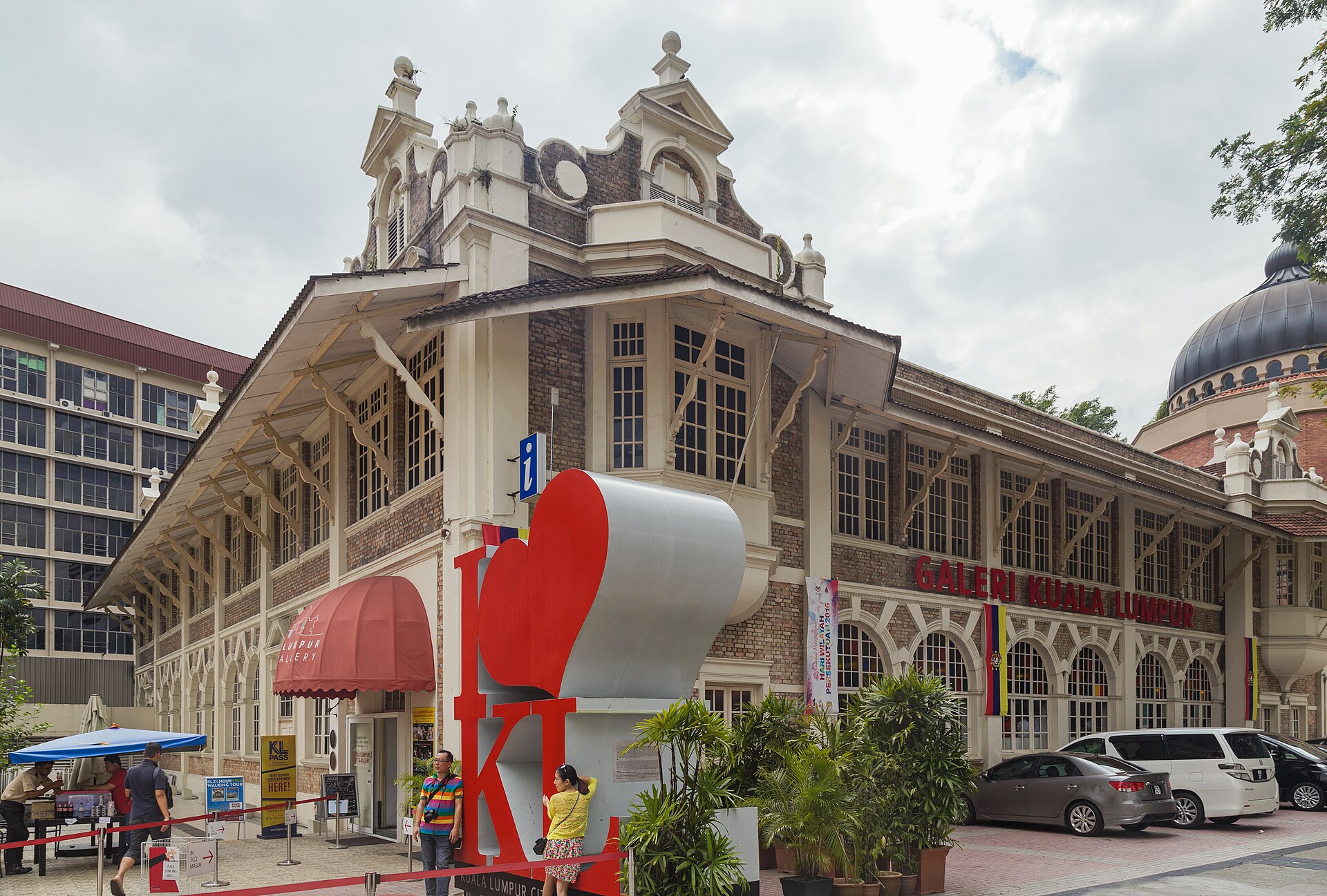
Kuala Lumpur City Gallery
- Must see
- Museum
Museum · Kuala Lumpur
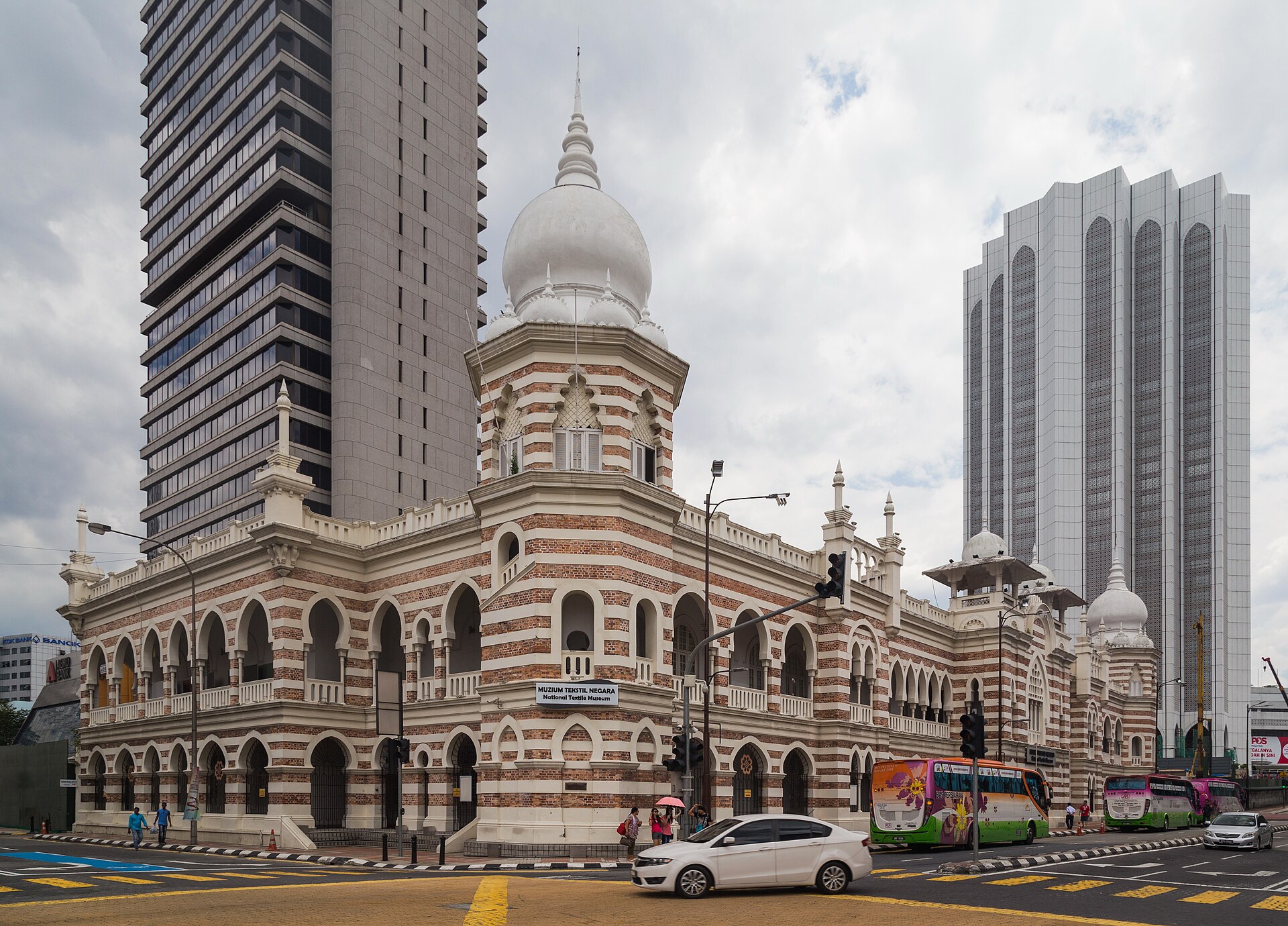
Muzium Tekstil Negara
| Monday | 09:00 – 17:00 |
|---|---|
| Tuesday | 09:00 – 17:00 |
| Wednesday | 09:00 – 17:00 |
| Thursday | 09:00 – 17:00 |
| Friday | 09:00 – 17:00 |
| Saturday | 09:00 – 17:00 |
| Sunday | 09:00 – 17:00 |
Parsed from OpenStreetMap opening hours on 2026-09-09.
The National Textile Museum, known locally as Muzium Tekstil Negara, stands as a cultural institution in Kuala Lumpur dedicated to preserving and showcasing Malaysia's textile heritage. Housed within a distinctive heritage building, the museum serves as a repository for traditional fabrics, weaving techniques, and textile craftsmanship that reflect the nation's multicultural identity. The institution contributes to public understanding of how textiles have shaped Malaysian social customs, ceremonial practices, and economic history across diverse communities including Malay, Chinese, Indian, and indigenous traditions. National Textile Museum also earns time in a kuala lumpur itinerary because A visitor-relevant POI matched exactly to the production city pool; stored identity, local name and coordinates were copied without approximation. Its value becomes clearer when the stop is compared with the surrounding streets and the other ranked places nearby.
Checked 2026-08-26
The museum's collections encompass traditional Malaysian textiles including songket, batik, pua kumbu, and various regional weaving styles. Exhibits typically display the intricate processes behind textile production, from natural dye preparation to loom operation. Visitors encounter garments, ceremonial cloths, and accessories that illustrate the technical sophistication of Malaysian craftspeople. Thematic presentations may explore the role of textiles in royal ceremonies, weddings, and religious observances. The museum likely features both historical artifacts and contemporary pieces, demonstrating continuity and innovation in Malaysian textile arts through changing social contexts.
Checked 2026-08-26
A thorough visit to the National Textile Museum generally requires between sixty and ninety minutes for visitors with genuine interest in textile history and craftsmanship. Casual visitors may complete a basic walkthrough in approximately forty-five minutes. Those with academic or professional backgrounds in fashion, anthropology, or material culture might extend their stay beyond two hours to examine weaving details, study display labels, and absorb contextual information about regional variations. The compact nature of specialized museums typically allows efficient viewing without the fatigue associated with larger institutional collections.
Checked 2026-08-26
Visitors should independently verify current opening schedules before planning their visit, as museum operating times may change without broad public notification. Kuala Lumpur's tropical climate means indoor attractions offer welcome respite from heat and humidity year-round, though weekday mornings potentially provide quieter conditions for contemplative examination of detailed textile work. Holiday periods and school vacation seasons may increase domestic visitor numbers. International travelers should account for Malaysian public holidays when local tourism activity typically surges significantly. Check the operator's own site for the travel date before relying on a schedule or fare.
Checked 2026-08-26
Prospective visitors must seek current admission fees through official channels before arrival. Many Malaysian national museums have historically offered free entry or nominal charges to promote cultural accessibility, though this policy landscape evolves. Some special exhibitions may carry separate pricing structures. International visitors should carry appropriate payment methods as cashless transactions increasingly dominate Malaysian institutional settings. Student, senior, or group concessions may apply where fees exist, though verification requirements vary. Budget-conscious travelers should confirm costs to avoid unexpected expenditure. Check the operator's own site for the travel date before relying on a schedule or fare.
Checked 2026-08-26
The National Textile Museum occupies a central location within Kuala Lumpur's heritage district, accessible via multiple transportation modes. The city's integrated rail network serves nearby stations, with subsequent walking required through historically significant streetscapes. Ride-hailing services and taxis operate extensively throughout central Kuala Lumpur, though traffic congestion during peak periods demands temporal flexibility. Pedestrian navigation from adjacent attractions including Merdeka Square and the Sultan Abdul Samad Building allows efficient multi-site itineraries. Signage in major tourist zones typically includes English alongside Bahasa Malaysia, assisting independent navigation for international visitors unfamiliar with local geography.
Checked 2026-08-26
Heritage building infrastructure may present accessibility challenges including stairs without alternative circulation routes. Climate control in historic structures sometimes proves inconsistent, suggesting layered clothing preparation. Display cases with reflective glass can obstruct photography and detailed viewing depending on lighting conditions and visitor positioning. Textile exhibits require low-light environments for preservation, potentially straining visual examination. Crowding during peak periods limits movement between displays and extends wait times for optimal viewing positions. Visitors should respect barrier placements protecting delicate fabrics from contact damage, as oils and moisture from skin compromise textile integrity irreversibly.
Checked 2026-08-26
Photography policies within Malaysian museums vary considerably between institutions and may change without prominent notification. Flash photography typically remains prohibited near textile displays due to cumulative light damage affecting dye stability and fiber integrity. Tripod and monopod use often requires advance permission and may be restricted entirely in confined gallery spaces. Visitors should observe posted signage and staff guidance regarding permissible equipment and techniques. Respectful photography avoids obstructing other visitors' sightlines or creating congestion at popular exhibits. Commercial or publication-oriented image capture generally demands formal authorization through institutional administrative channels.
Checked 2026-08-26
Children with patience for indoor cultural exhibits may appreciate colorful textiles and occasional interactive displays, though sustained engagement varies by individual temperament.
Guided tour availability is Not recorded; visitors should inquire directly with museum administration regarding scheduled or request-based interpretive services.
Gift shop presence is Not recorded; many national museums maintain retail spaces offering reproductions or craft items, though inventory and operations require direct verification.
The museum occupies a heritage building contributing to Kuala Lumpur's architectural character, though specific construction dates and historical narratives require authoritative source confirmation.
On-site dining facilities are Not recorded; the central location provides access to numerous surrounding food establishments serving diverse Malaysian cuisines.
The museum sits within walking distance of Merdeka Square and the Sultan Abdul Samad Building, enabling consolidated exploration of Malaysia's colonial and cultural heritage in a compact geographic zone.
Loading the interactive map…
The interactive map could not be loaded.
Last updated:
Source: OpenStreetMap contributors, Wikidata ·