
2 min walk
Dark Cave
- Notable
- Nature site
Language · 11 published
Place of worship · Kuala Lumpur
Batu Caves பத்து மலை
Reviewed by Elena Voss · Roavina Travel Editor
| Monday | 06:00 – 21:00 |
|---|---|
| Tuesday | 06:00 – 21:00 |
| Wednesday | 06:00 – 21:00 |
| Thursday | 06:00 – 21:00 |
| Friday | 06:00 – 21:00 |
| Saturday | 06:00 – 21:00 |
| Sunday | 06:00 – 21:00 |
Checked 2026-08-31 · Source
Read from the OpenStreetMap access tags; anything not listed has no tag recorded.
Set the group type to family in the planner and the day window contracts to about three quarters of a solo day.
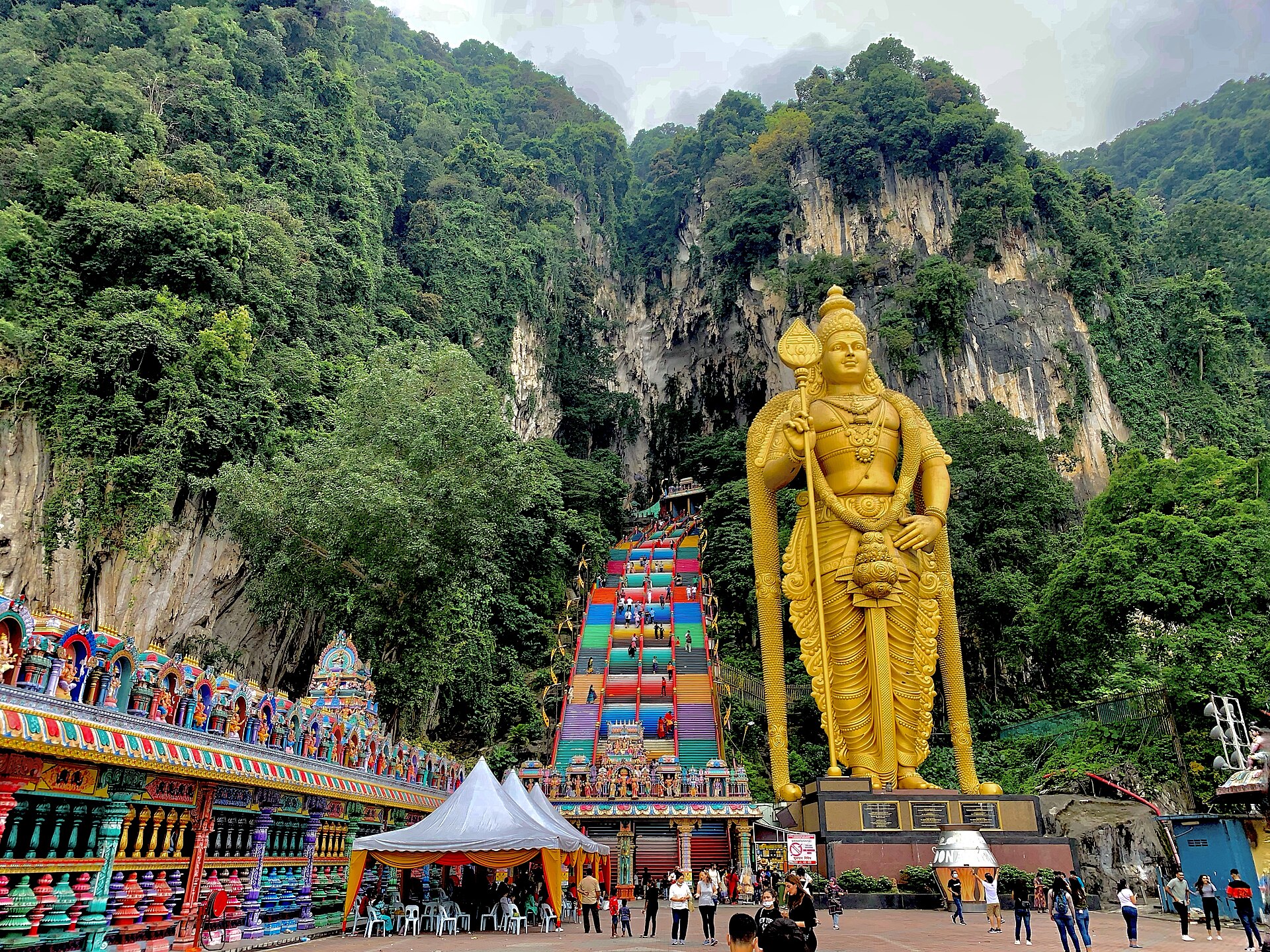
Batu Caves is a limestone hill featuring a series of caves and cave temples in Gombak, Selangor, Malaysia. It serves as a significant religious site for Hindu devotees and a major tourist attraction in the Kuala Lumpur region. The complex is dominated by a massive golden statue of Lord Murugan at the entrance. The site combines natural geological formations with religious significance, drawing both worshippers and visitors interested in cultural and natural heritage. The name reflects the Malay word for rock.
Checked 2026-08-31 · Source
The main attraction is Cathedral Cave, the largest cavern, accessible via a steep flight of 272 concrete steps adorned with vibrant painted sections. Several smaller caves exist at the base and within the hill system. Temple Cave contains Hindu shrines and religious iconography. Dark Cave offers guided ecotourism experiences focusing on conservation and unique cave ecology, though operational status varies. Macaque monkeys inhabit the area, particularly around the steps and entrance zones. Various smaller shrines and statues are positioned throughout the complex.
Checked 2026-08-31 · Source
Visitors typically allocate between two to four hours for a comprehensive experience at Batu Caves. This duration accounts for ascending the steps, exploring the main cavern, observing religious practices, and navigating the base area. Photography enthusiasts and those participating in religious observances may require additional time. The physical exertion of the staircase demands pacing for many visitors. Dark Cave tours, when available, extend the visit substantially. Crowd conditions significantly affect movement speed and overall duration, particularly during festival periods. city_place_id; stored production name and coordinates were copied without approximation.
Checked 2026-08-31 · Source
Daily 06:00–21:00 Open daily; there are no regular closure days. Early morning hours generally offer cooler temperatures and reduced crowd density for visiting Batu Caves. Weekday visits typically experience lower visitor volumes compared to weekends. The Thaipusam festival period attracts massive pilgrim and tourist numbers, fundamentally altering the visitor experience. Rainy season conditions may create slippery step surfaces and reduced visibility. Visitors should verify current opening status before travel, as religious sites may modify accessibility for ceremonies or maintenance without advance public notification.
Checked 2026-08-31 · Source
General admission to the Temple Cave and Cathedral Cave is free for Malaysian and non-Malaysian visitors. Separate admission applies to Cave Villa: RM7 for Malaysians and RM15 for non-Malaysians; Ramayana Cave costs RM5 for all visitors. Prices were current in May 2026. Entry to the main Batu Caves complex has historically been free of charge for general visitors. Specific attractions within the site, such as Dark Cave conservation tours when operational, may impose separate fees. Donation boxes support temple maintenance and religious activities. Visitors should carry cash for incidental expenses including refreshments, offerings, or optional guided experiences. Any mandatory fees or newly implemented charges would require verification through official channels. Budget-conscious travelers should prepare for variable expenditure depending on chosen activities.
Checked 2026-08-31 · Source
Take the KTM Komuter Batu Caves–Pulau Sebang service from KL Sentral to Batu Caves station. Tourism Malaysia describes the entrance as about a five-minute walk from the station. KTMB publishes separate weekday and weekend/public-holiday timetables for this line. Batu Caves sits approximately thirteen kilometers north of central Kuala Lumpur. The KTM Komuter train service connects KL Sentral station directly to Batu Caves station, providing a practical public transport option. Taxis and ride-hailing services operate from the city center, though traffic conditions vary significantly by time of day. Driving presents parking challenges during peak visitation periods. Tour operators frequently include Batu Caves within broader Kuala Lumpur excursion packages. Visitors should anticipate transportation delays during major religious festivals when road access becomes severely congested.
Checked 2026-08-31 · Source
The Temple Cave is not step-free: reaching it requires climbing 272 stairs. Step-free sightseeing is limited to the foot-of-hill precinct, where the Lord Murugan statue and Cave Villa are located. The municipal council lists toilets, shelters, food outlets and vehicle parking at the complex. The staircase ascent presents physical demands and cardiovascular challenge; visitors with mobility limitations should assess feasibility carefully. Macaque monkeys aggressively seek food and may snatch unsecured items; maintaining distance and concealing provisions reduces conflict. Step surfaces become slippery during rainfall, increasing fall risk. Proper footwear with grip is essential. Religious sensitivity requires modest dress covering shoulders and knees; temple authorities may enforce this expectation. Sun exposure on the staircase intensifies during midday hours. Hydration preparation is advisable given the tropical climate and physical exertion involved.
Checked 2026-08-31 · Source
The golden Murugan statue and rainbow-painted staircase provide iconic photographic subjects. Interior cave photography presents challenges due to variable lighting conditions combining natural and artificial sources. Flash photography may disturb religious ceremonies and worshippers; discretion and situational awareness are essential. Morning directional light enhances exterior compositions. Monkeys present dynamic but unpredictable subjects requiring caution. Drone operation would require regulatory compliance and site-specific authorization. Respect for active worshippers must override photographic objectives in all temple interior contexts.
Checked 2026-08-31 · Source
The main cave is reached by climbing 272 stairs.
The statue at the foot of the stairs is 43 metres tall.
Tourism Malaysia recommends arriving before 08:00 to avoid the larger crowds, particularly outside the Thaipusam period.
Long-tailed monkeys are commonly encountered from the foot of the stairs to the temple entrance.
Selayang Municipal Council lists toilets, shelters, food outlets and vehicle parking at the complex.
Batu Caves is a major venue for the annual Hindu festival of Thaipusam, when thousands of devotees gather at the complex.
Loading the interactive map…
The interactive map could not be loaded.

Last updated:
Source: OpenStreetMap contributors, Wikidata ·