_-_img_05.jpg)
2 min walk
Central Market
- Must see
- Market
Language · 11 published
Place of worship · Kuala Lumpur
Reviewed by Elena Voss · Roavina Travel Editor

| Monday | 07:00 – 17:00 |
|---|---|
| Tuesday | 07:00 – 17:00 |
| Wednesday | 07:00 – 17:00 |
| Thursday | 07:00 – 17:00 |
| Friday | 07:00 – 17:00 |
| Saturday | 07:00 – 17:00 |
| Sunday | 07:00 – 17:00 |
Checked 2026-08-31 · Source
Read from the OpenStreetMap access tags; anything not listed has no tag recorded.
Set the group type to family in the planner and the day window contracts to about three quarters of a solo day.
This place is a Attraction. It was established in 1883.
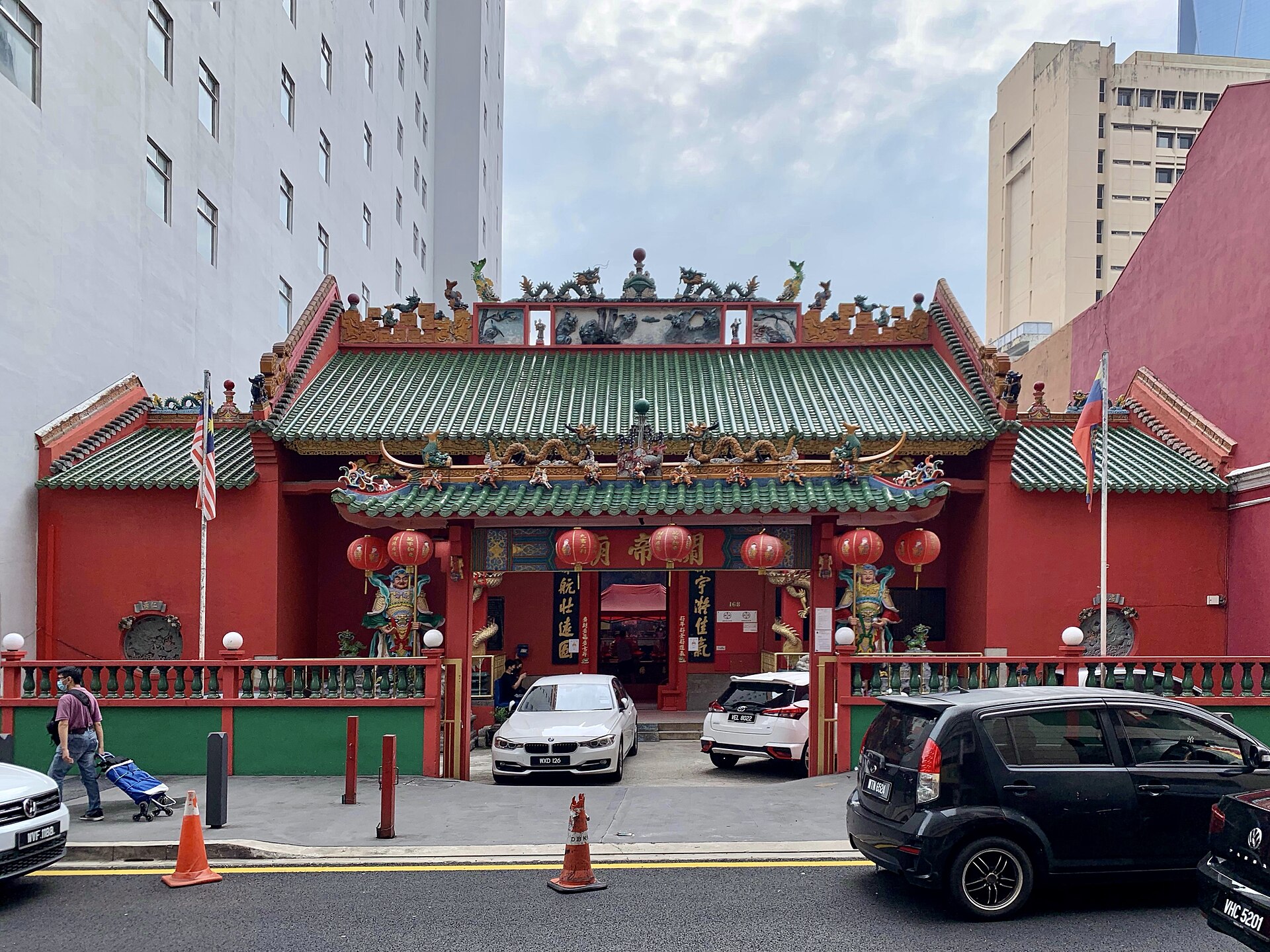
Sin Sze Si Ya Temple is a Chinese temple in Kuala Lumpur, recognised as the oldest Taoist temple in the city. It was founded by Yap Ah Loy, a prominent historical figure in Kuala Lumpur's development. The temple serves as a place of worship dedicated to Sin Sze Ya and Si Sze Ya, deities associated with protection and prosperity. It holds significant cultural and historical value for the local Chinese community and represents an important part of Kuala Lumpur's heritage. The structure reflects traditional Chinese architectural influences.
Checked 2026-08-31 · Source
The temple interior contains altars dedicated to its patron deities. Visitors will find traditional religious artefacts, incense burners, and offerings typical of Taoist worship practices. Decorative elements include Chinese calligraphy and ornamental details consistent with temple design. The main prayer hall serves as the focal point for religious activities. Additional spaces within the compound support various ceremonial functions. The architectural layout follows conventions of Chinese temple organisation, with spaces arranged for specific ritual purposes. The atmosphere reflects ongoing active worship rather than purely historical display.
Checked 2026-08-31 · Source
A typical visitor might spend approximately thirty to sixty minutes exploring the temple grounds and interior spaces. Those with particular interest in Chinese religious architecture, historical sites, or photographic documentation may wish to allocate additional time. Worshippers engaging in prayer or ceremonial activities will determine their own duration based on personal practice. The compact nature of the temple compound means extensive time is not required for general observation. Visitors should remain sensitive to ongoing religious activities and adjust their pace accordingly without disrupting worshippers.
Checked 2026-08-31 · Source
Daily 07:00–17:00 Open seven days a week; no regular closure day. Visitors should verify current opening times through direct contact with temple management or official local tourism resources before planning their visit. Religious sites may observe variable schedules influenced by ceremonial calendars, festival periods, or community events. Morning hours commonly see active worship and may offer visitors insight into religious practices. Advance confirmation remains essential for reliable planning. Weather considerations for Kuala Lumpur's tropical climate apply year-round.
Checked 2026-08-31 · Source
Free general entry. Optional joss sticks for the Taoist ritual cost RM10. Many traditional religious sites in Malaysia do not charge formal admission fees, though voluntary donations may be welcomed or expected to support maintenance and operations. Visitors should carry small denomination currency for potential contribution purposes. Any specific fee structures would require direct verification with temple authorities. Donation boxes are typically present at religious sites for this purpose.
Checked 2026-08-31 · Source
Use RapidKL’s Kelana Jaya LRT to Pasar Seni station; Tourism Malaysia describes the temple as a short walk from the station. The entrance is near the junction of Lebuh Pudu and Jalan Tun H.S. Lee and can also be approached on foot through Chinatown. The temple occupies a location within central Kuala Lumpur accessible through the city's public transportation network. Proximity to Pasar Seni LRT station and Merdeka MRT station provides rail access options for visitors. Walking from these stations through the surrounding urban area is feasible. Local bus services operate in the vicinity with stops nearby. Taxis and ride-hailing services serve the central district. Traffic conditions in central Kuala Lumpur vary considerably by time of day. Visitors should consult current transit applications or local sources for precise routing from their specific origin points.
Checked 2026-08-31 · Source
OpenStreetMap records wheelchair=yes for the temple. The mapped temple building has one level. Visitors must observe appropriate conduct at this active religious site. Modest dress covering shoulders and knees demonstrates respect. Photography restrictions may apply in certain interior spaces; visitors should seek guidance or observe posted indications. Worshippers deserve uninterrupted privacy during prayer. Footwear removal is typically required before entering main prayer halls. Incense smoke may affect sensitive individuals. The surrounding urban environment requires standard awareness of personal belongings. Wet conditions from tropical weather create slippery surfaces. Visitors should remain quiet and move deliberately to maintain respectful atmosphere. Children require supervision to prevent disruption.
Checked 2026-08-31 · Source
Photography opportunities exist at this heritage site, though visitors must exercise restraint and respect. Exterior architectural details including roof ornamentation and facade elements permit documentation. Interior photography may face restrictions, particularly in altar areas where worshippers are present. Flash photography is generally inappropriate in religious spaces and may be prohibited. Visitors should observe whether others are photographing or whether signage indicates limitations. Tripod and professional equipment use may attract scrutiny or require permission. The priority remains religious function over tourist documentation. When uncertain, visitors should refrain rather than risk causing offence to worshippers or custodians.
Checked 2026-08-31 · Source
Yap Ah Loy brought Seng Meng Lee’s spirit to a small Kuala Lumpur shrine in 1864. He donated the present site in 1873, and the temple was completed in 1875.
The temple’s two namesake deities are Sin Si Ya, identified as Kapitan Seng Meng Lee, and Sze Si Ya, identified as Yap Sze.
The complex has a central main hall, a Guanyin Hall and a Heroic Martyr Hall, also called the Tai Sui Hall.
The operator identifies it as traditional Cantonese temple architecture, with features including the main gate, decorative boards, roof ridges, windows, stone lions and pillar heads.
Two wooden plaques made in 1881 are the oldest surviving artefacts. Their inscriptions mean “Great Blessing and Protection” and “May Peace be with Us,” and both were donated by Yap Ah Loy.
Tourism Malaysia asks visitors to places of worship to dress modestly and maintain respectful silence.
Loading the interactive map…
The interactive map could not be loaded.
Last updated:
Source: OpenStreetMap contributors, Wikidata ·