
1 min walk
River of Life site
- Must see
- Historic monument
Place of worship · Kuala Lumpur
Masjid Jamek Kuala Lumpur
| Monday | 08:30 – 18:30 |
|---|---|
| Tuesday | 08:30 – 18:30 |
| Wednesday | 08:30 – 18:30 |
| Thursday | 08:30 – 18:30 |
| Friday | 14:30 – 18:30 |
| Saturday | 08:30 – 18:30 |
| Sunday | 08:30 – 18:30 |
Checked 2026-08-31 · Source
| Per person | Free entry |
|---|
Checked 2026-08-31 · Source
Read from the OpenStreetMap access tags; anything not listed has no tag recorded.
Set the group type to family in the planner and the day window contracts to about three quarters of a solo day.
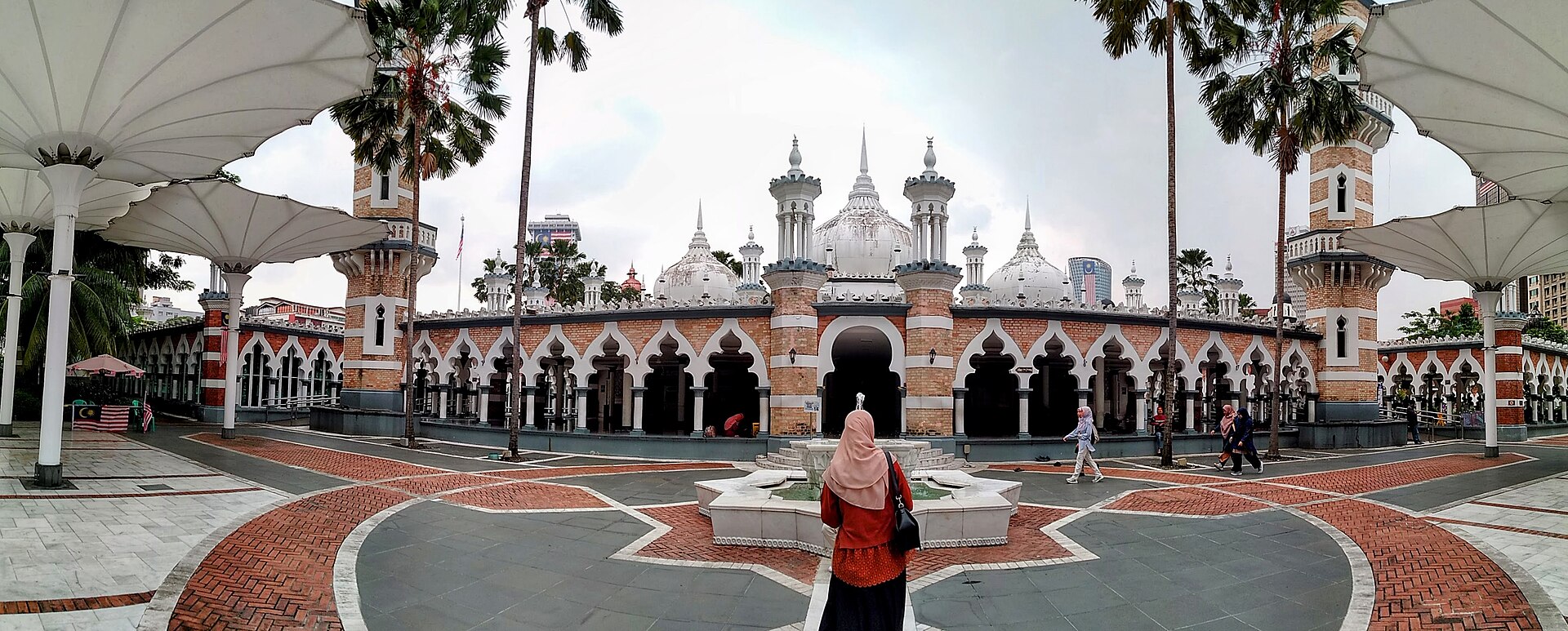
Masjid Jamek Kuala Lumpur, commonly known as Sultan Abdul Samad Jamek Mosque, stands as one of the oldest mosques in Kuala Lumpur. Located at the confluence of the Klang and Gombak rivers, this historic place of worship occupies a site of deep cultural significance. The mosque was established during the colonial era and represents an important architectural landmark in Malaysia's capital. Its distinctive Moorish design elements reflect the Islamic architectural traditions that influenced public buildings of the period. The structure serves as an active mosque for the local Muslim community while also attracting visitors interested in heritage and religious architecture.
Checked 2026-08-31 · Source
The mosque features prayer halls oriented toward Mecca, with architectural details typical of Islamic places of worship. Visitors may observe the main prayer space, ablution facilities for worshippers, and the surrounding grounds that include the historic riverside setting. The interior contains columns and arches that create a sense of spatial grandeur appropriate for congregational prayers. Decorative elements include geometric patterns and calligraphic inscriptions drawn from Islamic artistic traditions. The building's materials and construction methods reflect early twentieth-century building practices in British Malaya. The riverside location provides a distinctive setting that separates this mosque from more modern religious structures in the city.
Checked 2026-08-31 · Source
A respectful visit to Masjid Jamek Kuala Lumpur typically requires between thirty minutes and one hour. This duration allows time to appreciate the exterior architecture, observe the riverside setting at the historic confluence, and view interior spaces that may be accessible to non-Muslim visitors during appropriate hours. Visitors should adjust their stay according to prayer times, as access may be restricted or altered when worshippers are present. Those with strong interest in architectural history or photography may wish to allocate additional time. The compact urban location permits easy combination with nearby attractions in the central Kuala Lumpur area.
Checked 2026-08-31 · Source
Saturday–Thursday 08:30–18:30, with closures 12:30–14:30 and 16:00–17:30; Friday 14:30–18:30, with closure 16:00–17:30. These are visitor hours. Non-Muslims are admitted outside prayer times. No full-day weekly closure is listed; visitor access is closed on Friday morning and midday. Visitors should consult current information before planning their visit. As an active mosque, prayer times structure daily accessibility, with Friday midday prayers typically drawing the largest congregations. Early morning and late afternoon may offer favorable lighting for exterior photography and potentially quieter conditions. The tropical climate of Kuala Lumpur brings consistent warmth year-round with periodic rainfall; visitors should prepare for humidity and possible rain regardless of season.
Checked 2026-08-31 · Source
Free entry; no admission ticket is required. As a functioning religious institution rather than a commercial tourist attraction, Masjid Jamek Kuala Lumpur may not charge standard admission fees. Donations for maintenance and preservation may be welcomed or requested. Visitors should carry modest cash amounts for any voluntary contributions. Some mosques in Malaysia provide robes or appropriate covering garments for visitors without charge, though a deposit system may operate. Any fees for guided services, if available, would be separate from basic site access. Visitors should verify current financial arrangements through official channels rather than relying on secondary sources that may contain outdated information.
Checked 2026-08-31 · Source
Take the LRT to Masjid Jamek station, immediately beside the mosque; the station serves the Kelana Jaya and Ampang/Sri Petaling lines. Bsn Lebuh Ampang (KL117) and LRT Masjid Jamek (KL107) bus stops are about a three-minute walk away. Pasar Seni LRT station is an alternative with an approximately 11-minute walk, while Bank Negara station is approximately 13 minutes away on foot. The mosque occupies a prominent position near the confluence of the Klang and Gombak rivers in central Kuala Lumpur. The Masjid Jamek LRT station provides direct rapid transit access, with the mosque visible immediately upon exiting. Multiple bus routes serve the surrounding area.
Checked 2026-08-31 · Source
A professional access audit identifies smooth pathways and barrier-free routes serving wheelchair users at the mosque. The responsible public-body listing records toilets and ablution facilities within the mosque compound. Masjid Jamek LRT station, immediately beside the mosque, has lifts and ramps for step-free station access. Visitors must observe Islamic dress codes and behavioral expectations. Modest clothing covering shoulders, arms, and legs is required; women typically must cover their hair. Shoes must be removed before entering prayer areas. Non-Muslims may face restrictions on entering certain interior spaces, particularly during prayer times. Photography of worshippers requires discretion and may be prohibited. The riverside location creates slippery conditions during rainfall. Urban surroundings include busy roads and active construction in developing areas nearby.
Checked 2026-08-31 · Source
The distinctive architecture and riverside setting offer significant photographic interest. Exterior views from multiple angles capture the mosque's relationship with the historic river confluence and surrounding urban fabric. The Moorish-influenced arches, domes, and minarets provide characteristic subjects. Lighting conditions vary throughout the day, with morning and late afternoon potentially offering softer illumination. Tripod use may attract security attention in this sensitive location. Interior photography requires explicit permission and awareness of worshippers' privacy and religious sensitivities. Flash photography should be avoided as disruptive and potentially disrespectful. The nearby LRT station and bridges provide elevated vantage points for contextual shots showing the mosque within its urban environment.
Checked 2026-08-31 · Source
Yes. Non-Muslims are welcome during the published visitor periods outside prayer times.
Visitors must cover their shoulders and wear long trousers or a long skirt. Robes are available at the entrance when additional covering is needed.
Yes. Footwear must be removed before entering the prayer hall and placed on the racks or left at the entrance.
Yes. A free guided tour can be requested at the mosque entrance.
The Gallery Room is within the mosque compound and presents the mosque’s history through photographs and other historical material.
The mosque’s public-body listing records toilets, ablution facilities and a pedestrian bridge across the Gombak River toward Dataran Merdeka.
Loading the interactive map…
The interactive map could not be loaded.
Last updated:
Source: OpenStreetMap contributors, Wikidata ·