.JPG)
2 min walk
Tuschinski Theatre
- High · Heritage site
- Entertainment venue
Language · 11 published
Historic monument · Amsterdam
Reviewed by Elena Voss · Roavina Travel Editor
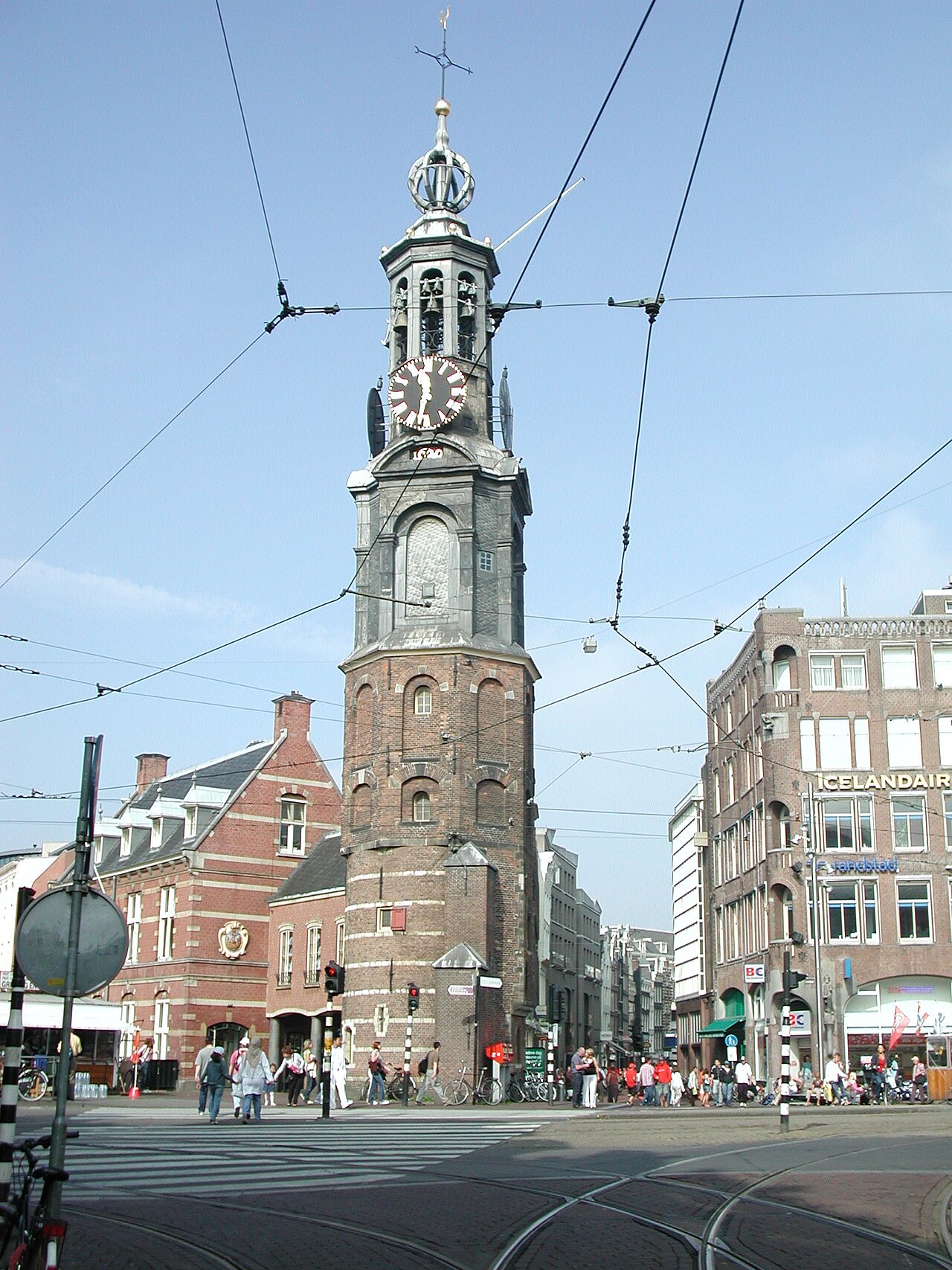
This place is a Attraction. It opened in 1500. It was built in the Renaissance architecture style. It was designed by Hendrick de Keyser. It carries the Rijksmonument heritage designation.
Munttoren is Amsterdam’s historic clock tower at Muntplein, where the Amstel meets the Singel canal. It began as part of the Regulierspoort, one of the city’s medieval gates, and later gained its name from the mint that operated here in the seventeenth century. Today its clock faces, distinctive silhouette and carillon make it a memorable city-centre landmark. The Munttoren is a historic tower in Amsterdam, situated at Muntplein where the Amstel river meets the Singel canal. It originally formed part of the Regulierspoort, one of the main gates in Amsterdam's medieval city wall. The tower acquired its current name when the city mint operated here in the seventeenth century. The present structure features a clock and carillon added during later modifications. The tower stands as a prominent landmark at a busy intersection, visible from multiple approaches through the city centre. Its distinctive profile makes it a familiar reference point for navigation.
Checked 2026-08-26 · Source
The tower contains working bells and a carillon, while its main visitor experience takes place outdoors around Muntplein. The clock faces and tower profile can be viewed from the surrounding streets, bridges and canal edges. Ground-level commercial premises form part of the busy square. Munttoren functions as a working urban clock tower, not as a conventional museum with permanent exhibitions. The Munttoren contains a carillon of bells, which plays melodies at scheduled intervals throughout the day. The internal mechanism and bell chamber are not routinely accessible to the general public for independent visitation. The tower's primary function is as a working clock tower rather than a museum or exhibition space. Visitors typically experience the structure from the exterior, observing the clock faces and listening to the carillon performances. The ground level around the tower comprises commercial premises and the public square.
Checked 2026-08-26 · Source
Fifteen to thirty minutes is enough for most visits. Use that time to circle the square, study the architecture, listen for the carillon and take photographs from different angles. The tower works best as a short stop within a canal-district walk, especially when combined with Dam Square, Rembrandtplein or nearby bridges. Allow longer if you enjoy urban photography or want to wait for the bells. A visit to the Munttoren is typically brief, as the tower is primarily an exterior landmark rather than an extended destination. Most visitors allocate fifteen to thirty minutes to observe the architecture, listen to the carillon if timing permits, and appreciate the surrounding square.
Checked 2026-08-26 · Source
Munttoren can be viewed from public space throughout the day and after dark. Daylight brings out architectural detail and helps with photographs of the clock faces and surrounding canals. Evening visits offer illuminated views. Muntplein is busiest during shopping and commuting periods, while traffic noise can be lower at quieter times. Weather matters because the main experience is outdoors and the square offers limited shelter.
Checked 2026-08-26 · Source
Viewing Munttoren from Muntplein and the surrounding streets requires no admission ticket. It is an open urban landmark rather than a ticket-controlled attraction. You can include it in a self-guided walk through Amsterdam’s central canal district without adding an entry cost. The nearby businesses and transport services operate separately from the tower’s public exterior setting.
Checked 2026-08-26 · Source
Munttoren stands at Muntplein, a major central Amsterdam intersection served by tram stops close to the tower. It is walkable from Dam Square, Rembrandtplein and other inner-city landmarks. Cycling is common, although bicycle parking must follow local rules. Amsterdam Centraal is within the broader central walking and tram network. Take particular care at crossings because trams, bicycles, cars and pedestrians meet around the square.
Checked 2026-08-26 · Source
Muntplein is a traffic junction, not a quiet monument forecourt. Look carefully before crossing cycle paths and tram tracks, and keep children close in the moving crowd. Busy tourist conditions can attract pickpockets, so carry valuables securely. Traffic noise may hide the carillon. The tower itself provides little protection from rain or wind, and evening views require continued attention to vehicles and bicycles.
Checked 2026-08-26 · Source
Photograph Munttoren from Muntplein, nearby bridges and canal-side positions. Reflections, clock faces and evening illumination offer different compositions, while wider frames show the tower within Amsterdam’s waterways and traffic-filled square. Morning and late-afternoon light can add detail to the facade. Avoid blocking cycle lanes or pedestrian routes, and choose a stable position away from the busy intersection instead of setting up a tripod in the main flow.
Checked 2026-08-26 · Source
Yes. The tower can be viewed from Muntplein and surrounding public streets without an admission ticket.
It is known for its historic clock tower, distinctive profile and carillon at Amsterdam’s Muntplein.
Munttoren is at Muntplein, where the Amstel meets the Singel canal in central Amsterdam.
Most visitors need fifteen to thirty minutes to view the exterior, hear the carillon and take photographs.
Nearby tram stops serve Muntplein, and the tower is also walkable from Dam Square and Rembrandtplein.
Take care around trams, bicycles, cars and pedestrians, and secure your belongings in this busy intersection.
Loading the interactive map…
The interactive map could not be loaded.
Last updated:
Source: OpenStreetMap contributors, Wikidata ·