
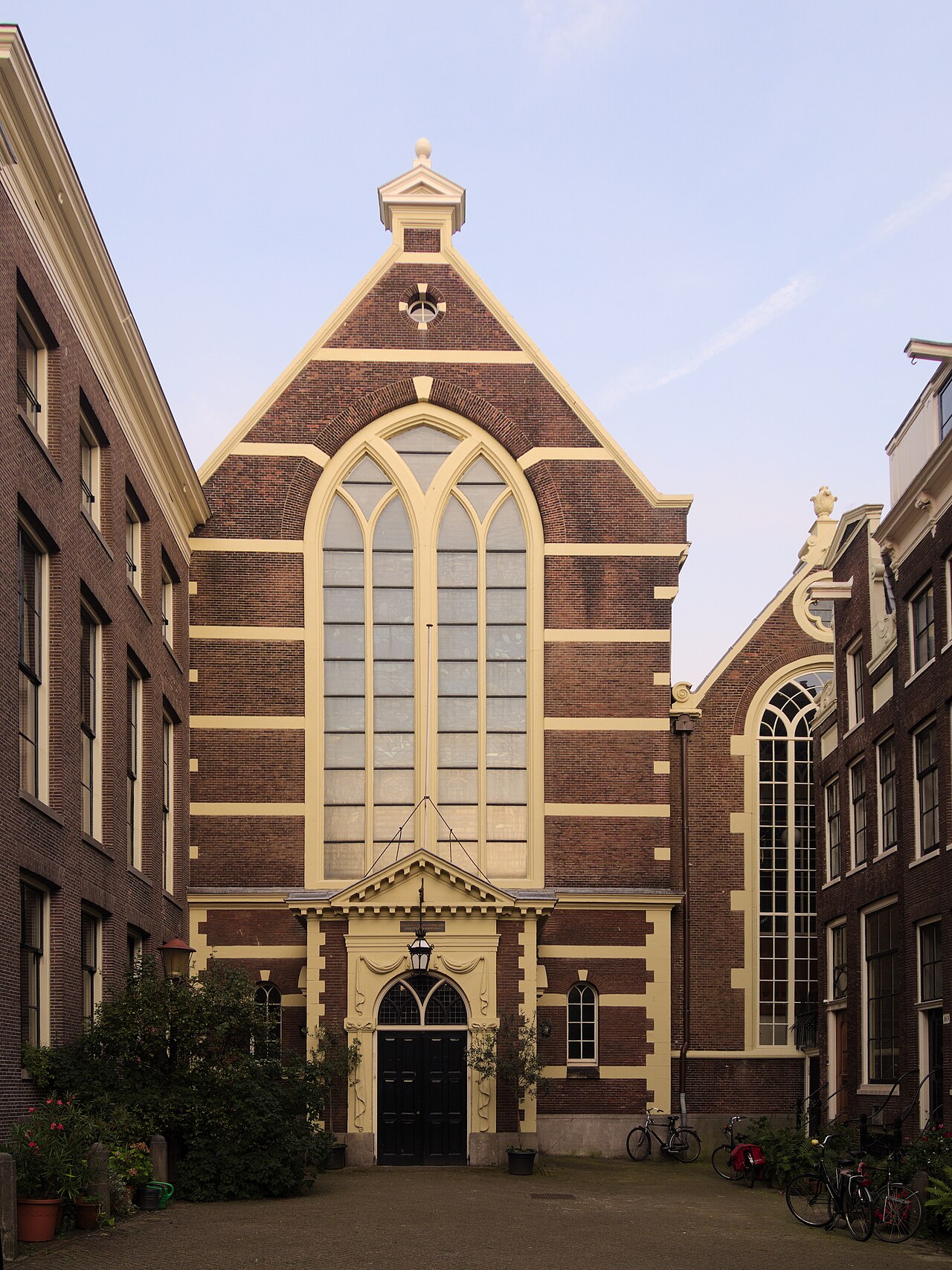
1 min walk
Walloon Church
- Must see · Heritage site
- Place of worship
Language · 11 published
Historic monument · Amsterdam
Reviewed by Elena Voss · Roavina Travel Editor

This place is a Attraction. It was established in 1606. It was designed by Hendrick de Keyser. It carries the Rijksmonument heritage designation.
Oost-Indisch Huis is a historic Amsterdam building identified with the Dutch East India Company, or VOC. Unlike a private canal-side merchant house, it is remembered for institutional work: administration, meetings, records and decisions connected with a powerful trading organisation. That distinction gives the site a particular historical value. It places the organisation’s commercial and overseas ambitions within Amsterdam’s urban fabric, where the building’s formal architecture communicated authority. The site is therefore a useful stop for understanding the structures behind Dutch maritime trade and colonial expansion during the Dutch Golden Age. Its meaning lies in the relationship between place, administration and power, even when the building is viewed from the surrounding streets rather than through a confirmed interior visit.
Checked 2026-08-26 · Source
The historical function of Oost-Indisch Huis was centred on rooms for the VOC’s governing and administrative bodies. Meeting rooms and offices were more important to its identity than domestic interiors, because the building supported decisions and organisation across a far-reaching trading network. Its classical architectural character reflects the authority and wealth associated with that role. The available record does not establish which historic rooms, displays or interior features can be entered today, so the building should be approached as a headquarters site whose purpose can be understood through its architecture and documented history. Visitors interested in the working mechanisms of trade may find that administrative context more revealing than a conventional collection of objects.
Checked 2026-08-26 · Source
Oost-Indisch Huis works best as a focused historical stop within a wider Amsterdam walk. Around thirty minutes is suitable for travellers concentrating on the building, its facade and its VOC connection. Visitors studying Dutch commercial history, maritime administration or colonial power may want longer to read the setting carefully and compare its institutional character with nearby historic streets. The stop does not need to dominate a full day: it can serve as a compact anchor between other central sights, provided the route allows time for pauses, orientation and the possibility that only the exterior is available to view. Its value comes from thoughtful context rather than a long sequence of visitor activities.
Checked 2026-08-26 · Source
A daytime stop is the most useful choice for examining Oost-Indisch Huis as part of Amsterdam’s historic centre. Natural light makes the classical exterior and its relationship with the surrounding streets easier to appreciate. Summer brings heavier visitor pressure across Amsterdam, while winter is generally quieter, although rain can affect any central walking route. Because no specific seasonal programme or public schedule is established in the supplied record, the building is best placed flexibly within a day rather than treated as an entry-dependent appointment. Travellers following Amsterdam’s maritime or commercial history may find it particularly rewarding when paired with other locations that explain the city’s trading past.
Checked 2026-08-26 · Source
No admission price or free-entry arrangement is recorded for Oost-Indisch Huis, so no fare should be stated. The site’s historical importance can be appreciated as part of the public cityscape, while any plan that depends on entering the building requires confirmed access from the responsible authority or operator. This is not a museum-ticket recommendation: the building is significant because it represents the VOC’s headquarters and administrative function.
Checked 2026-08-26 · Source
Oost-Indisch Huis occupies a central Amsterdam location suited to walking, cycling and public transport. Walking from Amsterdam Central Station takes approximately fifteen to twenty minutes through the historic centre, making the building a practical addition to a day already spent exploring central streets. Tram services reach the surrounding area, with the final approach completed on foot. Canal boats operate in the wider centre, but direct access to the building is not established. Driving is an awkward choice because central Amsterdam is congested and parking is limited. Cyclists should plan for the normal demands of the historic centre, including busy paths, pedestrians and limited space to leave a bicycle.
Checked 2026-08-26 · Source
The key practical distinction at Oost-Indisch Huis is between its firmly documented historical identity and visitor arrangements that are not established in the supplied record. In the surrounding centre, watch for cyclists, narrow pavements, busy streets and canal-side edges while moving between viewpoints. The building’s significance also includes the unequal and coercive history of Dutch colonial expansion, so a visit benefits from treating the VOC’s commercial success and its wider consequences as connected parts of the story.
Checked 2026-08-26 · Source
Oost-Indisch Huis offers photographic interest through its classical architectural character and its position in Amsterdam’s historic urban fabric. Street-level views can show how the formal building differs from the everyday scale and movement of the central city. Frame the facade with enough surrounding context to communicate its institutional presence, rather than treating it only as an isolated decorative frontage. Exterior photography should respect entrances, pedestrians and any active private or administrative use. Interior photography rules are not established in the supplied record, and drone operation is subject to Dutch aviation rules; ordinary public-space photography is therefore the most practical approach for visitors.
Checked 2026-08-26 · Source
Oost-Indisch Huis is known for its association with the Dutch East India Company, or VOC, and for its role as an institutional headquarters and administrative centre during the Dutch Golden Age.
The building supported the VOC’s governing and administrative work. Its role was connected with meetings, offices, records and the organisation of Dutch overseas trade and colonial activity.
No. Its documented significance is institutional rather than domestic: Oost-Indisch Huis represents a headquarters used for administration and decision-making connected with the VOC.
The building reflects Amsterdam’s role as a centre of maritime commerce and shows how trade, administration and colonial expansion were connected during the Dutch Golden Age.
Its classical architectural character expresses the authority and wealth associated with the VOC. The building is especially useful for understanding how institutional power appeared in Amsterdam’s historic cityscape.
Oost-Indisch Huis represents the administrative centre of the VOC, an organisation that played a major role in Dutch overseas trade and colonial expansion.
Loading the interactive map…
The interactive map could not be loaded.
Last updated:
Source: OpenStreetMap contributors, Wikidata ·