
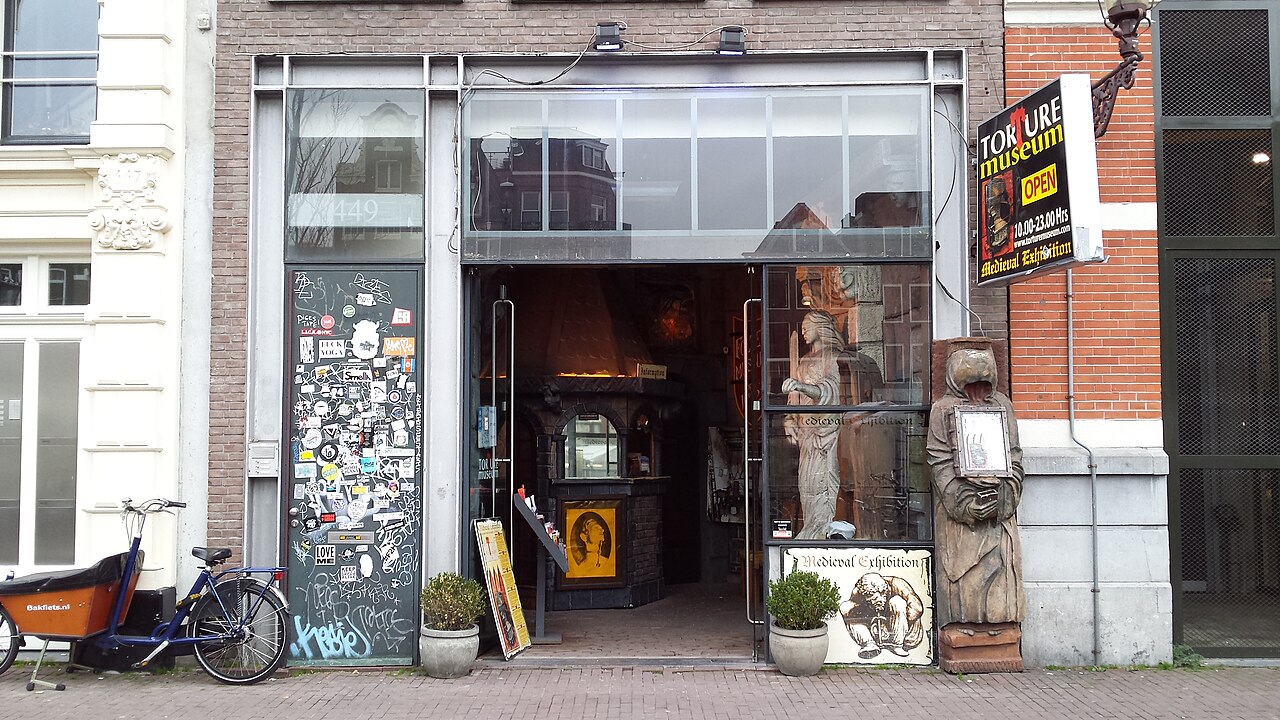
1 min walk
Torture Museum
- Notable
- Museum
Language · 11 published
Historic monument · Amsterdam
Rasphuispoort
Reviewed by Elena Voss · Roavina Travel Editor

Rasphuis, also known locally as Rasphuispoort, is a surviving gate connected with Amsterdam’s former rasphuis, or house of correction. The name refers to the rasping of wood, labour associated with inmates of the institution. Unlike Amsterdam’s canal houses or major churches, Rasphuis is a small architectural remnant whose importance comes from the history attached to this particular entrance. The gate gives visitors a tangible point of contact with the city’s early modern penal institutions and the ways Amsterdam organised punishment, labour and social control. The Rasphuis, known locally as Rasphuispoort, stands as a historic gate structure in Amsterdam. This remnant connects to the city's past penal and charitable institutions. The name derives from the rasphuis, a house of correction where inmates rasped wood. No interior access is recorded. The structure functions as an exterior gate visible from public streets. No fee applies to exterior observation from public thoroughfares.
Checked 2026-08-26 · Source
The feature visible to visitors is the gate itself. Rasphuispoort is not described as a public museum with exhibition rooms, a visitor centre or an accessible sequence of former prison interiors. Its value lies in the surviving masonry and the historical meaning of the entrance. Examine the gate as an exterior object, then place it in the story of the rasphuis, where inmates performed wood-rasping labour. The surrounding streets provide context for understanding how the former institution was embedded in Amsterdam’s central urban fabric.
Checked 2026-08-26 · Source
Allow about five to fifteen minutes for a focused stop at Rasphuispoort. This gives enough time to find the gate, look closely at its architectural details, take photographs and reflect on its connection with the former house of correction. Travellers with a particular interest in Amsterdam’s penal history or surviving urban fragments may stay longer while reading about the rasphuis. For most visitors, Rasphuis works best as a short historical point within a broader walk through Amsterdam’s central streets and canals.
Checked 2026-08-26 · Source
Rasphuispoort is an exterior remnant encountered in Amsterdam’s public streetscape. Daylight is the most useful time for examining the gate’s surface, proportions and surrounding setting, particularly if architectural detail matters to you. The stop can be combined with a daytime walk linking central landmarks, canal streets and other historical fragments. An evening visit is a street-level encounter rather than a scheduled indoor activity, so choose a time when you are comfortable with the surrounding pedestrian, cycling and traffic conditions.
Checked 2026-08-26 · Source
Rasphuispoort is presented as an exterior landmark viewed from the public thoroughfare, rather than as a ticketed interior attraction. There is no recorded entrance procedure, reservation process or staffed reception associated with observing the gate itself. A separate walking tour may discuss Rasphuis as one stop among many and may charge for the tour, but that would be a service fee for the tour rather than a recorded admission arrangement for the gate. Plan this visit as a brief architectural and historical observation.
Checked 2026-08-26 · Source
Rasphuispoort sits in Amsterdam’s compact central district and is easiest to include in a walking route. From Dam Square or Amsterdam Central Station, follow the central streets and canal-belt approaches, allowing time for the final walk to the gate. Trams serve the wider central area, although the last part of the journey still requires walking. Cyclists can use Amsterdam’s extensive cycle network, but the immediate surroundings remain active. Use the mapped Rasphuispoort location to identify the correct historical remnant rather than relying on a similar-sounding landmark.
Checked 2026-08-26 · Source
Rasphuis is modest in scale and can be easy to miss among Amsterdam’s busy central streets. Watch for bicycles, vehicles and other pedestrians while approaching or taking photographs, and do not stand in a cycle lane or carriageway. The gate itself has no recorded visitor facilities, so arrange restrooms, drinks and longer breaks elsewhere in the neighbourhood. Respect adjacent homes and businesses, keep clear of entrances, and remember that the surviving gate represents only one visible fragment of a much larger former institution.
Checked 2026-08-26 · Source
Photograph Rasphuispoort as both an architectural detail and part of its Amsterdam street setting. A close view can emphasise the masonry, entrance proportions and signs of age, while a wider frame shows how the remnant relates to the surrounding central streets. Daylight usually makes the material and form easier to read. Choose a safe public vantage point, avoid cycle lanes and roadways, and do not block residents, pedestrians or shop access. A short stop is normally sufficient for detail shots and contextual images.
Checked 2026-08-26 · Source
No public interior access is recorded. Rasphuis is best treated as an exterior gate visible from the surrounding public streets.
Expect a short exterior encounter with a historic gate associated with Amsterdam’s former house of correction, rather than a museum visit with public prison rooms or exhibitions.
Plan around five to fifteen minutes to locate the gate, inspect its details and take photographs. It fits naturally into a longer central Amsterdam walk.
No guided-tour programme is recorded for Rasphuis itself. The gate may be discussed as part of a separate city walk, but that is distinct from an on-site visitor programme.
The gate is viewed from Amsterdam’s public central streets. It is practical to include on foot from nearby landmarks, with the final approach from public transport stops made by walking.
The gate was associated with Amsterdam’s former rasphuis, a house of correction where inmates performed wood-rasping labour. It preserves a visible link to the city’s penal and institutional history.
Loading the interactive map…
The interactive map could not be loaded.
Last updated:
Source: OpenStreetMap contributors, Wikidata ·