

2 min walk
Museu Nacional de Arte Contemporânea (MNAC)
- High
- Museum
Language · 11 published
Museum · Lisbon
Museu Nacional de Arte Contemporânea - Museu do Chiado
Reviewed by Elena Voss · Roavina Travel Editor
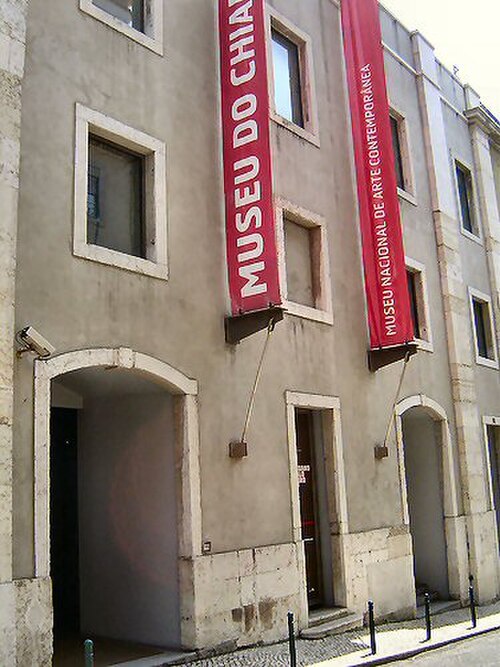
This place is a Museum. It opened in 1911.
The Chiado Museum is the National Museum of Contemporary Art in Lisbon, housed in a building that was reconstructed following a devastating fire in 1988. It occupies a significant position in the Chiado district, a historic commercial and cultural quarter of central Lisbon. The museum's full official designation reflects its dual identity as both a national institution and a locally anchored cultural venue. Its collection and programming focus on Portuguese contemporary art from the nineteenth century to the present day.
Checked 2026-08-26
The museum contains permanent collections of Portuguese contemporary art, including painting, sculpture, and other media spanning from the 1850s onward. The institution presents rotating exhibitions that engage with modern and contemporary artistic practices. Its holdings represent significant developments in Portuguese art history, with particular attention to works produced from the late nineteenth century through the twentieth century. The reconstructed building itself, designed by Álvaro Siza Vieira, constitutes an architectural statement integrating historical preservation with contemporary museum functionality.
Checked 2026-08-26
Visitors should allocate approximately two to three hours for a meaningful engagement with the museum's permanent collections and any temporary exhibitions on display. Those with specialized interest in Portuguese contemporary art history may wish to extend their visit to allow thorough examination of individual works and accompanying interpretive materials. The duration necessarily varies according to personal pace, the number of concurrent exhibitions, and whether audio guides or detailed wall texts are consulted. A complete experience demands unhurried attention.
Checked 2026-08-26
Visitors should consult the museum's official channels before planning attendance. The Chiado district experiences significant pedestrian traffic throughout daylight hours, with particular concentration during midday and weekend periods. Morning visits may offer relatively quieter conditions for concentrated engagement with exhibitions. Seasonal tourism patterns affect Lisbon generally, with summer months bringing increased visitor numbers to central cultural institutions. Advance verification of operational status remains essential regardless of planned timing. Chiado Museum also earns time in a lisbon itinerary because Unique exact local or English production name match within the declared city scope. Its value becomes clearer when the stop is compared with the surrounding streets and the other ranked places nearby. Check the operator's own site for the travel date before relying on a schedule or fare.
Checked 2026-08-26
The museum's admission structure likely distinguishes between general entry and possible concessions for designated visitor categories, consistent with Portuguese national museum practice. Visitors should verify current pricing through official museum communication channels prior to arrival. Some national museums in Portugal participate in reciprocal programs or offer periodic free admission days, though specific applicability to this institution requires direct confirmation. Budget planning should incorporate provisional allocation pending authoritative pricing information. A flexible visit lets travellers connect Chiado Museum with the rest of the day without treating one room, viewpoint or photograph as the whole experience. The useful pace depends on personal interest and conditions on arrival. Check the operator's own site for the travel date before relying on a schedule or fare.
Checked 2026-08-26
The museum occupies a central position in the Chiado district, accessible via Lisbon's public transportation network. The Baixa-Chiado metro station serves the area, with pedestrian connection through the surrounding street network. Multiple bus routes traverse adjacent thoroughfares. The historic center's topography involves significant elevation changes; visitors should anticipate stair climbing and uneven surfaces characteristic of Lisbon's central districts. Walking from nearby landmarks including the Santa Justa Lift or Commerce Square is feasible for able pedestrians familiar with urban navigation.
Checked 2026-08-26
The surrounding Chiado district presents standard urban conditions requiring ordinary visitor vigilance regarding personal belongings in crowded commercial areas. The museum building's architectural reconstruction incorporates specific spatial configurations that may disorient unfamiliar visitors; attention to directional signage assists navigation between gallery levels. Climate control within exhibition spaces maintains preservation conditions that may feel cooler than external temperatures, suggesting layered clothing preparation. Photography restrictions may apply to specific works or exhibition areas; visitors should observe posted guidance and staff direction regarding permitted activities.
Checked 2026-08-26
Photography policies within the museum likely restrict or prohibit image capture in certain galleries or of designated works, consistent with standard museum practice protecting copyrighted contemporary artworks and lender requirements. Visitors should anticipate variable permissions across different exhibition spaces and verify applicable regulations upon entry rather than assuming uniform permissibility. Flash photography typically encounters universal prohibition due to conservation concerns. Personal device use for non-photographic purposes may similarly face restriction in sensitive exhibition environments; respectful observation of institutional protocols preserves access quality for all visitors.
Checked 2026-08-26
Yes, the institution operates under both designations, reflecting its national scope and local Chiado district location.
The current building was reconstructed following that fire, with architecture by Álvaro Siza Vieira integrating preserved and new elements.
Its permanent collection emphasizes Portuguese contemporary art from the nineteenth century onward, though temporary exhibitions may present broader scope.
Lisbon's central topography involves significant elevation changes and stairs; visitors with mobility considerations should plan routes carefully.
Online ticketing availability is Not recorded pending review; consult official museum channels for current purchase options.
Formal guided tour programming is Not recorded pending review; visitors should inquire directly regarding current educational offerings.
Loading the interactive map…
The interactive map could not be loaded.
Last updated:
Source: OpenStreetMap contributors, Wikidata ·