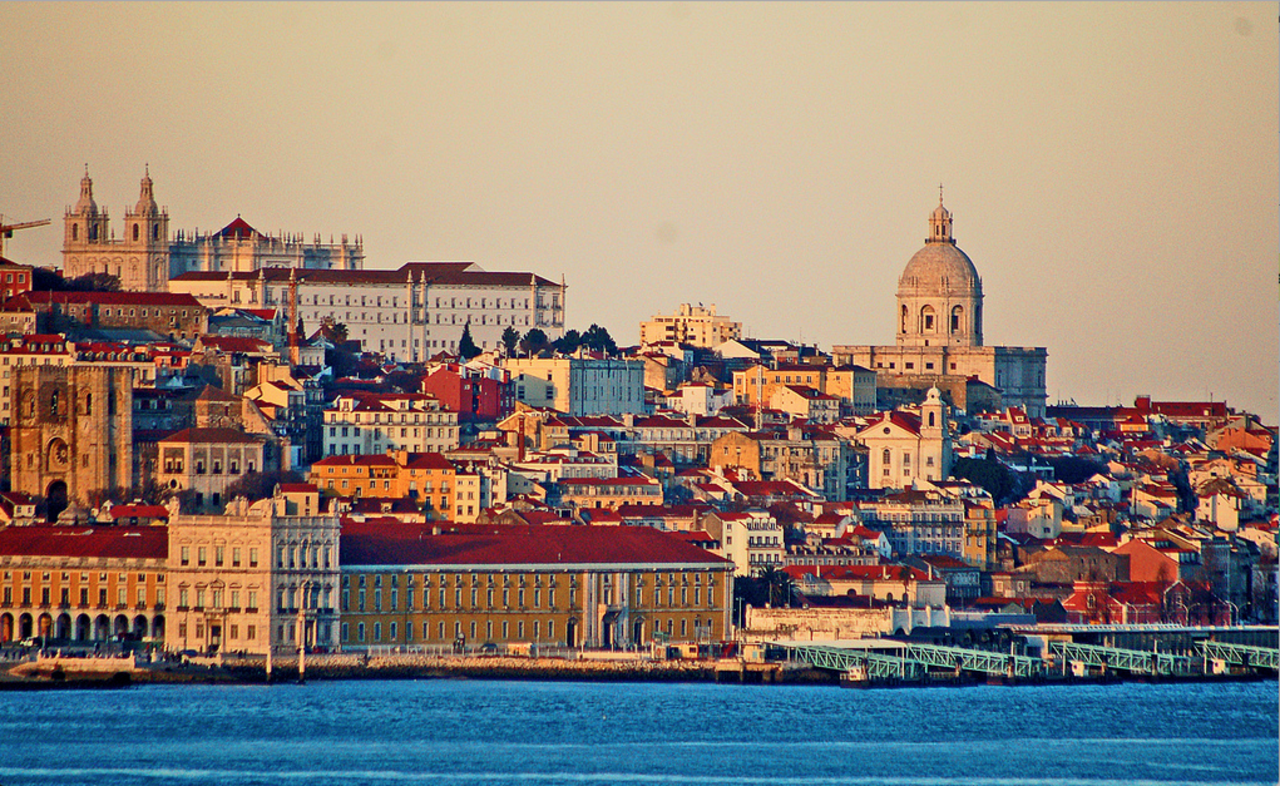
A photograph of Lisbon

City guide · Portugal

Lisbon

Lisbon is Portugal's capital, built on hills along the north bank of the Tagus estuary. The lower Baixa grid forms the central hinge between the older slopes of...

Photograph · Lacobrigo · CC BY-SA 4.0

3,015 Places
Suggested stay
Not recorded
Getting around
Walk, metro, Carris and ferry

Turn this list into a plan

Set your days, your pace and the hours you actually want to be out. The planner works around closing days and travel time, and leaves room to eat.

Plan Lisbon

Reviewed by Elena Voss · Roavina Travel Editor

Lisbon is Portugal's capital, built on hills along the north bank of the Tagus estuary. The lower Baixa grid forms the central hinge between the older slopes of Alfama and Mouraria to the east and Chiado, Bairro Alto and Estrela to the west. Belém is a separate riverside monument cluster farther west, while Parque das Nações occupies a modern eastern waterfront. Viewpoints, steep lanes, tiled facades and river crossings make the city's geography part of the visit rather than a background to isolated monuments.

Checked 2026-08-26

Practical information

Language spoken
Portuguese
National practical orientation; regional and minority languages may also be used
Dialling code
+351
International calling code; local area and mobile prefixes still apply
Currency
Euro (EUR)
Use the official local currency; card acceptance varies by place
Emergency number
112
Use only for an emergency; tourist assistance may use a separate number
Plug type
Type C and F · 230 V
Check that chargers support the recorded voltage before using an adapter
Tap water
Not recorded
No verified nationwide visitor statement was recorded

Planning a visit

September · September in Lisbon has mean high 26.6°C and rainfall 38.6 mm. Warm, drier weather makes Lisbon's hills, viewpoints, and waterfront easier to enjoy. September supports a full day of outdoor stops in Lisbon.

  1. January: viable with meaningful trade-offs
  2. February: good time to visit
  3. March: good time to visit
  4. April: best time to visit
  5. May: best time to visit
  6. June: best time to visit
  7. July: best time to visit
  8. August: best time to visit
  9. September: best time to visit — current month
  10. October: good time to visit
  11. November: viable with meaningful trade-offs
  12. December: viable with meaningful trade-offs

Sources

Top things to see

Ranked by importance — sitelinks, pageviews and heritage status, not editor preference.

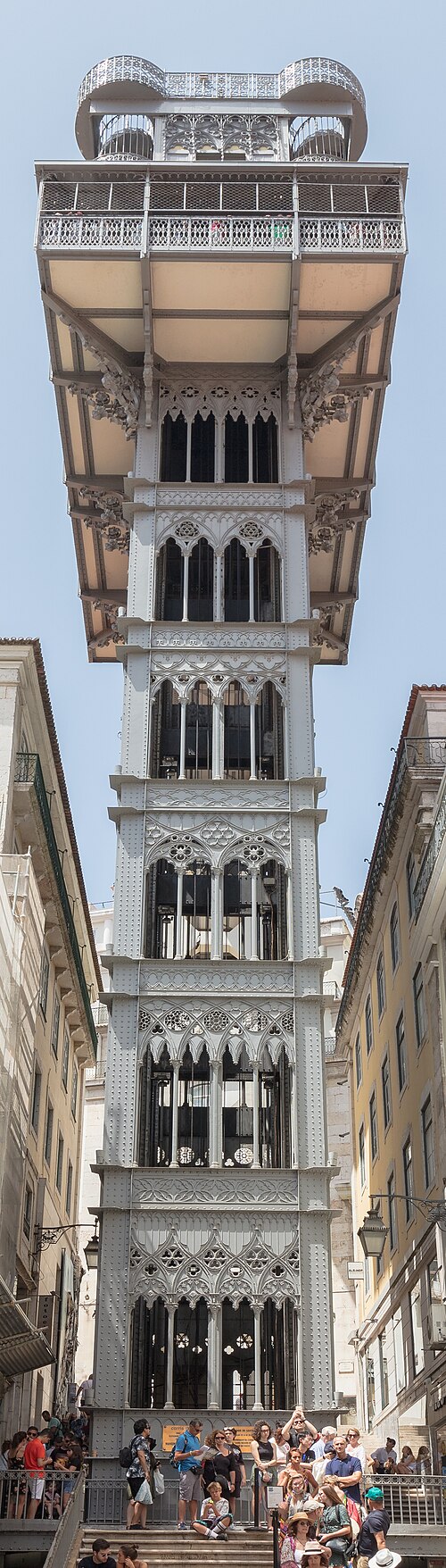
  1. Santa Justa Lift Santa Justa Lift
    02 45 min

    Santa Justa Lift

    Elevador de Santa Justa

    The Santa Justa Lift, known locally as Elevador de Santa Justa, is a historic elevator connecting the lower streets of Baixa with the higher Largo do Carmo.

    • Must see
    • Historic monument
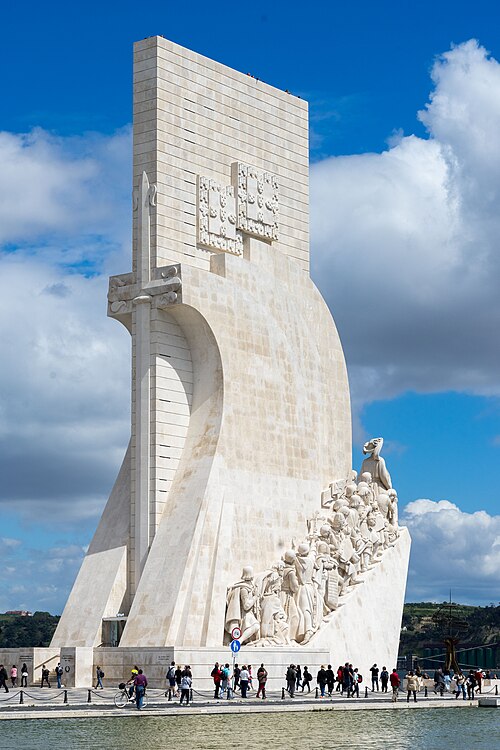
  2. Padrão dos Descobrimentos Padrão dos Descobrimentos
    03 1 hour

    Padrão dos Descobrimentos

    Padrão dos Descobrimentos stands on the Belém waterfront as a 56-metre wedge of concrete and rose-tinted Leiria stone, shaped like a caravel putting out into the Tagus.

    • Must see
    • Historic monument
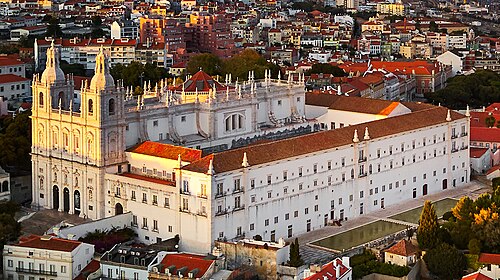
  3. Monastery of São Vicente de Fora Monastery of São Vicente de Fora
    04 45 min

    Monastery of São Vicente de Fora

    Igreja de São Vicente de Fora

    Mosteiro de São Vicente de Fora is a major monastery and church complex above Alfama. The operator traces the foundation to Portugal’s first king, Afonso Henriques, after the 1147 conquest of Lisbon; the present monumental complex reflects later rebuilding.

    • Must see
    • Historic monument
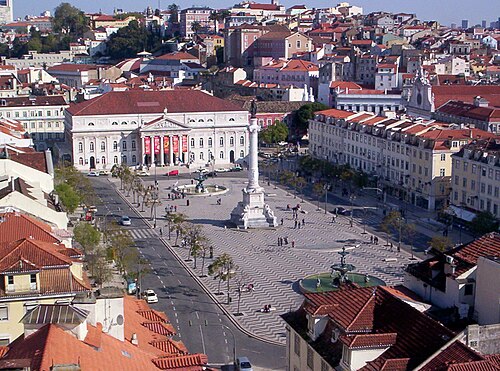
  4. Rossio Square Rossio Square
    05 45 min

    Rossio Square

    Praça Dom Pedro IV

    Rossio Square, known locally as Praça Dom Pedro IV, stands as one of Lisbon's most emblematic public spaces in the Baixa district.

    • Must see
    • Historic monument
  5. Church of Nossa Senhora da Conceição Velha Church of Nossa Senhora da Conceição Velha
    06 45 min

    Church of Nossa Senhora da Conceição Velha

    Igreja da Conceição Velha

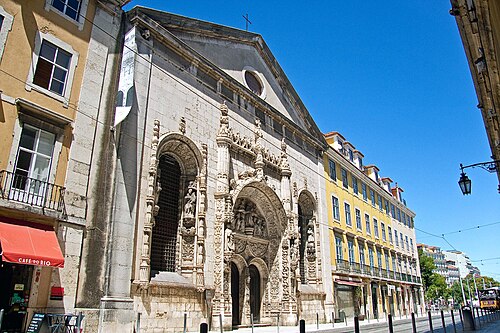
    The Church of Nossa Senhora da Conceição Velha, known locally as Igreja da Conceição Velha, stands in Lisbon's Baixa district.

    • High
    • Historic monument

Source: OpenStreetMap contributors, Wikidata ·

How the city is laid out

Baixa lies in the low central valley between Lisbon's hills and is the easiest orientation point. Alfama and the castle climb east from the river; Mouraria and Graça continue around the northern side of that ridge. Chiado and Bairro Alto rise west of Baixa, with Cais do Sodré below them on the waterfront. Belém is well west of the centre and should be treated as its own cluster. Across the Tagus, Cacilhas is reached by ferry and gives a different riverbank perspective rather than another central neighbourhood.

Checked 2026-08-26

Getting around

Walk within Baixa, Chiado and each hill district, but combine metro, Carris buses, trams and funiculars when elevation or distance makes walking inefficient. Lisbon City Council identifies Carris as the operator for buses, trams and elevators, while Metropolitano de Lisboa runs the metro. Urban trains serve routes such as Cascais and Sintra, and Transtejo or Soflusa ferries cross the Tagus. These are related but distinct services, so verify the current fare product and operator coverage before relying on one ticket for an entire itinerary.

Checked 2026-08-26

Common questions

How many days should I spend in Lisbon?

A fixed stay length is not recorded. Plan separate clusters for Baixa and the central hills, Belém, and any river crossing or regional rail excursion that fits your priorities.

Which district is easiest for orientation?

Baixa is the low central grid. Alfama and Graça rise east, Chiado and Bairro Alto rise west, and the riverfront runs below them toward Belém.

Do I need public transport in central Lisbon?

Yes for some journeys. The centre is walkable in clusters, but hills and changes in elevation make the metro, trams, buses and funiculars useful even over modest map distances.

Is Belém part of the central walking route?

Treat Belém as a separate western riverfront cluster. It is connected by public transport but sits beyond the Baixa, Chiado and Alfama sightseeing core.

How do I cross the Tagus from Lisbon?

Transtejo and Soflusa operate passenger ferries within the metropolitan transport system. Check the current route and timetable for the crossing you need rather than assuming every waterfront terminal serves the same destinations.