
1 min walk · Stari Grad
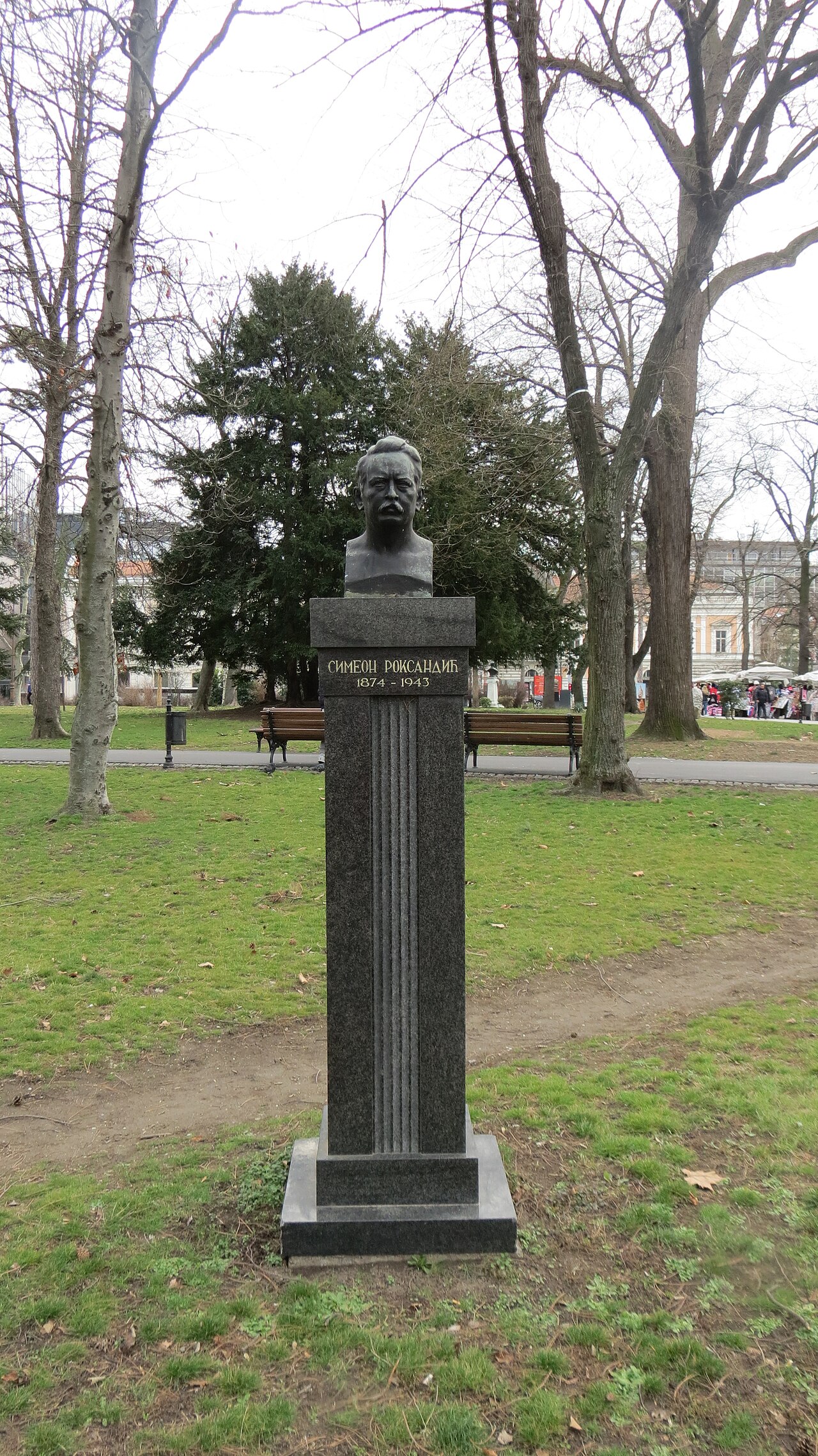
Bust of Simeon Roksandić
- High
- Historic monument
Language · 11 published
Historic monument · Stari Grad, Belgrade
Место предаје кључева Београда 1867.
Reviewed by Elena Voss · Roavina Travel Editor
This place is a Memorial. It carries the Historic Landmark heritage designation.
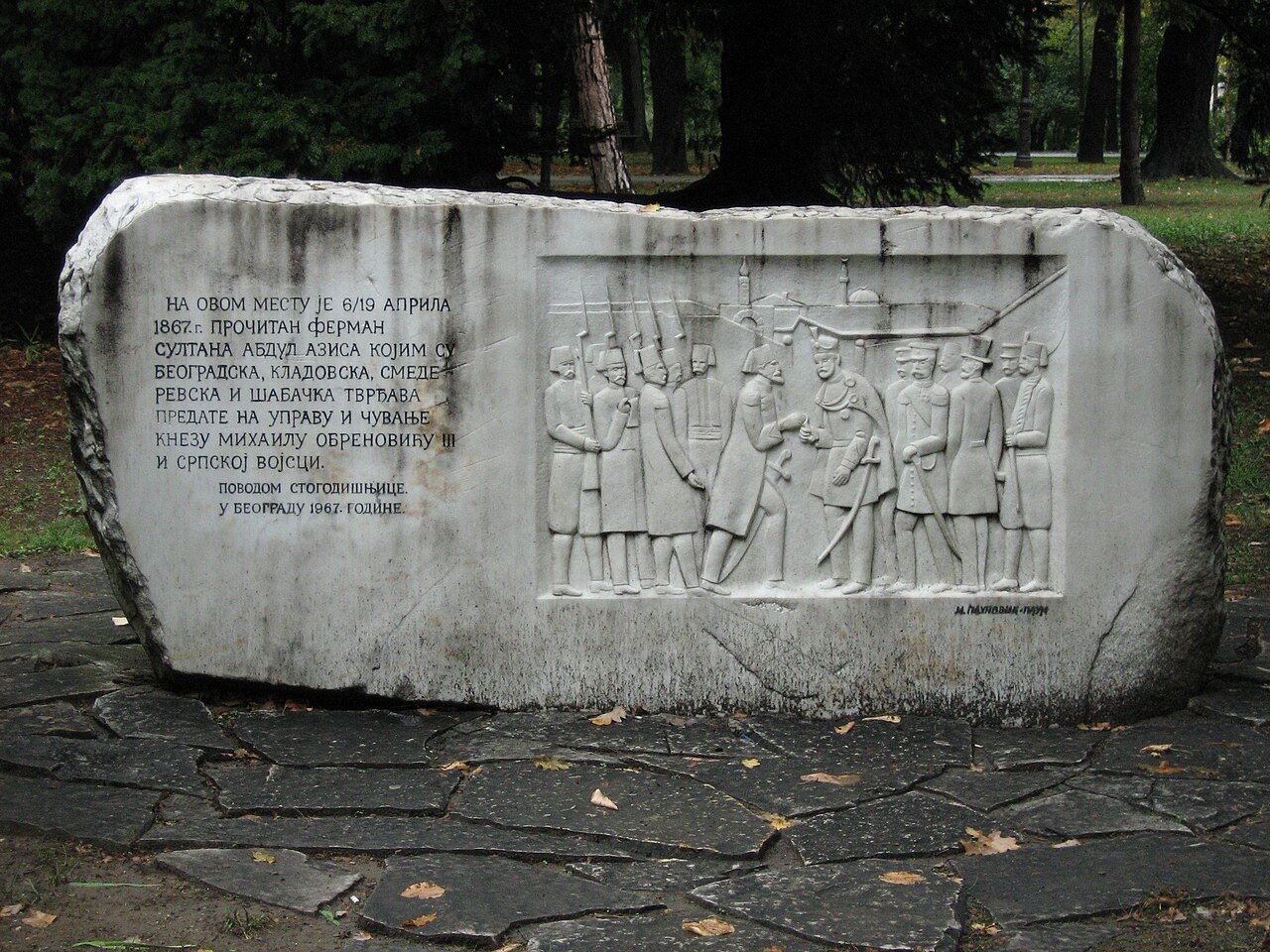
The Keys Handover Memorial is a compact outdoor monument at the entrance to Kalemegdan Park from Knez Mihailova Street. It commemorates the 1867 handover of the keys of Belgrade Fortress to Prince Mihailo Obrenović by the Ottoman commander Ali Pasha Riza. Erected in 1967 for the centenary, it was created by sculptor Mihailo Paunović. Its significance comes from this precise historical reference and its position between Belgrade’s central pedestrian street and the fortress park. The monument marks a political transition at a physical threshold, making it a useful first historical stop before exploring the larger fortress complex.
Checked 2026-09-02 · Source
There is no indoor collection or gallery to tour at the memorial. The attraction is the commemorative monument itself, encountered in an open-air setting before you continue into Kalemegdan Park and the Belgrade Fortress area. Its subject is the transfer of fortress control in 1867, while the surrounding landscape supplies the larger historical setting. Treat fortress buildings, viewpoints and other monuments as separate parts of the wider walk, rather than assuming they belong to this focused memorial stop. The fortress’s virtual tour is useful for understanding the broader site, but it does not turn the memorial into an indoor exhibition.
Checked 2026-09-02 · Source
Allow about 10 to 20 minutes for the memorial as an individual stop. That gives enough time to examine the sculpture, take in its commemorative meaning and understand its location at the park entrance. Plan a longer block if you are continuing through Kalemegdan Park, Belgrade Fortress and nearby viewpoints, because that additional exploration belongs to the surrounding heritage route. The memorial works best as a concise historical waypoint within a central Belgrade walking itinerary, not as a full standalone museum visit. Visitors following the fortress story should allow extra time for the distance, slopes and pauses beyond the memorial.
Checked 2026-09-02 · Source
Visit in daylight so the monument and its relationship with the park entrance are easy to see. As an open-air memorial, the experience depends on weather, visibility and the condition of the surrounding paths. A morning or late-afternoon stop can fit comfortably into a walk from Knez Mihailova Street into Kalemegdan, while the wider route may be busier at popular times. The entrance setting makes it convenient to combine with a daytime exploration of the park and fortress landscape. Choose a time when you can pause without rushing, because the memorial’s location is best understood together with the route leading toward the fortress.
Checked 2026-09-02 · Source
No admission price or confirmed free-entry policy is recorded for this specific memorial. Do not transfer ticket information from other attractions, exhibitions or monuments elsewhere in the fortress complex to this site. Plan it as an outdoor historical landmark on your walking route, while keeping its admission status distinct from any separately managed experience nearby.
Checked 2026-09-02 · Source
The memorial stands at the entrance to Kalemegdan Park from Knez Mihailova Street, in Belgrade’s Stari Grad municipality. The official Belgrade public-transport timetable lists tram lines 5 and 10 for the Kalemegdan and Donji grad area, while buses serve the Kalemegdan and Vidin kapija area. From a stop, continue on foot through the park entrance. The wider approach is a historic park route, so expect walking, level changes and surfaces that may vary. The location is particularly convenient as an extension of a central Belgrade walk rather than a destination requiring a separate cross-city journey.
Checked 2026-09-02 · Source
This is an outdoor historic setting rather than a controlled indoor venue. The approach through Kalemegdan and the fortress landscape may include uneven surfaces and changes in level, so wear footwear suited to walking and allow time for the route from the street or transport stop. Weather, darkness and ground conditions can affect comfort. Keep the monument stop distinct from the longer walk, whose surfaces and access conditions may change as you move deeper into the park. The memorial’s entrance position can also mean passing pedestrians are close by, so pause carefully and keep the route clear.
Checked 2026-09-02 · Source
Use the memorial’s position at the park entrance to give photographs a sense of place. A close view can concentrate on Mihailo Paunović’s sculptural work, while a wider frame can show the transition from Knez Mihailova Street into Kalemegdan Park. Daylight helps reveal the monument’s details and the setting connected with the 1867 handover. Photograph without obstructing pedestrians, then continue into the fortress landscape if you want broader views that place this historical marker in context. A useful sequence includes one detail of the monument, one view of its entrance setting and one image looking toward the wider historic area.
Checked 2026-09-02 · Source
It stands at the entrance to Kalemegdan Park from Knez Mihailova Street, in Belgrade’s Stari Grad municipality.
It commemorates the 1867 handover of the keys of Belgrade Fortress to Prince Mihailo Obrenović by the Ottoman commander Ali Pasha Riza.
It was erected in 1967, marking the centenary of the 1867 handover.
The memorial was created by sculptor Mihailo Paunović.
No admission price or confirmed free-entry policy is recorded for this specific memorial. Nearby fortress attractions may have separate arrangements.
The official Belgrade public-transport timetable lists tram lines 5 and 10 for Kalemegdan and Donji grad; buses also serve the Kalemegdan and Vidin kapija area.
Loading the interactive map…
The interactive map could not be loaded.
Last updated:
Source: OpenStreetMap contributors, Wikidata ·