
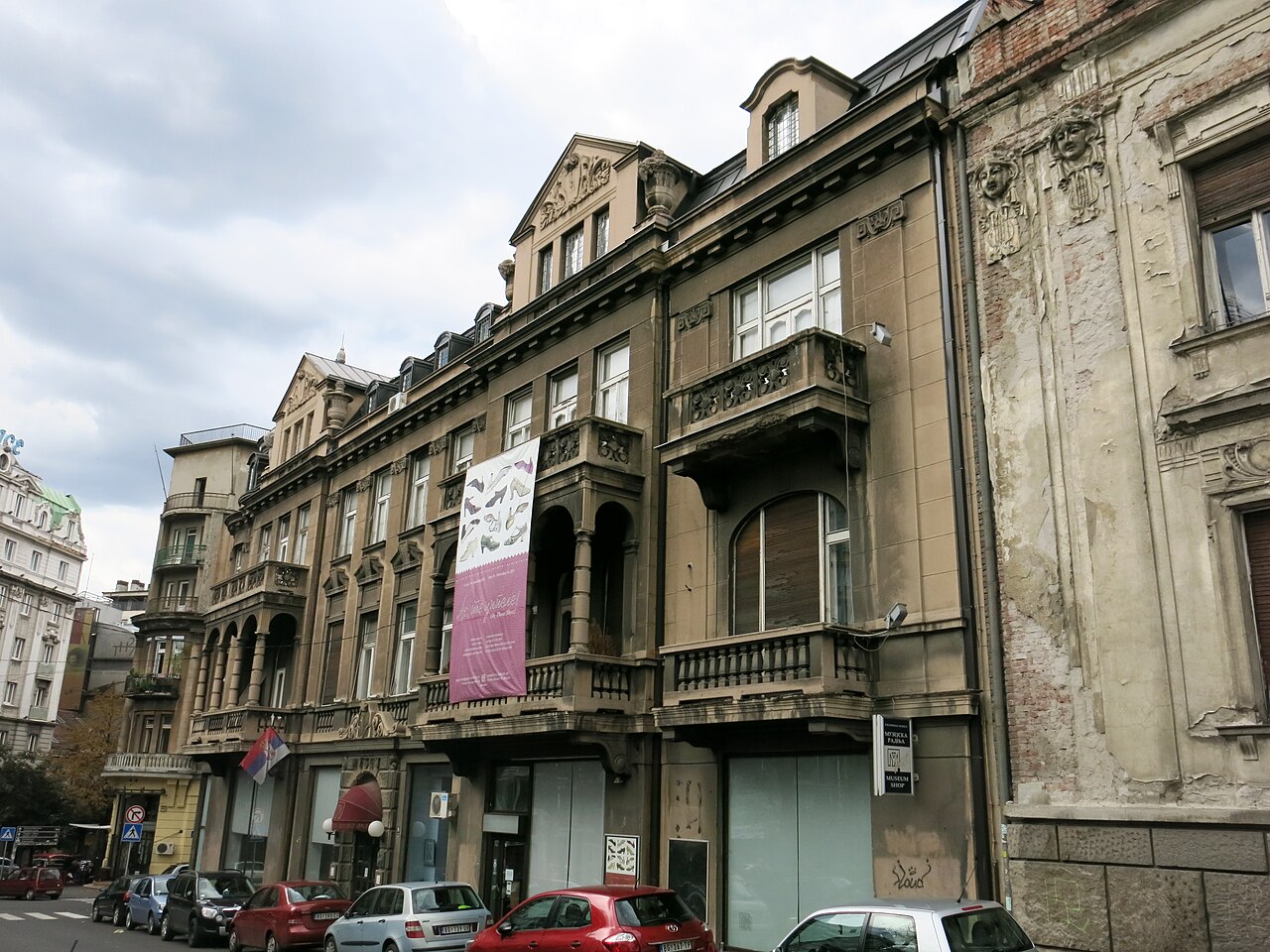
1 min walk · Stari Grad
Gallery "Mladi"
- High
- Art and culture venue
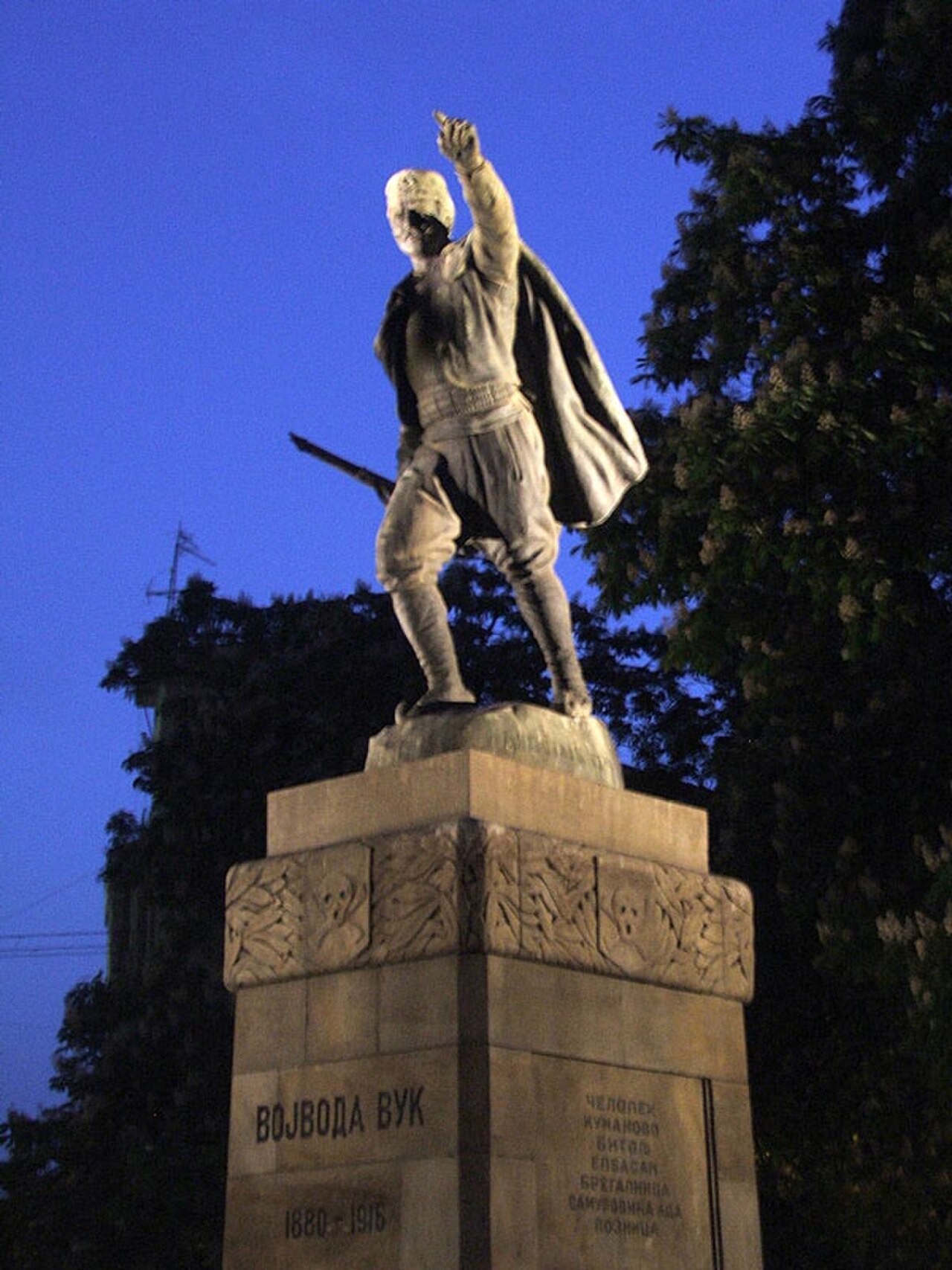
Historic monument · Stari Grad, Belgrade
Споменик војводи Вуку
| Monday | 00:00 – 23:59 |
|---|---|
| Tuesday | 00:00 – 23:59 |
| Wednesday | 00:00 – 23:59 |
| Thursday | 00:00 – 23:59 |
| Friday | 00:00 – 23:59 |
| Saturday | 00:00 – 23:59 |
| Sunday | 00:00 – 23:59 |
Parsed from OpenStreetMap opening hours on 2026-09-09.
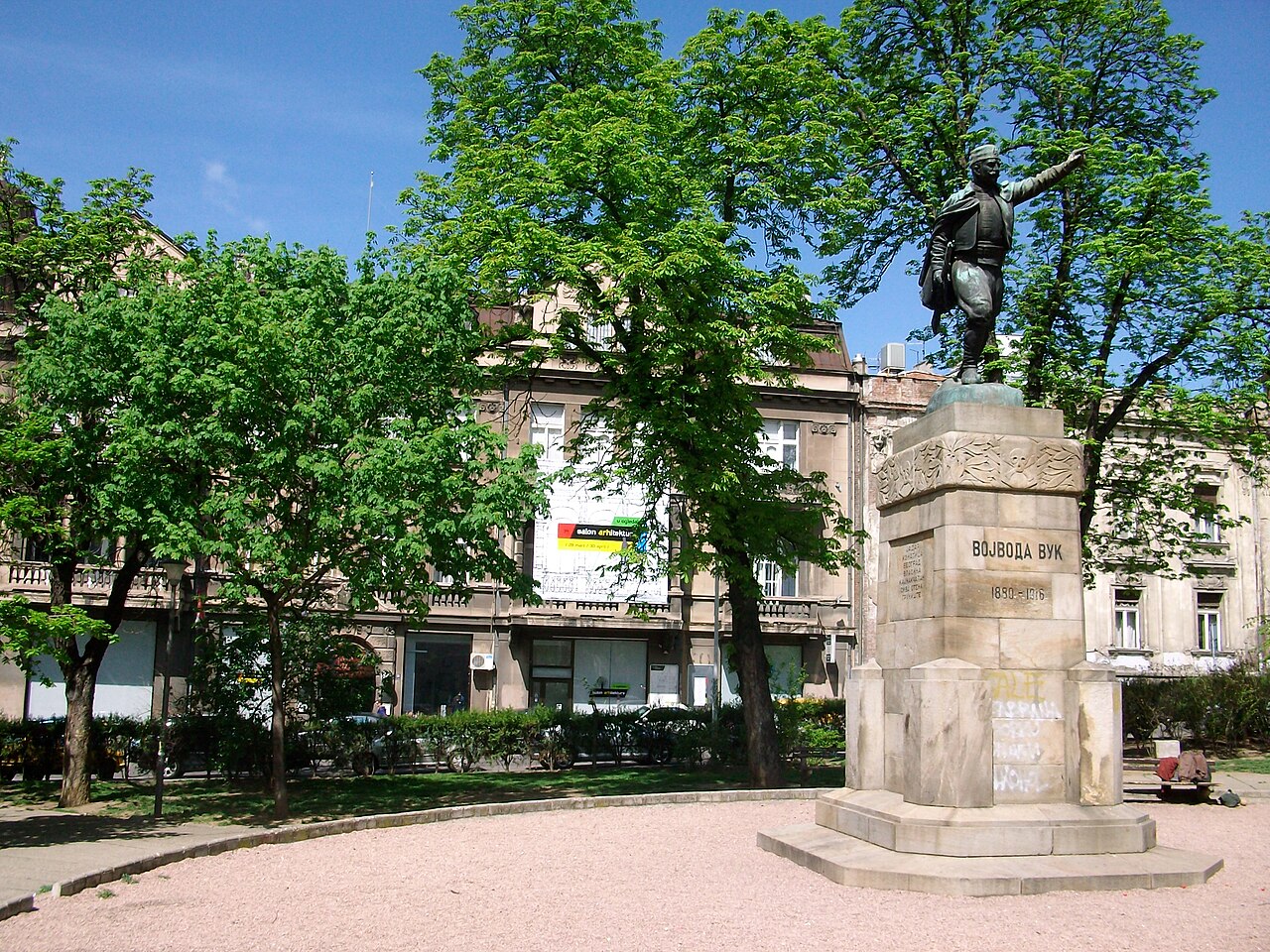
Monument to Vojvoda Vuk is a 1936 sculpture by Đorđe Jovanović honouring Vojin Popović, the Serbian military commander known as Vojvoda Vuk. It stands in Park Vojvode Vuka, a compact public space between Ulica carice Milice and Topličin venac. The memorial is encountered in an everyday urban setting, where paths, a paved plaza and nearby central streets form part of the experience. Its significance is both commemorative and geographical: the sculpture marks a named figure in Serbian military history while anchoring a small park within Belgrade’s protected Historic Core. This is a place to understand through its setting as much as through its sculptural form.
Checked 2026-09-02 · Source
The main object is the monument itself, positioned outdoors in the park rather than inside a museum or enclosed memorial hall. Park Vojvode Vuka also contains the Banatska česma fountain, adding a second point of interest within the same small landscape. The park lies over archaeological remains connected with Roman Singidunum, while its present paths and paved plaza belong to a much later public-space design. Nothing here should be treated as an open excavation: the visitor sees a memorial, fountain and landscaped setting, with the archaeological importance providing context beneath and around the modern park. Nearby historic streets extend the scene beyond the monument.
Checked 2026-09-02 · Source
Plan roughly 15 to 25 minutes for the monument as a focused stop. That allows time to approach through Park Vojvode Vuka, look at the sculpture from the paved plaza and paths, and take in the relationship between the memorial and the surrounding central streets. The stop can be longer if you are using it as one point in a walk that also includes Knez Mihailova Street, the Museum of Applied Arts or Obilićev venac. Visitors interested in the park’s layered history may pause longer to consider the Roman Singidunum context. It is best treated as a compact cultural pause, not a full indoor attraction.
Checked 2026-09-02 · Source
The City of Belgrade describes the monument as part of an outdoor park setting but gives no daily timetable and states no closure days for the site. Plan the visit around daylight and weather, since the sculpture and its relationship to the plaza are easiest to read outdoors. Early morning or late afternoon can make this small central space feel less hurried than the surrounding streets. Dry conditions are more comfortable if you want to linger on the paths. Seasonal light also changes how the figure stands against nearby buildings, making different times of day useful for visitors combining a short historical stop with a city walk.
Checked 2026-09-02 · Source
The attraction is described as an outdoor monument in Park Vojvode Vuka, but that description is not enough to record a free-admission claim. Treat the practical admission information as unavailable in this guide fragment; any nearby museum or other paid attraction has separate arrangements and is outside this monument’s recorded facts. The absence of a recorded price reflects the source evidence, not an assertion that a charge exists.
Checked 2026-09-02 · Source
The monument stands in Park Vojvode Vuka between Ulica carice Milice and Topličin venac, close to Knez Mihailova Street, the Museum of Applied Arts, Obilićev venac and Hotel Aleksandar Palas. For public transport, Trg Republike is a useful urban landmark. The City of Belgrade’s transport documentation places bus 31, on the Studentski trg–Konjarnik route, at a Trg Republike stop. From there, walk toward Knez Mihailova Street, then continue in the direction of Topličin venac and the park. The final approach is a central-city walk through surrounding streets, not a dedicated attraction shuttle.
Checked 2026-09-02 · Source
Visitors with wheelchairs or pushchairs should therefore assess the approach when they arrive, especially where the route changes level. Keep in mind that this is a compact public space beside active central streets, so pedestrians may cross the paths while traffic remains nearby. The archaeological setting is contextual rather than an invitation to enter visible remains: the visitor experience is the monument, fountain and landscaped park. Comfortable footwear helps on a short urban stop.
Checked 2026-09-02 · Source
Use the paved plaza to frame the monument within Park Vojvode Vuka, then move to an oblique angle for a closer view of the sculpture’s military character. A wider composition can include the park and nearby historic streets, while the Banatska česma fountain adds a distinctive secondary element without requiring a separate stop. Daylight is the practical choice for reading the figure against the urban background. Because the park is small and public, keep paths open for people moving between the surrounding streets. Several short viewpoints will show more than one straight-on photograph, especially when the light changes across the plaza and adjacent buildings.
Checked 2026-09-02 · Source
It is in Park Vojvode Vuka, between Ulica carice Milice and Topličin venac in central Belgrade.
The monument was erected in 1936.
The sculptor was Đorđe Jovanović.
It honours Vojin Popović, known as Vojvoda Vuk, a Serbian military commander.
The park also contains the Banatska česma fountain.
The park lies within the protected Historic Core of Belgrade, with archaeological remains from Roman Singidunum beneath it.
Loading the interactive map…
The interactive map could not be loaded.
Last updated:
Source: OpenStreetMap contributors, Wikidata ·