


1 min walk · Stari Grad
Gunpowder magazine, Kalemegdan
- High
- Museum
Historic site · Stari Grad, Belgrade
Победник

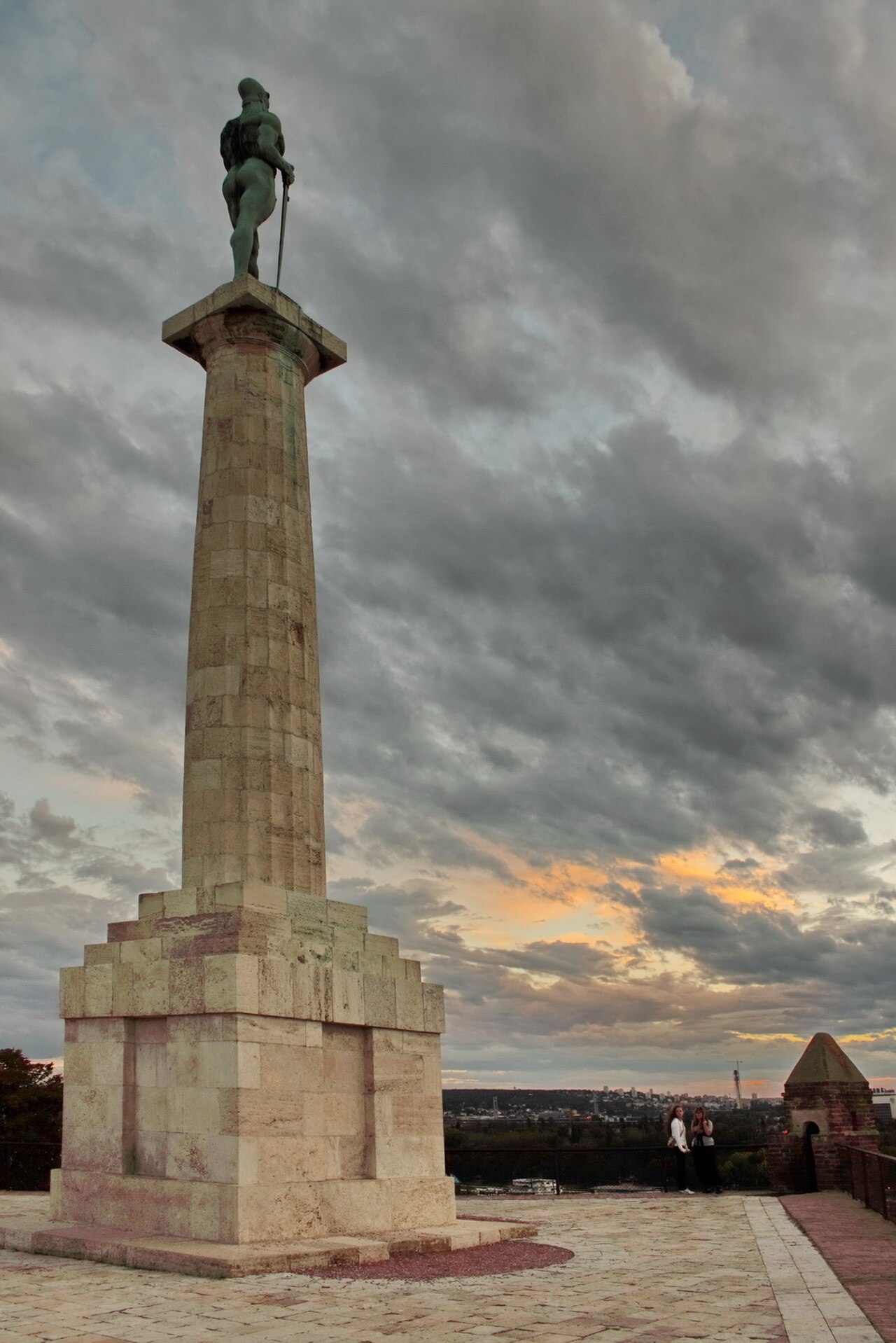
Pobednik, usually translated as the Victor, is a bronze monument by sculptor Ivan Meštrović on the Upper Town ridge of Belgrade Fortress, above the confluence of the Sava and Danube. It is an outdoor sculpture on a tall Doric column, rather than a building or museum. The Belgrade Fortress public operator says the complete monument, including its pedestal, is 14 metres high; this is the total height, not the height of the bronze figure alone. The City of Belgrade reports a 17.5-metre column / monument height, while the fortress operator gives 14 metres for the complete statue and pedestal; neither figure should be presented as the height of the bronze figure alone. The sculpture faces toward the Sava and was unveiled in 1928 to mark the tenth anniversary of the breakthrough on the Salonica Front. The operator records its protected cultural-property status from 1992.
The bronze figure is unclothed and holds a sword in its right hand and a falcon in its left. The operator describes the objects as symbols of war and peace; the City account also explains the falcon's associations with chivalry, war and peace. From the riverside, the elevated silhouette has become a recognizable part of Belgrade's skyline. The statue itself is the subject of this page. Belgrade Fortress and Kalemegdan Park form a much larger historic landscape containing gates, walls, other monuments, museums and park paths. A visit to Pobednik can be one brief stop within that wider walk, but those other places are not parts of the statue. The City describes the fortress and park as a spatial whole and lists the Victor among its separate monuments.
Checked 2026-10-07 · Source

There is no interior to enter at Pobednik: the visit is to a freestanding bronze figure, its Doric-column pedestal and the open rampart around it. The operator's monument account identifies Meštrović as the sculptor and describes the figure's two attributes: a sword in the right hand and a falcon in the left. Look closely at how the upright figure, column and river-facing position work together; these are the main features of the monument rather than rooms, collections or an exhibition. The statue faces the Sava, while the site is above the point where the Sava and Danube meet. Views from the adjacent rampart are part of the setting, not an interior offered by the monument.
Pobednik began as the central figure in a much larger fountain planned for Terazije Square. The City of Belgrade says the concept included a water basin and a five-part column intended to recall five centuries of Ottoman rule; Meštrović had cast the bronze figure by 1913. The First World War interrupted the project. The figure was stored in a house in Senjak for safekeeping during the war, and the fountain plan was abandoned afterwards. Public objections to displaying a nude male figure in the city centre contributed to the decision to place the sculpture on the fortress ridge instead. The operator records the final monument's 1928 unveiling and 14-metre total height; the City account adds the fountain's planned basin and the debate over its original location. The resulting work is a single sculpture on a pedestal, not the fountain that was first proposed.
Checked 2026-10-07 · Source
Pobednik is a single outdoor monument, so the stop itself can be short. Allow around 10 to 15 minutes if you want time to look at the sculpture from the rampart, take a few photographs and read any on-site interpretation that is available. This is a suggested visit duration, not an official timed route or a minimum stay. There are no rooms, galleries or interior exhibits at the statue that require a longer visit. A visitor who only wants a quick look may spend less time; anyone studying the pedestal, the sculpture's details and the changing river views may stay longer.
Keep this estimate separate from time for Belgrade Fortress and Kalemegdan Park. The statue occupies one point on the Upper Town ridge, while the broader complex includes a large park, historic gates and walls, other monuments, and ticketed interiors managed as separate attractions. Exploring those places can take substantially longer, but their walking routes and opening schedules do not define how long the Pobednik stop takes. The operator's visitor page lists hours for specific fortress facilities, not a schedule for viewing the sculpture. A route that combines Pobednik with the rest of the Upper Town or Lower Town should therefore be planned separately according to the visitor's interests and the current access information for each individual facility.
Checked 2026-10-07 · Source
Choose when to see Pobednik according to daylight, weather and the river view you want. The monument stands outdoors and above the Sava–Danube confluence; the elevated position makes the surrounding sky and water part of the view. Morning and later daylight can produce different light on the bronze and pedestal. The official sources consulted describe the monument's location and orientation but do not publish a Pobednik-specific visiting timetable, sunset programme or crowd forecast. Treat any suggested time of day as a personal preference, not an official operating schedule.
Pobednik is one stop within the Belgrade Fortress and Kalemegdan Park landscape. The operator publishes seasonal opening hours for named interior facilities, including the Roman Well, Clock Tower, Military Bunker, Big Powder Magazine, Casemates and Nebojša Tower. Those dates and hours govern those facilities only; they do not establish that the statue or its immediate rampart is open around the clock, nor do they show that Pobednik closes when an interior facility does. The operator page consulted gives no statue-specific seasonal schedule. Opening conditions for outdoor routes may also be affected by temporary maintenance or safety restrictions; check current notices from the fortress operator before setting out if access at a particular time matters. The sources checked for this guide do not establish whether temporary access restrictions are in force on a particular day.
Checked 2026-10-07 · Source
The official visitor information page does not list a Pobednik ticket or a fee for viewing the sculpture. It lists prices for specific indoor or staffed attractions at Belgrade Fortress, such as the Roman Well, Clock Tower, Military Bunker, Big Powder Magazine, Casemates and Nebojša Tower. Those charges apply to the named facilities; they should not be presented as a ticket price for the statue. The same page does not explicitly confirm that access to Pobednik's rampart is free, so this guide leaves the monument's admission charge unrecorded rather than promising either a free visit or a paid ticket.
Pobednik is an outdoor sculpture on the Upper Town rampart, not one of the ticketed interior facilities described in the operator's visitor information. The wider fortress and park contain several distinct places with their own access arrangements. If you plan to visit an interior attraction during the same outing, check its current price, hours and any advance-booking requirement directly with the operator; do not assume a ticket for one place covers another. The operator's page currently describes seasonal hours and prices for named facilities, but the exact access conditions for the monument itself were not stated on the page consulted on 7 October 2026. Confirm with PE Belgrade Fortress if a charge, gate or access restriction would affect your plans.
Checked 2026-10-07 · Source

Pobednik stands on the Upper Town ridge of Belgrade Fortress, at the high point above the Sava–Danube confluence. It is reached as part of a visit to the fortress and Kalemegdan Park, rather than by entering a separate monument building. The official operator's Pobednik page identifies the ridge location within the larger complex. Follow current on-site signs and staff directions when choosing an approach to the Upper Town rampart; this source audit did not verify a specific transit stop, walking time, step-free route or live path condition for reaching the statue.
Keep arrival at the monument distinct from touring the full fortress. The fortress and park contain several entrances, paths, gates and separate facilities, so reaching the Upper Town does not mean every area or interior is on the same route. The City of Belgrade describes the fortress and Kalemegdan Park as one spatial complex and lists Pobednik among its monuments. If you plan to continue to the Lower Town, a museum or another interior, check the operator's current information for that place as well. The operator's published information does not provide a reliable journey duration from Republic Square or a Pobednik-specific transport instruction. Avoid treating a generic route estimate as a guaranteed travel time, especially when maintenance, events or temporary closures could change pedestrian access.
Checked 2026-10-07 · Source
Pobednik stands outdoors on an elevated rampart, so the riverside viewpoint is exposed to weather. Keep children close to an adult near the edge and follow barriers, signs and any temporary instructions on site. The sources consulted do not publish a monument-specific accessibility statement or a detailed description of the paving and parapet. Visitors who need step-free access, have limited mobility or are concerned about heights should contact PE Belgrade Fortress before relying on a particular approach. Do not assume that all paths through the wider fortress and park have the same surface, gradient or access conditions.
The statue's nudity is an intentional part of its design and was central to the public debate about its original proposed location at Terazije. The City account says objections to displaying a nude male figure in the city centre contributed to moving it to the fortress. This is historical context, not a conduct restriction for visitors. The City and operator accounts also report a full restoration around the end of 2019 and beginning of 2020; the statue was returned to the Upper Town site after that work. The official sources consulted identify its protected status but do not describe special dress rules or photography restrictions for viewing the outdoor sculpture. Ordinary visitor access rules for the park and fortress still apply. Separate ticketing, opening times and advance arrangements may apply if you go on to an interior facility; the operator publishes those separately.
Checked 2026-10-07 · Source
The most useful way to photograph Pobednik is to decide whether the statue or the river panorama is the main subject. From the nearby Upper Town rampart, a wider frame can include the column, the figure and the open sky, while a closer view can make the falcon and sword more legible. The statue stands above the confluence of the Sava and Danube, so the viewpoint also supports a separate landscape photograph looking out over the rivers. The official operator confirms the monument's position on the ridge and its orientation toward the Sava; it does not prescribe a best camera position or guarantee an unobstructed view from every point. Use the public paths and respect barriers or temporary access restrictions.
Light changes the result. When the bright sky or water sits behind the bronze, the figure may appear as a darker outline; moving to another permitted angle or returning when the light is different can reveal more surface detail. These are practical photographic observations, not an official promise about weather, visibility or crowd levels. The fortress operator page consulted does not specify a photography ban for the outdoor monument, but it also is not a general permit for commercial photography, tripods or equipment on managed sites. Ask the operator about any planned commercial shoot or equipment that may affect other visitors. The sculpture was fully restored around 2019–20, according to the operator, so photographs taken before that restoration may show a different surface condition. Keep this page focused on the statue and its immediate river-facing outlook; the broader fortress offers other viewpoints and subjects covered by the fortress guide.
Checked 2026-10-07 · Source
The sculptor Ivan Meštrović made the bronze figure. The Belgrade Fortress operator identifies him on its Pobednik monument page.
It was unveiled in 1928 to mark the tenth anniversary of the breakthrough on the Salonica Front. The operator does not give an exact unveiling day on the page consulted.
The Belgrade Fortress operator gives a total height of 14 metres for the sculpture and its Doric pedestal together. The [City of Belgrade reports a 17.5-metre column / monument height](https://www.beograd.rs/lat/zivot-u-beogradu/beogradska-riznica/a85266/Spomenik-Pobednik-najfotografisaniji-simbol-Beograda.html); this differs from the operator figure and should not be presented as the bronze figure's height alone.
The statue was first conceived for a fountain at Terazije, but the fountain was abandoned after the First World War. The City of Belgrade says public objections to placing a nude male figure in the city centre contributed to choosing the fortress ridge instead.
The operator describes the sword and falcon as symbols of war and peace. The City account also associates the falcon with chivalry, war and peace, so the exact interpretation is presented here as the sources' account rather than as a single uncontested explanation.
The operator page consulted does not publish opening hours or a ticket price for Pobednik itself. Its seasonal schedules and charges refer to named fortress interiors and facilities, so check directly with PE Belgrade Fortress if the statue's access time or any charge is essential to your plans.
Yes. It was removed from its pedestal in October 2019, and conservators found more than 30 bullet and shrapnel holes in the bronze; it was returned on 14 February 2020 and the restoration was completed on 5 March 2020.
Loading the interactive map…
The interactive map could not be loaded.
Last updated:
Source: OpenStreetMap contributors, Wikidata ·