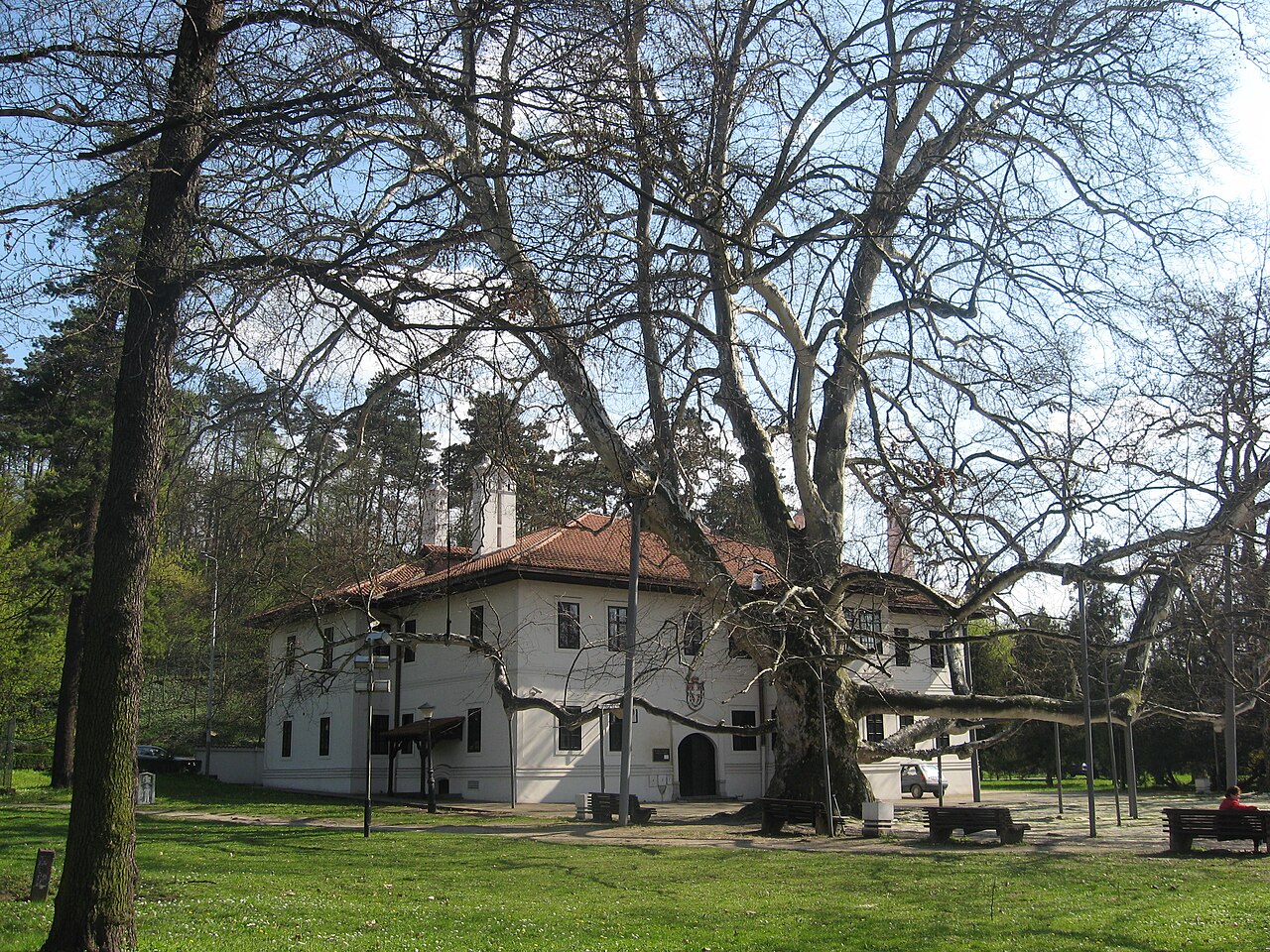
The Residence of Prince Miloš was built between 1830 and 1834 for Miloš Obrenović, the prince who led Serbia's second uprising against Ottoman rule and secured its autonomy, and it is one of the few surviving buildings from that transitional period between Ottoman-era Belgrade and the modern Serbian state that replaced it.
Miloš ruled twice, from 1815 to 1839 and again from 1858 to 1860, and the building predates his return to power, having been completed during the earlier reign when Serbian autonomy inside the Ottoman Empire was still newly won rather than settled. Miloš had it built as one of several residences rather than a single fixed seat of government, reflecting a still-mobile early nineteenth-century court, and it now stands as one of the clearest remaining examples of the domestic Balkan architecture the city mostly demolished as it modernised.
The building today houses part of the Historical Archive of Belgrade, and its rooms combine the Ottoman-influenced construction typical of the period — a bondruk timber frame, divanhana galleries — with the furnishing of an early Serbian princely household.
Original nineteenth-century features, including painted ceiling decoration in some rooms, survive alongside the archive's own later use of the space for storage and display. Documents held by the archive relate directly to the city's nineteenth-century administration, and some are displayed alongside the household rooms rather than kept purely in closed storage, giving the visit a working-institution character rather than a static period reconstruction. Because the building is administered as an archive rather than purely a house museum, public access to some rooms can be more limited than at a dedicated museum property.
Thirty to forty-five minutes covers the rooms generally open to visitors, since the residence is a single historic house rather than a museum complex.
Anyone specifically researching the archive's holdings rather than viewing the house should contact it in advance rather than expect research access on a walk-in visit. It sits close enough to central Belgrade's other Ottoman-era survivals — Princess Ljubica's Residence among them — that a visitor interested in the period before Serbian independence can combine several such houses into one themed morning.
Because the building operates in part as a working archive rather than purely as a museum, opening hours can be more limited or more tied to weekday archive business than a dedicated tourist attraction, and current opening times are not published on the sources this page uses; confirm before travelling out specifically to see it.
Admission arrangements and pricing are not published on the sources this page uses and are not reproduced here; because part of the building serves as an active archive, access for casual visitors may need to be arranged or confirmed in advance rather than assumed on arrival.
Combining a visit with the nearby Princess Ljubica's Residence, run by the Belgrade City Museum, is a reasonable way to plan around uncertain opening hours at either site.
Central Belgrade, within reasonable walking distance of the fortress and Republic Square, in the older residential streets rather than directly on the main tourist thoroughfare.
Trams and buses serve the surrounding streets. There is no metro in Belgrade; trams, buses and trolleybuses run instead, and the old town is walkable end to end.
As a genuine 1830s timber-framed house rather than a purpose-built gallery, floors, stairways and doorways are those of the period rather than adapted for modern accessibility, and a visitor with mobility needs should confirm access before travelling.
Because the building shares its role with the Historical Archive, some areas open on one visit may be closed to the public on another depending on archive business. The residence is smaller and less visited than Princess Ljubica's Residence, and it is worth confirming which of Belgrade's several Ottoman-era konaks a given day trip is aimed at, since the names are easily confused by visitors new to the city.
The bondruk timber construction and divanhana galleries are the details worth framing close, since they are increasingly rare survivals in a city that replaced most of its Ottoman-era housing stock.
The exterior reads most clearly from across the street rather than close against the facade, where the low eaves and timber framing are hard to separate from neighbouring buildings.
Miloš Obrenović, who led Serbia's second uprising against Ottoman rule and secured its autonomy, ruling as prince from 1815 to 1839 and again from 1858 to 1860.
When was the residence built?
Between 1830 and 1834, during Miloš's first reign, making it one of the few surviving buildings from that transitional period in Belgrade.
What does the building house today?
Part of the Historical Archive of Belgrade, which combines the original nineteenth-century rooms with its own archival collection.
Is the residence often confused with Princess Ljubica's Residence?
Yes — both are Ottoman-era Belgrade konaks from the same royal family and era, and visitors should confirm which site a given day trip is aimed at.
How long does a visit take?
Thirty to forty-five minutes, since the residence is a single historic house rather than a museum complex.
Where is the residence located?
In central Belgrade, within walking distance of the fortress and Republic Square, in the older residential streets.