
1 min walk
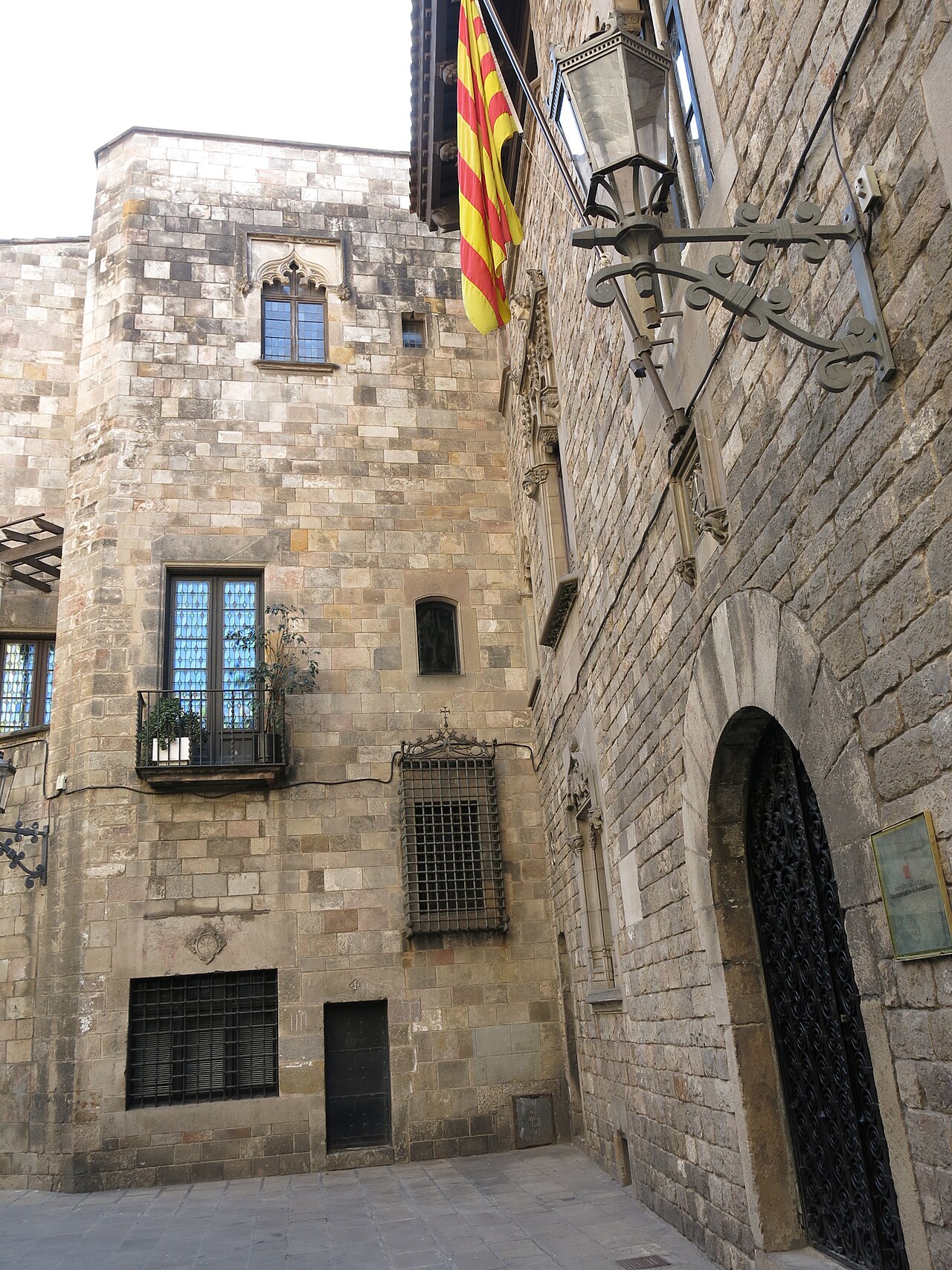
Cases dels Canonges
- Must see · Heritage site
- Historic monument
Language · 11 published
Place of worship · Barcelona
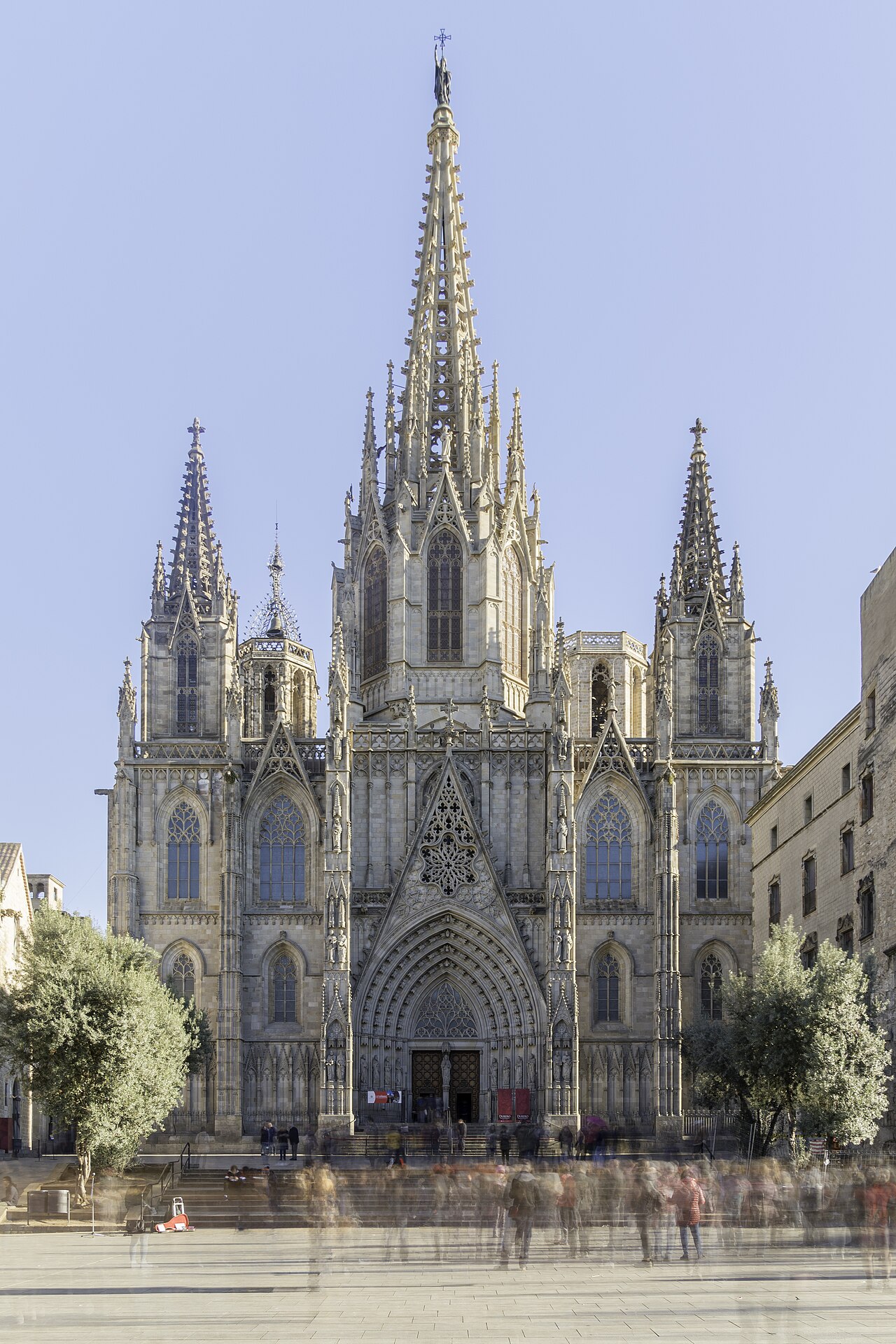
Catedral de la Santa Creu i Santa Eulàlia
Reviewed by Elena Voss · Roavina Travel Editor
| Monday | 09:30 – 18:30 |
|---|---|
| Tuesday | 09:30 – 18:30 |
| Wednesday | 09:30 – 18:30 |
| Thursday | 09:30 – 18:30 |
| Friday | 09:30 – 18:30 |
| Saturday | 09:30 – 17:15 |
| Sunday | 14:00 – 17:00 |
Checked 2026-08-31 · Source
Read from the OpenStreetMap access tags; anything not listed has no tag recorded.
Set the group type to family in the planner and the day window contracts to about three quarters of a solo day.
This place is a Attraction. It was established in 1298. It was built in the Gothic architecture style. It was designed by Bernat Roca. It is built of Montjuïc stone. It carries the bien de interés cultural heritage designation.
The Cathedral of the Holy Cross and Saint Eulalia is the Gothic cathedral of Barcelona, seat of the Archbishop of Barcelona. Dedicated to the city's co-patron saint Eulalia, a young martyr, it stands in the historic Barri Gòtic district. Construction began in the thirteenth century on the site of a Romanesque cathedral, with the main building completed over several centuries. Monday–Friday 09:30–18:30, last entry 17:45; Saturdays and religious-holiday eves 09:30–17:15, last entry 16:30; Sundays and religious holidays 14:00–17:00, last entry 16:30. No regular weekly closure day is listed: the cultural-tourist schedule covers all seven days and religious holidays.
Checked 2026-08-31 · Source
The interior contains the central nave with its tall Gothic columns and vaulted ceilings. The crypt houses the sarcophagus of Saint Eulalia. A cloister with a garden and fountain features thirteen white geese, traditionally kept in memory of the saint's age at martyrdom. The choir stalls display carved wooden seats. Chapels line the perimeter of the cathedral. The roof offers views over the Gothic Quarter, accessible by elevator. Treasury and museum spaces contain liturgical objects and historical artifacts. No regular weekly closure day is listed: the cultural-tourist schedule covers all seven days and religious holidays.
Checked 2026-08-31 · Source
Visitors typically allocate between forty-five minutes and ninety minutes for a general visit to the cathedral interior. Those wishing to explore the cloister, ascend to the roof, and examine the crypt and chapels in greater detail may extend their stay to approximately two hours. The duration depends on individual interest in architectural features, religious history, and photography. Peak periods with larger crowds naturally extend required time. Personal pace and depth of engagement determine actual time spent. General individual admission is €16 per adult. Visitors with a documented disability of at least 33% and ICOM members receive free admission.
Checked 2026-08-31 · Source
The Gothic Quarter experiences increased foot traffic during summer months and major festivals including La Mercè. Morning hours generally offer quieter conditions for contemplative visits. Midday periods coincide with local activity and potential service times. Weekends and religious holidays may affect accessibility and atmosphere. Seasonal variations in daylight influence exterior photography and neighborhood exploration. Monday–Friday 09:30–18:30, last entry 17:45; Saturdays and religious-holiday eves 09:30–17:15, last entry 16:30; Sundays and religious holidays 14:00–17:00, last entry 16:30. The designated reduced-mobility entrance is the Gate of Santa Eulàlia on Carrer del Bisbe.
Checked 2026-08-31 · Source
The cathedral has historically maintained separate access arrangements for worshippers and tourists, with potential fees for certain areas including the roof, cloister, and treasury. Some portions may remain accessible for prayer without charge during designated times. Payment methods and advance booking possibilities require direct verification. Group rates and guided tour supplements, if offered, need confirmation from authorized providers. General individual admission is €16 per adult. Visitors with a documented disability of at least 33% and ICOM members receive free admission. The designated reduced-mobility entrance is the Gate of Santa Eulàlia on Carrer del Bisbe.
Checked 2026-08-31 · Source
The cathedral occupies a central position in Barcelona's Ciutat Vella, accessible via the Jaume I metro station on Line 4, approximately five minutes' walk away. The Liceu station on Line 3 serves the southern edge of the Gothic Quarter. Multiple bus routes traverse Via Laietana and surrounding streets. Take Metro L4 to Jaume I. TMB identifies Jaume I as a station without interchanges and currently marks it non-accessible. The cathedral is at Pla de la Seu; visitors requiring the reduced-mobility entrance should arrive at the Gate of Santa Eulàlia on Carrer del Bisbe.
Checked 2026-08-31 · Source
Pickpockets operate in the Gothic Quarter's crowded streets and tourist concentrations; secure belongings and maintain awareness. Cobblestone surfaces and uneven paving present trip hazards, particularly in wet conditions. Street performers and petitioners may approach visitors near the cathedral entrance. Religious services require respectful behavior and may restrict photography or access to certain areas. The roof visit involves exposed heights and weather-dependent conditions. The designated reduced-mobility entrance is the Gate of Santa Eulàlia on Carrer del Bisbe. Catalonia's official tourism portal lists wheelchair and reduced-mobility facilities but notes that uneven levels prevent access to some areas.
Checked 2026-08-31 · Source
Photography policies within the cathedral require verification at entry, as restrictions may apply to specific areas, during services, or for commercial purposes. Flash photography is commonly prohibited in historic interiors to protect sensitive materials. Tripods and professional equipment typically need advance authorization. The cloister garden offers natural light opportunities with the geese as distinctive subjects. The roof provides elevated perspectives of the Gothic Quarter's dense urban fabric. Exterior facades photograph effectively from Plaça de la Seu, though spatial constraints limit wide-angle composition. No dedicated facilities for visitors with hearing or visual impairments are listed by the official tourism portal.
Checked 2026-08-31 · Source
The visitable route lists the cathedral floor and cloister, rooftops, Golden Fleece choir stalls, Chapter Hall, Jewish-memory display, and Chapel of the Holy Christ of Lepanto.
The rooftop elevator is entered through the Chapel of the Innocent Saints, beside the Gate of Sant Iu.
The cloister pond is home to 13 white geese.
Visitors must not enter or take photographs in the chapel during religious celebrations because it is reserved for worship and prayer.
Their commemorative shields were painted by Juan de Borgoña in 1517–1518 for the knights summoned by Emperor Charles V to meet in Barcelona in 1519.
Highlights include an 11th-century lobed baptismal font, Jaume Huguet's 1465–1470 altarpiece, Bartolomé Bermejo's 1490 Pietà, and a late-14th-century monstrance incorporating King Martin the Humane's campaign throne.
Loading the interactive map…
The interactive map could not be loaded.
Last updated:
Source: OpenStreetMap contributors, Wikidata ·