
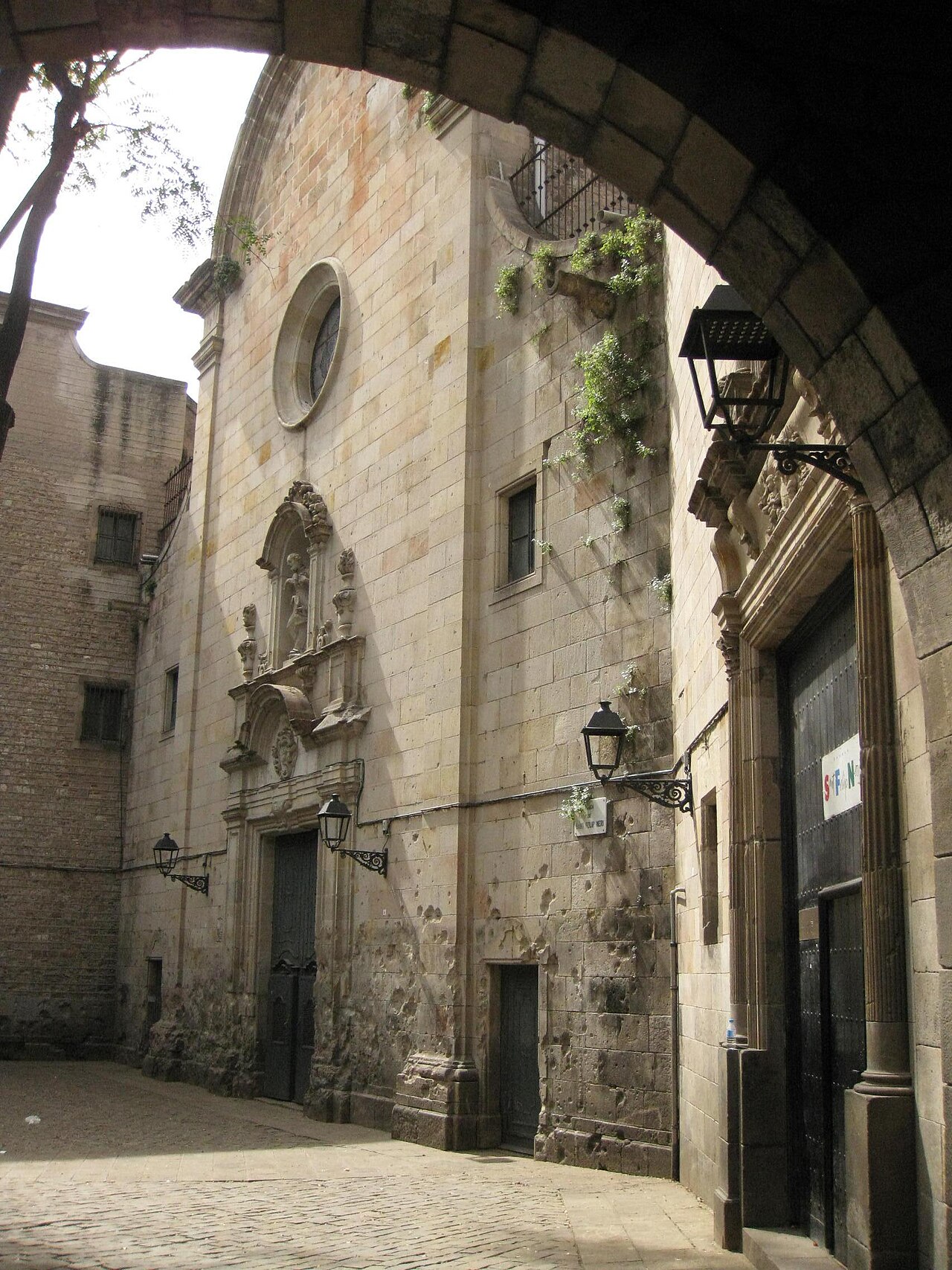
1 min walk
Church of Saint Philip Neri
- High · Heritage site
- Place of worship
Language · 11 published
Historic monument · Barcelona
el Gòtic
Reviewed by Elena Voss · Roavina Travel Editor
Read from the OpenStreetMap access tags; anything not listed has no tag recorded.
Set the group type to family in the planner and the day window contracts to about three quarters of a solo day.
The Gothic Quarter, known locally as el Gòtic, forms the historic core of Barcelona's old city. It encompasses the medieval centre where Roman foundations underlie a dense labyrinth of narrow streets, small squares, and stone buildings accumulated across centuries. The district sits within the larger Ciutat Vella district and represents one of the most continuously inhabited urban areas in Europe. Public streets and squares; no visitor opening schedule applies. The neighbourhood has no district-wide closure day. Individual churches, museums, archaeological sites, businesses and guided tours keep separate schedules.
Checked 2026-08-31 · Source
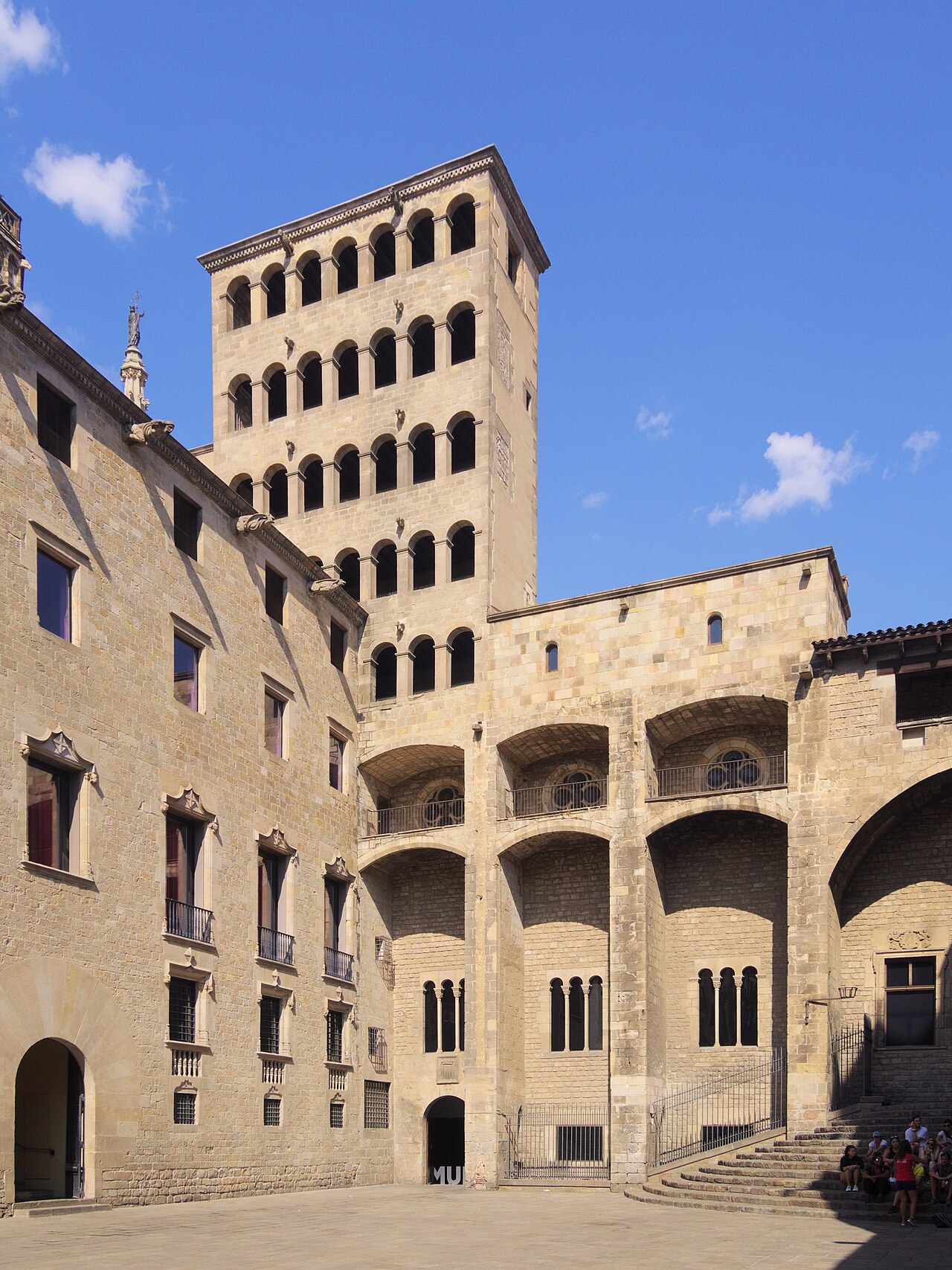
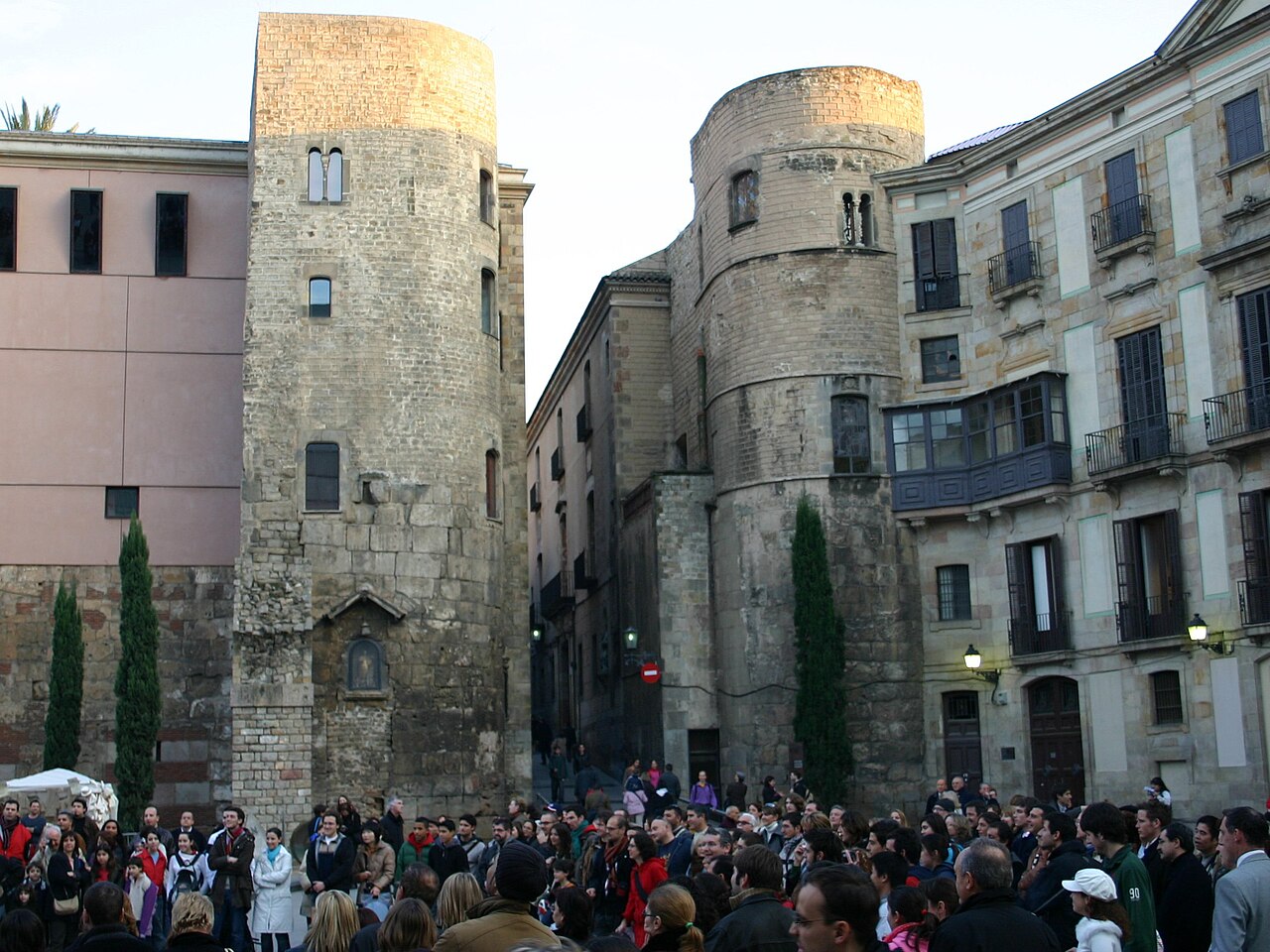
The quarter contains Barcelona Cathedral, whose construction extended across multiple centuries with Gothic and neo-Gothic elements. Several medieval civic buildings survive, including portions of the former royal palace complex. Roman walls and fragments of the ancient temple of Augustus remain visible at specific locations. Numerous small churches, former monastic structures, and historic commercial arcades occupy the streetscape. Plaça del Rei and Plaça Sant Jaume function as significant public gathering spaces. The neighbourhood has no district-wide closure day. Individual churches, museums, archaeological sites, businesses and guided tours keep separate schedules.
Checked 2026-08-31 · Source
Visitors typically allocate between two hours and half a day depending on their interests and pace. Those concentrating on exterior architecture and atmospheric wandering may complete a meaningful circuit more quickly. Visitors entering the cathedral and additional interior spaces, or those seeking to examine Roman archaeological remains in detail, should extend their timeframe accordingly. The dense concentration of narrow streets rewards unhurried exploration, and the absence of vehicular traffic in many passages encourages pedestrian pacing. Free access to the neighbourhood’s public streets and squares; there is no general admission ticket. Individual attractions and guided tours may charge separately.
Checked 2026-08-31 · Source
The quarter remains publicly accessible throughout all hours as an open urban district, though individual buildings maintain separate schedules. The cathedral and other religious structures observe liturgical schedules that may restrict tourist access during services. Summer months bring concentrated tourist presence and elevated temperatures in the confined streets. Public streets and squares; no visitor opening schedule applies. Turisme de Barcelona provides a designated Easy Gòtic itinerary that is free of architectural barriers and adapted to participants’ mobility and pace. The accessible tour is limited to 10 participants including companions and provides tactile maps; portable chairs, hearing-loop audio guides and sign-language guiding are available on request.
Checked 2026-08-31 · Source
As a public urban district, the Gothic Quarter itself requires no admission. Individual monuments and museums within its boundaries operate separate ticketing arrangements. The cathedral charges for certain interior areas while maintaining free access to principal worship spaces during designated periods. Archaeological sites and museum exhibitions apply their own fee structures. Free access to the neighbourhood’s public streets and squares; there is no general admission ticket. Individual attractions and guided tours may charge separately. Turisme de Barcelona provides a designated Easy Gòtic itinerary that is free of architectural barriers and adapted to participants’ mobility and pace.
Checked 2026-08-31 · Source
The quarter connects to Barcelona's metro system through multiple stations including Liceu and Jaume I on the green line, and L4 connections at nearby points. Drassanes and Catalunya stations provide additional access at the perimeter. Bus routes traverse surrounding streets with stops at various boundaries. For the cathedral-side arrival point, use Barcelona Cathedral Tourist Information at Pla de la Seu 4. Turisme de Barcelona names buses 47, V15 and V17 and Jaume I metro station; Jaume I is on line L4, but TMB classifies the station as non-accessible. Liceu on line L3 serves the La Rambla side and is also classified by TMB as awaiting accessibility adaptation.
Checked 2026-08-31 · Source
Narrow medieval streets create disorientation risks; visitors should maintain awareness of their route as GPS signals may prove unreliable between tall structures. Pickpocketing occurs in crowded tourist concentrations, particularly around the cathedral approaches and main squares. Cobblestone surfaces become slippery when wet and present trip hazards regardless of conditions. Some passages receive limited natural illumination even during daylight hours. Turisme de Barcelona provides a designated Easy Gòtic itinerary that is free of architectural barriers and adapted to participants’ mobility and pace. The barrier-free designation applies to the planned Easy Gòtic route, not every street or attraction throughout the neighbourhood.
Checked 2026-08-31 · Source
Exterior photography faces no general restrictions throughout the public streetscape. The cathedral permits photography in exterior areas and certain interior spaces while prohibiting flash and specific zones may restrict all imaging. Individual museums and monuments apply their own photographic policies, with some prohibiting tripods or professional equipment without prior arrangement. Evening photography benefits from artificial illumination of key monuments, though capturing satisfactory images in narrow streets requires attention to mixed lighting conditions. No. It is Barcelona’s historic neighbourhood of narrow public streets and squares, containing civic buildings, churches and archaeological sites with their own visiting arrangements.
Checked 2026-08-31 · Source
No. It is Barcelona’s historic neighbourhood of narrow public streets and squares, containing civic buildings, churches and archaeological sites with their own visiting arrangements.
The Cardo and Decumanus crossed in the area represented today by Carrer del Bisbe and Carrer Llibreteria.
Remains of the Temple of Augustus stand near the former Roman crossroads, while archaeological remains of Roman Barcino can be visited beneath Plaça del Rei.
The Call Jueu lies near Plaça de Sant Jaume; part of the ancient synagogue survives within its network of narrow streets.
Barcelona City Hall and the Palau de la Generalitat, seat of the Catalan Government, face the central Plaça de Sant Jaume.
The 90-minute route starts beside Barcelona Cathedral, follows an itinerary free of architectural barriers and is limited to 10 participants including companions.
Loading the interactive map…
The interactive map could not be loaded.

Last updated:
Source: OpenStreetMap contributors, Wikidata ·