


1 min walk
La Rambla
- Must see
- Historic site
Historic site · Barcelona
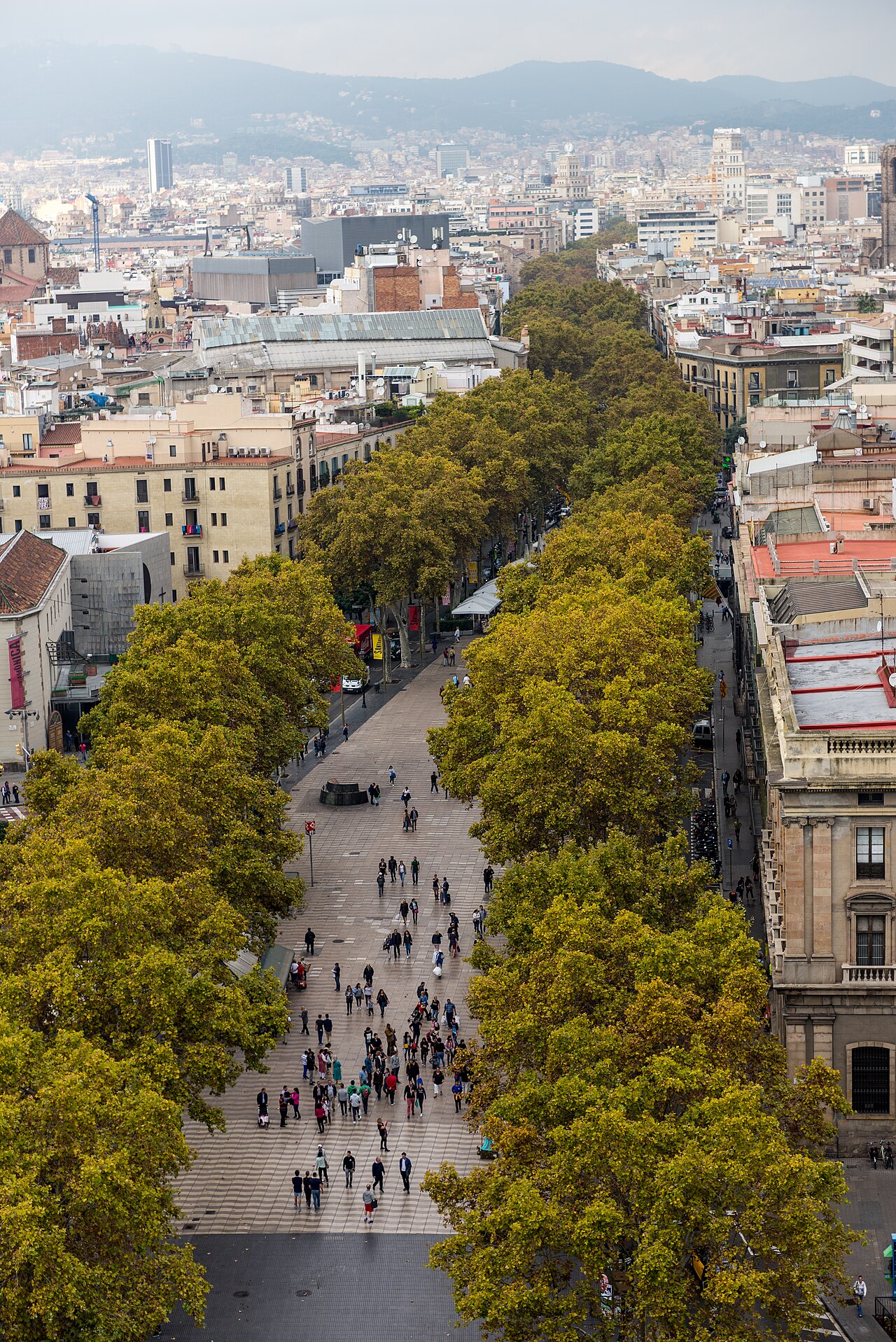
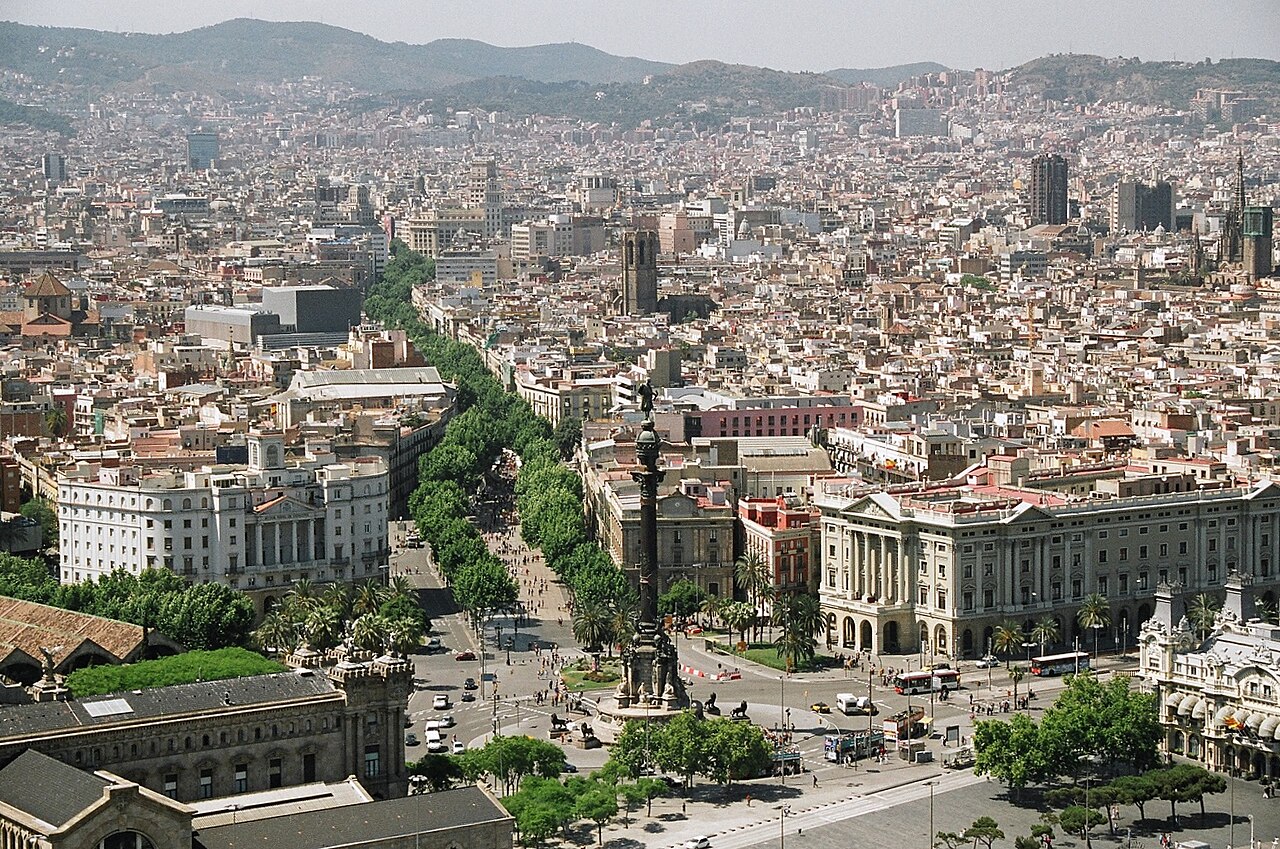
La Rambla is a 1.2-kilometre public promenade in central Barcelona, running from Plaça de Catalunya toward the waterfront and the Mirador de Colom. Tourism of Barcelona says it was laid out in 1766 along the line of medieval city walls that had bounded this part of the city since the thirteenth century. Barcelona City Council describes the later boulevard as a connection between the upper city and Ciutat Vella, built after the walls were removed in the nineteenth century. These accounts describe different stages in the street's development: the route began to take shape before becoming the broad civic promenade visitors recognize today. (Tourism of Barcelona; Barcelona City Council: La Rambla)
The city identifies five named stretches from the mountain end toward the sea: Rambla de Canaletes, Rambla dels Estudis, Rambla de les Flors, Rambla dels Caputxins and Rambla de Santa Mònica. The names help orient a walk through a long street with different landmarks at each end and along its centre. This is a route through an urban district, not a single enclosed attraction with one entrance, timetable or ticket desk. Its main visitor decision is how much of the 1.2-kilometre promenade to walk and which places along it to enter. (Barcelona City Council: La Rambla)
Checked 2026-10-07 · Source
La Rambla is best read as a sequence of places, not as one attraction with rooms. At the upper end, Font de Canaletes is a nineteenth-century fountain associated with the first named stretch, Rambla de Canaletes. The Barcelona Literary Map describes the current fountain as dating to 1892 and records the local saying that someone who drinks from it will return to Barcelona. This is a piece of city folklore, not a practical guarantee. (Barcelona City Council: La Rambla; Barcelona Literary Map, Les Rambles)
Further down, Palau de la Virreina is an eighteenth-century Baroque palace built for Manuel Amat i Junyent, viceroy of Peru. The city map identifies it as the present home of the Barcelona Institute of Culture and La Virreina Centre de la Imatge. Near it, Mercat de la Boqueria occupies the historic site of Sant Josep market: the current market was built in 1840 on former convent land, and its metal roof dates from 1914. Its stalls and food businesses make it a different kind of stop from the monumental buildings outside. (Barcelona Literary Map; Boqueria market)
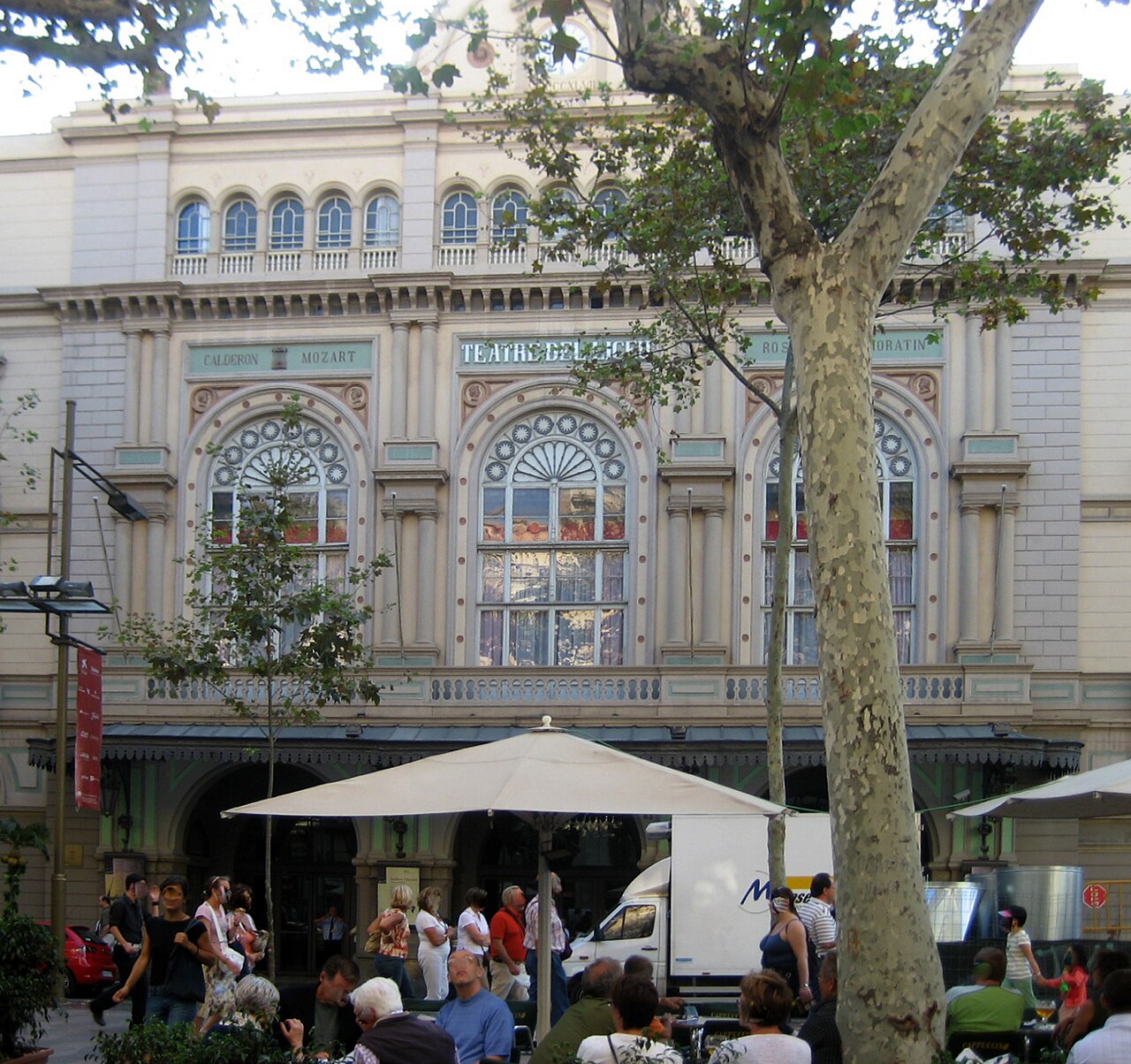
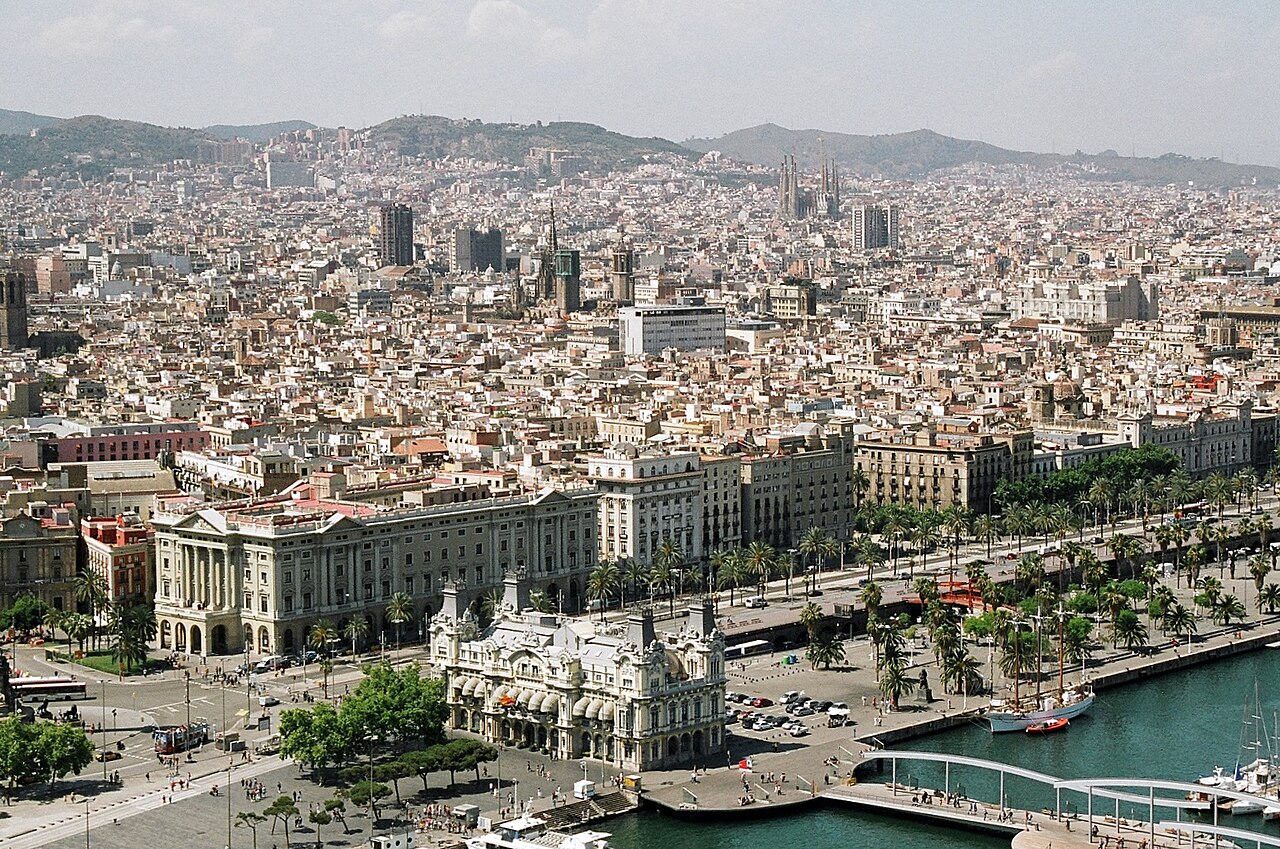
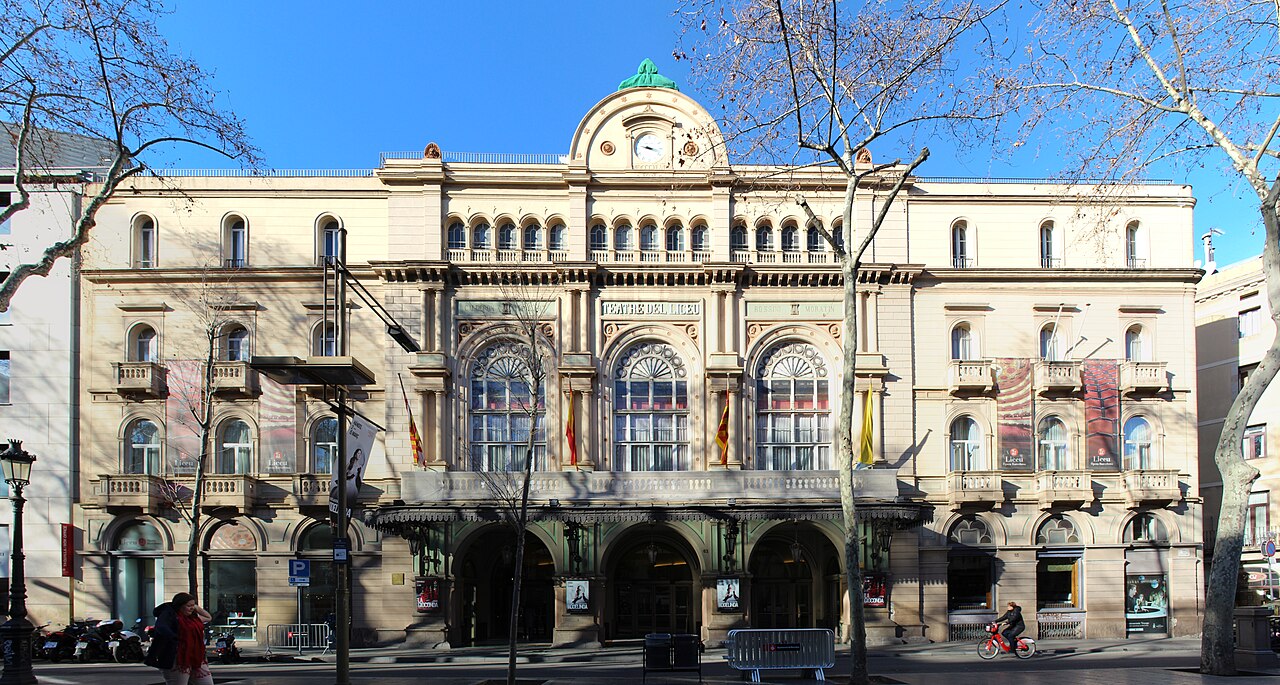
Gran Teatre del Liceu is the opera house at La Rambla 51–59. The city map dates its opening to 4 April 1847, records its destruction by fire in 1994, and says it reopened after restoration on 7 October 1999. At the waterfront end, Mirador de Colom stands by Plaça del Portal de la Pau; it opened in 1888 for the Barcelona Universal Exposition. Its lift leads to a viewing gallery with a view back along the full avenue. Plaça Reial, opened in 1848, is another nearby landmark, distinguished in the city's account by its porticoes. (Barcelona Literary Map; Mirador de Colom)
The attraction list is not a promise that every stall, terrace or building is open on the day. The Boqueria, Liceu and Mirador are separate places with their own programmes and visitor information; check each one before making it the reason for your walk. (Boqueria; Gran Teatre del Liceu box office; Mirador de Colom)
Checked 2026-10-07 · Source
The promenade is 1.2 kilometres long from Plaça de Catalunya toward the sea. Barcelona's official visitor page gives the route length but does not publish a standard walking or sightseeing duration, so this guide does not assign one. The time needed depends on whether you walk from end to end, stop at landmarks, enter the market or book a performance or viewing-gallery visit. Plan the route around those choices rather than treating the boulevard as a timed venue. (Tourism of Barcelona)
You can divide the walk by its five named sections: begin at Canaletes, continue through the Estudis and Flors stretches, pass the Caputxins section, and finish at Santa Mònica and the waterfront. This provides natural points to pause or turn back without needing to complete the full promenade. The L3 metro has stations at Catalunya, Liceu and Drassanes, so public transport can serve different parts of the route. Check the TMB station and service information for the trip you plan, and verify current street conditions with Barcelona City Council before relying on a particular crossing or entrance. (Barcelona City Council: La Rambla; TMB metro stations; Barcelona City Council works information)
If the market is part of your plan, account for its separate opening schedule; its hours are covered in “When to go.” The route itself does not have one published visitor schedule in the sources reviewed. A performance at the Liceu or an ascent to the Mirador de Colom gallery adds a separate activity and should be planned from that venue's current information. The public pages reviewed do not provide one combined itinerary duration for these choices. (Boqueria market; Liceu tickets and programme; Mirador de Colom)
Checked 2026-10-07 · Source
Choose the time for the parts of La Rambla you want to visit. The public promenade does not have a single schedule in Barcelona's official visitor information, but the Mercat de la Boqueria does: its current visitor page lists opening Monday to Saturday, 8:00 a.m. to 8:30 p.m. If the market is a priority, plan that stop within its published hours and check the market's page again for your date. The market's hours do not set the opening times of the street or the businesses beside it. (Tourism of Barcelona: La Rambla; Boqueria market hours)
A performance at the Liceu or a visit to the Mirador de Colom gallery calls for a different check: consult the venue's current programme, ticketing or visitor page, because neither is covered by the market schedule. The city's official visitor pages treat these as separate places along the walk. This distinction helps avoid arriving outside market hours or assuming that the boulevard's public character means every attraction is open. (Liceu box office and programme; Mirador de Colom; Tourism of Barcelona: La Rambla)
The city calendar also lists date-specific activities about the transformation of La Rambla, including project walks and an archaeological route during 2026. These are scheduled events, not daily visitor services; check the current agenda for dates, times and registration before travelling for one. The calendar extends to 16 December 2026, so the listed programme may change after that date. (Barcelona City Council public programme)
Checked 2026-10-07 · Source
You do not need an admission ticket to walk along La Rambla: Barcelona's official tourism authority describes it as a public promenade, and the City Council lists it as an urban public space. That statement applies to walking along the street, not to entering every place beside it. The Liceu, the Boqueria's businesses and market services, and the Mirador de Colom are distinct venues or activities with their own visitor terms. Performances, exhibitions, purchases and a visit to the Mirador's viewing gallery may have separate charges or booking conditions; consult the relevant official venue page for the current offer. No single La Rambla ticket or combined admission arrangement is listed in the sources reviewed. (Tourism of Barcelona: La Rambla; Barcelona City Council: La Rambla)
The Mirador de Colom page describes the lift and its viewing gallery, while the Liceu's official ticket page lists performances and ticketing for that theatre. Those are separate visits, not a charge to use the public street. The Boqueria market page publishes its own hours and information for its traders and visitors; purchases inside the market are also separate from walking along La Rambla. Check each venue directly if you plan to enter, attend a performance or buy something, because its schedule and terms can change. (Mirador de Colom; Gran Teatre del Liceu box office; Boqueria market)
Checked 2026-10-07 · Source

Metro line L3 gives access at three stations along La Rambla: Catalunya at the Plaça de Catalunya end, Liceu near the central landmarks, and Drassanes toward the port. The city transit operator lists all three as L3 stations. Using one of them lets you plan a shorter section of the walk or connect the promenade to the wider metro network. Check the station and service information for your travel date before setting a tight connection. (TMB station information)
La Rambla is a public street in Ciutat Vella, and Barcelona City Council's city page places it in the Gothic Quarter and describes the named route from Plaça de Catalunya down toward the port. The municipal renewal project describes better connectivity between El Raval and the Gothic Quarter as one of its objectives. Use the city page for the route and neighborhood context rather than assuming that every metro exit opens onto an unobstructed section of the promenade. A metro exit is not a guarantee that every sidewalk, crossing or approach is unobstructed on the day: consult the city works page for the latest street-level information. (Barcelona City Council: La Rambla; City Council renewal project)
For bus routes, use TMB's journey planner with your origin, destination and travel time; it compares bus, metro and other public transport options. TMB also publishes service information for incidents and planned disruptions. These live tools are more useful for a particular trip than a fixed bus itinerary in this guide. The official sources reviewed for this page confirm the metro stations but do not establish one stable bus itinerary for all visitors or all ends of the promenade. For an accessible route or a particular entrance, verify the current approach with the city and the relevant station or venue before departure. (TMB metro stations; TMB journey planner; Barcelona City Council works information)
Checked 2026-10-07 · Source
La Rambla is undergoing a long-term renewal, but the sources here do not establish which stall, terrace or walking section is affected on a particular October 2026 date. Barcelona City Council's renewal page, last updated 19 November 2025, describes work over the full stretch from Portal de Santa Madrona to Plaça de Catalunya, says 40 percent had been completed at that update, and gives 2027 as the expected finish. Treat that as a dated project forecast, not as a live report of today's access or the location of individual works. (Barcelona City Council renewal project)
A separate municipal announcement published on 23 December 2025 described temporary terrace-licence suspensions and the relocation of some press and flower stalls for a phase planned from January 2026. That announcement documents the announced phase; it does not prove that the same stalls remain moved or that the same terrace areas are affected now. For actual route access, barriers, detours, stall positions and accessible paths, check the current Barcelona works notices or the city's La Rambla page shortly before your visit. (Dated city works announcement; La Rambla city page)
The city calendar schedules project walks and an archaeological route on selected dates through 16 December 2026. These give visitors a way to learn about the renewal, but they are limited, dated activities and should not be treated as a substitute for the everyday route or a live works alert. Check the agenda for the date, time, route and registration details. (Barcelona City Council agenda)
Checked 2026-10-07 · Source
For a view that takes in the length of La Rambla, the Mirador de Colom's gallery is the specifically documented overlook. Tourism of Barcelona says the monument stands at the sea end of the avenue and that the gallery looks north over the Gothic Quarter, the Cathedral, Santa Maria del Mar and the full stretch of La Rambla. Looking east follows the coast toward the Olympic Marina and the Forum; looking south brings Montjuïc into view, while Collserola lies to the west. These directions help you choose a subject from the gallery without relying on a guaranteed light or weather condition. (Mirador de Colom)
At street level, the city literary map provides another way to plan a sequence of details: Font de Canaletes, the facades and cultural buildings, the market, the Rambla de les Flors stretch, Liceu, Plaça Reial and the Columbus Monument. The map describes the flower stretch as a historically distinctive part of the street, but the current state of any stall or terrace can vary during the renewal. Treat those named points as subjects to look for, not a promise that every business or temporary feature will be in the same place. (Barcelona Literary Map; Barcelona City Council works information)
The sources reviewed do not set a general rule for ordinary personal photography in the public street, and this page does not infer one. Rules inside the Liceu, market businesses or the Mirador gallery belong to those locations; follow their current posted directions. This guide also makes no claim about drone permissions or commercial filming permits. Check the authority responsible for a specific location before planning a commercial shoot or aerial image. (Tourism of Barcelona: La Rambla; Mirador de Colom)
Checked 2026-10-07 · Source
It runs about 1.2 kilometres from Plaça de Catalunya toward the waterfront and the Mirador de Colom. ([Tourism of Barcelona](https://www.barcelonaturisme.com/wv3/en/page/3265/la-rambla.html))
From the mountain end toward the sea, Barcelona City Council names Rambla de Canaletes, Rambla dels Estudis, Rambla de les Flors, Rambla dels Caputxins and Rambla de Santa Mònica. ([Barcelona City Council](https://www.barcelona.cat/es/coneixbcn/pics/la-rambla-99400356278))
Metro line L3 serves Catalunya, Liceu and Drassanes along the route. Check TMB's current information for your trip. ([TMB](https://www.tmb.cat/ca/transport-barcelona/serveis-estacions-metro))
The market currently lists opening hours of Monday to Saturday, 8:00 a.m. to 8:30 p.m. Check its official page for the date you plan to visit. ([Boqueria](https://www.boqueria.barcelona/-n-23-en))
No. You do not need an admission ticket to walk along La Rambla as a public street. A performance at the Liceu, an activity at the Boqueria, or a visit to the Mirador de Colom's viewing gallery is a separate venue visit and may have its own fee, booking or schedule. Check the venue's official page for its current terms. ([Tourism of Barcelona](https://www.barcelonaturisme.com/wv3/en/page/3265/la-rambla.html); [Barcelona City Council](https://www.barcelona.cat/es/coneixbcn/pics/la-rambla-99400356278); [Mirador de Colom](https://bid.barcelonaturisme.com/wv3/en/page/456/mirador-de-colom.html))
The City Council project page gives an expected completion in 2027, but its latest listed update is dated 19 November 2025 and does not confirm today's segment-by-segment conditions. Check the current municipal works notices for access, diversions and any temporary changes before your visit. ([Barcelona City Council project](https://ajuntament.barcelona.cat/pla-accio-govern2023-2027/ca/actuacio/reforma-de-la-rambla_492); [La Rambla city page](https://www.barcelona.cat/larambla/ca))
Loading the interactive map…
The interactive map could not be loaded.
Last updated:
Source: OpenStreetMap contributors, Wikidata ·