
2 min walk
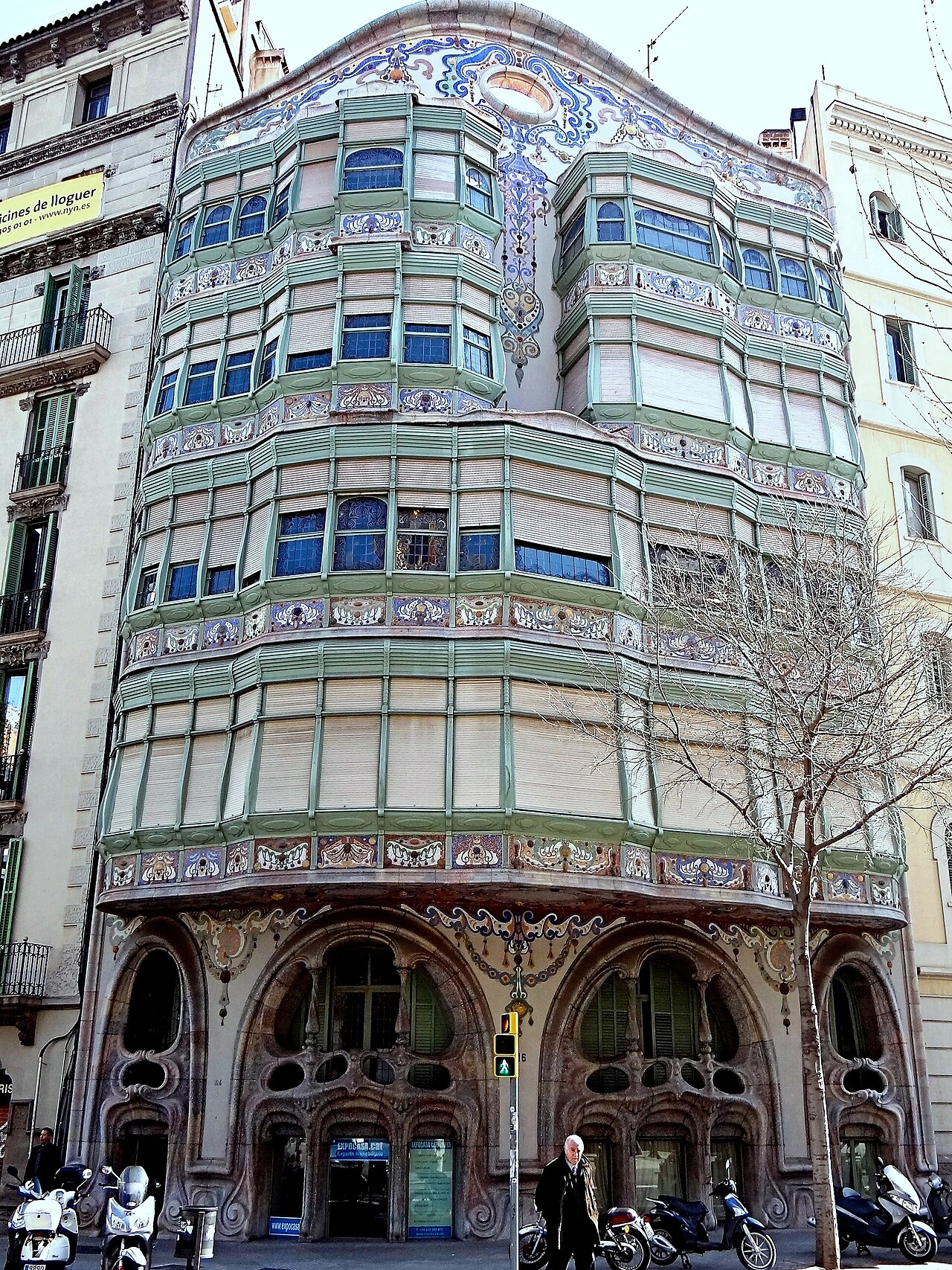
Casa Comalat
- Must see · Heritage site
- Historic monument
Language · 11 published
Historic monument · Barcelona
Reviewed by Elena Voss · Roavina Travel Editor
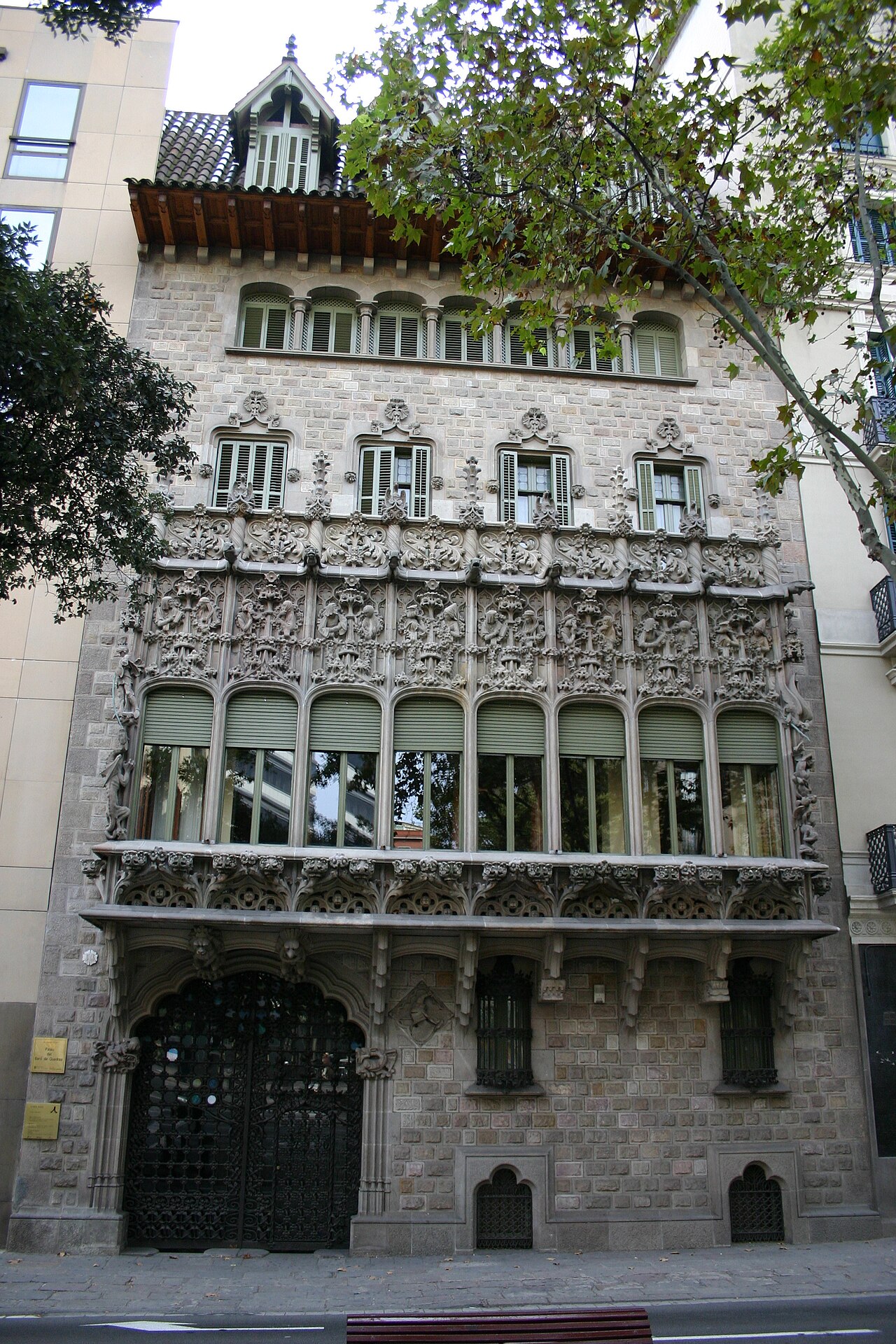
This place is a Attraction. It was built in the Catalan modernism style. It was designed by Josep Puig i Cadafalch. It carries the bien de interés cultural heritage designation.
Palau del Baró de Quadras is a Barcelona mansion associated with Catalan modernism and the Eixample’s early twentieth-century prosperity. Built as a private residence for the Baron of Quadras, it later became home to the Institut Ramon Llull, an institution promoting Catalan language and culture internationally. Its appeal lies in domestic architecture: a city palace where façade, interiors and ceremonial spaces express the period’s decorative ambition. Palau del Baró de Quadras is a historic mansion in Barcelona, built as a private residence for the Baron of Quadras. The building exemplifies Catalan modernist architecture and now serves as a cultural institution. It houses the Institut Ramon Llull, which promotes Catalan language and culture internationally. The palace stands as a significant example of early twentieth-century domestic architecture in Barcelona's Eixample district, reflecting the city's prosperous industrial era and its patronage of the arts.
Checked 2026-08-26 · Source
The interior is known for ornate woodwork, stained glass, sculptural decoration, tilework and embellished ceilings. The grand staircase and reception rooms convey how an affluent household used architecture to stage arrival and social life. Period details reward close looking: compare the materials, repeated motifs and changes in scale from circulation spaces to ceremonial rooms. The building’s institutional setting adds another layer, joining preserved modernist design with contemporary cultural work. The interior preserves notable modernist decorative elements including ornate woodwork, stained glass, and sculptural details typical of the period. Visitors can observe the grand staircase, reception halls, and ceremonial spaces that once served the baronial household. The building's adaptation for institutional use has maintained many original features while accommodating contemporary functions. Architectural details such as ceiling ornamentation, decorative tilework, and period furnishings contribute to the palace's historical atmosphere.
Checked 2026-08-26 · Source
Allow roughly forty-five minutes to one and a half hours for the palace, depending on which spaces are open and how closely you study the decoration. Visitors interested in Catalan modernism may linger over stained glass, carved wood, tile patterns and the staircase. It fits naturally into an Eixample architecture walk, where the palace can be followed by other modernist façades rather than treated as an isolated destination. A thorough visit to Palau del Baró de Quadras typically requires between forty-five minutes and one and a half hours, depending on individual interest in architectural details and available access.
Checked 2026-08-26 · Source
Plan this stop as an architecture visit in the Eixample, with flexibility around the building’s institutional role. A daytime route makes it easy to connect the palace with the district’s broad avenues and modernist buildings. The interior experience depends on the spaces available for visitors, so avoid building an entire day around one room or detail. Its location makes a shorter cultural stop practical between nearby landmarks.
Checked 2026-08-26 · Source
Palau del Baró de Quadras is also an active institutional building, not only a preserved residence. That distinction shapes the visit: public access may centre on cultural activity or selected architectural spaces rather than a conventional museum circuit. When entry is available, focus on the staircase, halls and decorative craftsmanship. The palace works best in an itinerary that leaves room for the surrounding Eixample architecture and public cultural life.
Checked 2026-08-26 · Source
The palace is in Barcelona’s Eixample, whose regular street grid makes the neighbourhood straightforward to explore on foot. Metro and bus services cover the district, while taxis can reach the surrounding avenues. Walking from other modernist landmarks is practical and gives the visit architectural context before arrival. Use the building’s name with a map because the Eixample contains many similarly styled façades and the palace is part of a working urban block.
Checked 2026-08-26 · Source
Remember that the palace also functions as an institutional workplace. Keep voices low, follow staff directions and avoid blocking circulation or disturbing people carrying out daily work. Decorative surfaces are preserved heritage, so do not touch carved elements, glass or tilework. Interior routes can include stairs and tight transitions. Treat the visit as a close architectural inspection within a working building, with access to some areas potentially limited.
Checked 2026-08-26 · Source
The grand staircase, stained glass, carved wood and decorated ceilings provide more rewarding subjects than a quick exterior snapshot. Use the entrance and corridors to frame repeated modernist motifs, then look for contrasts between dark wood, coloured glass and pale architectural surfaces. Work discreetly in an institutional setting and avoid photographing staff or occupied offices. If a sign or staff member limits photography, keep the camera away and concentrate on exterior details.
Checked 2026-08-26 · Source
It is an example of Catalan modernist domestic architecture from Barcelona’s early twentieth-century Eixample.
Notable features include a grand staircase, reception halls, stained glass, ornate woodwork, sculptural details, tilework and decorated ceilings.
Allow about forty-five minutes to one and a half hours, depending on the accessible spaces and your interest in decoration.
It is in Barcelona’s Eixample district, a practical area for a walking route linking several modernist buildings.
The building houses the Institut Ramon Llull, which promotes Catalan language and culture internationally.
Focus on stained glass, the grand staircase, carved wood, tilework and decorated ceilings, while keeping photography discreet around the working institution.
Loading the interactive map…
The interactive map could not be loaded.
Last updated:
Source: OpenStreetMap contributors, Wikidata ·