
10 min walk
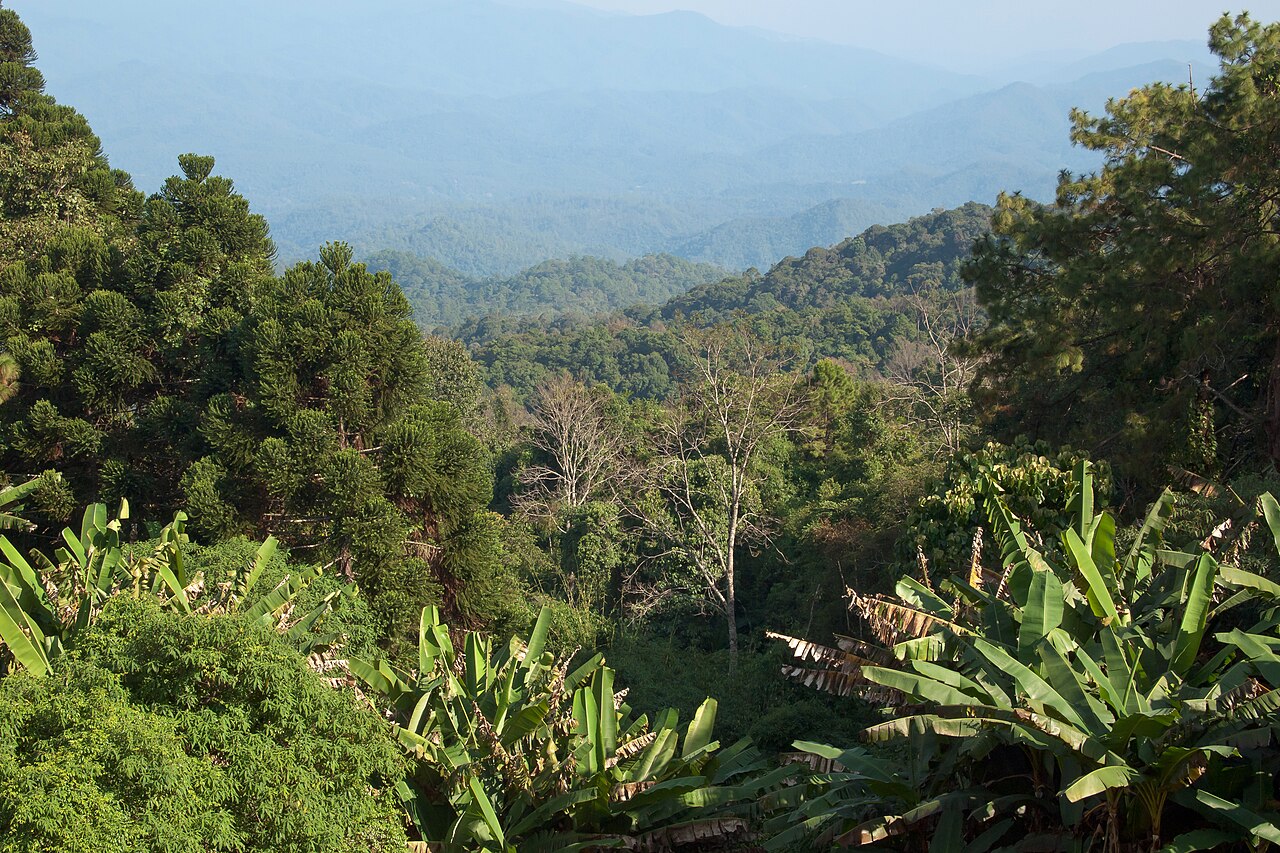
Doi Suthep-Pui National Park
- Must see
- Nature site
Place of worship · Chiang Mai
| Monday | 05:00 – 21:00 |
|---|---|
| Tuesday | 05:00 – 21:00 |
| Wednesday | 05:00 – 21:00 |
| Thursday | 05:00 – 21:00 |
| Friday | 05:00 – 21:00 |
| Saturday | 05:00 – 21:00 |
| Sunday | 05:00 – 21:00 |
Checked 2026-08-31 · Source
| Per person | THB 30.00 |
|---|
Checked 2026-08-31 · Source
Read from the OpenStreetMap access tags; anything not listed has no tag recorded.
Set the group type to family in the planner and the day window contracts to about three quarters of a solo day.
Wat Phra That Doi Suthep is a Theravada Buddhist temple located on Doi Suthep mountain, approximately fifteen kilometers west of Chiang Mai city center in northern Thailand. The temple is among the most sacred sites in the region and serves as a major pilgrimage destination for Thai Buddhists. Its founding is traditionally attributed to the fourteenth century, though specific historical details remain debated among scholars. Daily 05:00–21:00. No scheduled weekly closure; DASTA lists the temple as open every day. The paid funicular operates approximately 06:00–18:00. Base visitor admission is THB 30. The optional funicular costs THB 50 per person separately.
Checked 2026-08-31 · Source
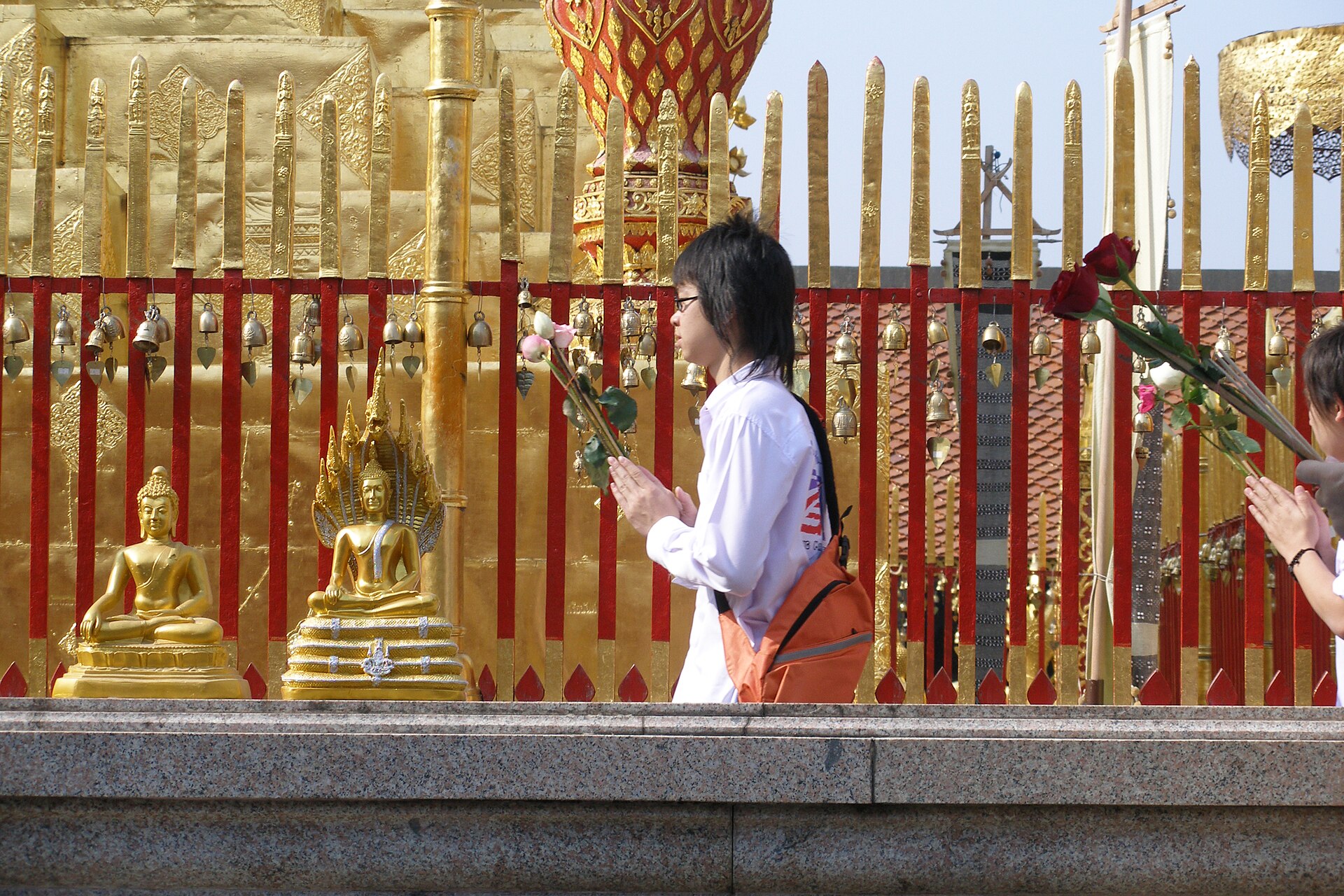
The temple compound centers on a golden chedi containing relics of the Buddha, which forms the primary object of veneration. Visitors encounter elaborate naga balustrades flanking the staircase approach, ornate temple buildings, and numerous Buddha images in various postures. The complex includes bells, shrines, and meditation spaces. Decorative elements reflect Lanna architectural heritage. Monks reside and perform religious duties on site. The terrace surrounding the chedi permits circumambulation, a common Buddhist devotional practice. Several smaller structures and pavilions occupy the grounds. No scheduled weekly closure; DASTA lists the temple as open every day. The paid funicular operates approximately 06:00–18:00.
Checked 2026-08-31 · Source
Most visitors allocate two to three hours for the complete experience, including transit from the city base and exploration of the temple grounds. The ascent itself, whether by staircase or alternative route, requires additional time. Photography, contemplation, and observation of religious activities extend typical stays. Those combining the visit with other Doi Suthep attractions, such as Bhubing Palace or tribal villages, should plan substantially longer itineraries. Early morning visits may proceed more efficiently due to reduced crowding and cooler temperatures. Base visitor admission is THB 30. The optional funicular costs THB 50 per person separately.
Checked 2026-08-31 · Source
Chiang Mai experiences distinct seasonal variations affecting mountain conditions. The cool season from November through February generally offers the most comfortable temperatures and clearest visibility. March to May brings heat and occasional haze from agricultural burning. The rainy season spans June through October, with increased cloud cover potentially obscuring valley views. Daily 05:00–21:00. A paid funicular/electric tram bypasses the 306-step Naga staircase and provides access to the upper temple level. The documented step-free provision covers the ascent link rather than the complete temple circuit. Yes. It is open daily from 05:00 to 21:00, with no scheduled weekly closure.
Checked 2026-08-31 · Source
Foreign visitors typically encounter an entrance fee distinct from charges applied to Thai nationals, reflecting common practice at prominent Thai religious sites. Additional costs may arise for transportation, whether by songthaew, private vehicle, or organized tour. Some visitors choose to hire transport for the winding mountain road. Donations for temple upkeep are customary and voluntary. Base visitor admission is THB 30. The optional funicular costs THB 50 per person separately. A paid funicular/electric tram bypasses the 306-step Naga staircase and provides access to the upper temple level. The documented step-free provision covers the ascent link rather than the complete temple circuit.
Checked 2026-08-31 · Source
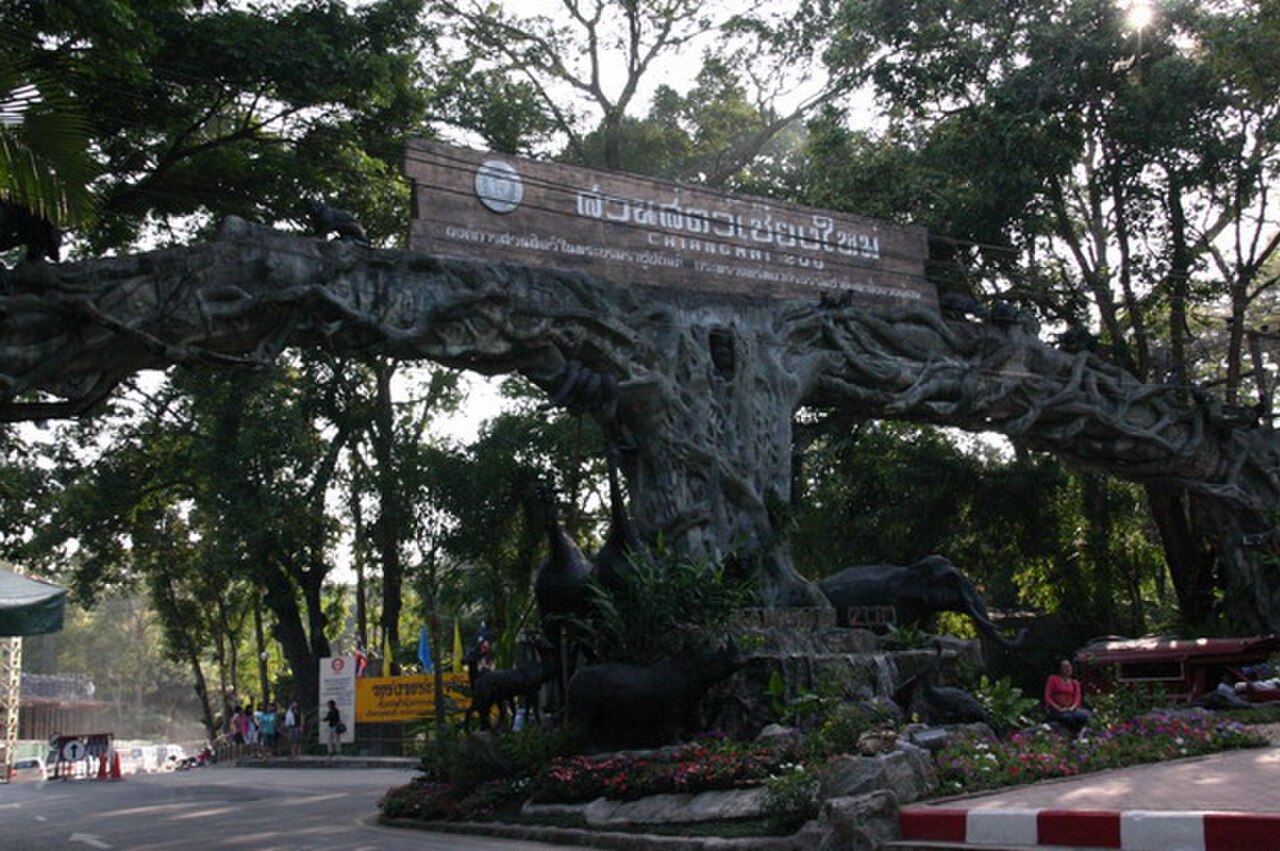
The temple is accessible via a winding mountain road from Chiang Mai city. Songthaews depart from various points including the Chiang Mai Zoo area and operate as shared transport. Private vehicles, including motorcycles, reach the summit parking area. Road conditions demand cautious driving. Red songthaews serve the temple from the front of Chiang Mai University on Huay Kaew Road; the public-body listing gives operating hours of 05:00–17:00. By road, follow Huay Kaew Road past Chiang Mai University and Chiang Mai Zoo toward Doi Suthep. TAT places the temple about 15 km west of central Chiang Mai, roughly 40 minutes by car.
Checked 2026-08-31 · Source
The staircase ascent is strenuous and exposed; adequate hydration and appropriate footwear are essential. Mountain weather changes rapidly; carrying a light layer is prudent. The site remains an active religious center; visitors must dress modestly, covering shoulders and knees, and remove footwear before entering sacred buildings. Behavior should remain respectful of worshippers and monastic routines. The altitude may affect some visitors. A paid funicular/electric tram bypasses the 306-step Naga staircase and provides access to the upper temple level. Yes. It is open daily from 05:00 to 21:00, with no scheduled weekly closure.
Checked 2026-08-31 · Source
The temple presents extensive photographic opportunities, from architectural details to panoramic landscapes. The golden chedi offers striking subjects in varying light conditions. Morning and late afternoon typically provide favorable illumination. Visitors should exercise discretion when photographing monks and worshippers, seeking implicit permission through observation of comfort levels. Interior spaces may restrict photography or flash use. Tripods may attract scrutiny in crowded areas. The view terrace captures Chiang Mai city spread across the plain. Haze conditions significantly impact distant visibility. Base visitor admission is THB 30; the optional funicular costs THB 50 per person separately.
Checked 2026-08-31 · Source
Yes. It is open daily from 05:00 to 21:00, with no scheduled weekly closure.
Base visitor admission is THB 30; the optional funicular costs THB 50 per person separately.
The Naga staircase has 306 steps, with a paid funicular available as an alternative.
Red songthaews depart from the front of Chiang Mai University on Huay Kaew Road, with listed service from 05:00 to 17:00.
The approximately 22-metre golden chedi enshrines relics of the Buddha.
Worshippers traditionally carry lotus flowers and incense clockwise around the chedi three times before making their offering.
Loading the interactive map…
The interactive map could not be loaded.
Last updated:
Source: OpenStreetMap contributors, Wikidata ·