
2 min walk
Wat Prasat
- Must see · Heritage site
- Place of worship
Language · 11 published
Place of worship · Chiang Mai
วัดพระสิงห์
Reviewed by Elena Voss · Roavina Travel Editor
| Monday | 07:00 – 22:00 |
|---|---|
| Tuesday | 07:00 – 22:00 |
| Wednesday | 07:00 – 22:00 |
| Thursday | 07:00 – 22:00 |
| Friday | 07:00 – 22:00 |
| Saturday | 07:00 – 22:00 |
| Sunday | 07:00 – 22:00 |
Checked 2026-08-31 · Source
Read from the OpenStreetMap access tags; anything not listed has no tag recorded.
Set the group type to family in the planner and the day window contracts to about three quarters of a solo day.
This place is a Place of worship. It carries the registered Thai historic site heritage designation.
Wat Phra Singh is a historic Buddhist temple in Chiang Mai's old city, regarded as one of the most significant religious sites in northern Thailand. The temple dates to the fourteenth century and houses the Phra Singh Buddha image, an important sacred object for the region. Its Lanna-style architecture represents classical northern Thai design. The complex includes multiple structures set within walled grounds, functioning as an active monastery and pilgrimage destination alongside its role as a visitor landmark. Daily 07:00–22:00. Open every day; no weekly closure day is listed. Free general admission for worship.
Checked 2026-08-31 · Source
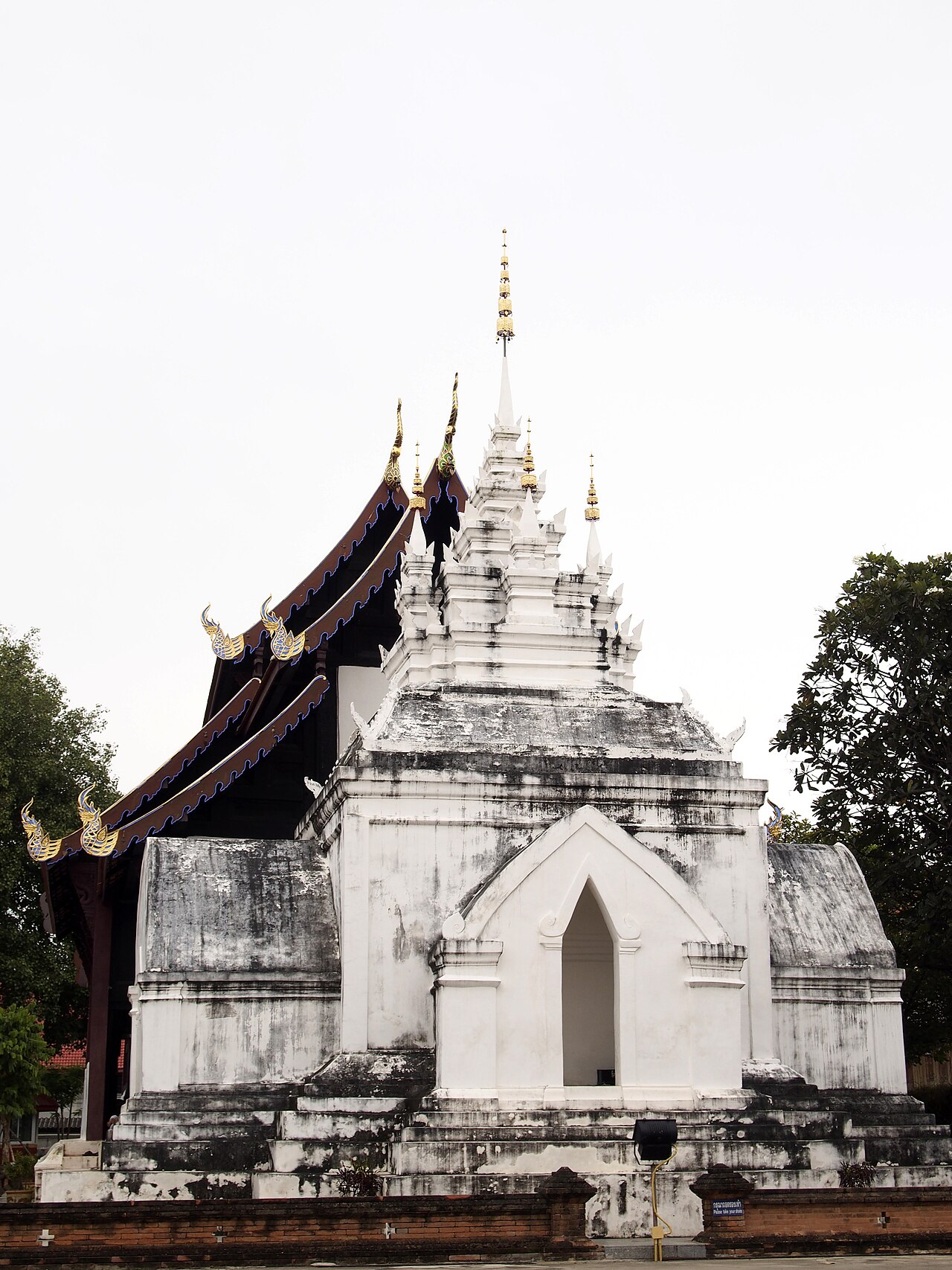
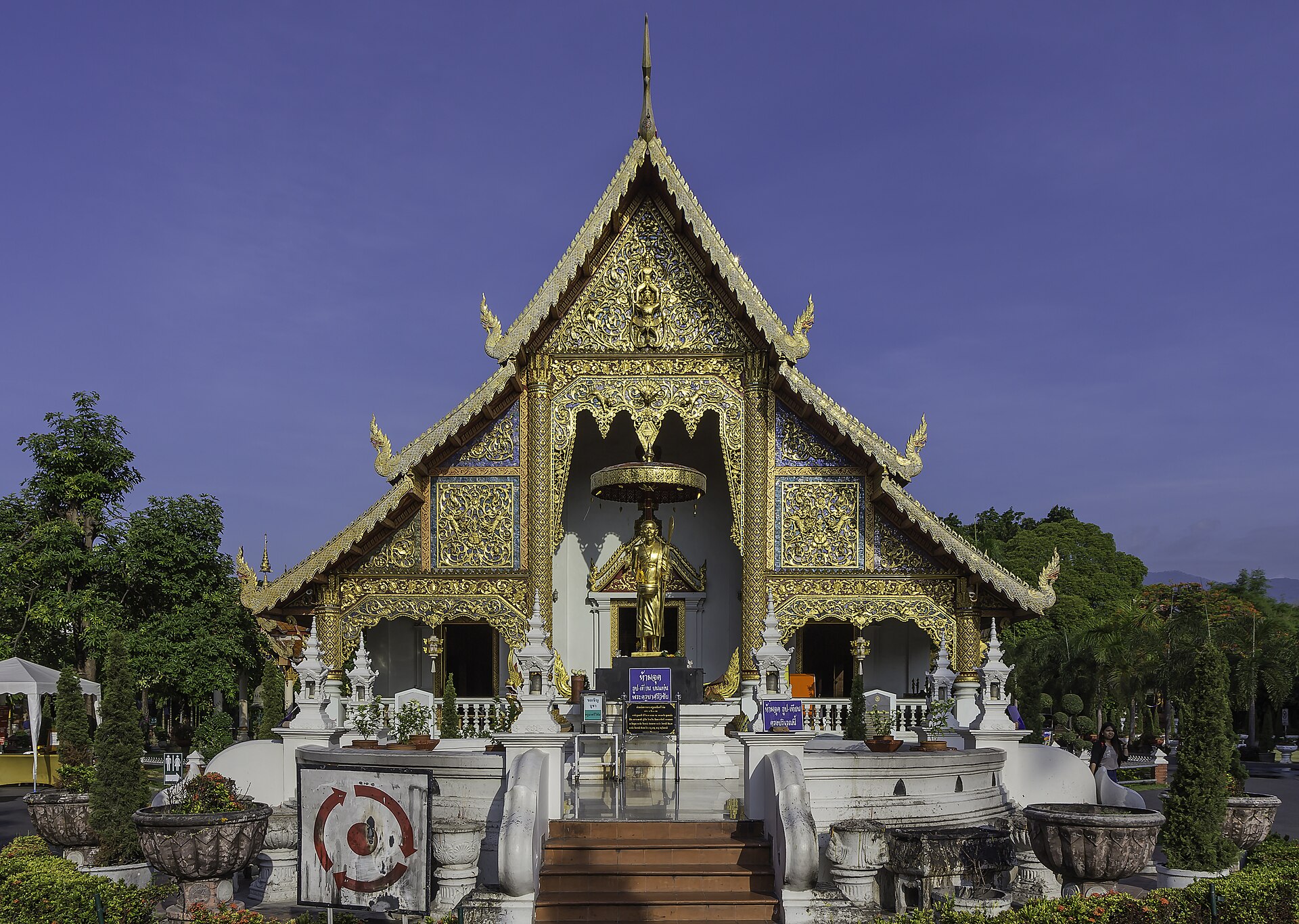
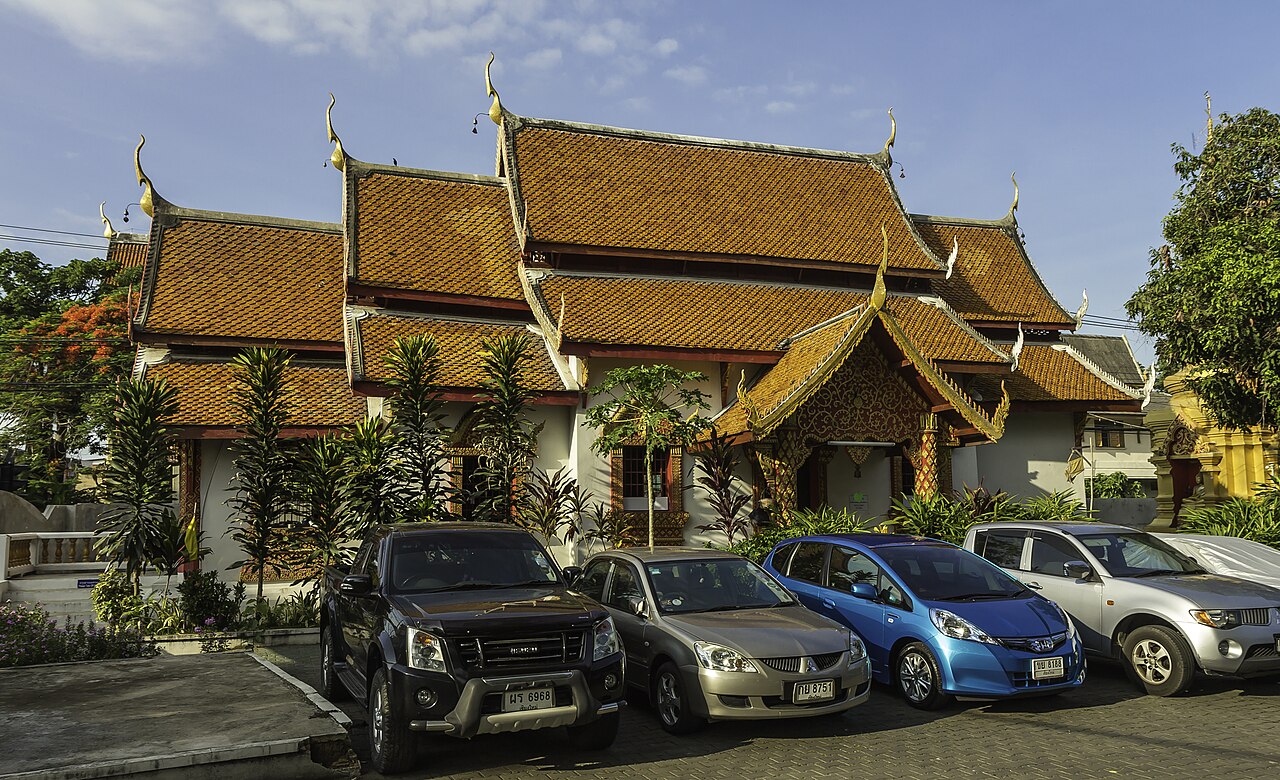
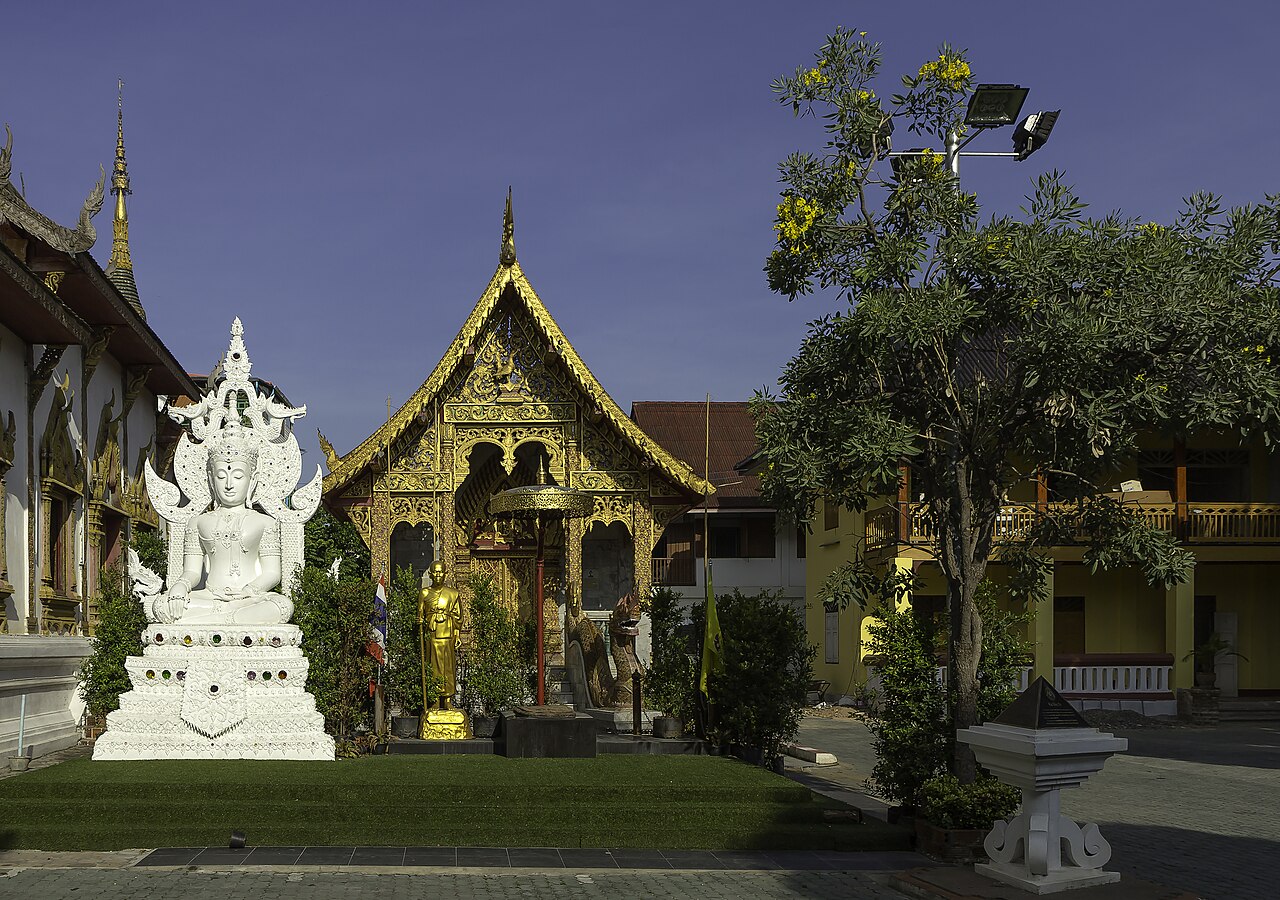
The temple complex contains several notable structures including the main viharn with its distinctive multi-tiered roof, the smaller but historically significant viharn Lai Kham with interior murals, and the scripture library elevated on a stone base. Chedis and subsidiary shrines occupy the grounds. The Phra Singh Buddha image resides in the main assembly hall. Decorative elements include carved woodwork and traditional northern Thai ornamental details. Monk quarters and ancillary buildings support ongoing religious functions. Open every day; no weekly closure day is listed. Free general admission for worship.
Checked 2026-08-31 · Source
Visitors typically allocate between forty-five minutes and ninety minutes for a meaningful walk through Wat Phra Singh. This duration permits circumambulation of the main structures, entry to the principal viharn, and observation of architectural details without haste. Those with particular interest in Buddhist art, Lanna architecture, or temple photography may extend their stay. The compact layout within the old city walls allows efficient combination with nearby temples and street exploration in a single morning or afternoon. Free general admission for worship.
Checked 2026-08-31 · Source
Early morning and late afternoon generally offer more comfortable conditions for temple visitation in Chiang Mai, with softer light and reduced heat. These periods also coincide with fewer visitors and potential observation of monastic routines. The cool season from November through February provides the most temperate climate. Daily 07:00–22:00. The temple is at 2 Sam Lan Road in Chiang Mai Old City. The official tourism listing gives a 10–15-minute songthaew ride from central Chiang Mai; walking and cycling are practical within the Old City. The main entrance is on the eastern side of the compound.
Checked 2026-08-31 · Source
Foreign visitors to significant Chiang Mai temples customarily encounter modest entry fees, though specific arrangements vary by site and management authority. Some temple complexes operate without formal ticketing, relying instead on donation boxes. Visitors should carry small denomination cash for potential contributions or fees. Thai nationals typically enter without charge at religious sites. Free general admission for worship. The exact OpenStreetMap feature is tagged wheelchair=no. Do not plan on step-free access through the temple complex. Vihara Lai Kham houses Phra Phuttha Sihing, a highly revered Buddha image, and preserves Lanna mural paintings.
Checked 2026-08-31 · Source
Wat Phra Singh occupies a central position within Chiang Mai's moated old city, accessible by multiple transport modes. Walking or cycling from elsewhere in the old city presents minimal difficulty given the flat terrain and grid street pattern. Tuk-tuks and ride-hailing applications provide alternatives. The temple is at 2 Sam Lan Road in Chiang Mai Old City. The official tourism listing gives a 10–15-minute songthaew ride from central Chiang Mai; walking and cycling are practical within the Old City. The main entrance is on the eastern side of the compound.
Checked 2026-08-31 · Source
Active religious sites require respectful conduct. Visitors should dress modestly with shoulders and knees covered, removing shoes before entering any viharn or shrine building. Photography may be restricted in certain interior spaces. Monks and worshippers merit unobtrusive observation; physical contact with monks is inappropriate for women. Some areas may be closed for private ceremonies. The exact OpenStreetMap feature is tagged wheelchair=no. Vihara Lai Kham houses Phra Phuttha Sihing, a highly revered Buddha image, and preserves Lanna mural paintings. King Phayu founded the temple in 1345 to enshrine the ashes of his father, King Kham Fu.
Checked 2026-08-31 · Source
The temple exterior presents strong photographic subjects including roofline silhouettes, gilded details, and the contrast between brick, wood, and painted surfaces. The elevated scripture library offers distinctive compositional possibilities. Interior photography requires awareness of restrictions and existing worshippers; flash use is generally inappropriate in sacred spaces. Morning and late afternoon light enhances dimensional qualities of the architecture. The surrounding old city streets provide contextual environmental shots. Drone operation would require specific permission and is unlikely to be permitted over religious compounds. King Phayu founded the temple in 1345 to enshrine the ashes of his father, King Kham Fu.
Checked 2026-08-31 · Source
Vihara Lai Kham houses Phra Phuttha Sihing, a highly revered Buddha image, and preserves Lanna mural paintings.
King Phayu founded the temple in 1345 to enshrine the ashes of his father, King Kham Fu.
The complex includes the principal chedi, Vihara Luang, Vihara Lai Kham, the ubosot, Ho Trai scripture library, a reclining-Buddha hall and a bell tower.
The image is carried through Chiang Mai from 13 to 15 April so people can pour scented water over it as an act of devotion.
Yes. It is an active Theravada Buddhist temple with approximately 90 resident monks.
Yes. It is registered as a national monument and protected by the Fine Arts Department's 7th Regional Office in coordination with the monastic community and temple committee.
Loading the interactive map…
The interactive map could not be loaded.
Last updated:
Source: OpenStreetMap contributors, Wikidata ·