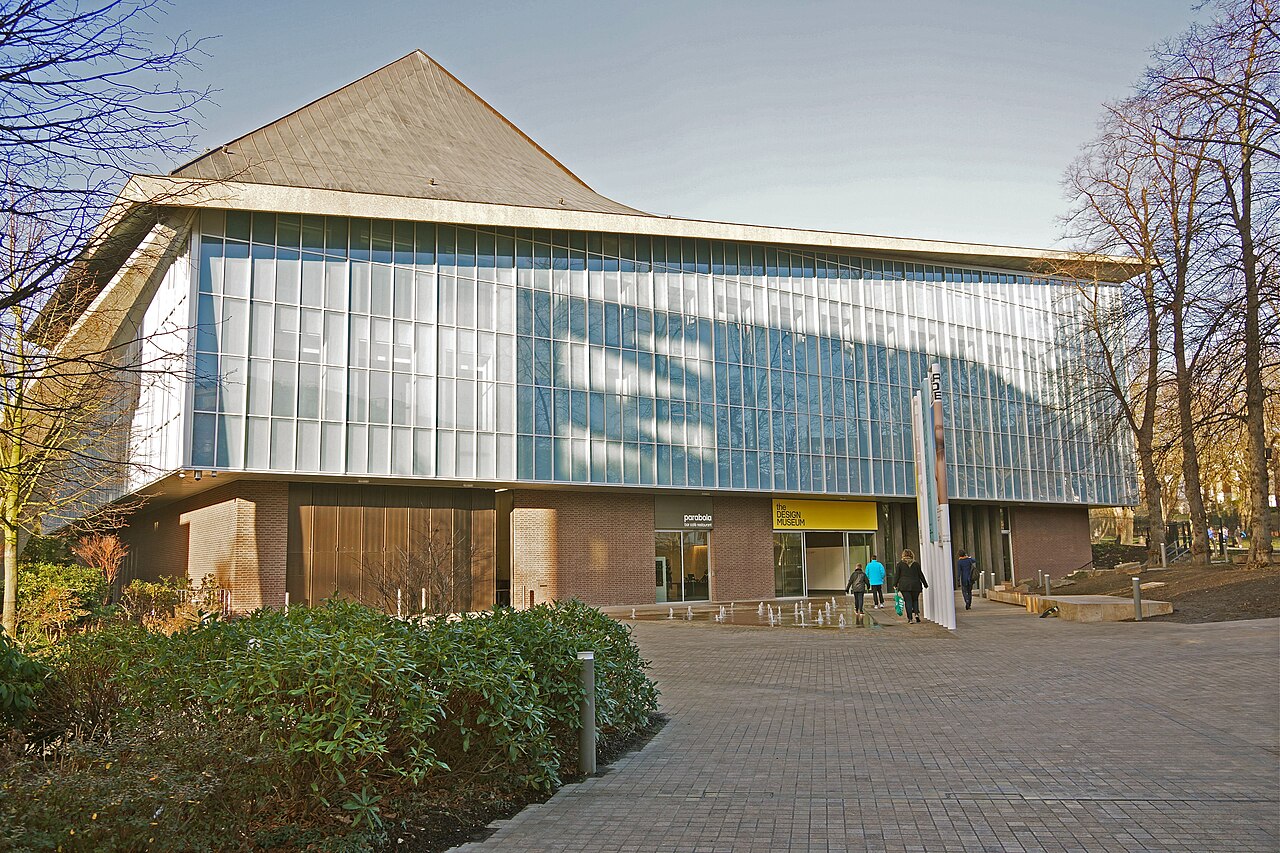
The Design Museum is a museum in London dedicated to contemporary design in every form, from architecture and fashion to graphics, product and industrial design. It was originally founded in 1989 by Sir Terence Conran. The museum relocated to its current location in Kensington in 2016, moving from its former site at Butler's Wharf on the River Thames. The building occupies the former Commonwealth Institute structure, a Grade II* listed building with a distinctive hyperbolic paraboloid roof. Its mission centres on making the impact of design visible to all.
The museum presents temporary exhibitions exploring diverse aspects of design practice and history. Galleries showcase work ranging from individual objects to large-scale installations. The collection and displays examine how design shapes daily life, addressing themes of sustainability, innovation, and social responsibility. The building itself demonstrates adaptive reuse of twentieth-century architecture, with the renovated interior providing flexible exhibition spaces. Educational programmes and talks accompany the main exhibitions. A shop offers design-focused products. The museum also contains spaces for learning and public engagement with design thinking processes.
Visitors typically spend between one and a half to three hours exploring the Design Museum, depending on the number of temporary exhibitions on display and individual interest levels. Those with strong professional or academic interest in design fields may wish to allocate additional time for detailed examination of exhibits. The museum's compact layout relative to major national institutions allows for efficient circulation. Combined with the shop and any scheduled talks or events, a half-day visit represents reasonable planning. Rushing through would compromise engagement with material that rewards attentive observation.
Visitors should consult the museum's official website or contact the institution directly before planning attendance. London's peak tourist seasons, particularly summer months and school holiday periods, generally bring increased visitor numbers to cultural attractions. Weekday mornings outside holiday periods typically offer quieter conditions. The museum's Kensington location places it within an area with numerous other attractions, allowing flexible scheduling. Weather considerations are less critical given indoor facilities, though the surrounding Holland Park area offers pleasant external environment when conditions permit. Check the operator's own site for the travel date before relying on a schedule or fare.
The museum has historically operated with a combination of free permanent displays and ticketed temporary exhibitions, but current pricing structures require direct verification. Concession categories commonly applied at UK museums may include students, seniors, and registered disabled visitors with companions. Family or group arrangements might be available. Membership options have previously existed for frequent visitors. Advance online booking has become standard practice for major London attractions and is advisable. Website consultation or telephone enquiry remains essential for accurate financial planning before travel. Check the operator's own site for the travel date before relying on a schedule or fare.
The Design Museum occupies a position on Kensington High Street in west London. The nearest Underground station is High Street Kensington, served by the Circle and District lines. Kensington Olympia station provides Overground and limited Underground connections within walking distance. Multiple bus routes serve the High Street corridor. The museum is not centrally located relative to the main cluster of South Kensington museums, requiring distinct journey planning. Walking from nearby Holland Park or Kensington Gardens is feasible for those already in the area. Cycling infrastructure exists though central London conditions demand confident navigation.
The building's listed status imposes certain constraints on accessibility modifications; visitors with mobility requirements should verify current provision. The hyperbolic paraboloid roof, while architecturally significant, creates unconventional internal volumes that may affect wayfinding. Exhibition content changes regularly, meaning specific displays referenced in older guides will have concluded. Photography policies vary by exhibition and individual loan agreements, with restrictions common on certain works. The shop and café areas operate with standard commercial pressures that may affect pricing. School groups frequent the museum on weekdays, potentially affecting noise levels and space availability.
Photography policies at the Design Museum are determined on an exhibition-by-exhibition basis due to loan agreements with individual designers, estates, and institutions. Some temporary exhibitions prohibit all photography; others permit non-flash photography for personal use. Copyright restrictions frequently apply to contemporary design works, with commercial or publication use requiring separate permission. Visitors should observe signage at gallery entrances and instructions from staff. Tripods, selfie sticks, and additional lighting equipment are typically prohibited as standard museum practice. When permitted, photography offers opportunity to document the distinctive architectural interior and selected exhibits for personal reference.
Checked 2026-08-26
Common questions
Is the Design Museum free to enter for Design Museum in London?
Some areas have historically been free while temporary exhibitions required tickets, but current admission policies are Not recorded pending review. Consult official sources before visiting.
What is the nearest Underground station for Design Museum in London?
High Street Kensington on the Circle and District lines is the closest Underground station to the museum's Kensington High Street location.
When was the Design Museum founded for Design Museum in London?
The museum was founded in 1989 by Sir Terence Conran, originally at Butler's Wharf before relocating to Kensington in 2016.
Does the museum have a permanent collection for Design Museum in London?
The museum's focus is on contemporary design with temporary exhibitions; specific current collection status is Not recorded pending review.
Is the building wheelchair accessible for Design Museum in London?
The Grade II* listed building imposes constraints; visitors with mobility requirements should verify current accessibility provision directly with the museum.
Can I take photographs inside for Design Museum in London?
Photography policies vary by exhibition due to loan agreements. Observe signage and staff instructions, as some displays may prohibit all photography.
Nothing non-essential is set before you choose, in regions where consent is required. If you decline, ads still appear and analytics is switched off entirely.
_(geograph_5246509).jpg)