
41 min walk
Stockport Armoury
- Notable · Heritage site
- Historic monument
Language · 11 published
Historic monument · Manchester
Reviewed by Elena Voss · Roavina Travel Editor
| Monday | Closed |
|---|---|
| Tuesday | Closed |
| Wednesday | Closed |
| Thursday | 11:00 – 16:30 |
| Friday | 11:00 – 16:30 |
| Saturday | 11:00 – 16:30 |
| Sunday | 11:00 – 16:30 |
Checked 2026-08-31 · Source
Read from the OpenStreetMap access tags; anything not listed has no tag recorded.
Set the group type to family in the planner and the day window contracts to about three quarters of a solo day.
It carries the Grade I listed building heritage designation.
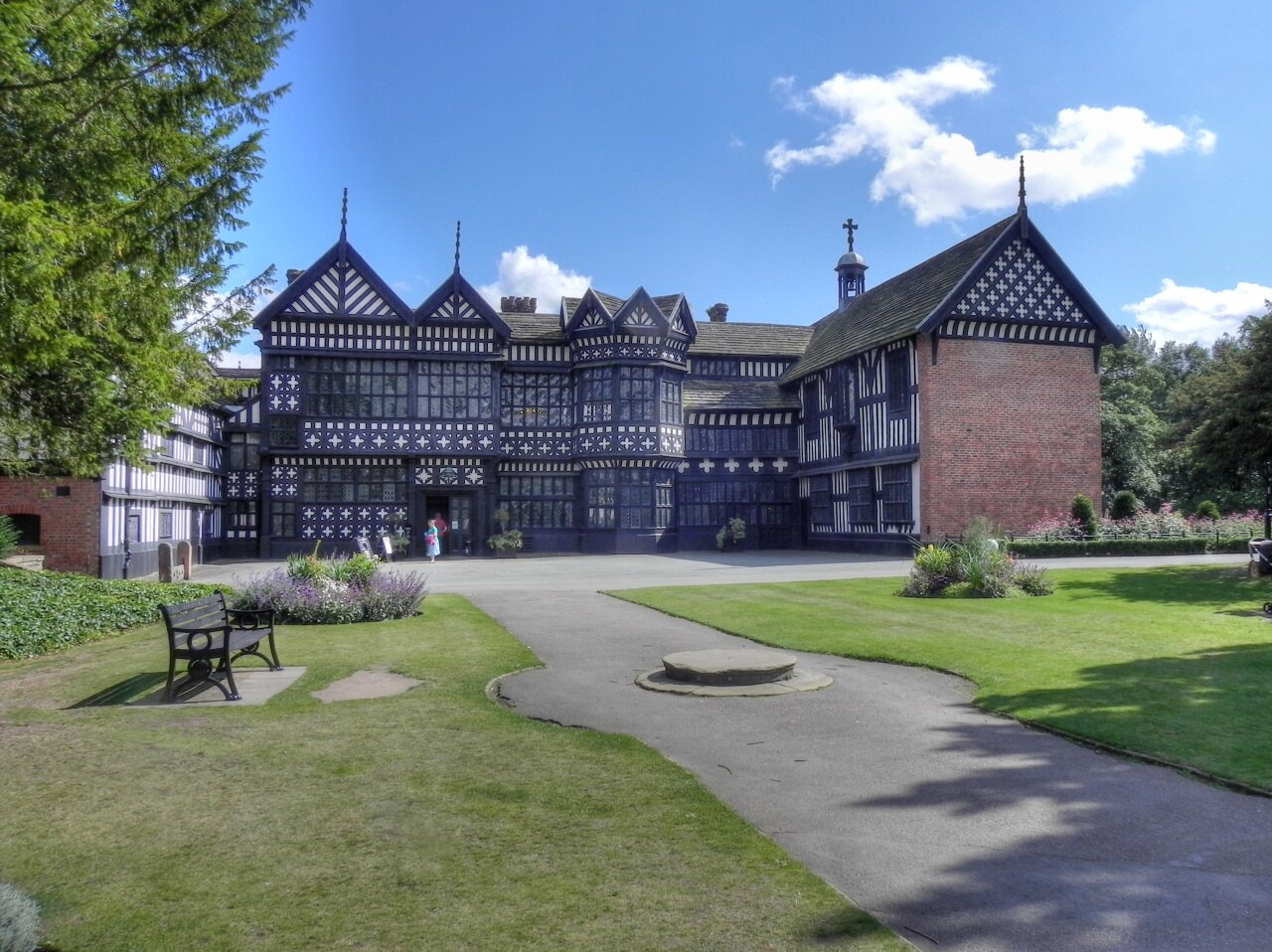
Bramall Hall is a Tudor manor house in Bramhall, within the Metropolitan Borough of Stockport, south of Manchester. Its timber-framed structure, historic interiors and surrounding parkland make it a rewarding stop for travellers interested in architecture, domestic history and landscaped settings. The hall offers a chance to experience a substantial historic residence in a quieter suburban setting rather than a city-centre museum. Allow time to appreciate both the building and the landscape around it. Bramall Hall is a Tudor manor house situated in Bramhall, within the Metropolitan Borough of Stockport, Greater Manchester. The building represents one of the most architecturally significant timber-framed structures in northwest England. The hall stands within substantial parkland grounds that contribute to its setting as a visitor destination. The property carries considerable historical weight for the Manchester region, reflecting centuries of domestic architecture and landed estate development. Its preservation allows public access to a building type that has become increasingly rare at this scale of elaboration. Visitors should verify current schedules directly with official sources.
Checked 2026-08-26 · Source
Inside, visitors encounter period rooms shaped by successive phases of occupation and renovation. Look for the original timber framing, ornate plasterwork and decorative details that reveal changing architectural tastes. The interior is most enjoyable when taken slowly: compare the structural frame with later finishes, then notice how the rooms express the hall's domestic and social functions. The building's layered fabric connects medieval origins with later alterations, giving each room more meaning than a single-period reconstruction. The interior contains period rooms that illustrate successive phases of occupation and renovation across multiple centuries. Visitors encounter architectural features including original timber framing, ornate plasterwork, and decorative elements that demonstrate evolving tastes and building techniques. The hall retains sufficient historical fabric to convey its development from medieval origins through later modifications.
Checked 2026-08-26 · Source
Plan around ninety minutes to two and a half hours for a balanced visit. That gives enough time to move through the principal rooms, study the timber structure and decorative features, and walk through part of the surrounding parkland. Architecture enthusiasts may want longer for close observation and photography, while families can make a shorter visit focused on the most distinctive rooms. Add outdoor time when the weather is comfortable and the landscape is part of your Manchester day.
Checked 2026-08-26 · Source
Bramall Hall works well when you want historic interiors combined with open landscape. Weekends and school holidays can feel busier, so an earlier arrival may make the rooms easier to enjoy at an unhurried pace. The parkland is more inviting in settled weather, while the hall provides an indoor focus when conditions are wet or cool. Build flexibility into your day because the experience combines a house visit with outdoor wandering rather than a single enclosed display.
Checked 2026-08-26 · Source
The visit centres on the historic house and its parkland setting. Treat the hall as a destination for architecture and heritage rather than planning your day around a particular ticket category. If you are travelling with others, allow enough time to move through the rooms together and then continue outdoors. The historic character is the main reason to come: the timber frame, period decoration and estate setting provide the substance of the visit.
Checked 2026-08-26 · Source
Bramall Hall is in Bramhall, south of Manchester city centre, within Stockport. Road approaches use the local suburban network, while bus services serve the wider Bramhall area. Expect some walking between transport stops and the hall's parkland setting. The location suits a half-day excursion from central Manchester, especially when paired with time outdoors. Cyclists can use local roads and paths, with the final approach shaped by the estate surroundings.
Checked 2026-08-26 · Source
Historic construction brings uneven floors, changes of level and narrow passages, so move carefully through the older rooms. Interior spaces may feel cooler than modern buildings, even on a mild day. Wet weather can make outdoor paths less comfortable and change the character of the parkland walk. Give other visitors room in smaller interiors, and take care around the historic fabric.
Checked 2026-08-26 · Source
Bramall Hall offers strong photographic subjects both inside and outside. The timber framing and brick infill create a distinctive exterior pattern, while the parkland places the building within a broader landscape. Indoors, focus on structural details, plasterwork and room perspectives rather than rushing from one space to the next. Natural light changes through the day and seasons. Keep equipment and movement unobtrusive, and protect the historic setting while photographing.
Checked 2026-08-26 · Source
It is known for its Tudor manor-house architecture, timber framing, period interiors and surrounding parkland in Bramhall.
Allow about ninety minutes to two and a half hours for the house and part of the parkland.
Bramall Hall is in Bramhall, within Stockport, south of Manchester city centre.
You can see period rooms, original timber framing, ornate plasterwork and decorative features from different phases of the building's history.
Yes. The hall stands within substantial parkland, which extends the visit beyond the historic interiors.
Photograph the timber-framed exterior, brick infill, period architectural details and the hall's relationship with the surrounding parkland.
Loading the interactive map…
The interactive map could not be loaded.

Last updated:
Source: OpenStreetMap contributors, Wikidata ·