It was established in 1899.
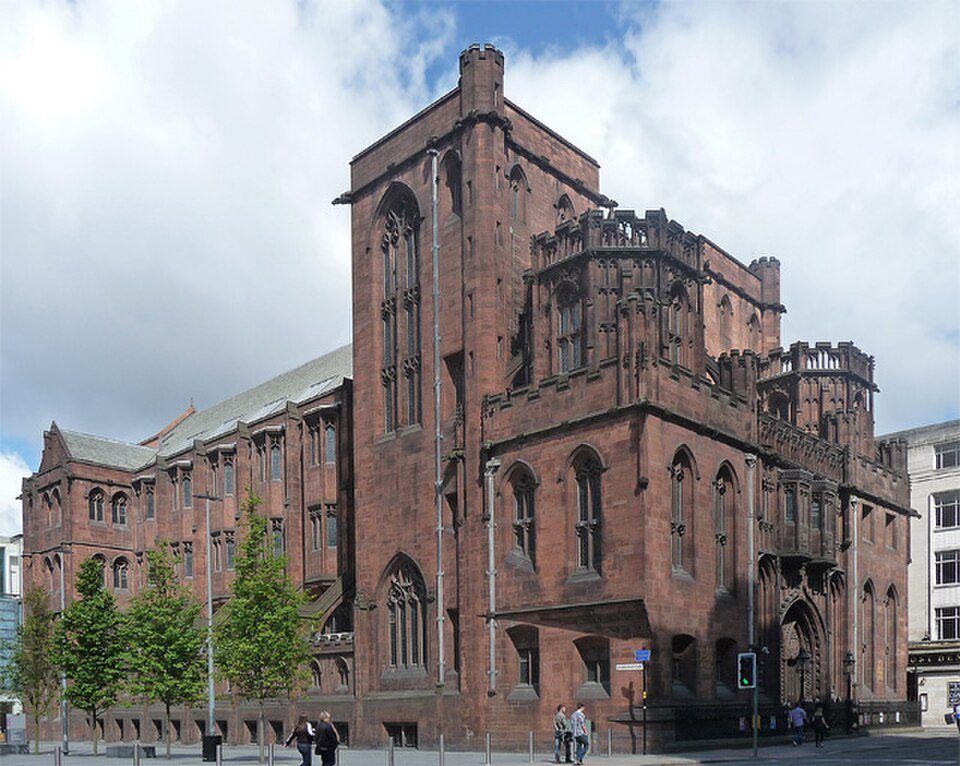
It was built in the Gothic Revival style.
It was designed by Basil Champneys.
It carries the Grade I listed building heritage designation.
John Rylands Library opened in 1900 as Enriqueta Rylands’s gift to Manchester and was purpose-built to give public access to rare books, manuscripts and archives. Its neo-Gothic historic building now belongs to the University of Manchester Library, but the public visit is architectural and exhibition-led rather than an invitation to browse shelves. The working research service operates alongside those public rooms under different rules. Understanding that division prevents disappointment: visitors can see the Historic Reading Room, architecture and selected displays for free, while consultation of original special-collections material requires registration, advance requests and an appointment in the controlled reading room.
The public route centres on the stone stairways, Historic Reading Room, book-lined alcoves and changing exhibitions drawn from the University’s special collections. The holdings range from ancient manuscripts and early printed books to archives, photography, art and material culture, but most are stored in closed access. Even the books visible behind the Historic Reading Room’s glass are not browsable. Researchers use the Elsevier Reading Room after ordering material; staff bring each item from storage and provide supports, weights or gloves when appropriate. Current exhibition pages, rather than the size of the collection, determine what an ordinary visitor can actually inspect on a given day.
Allow seventy-five minutes for the architecture and current public displays. Spend the first quarter-hour moving from the modern entrance into the historic core, half an hour in and around the Historic Reading Room, and the remaining time with the temporary exhibition and shop. This is an editorial estimate; a researcher’s appointment is a separate visit measured by the requested material, not by this guide. Architecture-only visitors can finish in forty-five minutes, but queues outside can consume that saving. The building rewards slow looking at carving, windows and reading-room details, so a compressed stop between timed attractions misses its principal value.
Public visiting runs Wednesday to Saturday from 10.00 to 17.00, with last entry at 16.40; Sunday, Monday and Tuesday are closed for the visitor route. The operator warns that queues outside are likely at busy times. Arrive soon after 10.00 if the Historic Reading Room is the priority, because the long interior is easier to understand before groups accumulate. Research appointments follow a different timetable and must be confirmed. A late arrival after 16.00 leaves too little time for the historic core and exhibition, even though the door remains open until the stated last-entry point.
Public admission is free and no booking is required. That simple rule does not apply to handling or studying special-collections material. Researchers over eighteen must request an appointment, normally give at least three days’ notice, and identify the material so staff can retrieve it; uncatalogued or restricted archives may need much longer. Treat an exhibition visit and a reading-room appointment as distinct arrangements. There is no advantage in buying a third-party ticket for the public rooms. Card payment is accepted in the shop, which sells books and items related to the collections.
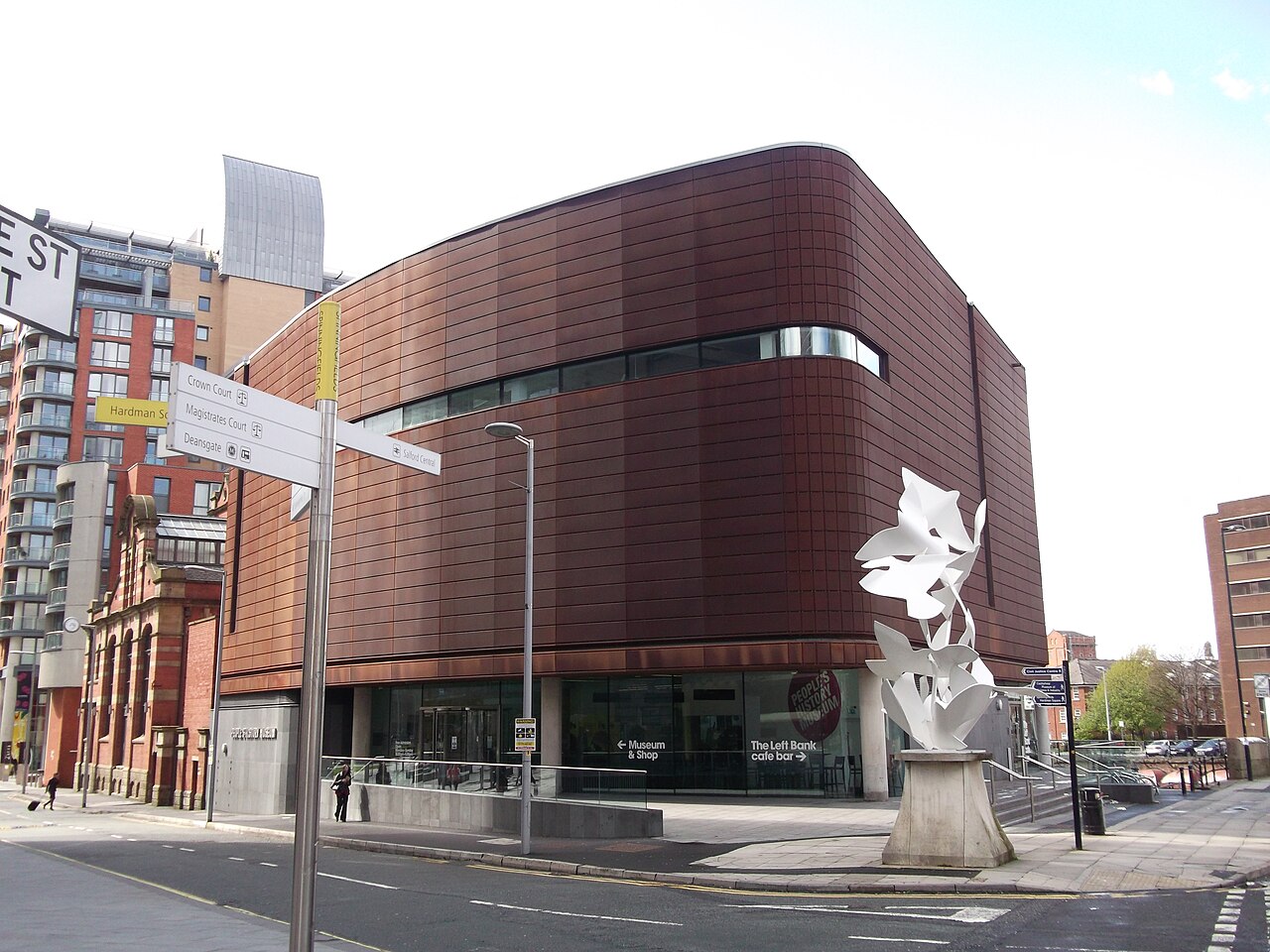
The library stands on Deansgate, but the working visitor entrance is in the modern extension just off that street, reached by walking along the side of the historic building. Do not wait at the monumental historic doors expecting them to open. This entrance detail matters because the exterior encourages exactly the wrong assumption. Deansgate is readily reached on foot from central Manchester, and a car adds little to an architecture visit with no dedicated public parking claim in the operator information. Researchers should report to ground-floor reception, where staff direct them onward to the controlled Reading Room.
The public library atmosphere does not remove collection-care rules. In the research room, bags and coats go into lockers, pens are not allowed, phones must be silent, and material is issued at the desk rather than taken from shelves. The air-conditioned room can feel cool, so researchers may want another layer. Public visitors face a different practical issue: outside queuing and a last entry twenty minutes before closing. Stone steps and subdued light are part of the historic interior, although the operator states that public areas and Special Collections Reading Rooms are wheelchair accessible and welcome assistance dogs.
For researchers, self-service photography is permitted only at staff discretion and for research purposes. Flash, tripods, mini-pods and scanners are prohibited, cameras must be silent, and fragile or tightly bound items may not be copied. Public architectural photography should follow room signage and avoid turning the central reading space into a portrait set. Editorially, the long Historic Reading Room works from one end with the roof and book presses aligned; the exterior is strongest when the modern entrance and neo-Gothic mass are treated as two phases of the same institution. Publication-quality collection images belong to the library’s imaging service, not an informal phone photograph.
Can visitors browse the books at John Rylands Library?
No. The special collections are closed access, and even volumes visible behind glass in the Historic Reading Room cannot be taken from the shelves. Public visitors see exhibitions; researchers order specific material for supervised consultation.
Which days is the public library open?
The visitor route opens Wednesday through Saturday, 10.00 to 17.00, with last entry at 16.40. It is closed to public visitors on Sunday, Monday and Tuesday.
Is advance booking needed?
Not for the free public architecture and exhibition visit. A Special Collections appointment is different: researchers must book, identify material in advance and normally allow at least three days for retrieval.
Where is the entrance?
From Deansgate, walk along the side of the Historic Building to the entrance in the modern extension. The grand historic façade is not the working public entrance.
May researchers photograph manuscripts?
Self-service photography may be allowed for research at staff discretion. Flash, tripods, mini-pods and scanners are forbidden, silent mode is required, and conservation or copyright restrictions can prevent copying.
How long should an ordinary visit take?
Seventy-five minutes is an editorial allowance for the historic rooms and one current exhibition. It excludes a research appointment, whose length depends on the requested collection material.
Nothing non-essential is set before you choose, in regions where consent is required. If you decline, ads still appear and analytics is switched off entirely.