
2 min walk
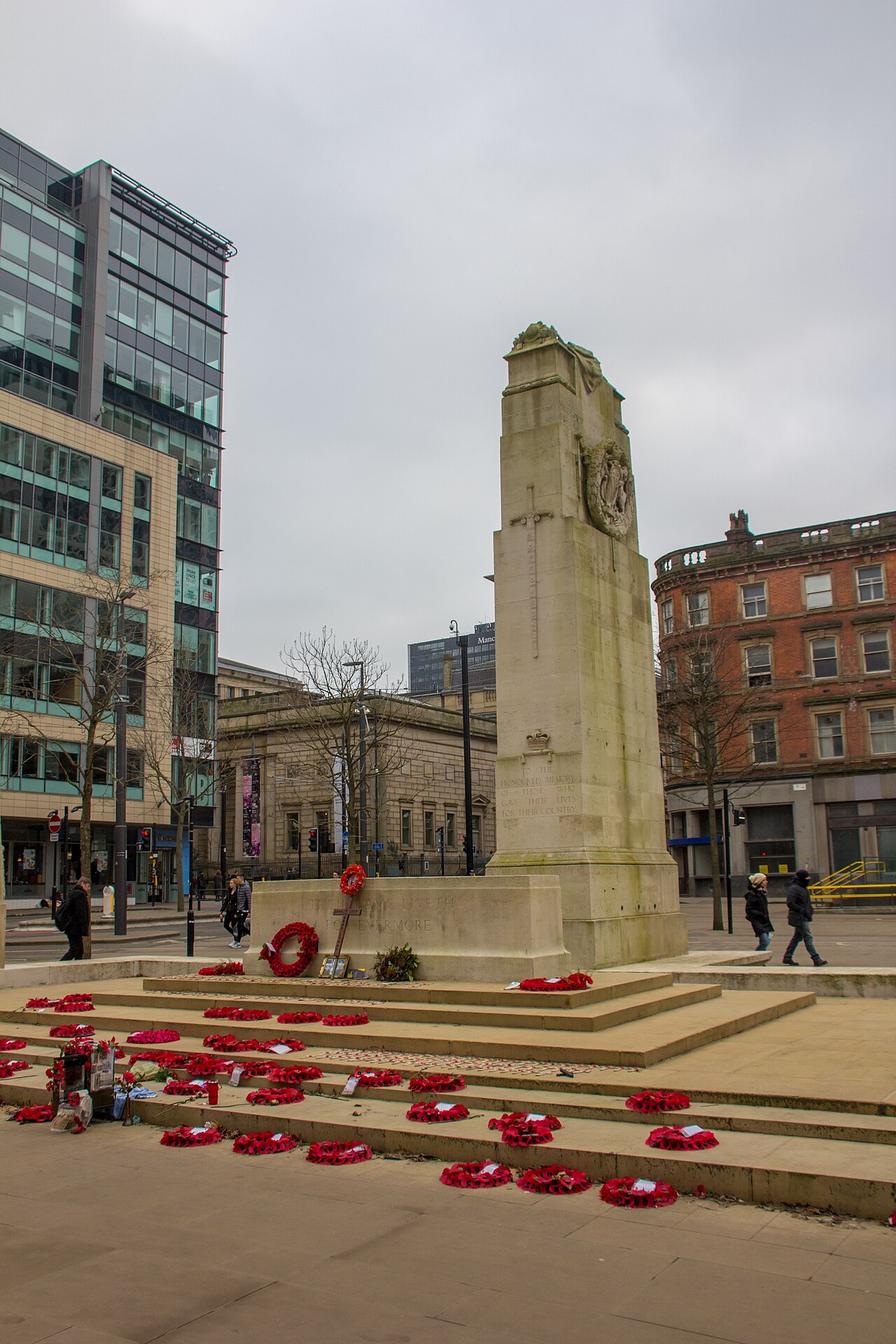
Manchester Cenotaph
- Must see · Heritage site
- Historic monument
Art and culture venue · Manchester
| Monday | Closed |
|---|---|
| Tuesday | 10:00 – 17:00 |
| Wednesday | 10:00 – 17:00 |
| Thursday | 10:00 – 17:00 |
| Friday | 10:00 – 17:00 |
| Saturday | 10:00 – 17:00 |
| Sunday | 10:00 – 17:00 |
Checked 2026-08-26 · Source
| Per person | Free entry |
|---|
Checked 2026-08-26 · Source
Read from the OpenStreetMap access tags; anything not listed has no tag recorded.
Set the group type to family in the planner and the day window contracts to about three quarters of a solo day.
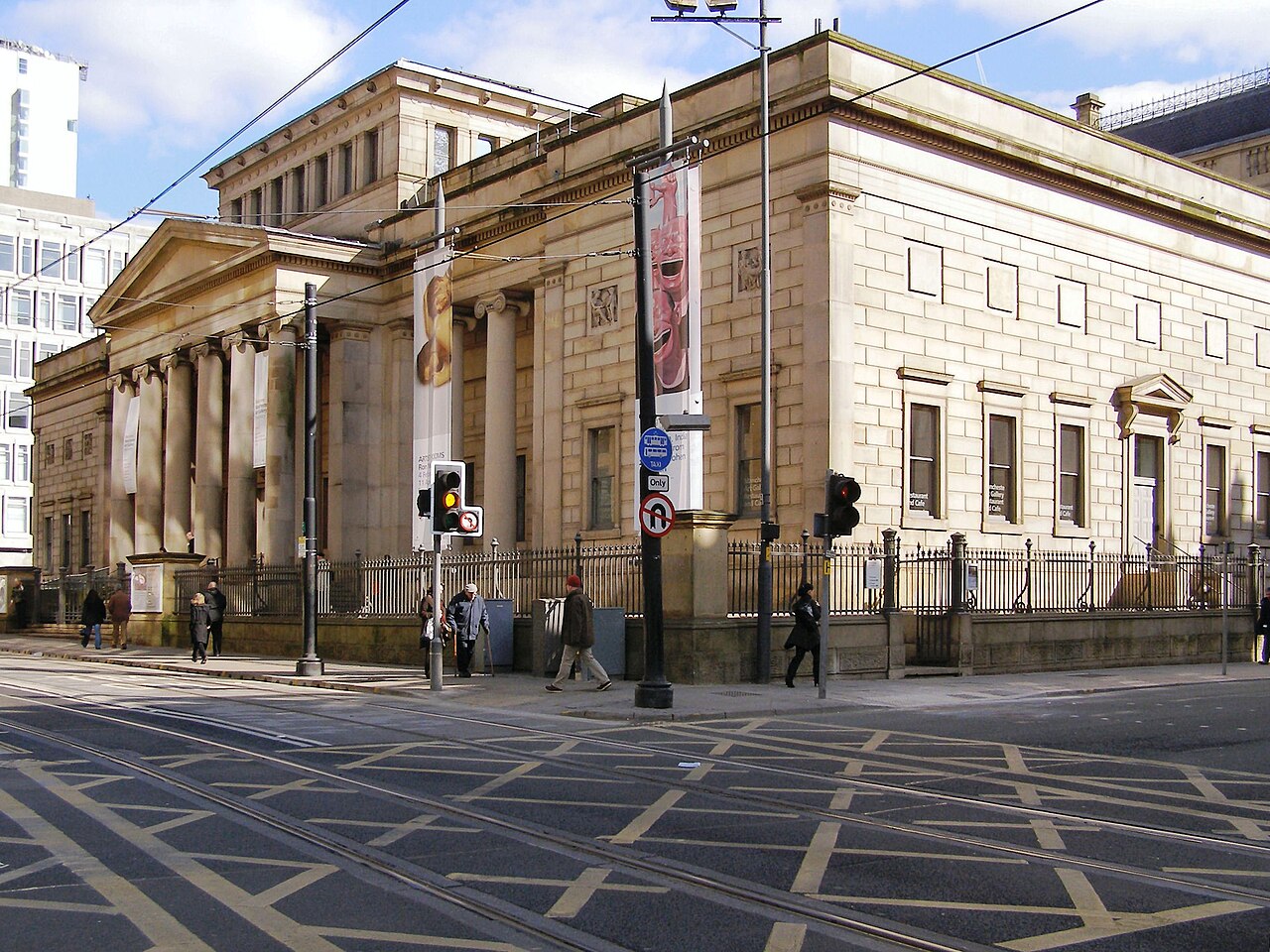
Manchester Art Gallery grew from the Royal Manchester Institution, whose fine-art holdings transferred to the new municipal gallery in 1882. The city opened the collection free to the public in the following period, and nineteenth-century collecting remains one of its defining strengths. The gallery is particularly associated with British Victorian art and the Pre-Raphaelites, but its remit extends from European painting and sculpture to craft, design, costume and contemporary work. A visit therefore makes more sense as a comparison between Manchester’s civic collecting history and current displays than as a search for one universally famous masterpiece.
Checked 2026-08-26 · Source
The first-floor sequence in Galleries 3 to 11 contains the best-known Pre-Raphaelite display, with work by founders and followers of the movement. The wider fine-art collection numbers more than 14,000 works, including oils, sculpture, watercolours, prints, photographs and medals, although only a fraction can be displayed. Craft and design holdings include ceramics, glass, furniture, metalwork and wallpaper; costume spans clothing, textiles and accessories from the seventeenth century onward. Check the current display list before building a visit around any one object, because conservation, loans and exhibition changes mean that the online collection and the walls are not identical.
Checked 2026-08-26 · Source
Ninety minutes is a sound first-visit allowance. Give forty minutes to the Pre-Raphaelite and Victorian rooms, twenty minutes to the current temporary or contemporary display, and use the final half-hour for decorative art, costume or a second pass through a painting that held attention. This division is editorial judgement, not a route imposed by the gallery. Visitors studying technique can spend the whole session in Galleries 3 to 11; families may prefer fewer rooms and longer conversations. Do not treat the collection database as a checklist, since the number of catalogued objects vastly exceeds what can be on view in Mosley Street.
Checked 2026-08-26
Manchester Art Gallery opens Tuesday to Sunday from 10.00 to 17.00 and closes on Monday. The operator also lists closure on Good Friday, 24, 25, 26 and 31 December, and 1 and 2 January. A weekday morning is the best editorial choice for sustained looking in the Pre-Raphaelite rooms; weekend afternoons more often bring group and family activity. Since the hours do not extend into the evening, arrive by 15.00 for a ninety-minute visit. Temporary displays and room changes should be checked through the current programme rather than inferred from the permanent collection pages.
Checked 2026-08-26 · Source
The gallery describes itself as free and open to all. No general admission charge or timed ticket is recorded for the permanent visit. Bookable workshops, talks or group activity can still have their own arrangements, and schools are asked to organise visits rather than simply arriving with a class. Free entry is useful for a selective plan: visitors can concentrate on the Pre-Raphaelites or one exhibition without feeling obliged to cover every medium. Donations and shop purchases support activity but are not admission. Use the gallery’s event listing for anything with a fixed start time.
Checked 2026-08-26 · Source
The gallery is at Mosley Street, Manchester M2 3JL, immediately beside the civic core around St Peter’s Square. Tram is the cleanest editorial recommendation because the stop is close and avoids city-centre parking; walking from central rail stations is also practical. The building addresses Mosley Street and Princess Street, and the classical façade can make the entrance choice less obvious when approaching from Albert Square, so follow gallery signs rather than circling the block. The compact location pairs naturally with Central Library or the Town Hall area, but leave the gallery’s full ninety minutes instead of treating it as a corridor between them.
Checked 2026-08-26 · Source
The catalogue is much larger than the display, so the main risk is promising a specific work without checking whether it is hung. Galleries rotate objects for conservation, loans and new interpretation. The famous Pre-Raphaelite group is concentrated on the first floor rather than spread evenly through the building, which matters for visitors with limited time or mobility. Large school groups are expected to book. Editorially, glazed paintings and controlled gallery light can cause eye strain if every label is read in one pass; alternate close looking with wider rooms. Food, bags and photographic restrictions should be taken from signs and staff on the day, not assumed from another museum.
Checked 2026-08-26 · Source
The Pre-Raphaelite rooms offer saturated colour and fine detail, but reflective glazing punishes straight-on phone photography. Editorially, step slightly aside to control reflections and photograph a room relationship rather than reproducing each painting badly. The Greek Ionic exterior is strongest from across Mosley Street with enough distance to include the columns; traffic and tram movement require patience at the kerb. Costume, works on paper and temporary loans may have stricter conservation rules, so signs override general expectations. Keep flash off unless the gallery explicitly permits it, and never place a camera or bag against a case, plinth or painted wall.
Checked 2026-08-26
The gallery’s own collection guide places its best-known Pre-Raphaelite paintings on the first floor, principally Galleries 3 to 11. Displays can change, so check the current room information for a particular work.
No general admission charge is recorded; the gallery states that it is free and open to all. Individual events, workshops or organised group visits can have separate booking instructions.
Monday is the weekly closed day. The operator also lists Good Friday, 24–26 and 31 December, and 1–2 January among its closure dates.
Beyond Victorian and Pre-Raphaelite painting, the gallery holds sculpture, works on paper, photographs, craft, furniture, ceramics, glass, wallpaper and a major costume collection. Only a selection is displayed at once.
Ninety minutes is the editorial first-visit target: roughly half for Victorian and Pre-Raphaelite art, then the rest for current displays and one other collection area.
No. The online catalogue describes the collection, not a guarantee that each object is hanging in Mosley Street. Loans, conservation and exhibition changes alter the rooms, so verify any must-see work before travelling.
Loading the interactive map…
The interactive map could not be loaded.
Last updated:
Source: OpenStreetMap contributors, Wikidata ·