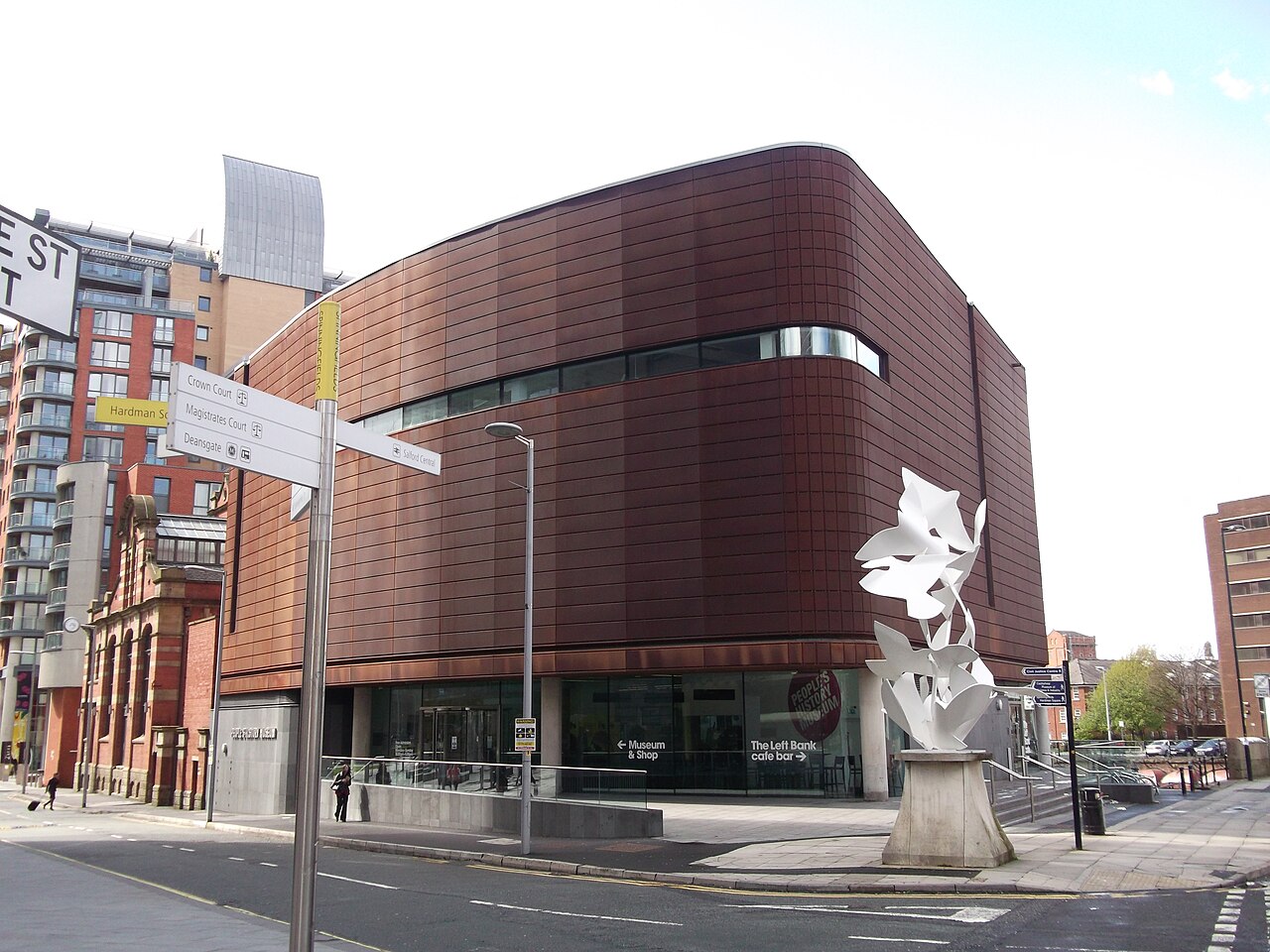
People’s History Museum calls itself the national museum of democracy and traces how people in Britain organised for political and social change. It occupies a 1907–1909 hydraulic pumping station beside the River Irwell, joined to a four-storey Cor-Ten steel extension completed for the museum’s 2010 reopening. That pairing mirrors the subject: industrial Manchester’s surviving infrastructure houses banners, printed material and personal evidence of campaigns that reshaped public life. The story begins with reform and Peterloo rather than with Parliament alone, then follows workers, voters and citizens into present debates. The museum is independent and keeps general admission free through donations and support.
Gallery One and Gallery Two form the permanent route through revolutionaries, reformers, workers, voters and citizens. Named stories include the Peterloo Massacre, Match Girls’ Strike, votes for women and workers’ rights, supported by hands-on interactives. Historic and contemporary campaign banners run across both galleries, and a viewing window into the Conservation Studio shows the specialist work required to preserve large political textiles. The Labour History Archive and Study Centre holds research material but operates by appointment, not as another drop-in gallery. Gather café, the shop and a picnic area sit around the visit, while changing installations and workshops appear through the What’s On programme.
Allow ninety minutes for the permanent galleries. An editorial route gives forty minutes to Gallery One’s reform and suffrage sequence, forty minutes to Gallery Two’s labour, citizenship and banner displays, and ten minutes at the Conservation Studio window. Families using every interactive or visitors reading banner symbolism closely should reserve two hours. The archive requires a separate appointment and is not included in this estimate. Because the narrative is chronological and argumentative, skipping randomly between floors weakens it; follow the main sequence once, then return to one campaign. Café and shop time should be added after the museum duration rather than quietly consuming the final gallery.
The museum opens 10.00 to 17.00 every day except Tuesday. It also closes on 24, 25 and 26 December and 1 January. A weekday opening hour is the editorial choice for reading dense campaign material before family interactives become busy. Access programming sometimes creates dedicated quiet arrangements, but event dates vary and should be checked rather than assumed. The archive and study centre follow appointment rules independent of general museum hours. Starting after 15.30 leaves little room for both permanent galleries, and the banner displays deserve enough time to move back and read their imagery at a distance.
General entry is free. The museum reports that most visitors donate £10, but that is a suggested contribution rather than a compulsory price, so the practical admission record correctly remains free. Workshops, talks and organised learning can use separate booking forms. Groups larger than six are asked to make a group enquiry to guarantee admission, even though individuals can enter without a paid ticket. Donations support conservation and the independent charity’s programme. Do not turn the suggested £10 into a per-person charge in prose or planning; it describes typical support, not a condition at the door.
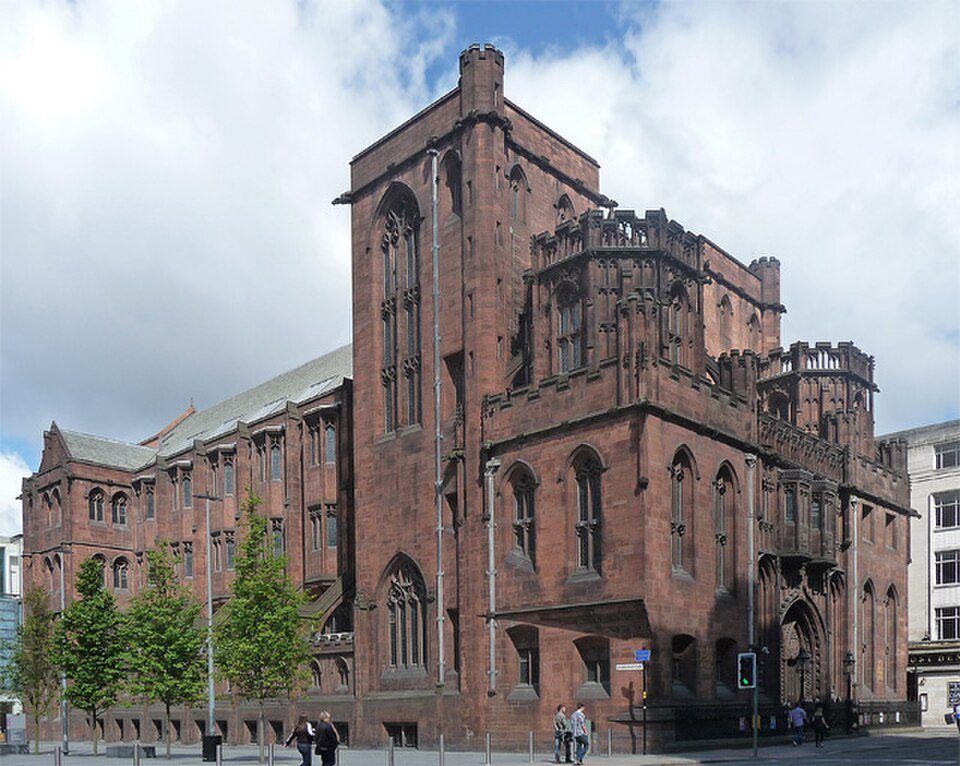
People’s History Museum is at Left Bank, Spinningfields, Manchester M3 3ER, on the corner with Bridge Street beside the River Irwell and opposite the Civil Justice Centre. It sits west of the main retail core, so walking from Deansgate or across Spinningfields is the straightforward editorial route. The older Pump House and rust-coloured extension make a clearer landmark from the river side than from office courtyards. Use the main visitor entrance rather than approaching service access along the water. A car is unnecessary for a central itinerary, and the museum combines naturally with John Rylands Library if each receives its own full visit time.
Gallery One and Gallery Two use low lighting to protect paintings and banners; visitors with low vision can borrow large-print text from access stations outside each gallery. Seating includes stools and backed benches, and staff can locate stronger arm or back support. Short-pile carpet covers the two permanent galleries, while other floors use vinyl or wood. Groups over six should book to guarantee entry. Political subjects include violence, exploitation and exclusion, so adults should help children interpret difficult material rather than assuming every interactive is light entertainment. The Conservation Studio is viewed through glass; it is a working area, not an invitation to enter or interrupt staff.
The museum explicitly welcomes photographs and asks visitors to switch flash off to protect objects. The banners are the defining subject: stand far enough back to include poles, fringe and scale, then make one detail of stitching or painted symbolism without leaning over barriers. Low conservation light requires steady hands and produces more truthful colour than flash. Gallery One’s Peterloo material and Gallery Two’s campaign displays benefit from contextual frames that include labels, not isolated images stripped of meaning. Share only photographs that respect other visitors and sensitive personal stories. The Pump House and Cor-Ten extension make a useful exterior contrast from the river approach.
It follows the development of democracy in Britain through reformers, workers, voters and citizens, from Peterloo and nineteenth-century organising to modern campaigns and rights.
Why are banners central to the museum?
Campaign banners are both political evidence and large textile artworks. They appear through Gallery One and Gallery Two, while the visible Conservation Studio demonstrates how the museum preserves them.
Is the suggested £10 donation compulsory?
No. Entry remains free; £10 is the amount the museum says most visitors donate. It supports the independent charity but is not a ticket price.
Which day is the museum closed?
Tuesday is the weekly closed day. The museum also lists closure on 24, 25 and 26 December and 1 January.
Do groups need to arrange entry?
Groups of more than six should submit an enquiry to guarantee admission. Individuals and smaller parties can use the ordinary free visitor route.
Is photography permitted?
Yes. The museum welcomes photographs but requires flash to be switched off to protect its objects. Keep clear of banners and avoid including unrelated visitors closely.