.jpg)
2 min walk
Bridgewater Hall
- Must see
- Art and culture venue
Language · 11 published
Historic monument · Manchester
Reviewed by Elena Voss · Roavina Travel Editor
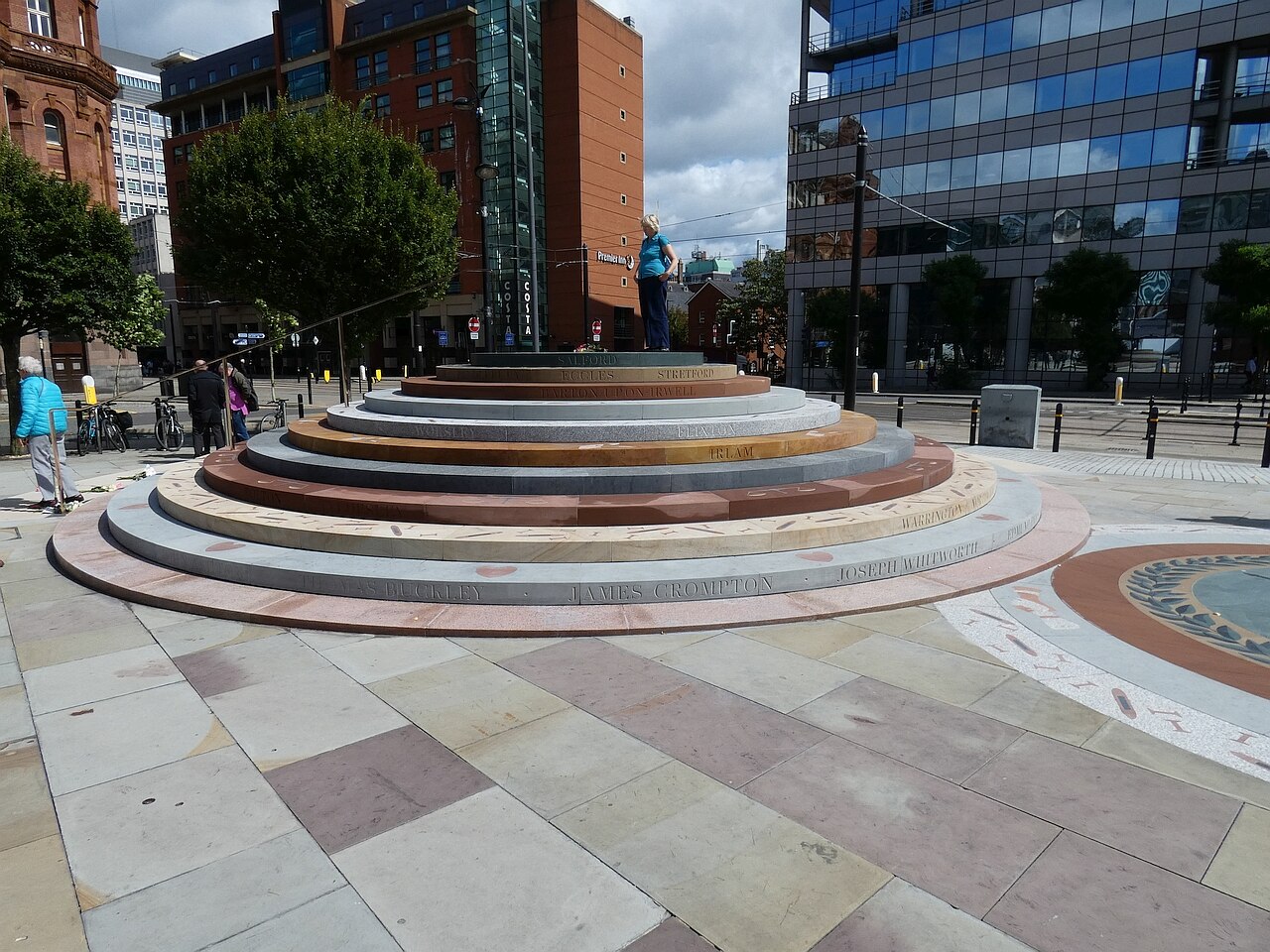
This place is a Memorial. It is built of stone.
The Peterloo Memorial commemorates the violent dispersal of a reform meeting at St Peter’s Field in Manchester on 16 August 1819. Cavalry charged a crowd demanding parliamentary reform, killing about eighteen people and injuring hundreds. Designed by Jeremy Deller and unveiled in 2019, the monument marks the bicentenary of the massacre. Its location near the original site connects a contemporary artwork with a defining event in Manchester’s political and working-class history. The Peterloo Memorial commemorates the Peterloo Massacre of 16 August 1819, when cavalry charged into a crowd of 60,000 peaceful protesters demanding parliamentary reform at St Peter's Field in Manchester. Approximately 18 people were killed and hundreds injured. Designed by Jeremy Deller, the memorial was unveiled in 2019 on the 200th anniversary. It consists of a stepped conical structure of stone discs arranged in a circular pattern, with each disc representing a location from which victims came. The memorial occupies a significant position in Manchester city centre near the original site of the massacre. No. The Peterloo Memorial is an outdoor sculptural installation without enclosed spaces, exhibition galleries, or visitor centre facilities.
Checked 2026-08-26 · Source
The memorial has no enclosed interior. It is a stepped, conical arrangement of circular stone discs set into the public realm. Names of victims and places associated with those who travelled to the 1819 meeting form part of the design. Visitors can move around the concentric structure and climb some of its raised surfaces. The monument is therefore read through its shape, inscriptions and position in the city rather than through gallery displays or a visitor centre. The memorial itself is an outdoor sculptural installation without enclosed interior spaces. Visitors walk among and upon the concentric stone discs that form the monument.
Checked 2026-08-26 · Source
Plan for fifteen to thirty minutes at the memorial. A shorter visit covers the overall form and immediate setting, while a longer pause allows time to follow the circular arrangement, read names and locations, and consider the event being commemorated. Its central position makes it simple to include during a wider walk around Manchester. Travellers interested in labour history, political reform or public art may want to linger beside the stone discs and study the inscriptions carefully.
Checked 2026-08-26 · Source
The memorial is an open-air city-centre monument, so daylight gives the clearest view of its inscriptions and stepped geometry. Manchester’s weather can be wet and changeable in every season; comfortable footwear and a rain layer make the visit easier. Summer offers longer daylight for reading and photography. 16 August, the anniversary of Peterloo, carries special historical significance and can make the site feel more solemn, particularly when visitors gather to remember the victims.
Checked 2026-08-26 · Source
The Peterloo Memorial is a free public monument with no ticketed entrance. Visitors can approach it directly from the surrounding pedestrianised city-centre space, without a reservation or admission desk. The site is experienced as public art and commemoration rather than as a managed museum visit. Any costs during a combined outing belong to transport, food or other attractions in Manchester, not to entering the memorial itself.
Checked 2026-08-26 · Source
The memorial stands near Manchester Central Library and the Manchester Central convention complex in the city centre. Manchester Oxford Road and Deansgate stations are within walking distance, while Manchester Piccadilly is around fifteen to twenty minutes away on foot. St Peter’s Square Metrolink stop provides a nearby tram connection and adds historical context to the walk. City-centre buses serve the surrounding streets, and the monument is reached from the street-level public realm.
Checked 2026-08-26 · Source
The stepped stone structure has uneven surfaces and can become slippery when wet, so take care if you climb onto the discs. The surrounding public space is exposed, with no shelter built into the memorial. Pedestrians pass through this central area, and visitors should leave clear routes around the artwork. The subject is a memorial to political violence, so the names and historical context may make the stop emotionally serious. Keep personal belongings close in a busy urban setting.
Checked 2026-08-26 · Source
The circular form offers photographs from ground level, along the outer edge and from higher points on the stepped discs. Wide compositions can include the surrounding civic buildings, while close views emphasise the stone surfaces and inscriptions. Overcast light can produce a quiet, even mood; brighter conditions reveal the structure’s shadows. Photograph respectfully at this commemorative site, keeping pathways open and allowing other visitors time to read names or pause in remembrance.
Checked 2026-08-26 · Source
No. It is an outdoor sculptural memorial made from stepped circular stone discs in Manchester’s city centre.
No. The memorial is freely accessible public artwork with no ticketed entrance.
It commemorates the 1819 Peterloo Massacre, when cavalry attacked a parliamentary reform meeting at St Peter’s Field.
The design includes names of victims and places connected with people who travelled to the 1819 reform meeting.
It was unveiled in 2019, two hundred years after the Peterloo Massacre of 16 August 1819.
Most visitors need fifteen to thirty minutes to walk around the monument, read its inscriptions and reflect on its history.
Loading the interactive map…
The interactive map could not be loaded.
Last updated:
Source: OpenStreetMap contributors, Wikidata ·