
26 min walk
Nuuanu Pali Lookout
- Must see
- Viewpoint
Nature site · Honolulu
| Monday | 09:00 – 16:00 |
|---|---|
| Tuesday | 09:00 – 16:00 |
| Wednesday | 09:00 – 16:00 |
| Thursday | Closed |
| Friday | 09:00 – 16:00 |
| Saturday | 09:00 – 16:00 |
| Sunday | 09:00 – 16:00 |
Checked 2026-08-31 · Source
| Per person | Free entry |
|---|
Checked 2026-08-31 · Source
Read from the OpenStreetMap access tags; anything not listed has no tag recorded.
Set the group type to family in the planner and the day window contracts to about three quarters of a solo day.
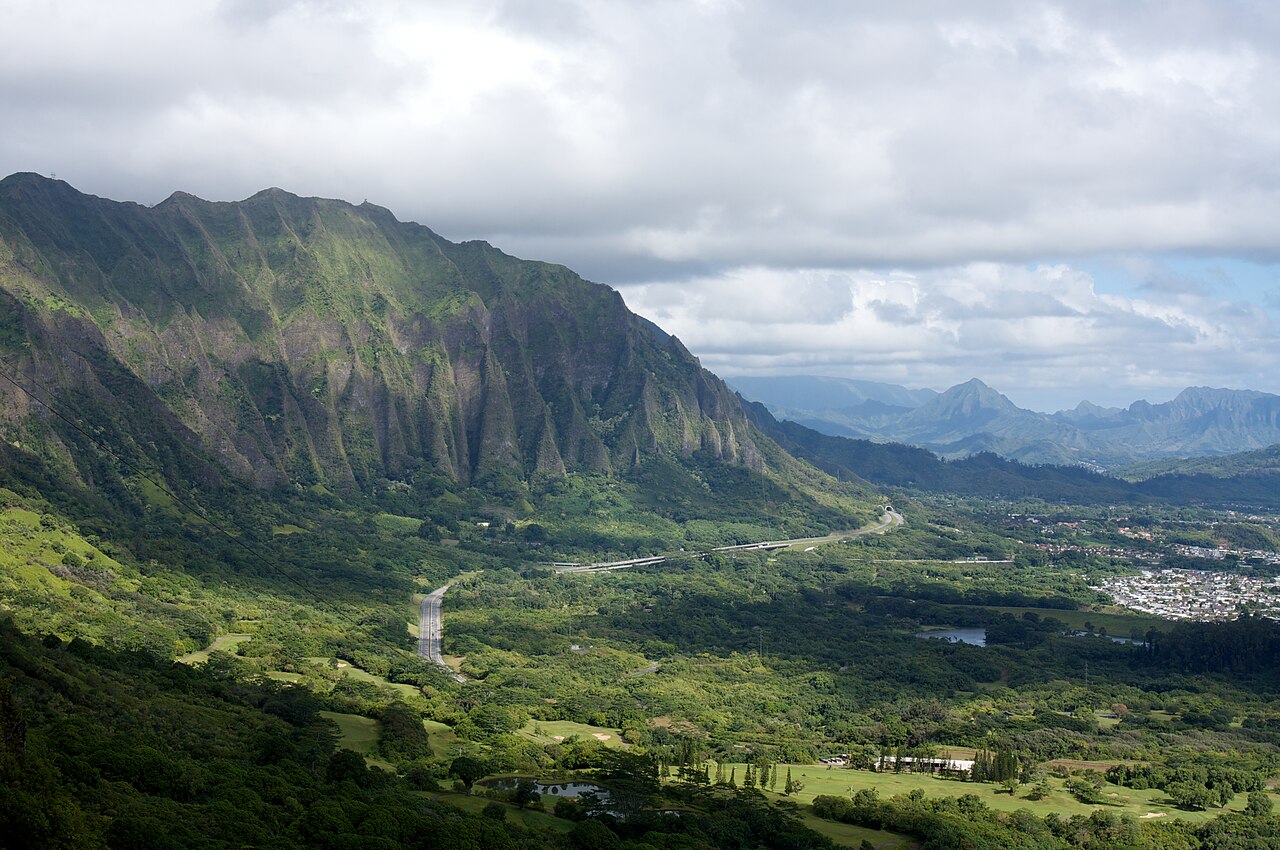
Ho'omaluhia Botanical Garden is a large botanical garden on the windward side of O'ahu, Hawaii. Established in 1982, the garden spans approximately 400 acres in the Kane'ohe area. Its name translates to "a place of peace and tranquility." The garden was designed as a flood protection project, with a 32-acre lake at its center. It is framed dramatically by the Ko'olau mountain range, creating a distinctive backdrop. It serves as both a recreational destination and a plant conservation site. Monday–Wednesday and Friday–Sunday, 09:00–16:00; closed Thursday.
Checked 2026-08-31 · Source
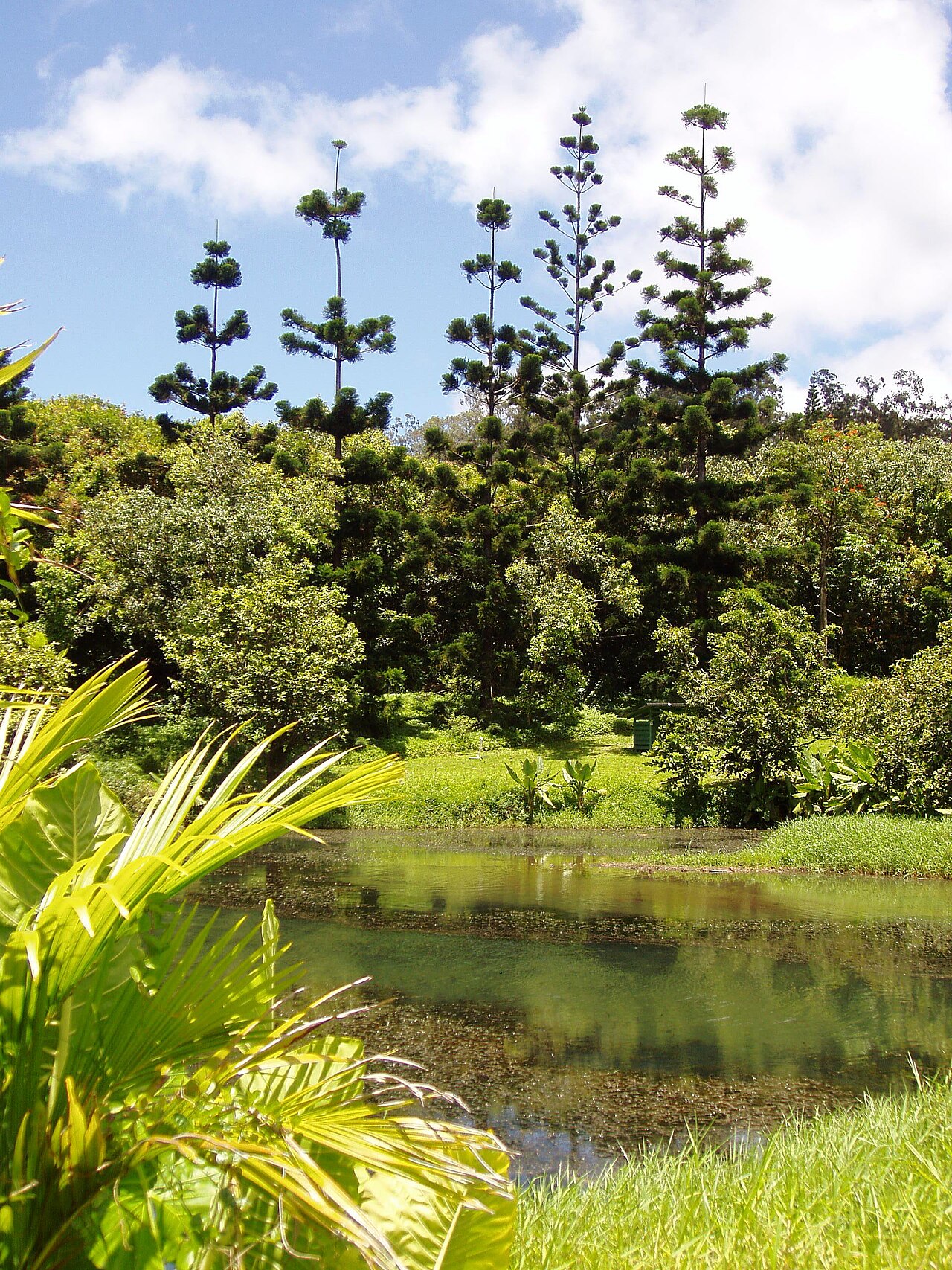
The garden features plant collections organized by geographic origin, including tropical plants from Africa, India, Sri Lanka, Malaysia, Polynesia, and the Philippines. A 32-acre lake anchors the landscape and supports aquatic ecosystems. Walking trails wind through varied terrain, allowing visitors to explore different botanical zones. The garden contains a visitor center with educational displays. Palms, gingers, heliconias, and other tropical specimens dominate the collections. Native Hawaiian plants are also represented. The Ko'olau cliffs provide a constant visual presence.
Checked 2026-08-31 · Source
Most visitors spend two to three hours exploring the garden's main areas. A complete visit covering all trails and collections could extend to half a day. The garden's size and varied terrain encourage unhurried exploration. Photography, birdwatching, and peaceful contemplation extend typical stays. Families with children may move more quickly through certain sections while lingering at the lake. Serious plant enthusiasts often take longer to examine specimens and read identification labels. The garden's peaceful atmosphere invites visitors to slow their pace. General admission is free for adults, children, residents, and non-residents.
Checked 2026-08-31 · Source
The windward side of O'ahu receives significant rainfall, which contributes to the garden's lush vegetation but may affect visit comfort. Morning hours often offer calmer conditions before afternoon cloud buildup. Visitors should consult the official Honolulu Botanical Gardens website or contact the garden directly for current opening times, as these may change. Monday–Wednesday and Friday–Sunday, 09:00–16:00; closed Thursday. Visitors can experience parts of the 400-acre garden by driving its main road. Paved walkways are available near the Visitor Center, Kahua Hau, and Kahua Kuou. Not every path is step-free: the official map warns of slippery surfaces, loose rocks, exposed roots, and temporarily closed lake paths.
Checked 2026-08-31 · Source
The garden is part of the municipal Honolulu Botanical Gardens system. Some Honolulu Botanical Gardens locations have historically charged admission while others remain free. Visitors should verify current fee structures through official city channels before visiting. Potential costs may include parking fees or special event charges. The garden may offer educational programs or guided tours with separate pricing. General admission is free for adults, children, residents, and non-residents. Visitors can experience parts of the 400-acre garden by driving its main road. Paved walkways are available near the Visitor Center, Kahua Hau, and Kahua Kuou.
Checked 2026-08-31 · Source
The garden is located in Kane'ohe on the windward coast of O'ahu. From Honolulu, take the Pali Highway or Likelike Highway through the Ko'olau mountains, then proceed on Kamehameha Highway to Luluku Road. Public bus service from Honolulu is available but requires transfers and extended travel time. The entrance is at 45-680 Luluku Road, Kāneʻohe. TheBus identifies Route 60 for Hoʻomaluhia Botanical Garden. From Waikīkī, take Route 20, 42, or E to Ala Moana Center and transfer to Route 60. Named nearby stops are Luluku Road + Kamehameha Highway (stop 4608) toward Kāneʻohe/Haleʻiwa and Kamehameha Highway + Luluku Road (stop 1765) toward Honolulu. Continue along Luluku Road to the garden entrance. On-site parking is limited, and the garden encourages carpooling.
Checked 2026-08-31 · Source
Mosquitoes are prevalent in this lush, moist environment; repellent is advisable. Sudden rain showers occur frequently on the windward side without warning. Trails may become slippery when wet. The lake has no lifeguard; swimming is prohibited. Some areas have uneven terrain unsuitable for standard wheelchairs. Limited facilities exist within the garden; visitors should bring water and necessities. Do not collect plant material. Visitors can experience parts of the 400-acre garden by driving its main road. Not every path is step-free: the official map warns of slippery surfaces, loose rocks, exposed roots, and temporarily closed lake paths.
Checked 2026-08-31 · Source
The garden is exceptionally photogenic, with the Ko'olau cliffs providing a dramatic backdrop to tropical plantings and lake reflections. Morning light often yields clearer mountain views before clouds obscure the peaks. The palm-lined entrance road is particularly iconic. Tripods and professional equipment may require permits; verify current policies with garden staff. Commercial photography and posed sessions typically need advance arrangement. Respect other visitors by not blocking paths. The lake offers mirror-like reflections on calm mornings. At the fishing area, vehicles are ordinarily restricted except when dropping off a person with a disability; the fishing program is currently suspended.
Checked 2026-08-31 · Source
The garden covers 400 acres in windward Oʻahu.
Its geographically arranged collections represent the Philippines, Malaysia, Tropical America, India and Sri Lanka, Melanesia, Hawaiʻi, Polynesia, and Africa.
No. The lake area, paths leading to it, and the switchback paths southeast of the Education Center are temporarily closed because of heavy rain and flooding.
No. The garden lists its free catch-and-release fishing program as temporarily suspended.
Yes, with a permit. The garden has 28 sites across Kahua Kuou, Kahua Lehua, and Kahua Nui Makai campgrounds.
Tour information is available directly from the garden at +1 808-768-8942.
Loading the interactive map…
The interactive map could not be loaded.
Last updated:
Source: OpenStreetMap contributors, Wikidata ·