
-L1004709.jpg)
3 min walk
Duke Kahanamoku Statue
- Must see
- Historic monument
Language · 11 published
Nature site · Honolulu
Waikīkī Beach
Reviewed by Elena Voss · Roavina Travel Editor
| Monday | 05:00 – 23:59 |
|---|---|
| Tuesday | 05:00 – 23:59 |
| Wednesday | 05:00 – 23:59 |
| Thursday | 05:00 – 23:59 |
| Friday | 05:00 – 23:59 |
| Saturday | 05:00 – 23:59 |
| Sunday | 05:00 – 23:59 |
Checked 2026-08-31 · Source
Read from the OpenStreetMap access tags; anything not listed has no tag recorded.
Set the group type to family in the planner and the day window contracts to about three quarters of a solo day.
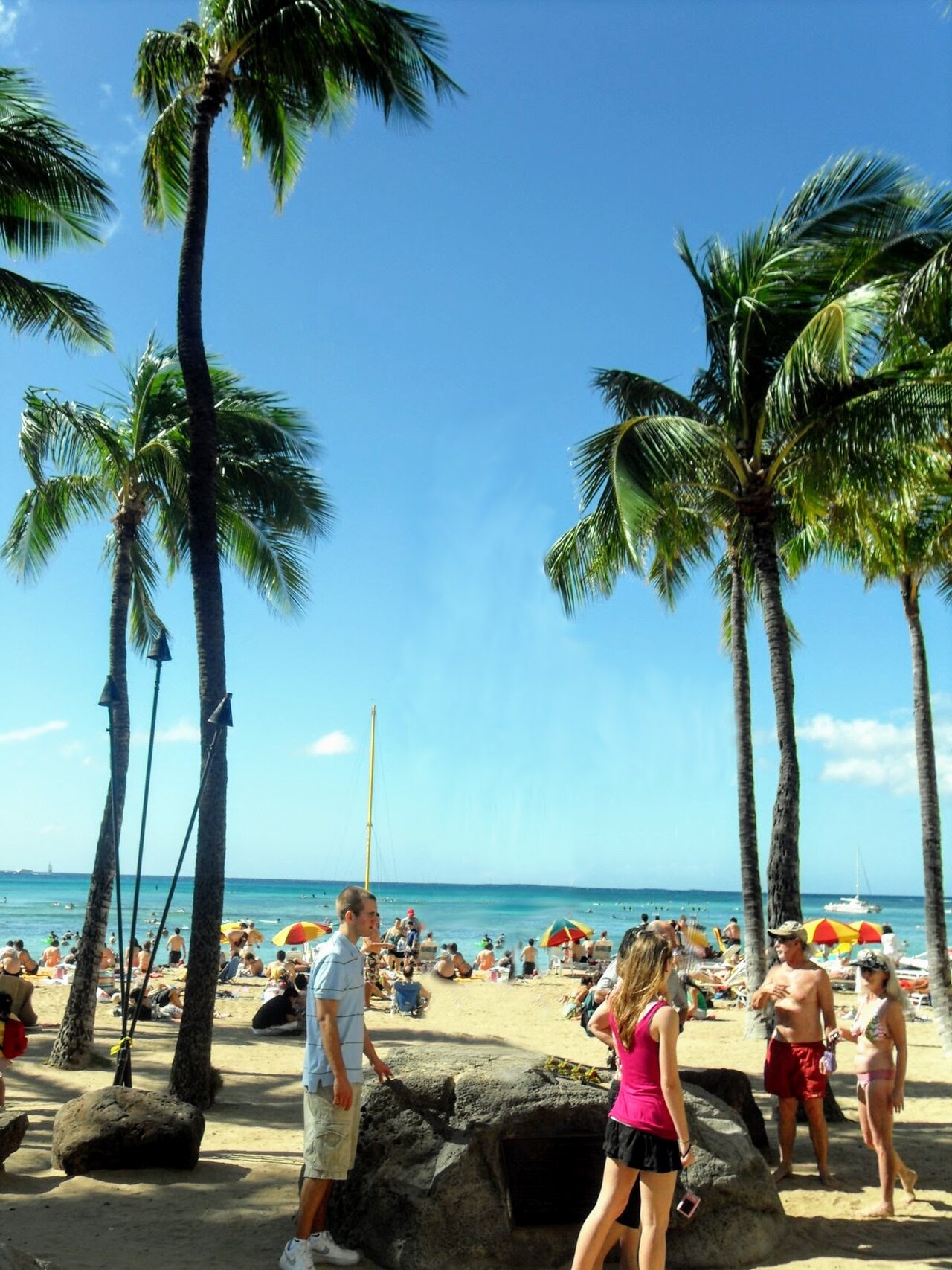
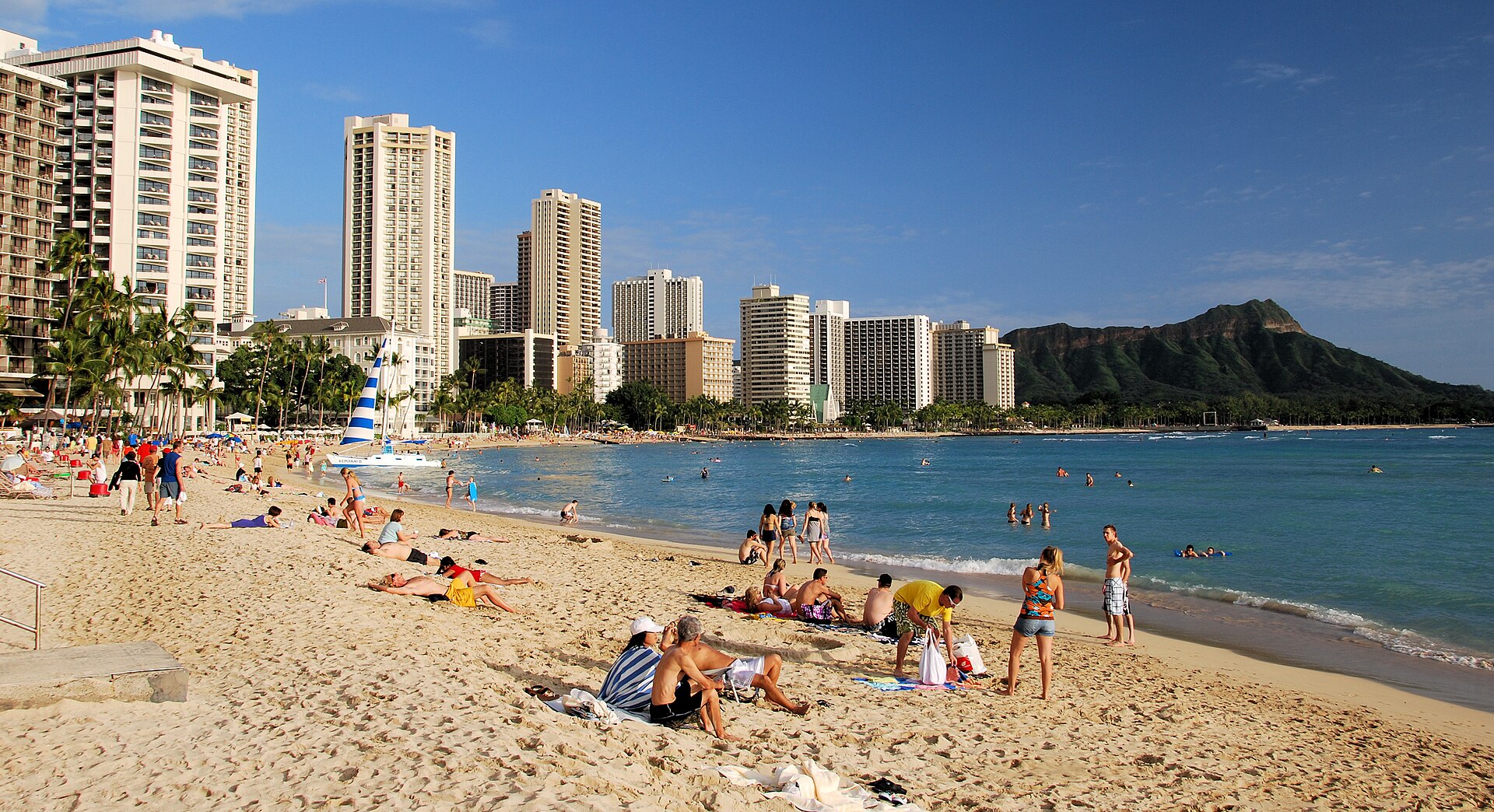
Waikīkī Beach is Honolulu’s best-known urban beach and the seafront focus of Waikīkī. This fast draft is tied to the exact OSM identity already ranked in the Honolulu editorial bundle, so it must not be transferred to a nearby namesake or broader district. The visit matters for the relationship between the beach, the resort district, and the volcanic profile of Lēʻahi. Daily 05:00–00:00. The Kūhiō Beach Park section closes nightly from 00:00 to 05:00, with no full-day weekly closure. During closure hours, the public may traverse the park to reach the ocean but may not remain in the park without permission.
Checked 2026-08-31 · Source
The experience at Waikīkī Beach centres on a long public shoreline, changing swimming and surf conditions, views toward Lēʻahi, and direct links to the hotel district. Start with the relationship between the beach, the resort district, and the volcanic profile of Lēʻahi, then add secondary elements only when access and conditions allow. A beach-access mat is available at Kūhiō Beach Park beside the Duke Kahanamoku statue. Step-free access is confined to the designated mat route across part of the sandy beach.
Checked 2026-08-31 · Source
No operator-stated visit duration is recorded for Waikīkī Beach. Build the stop around one complete primary experience rather than an invented fixed schedule: the relationship between the beach, the resort district, and the volcanic profile of Lēʻahi. Add margin for orientation, queues, walking, controlled access, weather, rest, and the transition to the next Honolulu stop. Free general access; the City and County of Honolulu states that its open and accessible public parks and beaches have no entry fees and specifically includes the Waikiki beach area from Kūhiō Beach Park to the west side of the Waikiki Natatorium.
Checked 2026-08-31 · Source
Choose the visit according to the site itself: exposed outdoor places depend on light, heat, rain, and ocean or trail conditions, while museums and memorials depend on current access arrangements. Confirm the operator’s latest notice before departure. Daily 05:00–00:00. For the central Waikiki beachfront, TheBus serves Kūhiō Avenue with routes 2, 2L on weekdays, 8, 13, 42, westbound E, and W. The W Line runs directly from Daniel K. Inouye International Airport to Waikiki Beach and Hotels. Routes 14 and 200 serve the Kalākaua Avenue/Kapiʻolani Park end. A beach-access mat is available at Kūhiō Beach Park beside the Duke Kahanamoku statue.
Checked 2026-08-31 · Source
Do not infer free entry from public ownership, an outdoor setting, or the absence of a price field, and do not infer a charge from a controlled entrance. Check the linked operator or institutional source for admission, reservations, eligibility, cancellations, and separately priced experiences. Free general access; the City and County of Honolulu states that its open and accessible public parks and beaches have no entry fees and specifically includes the Waikiki beach area from Kūhiō Beach Park to the west side of the Waikiki Natatorium. A beach-access mat is available at Kūhiō Beach Park beside the Duke Kahanamoku statue.
Checked 2026-08-31 · Source
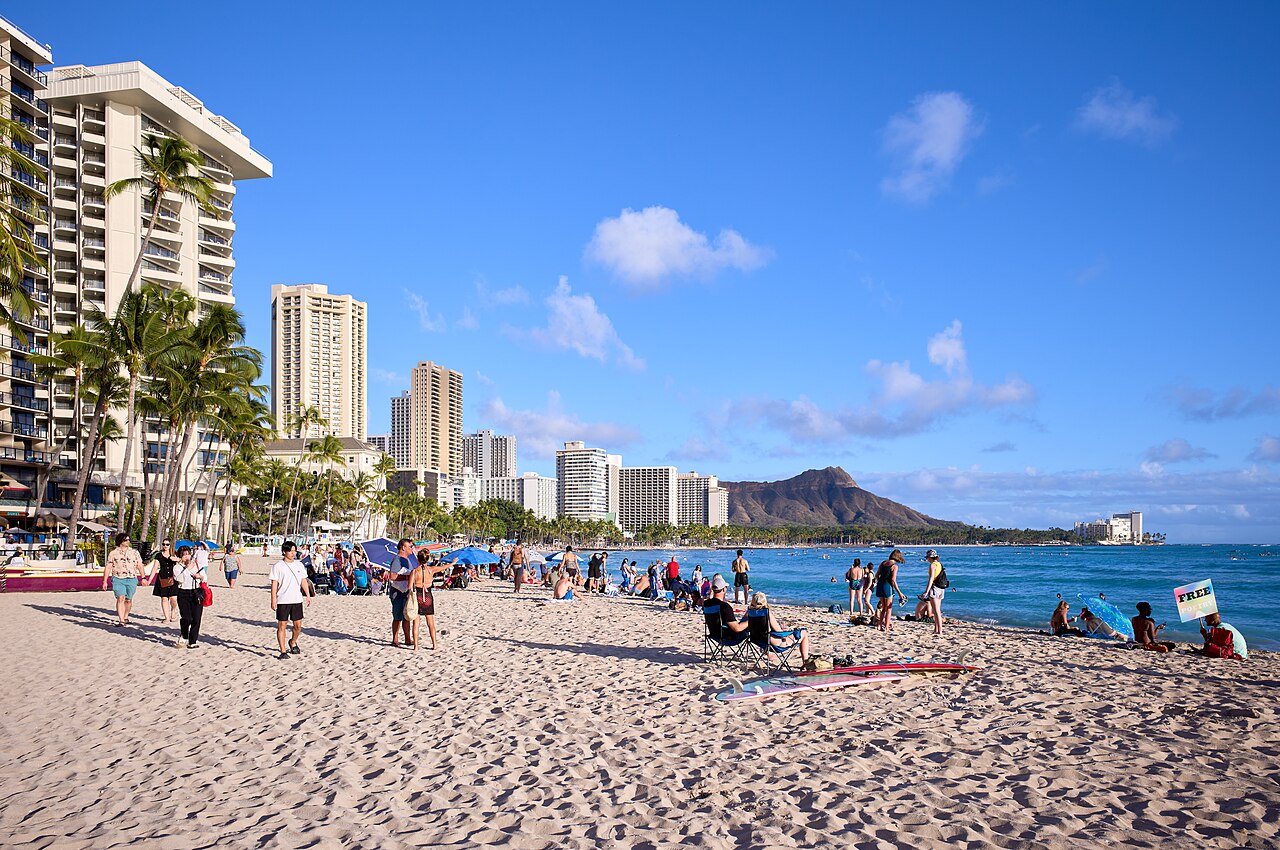
For Waikīkī Beach, approach from Waikīkī on foot or by public transport and choose an access point matching the shoreline section you intend to use. Check the final entrance, access path, stop, or check-in point before leaving. For the central Waikiki beachfront, TheBus serves Kūhiō Avenue with routes 2, 2L on weekdays, 8, 13, 42, westbound E, and W. The W Line runs directly from Daniel K. Inouye International Airport to Waikiki Beach and Hotels. Routes 14 and 200 serve the Kalākaua Avenue/Kapiʻolani Park end. Step-free access is confined to the designated mat route across part of the sandy beach.
Checked 2026-08-31 · Source
At Waikīkī Beach, plan for ocean conditions, sun exposure, crowded access points, unattended valuables, and lifeguard instructions. Follow barriers, posted notices, staff or ranger directions, and local conduct expectations. A beach-access mat is available at Kūhiō Beach Park beside the Duke Kahanamoku statue. Yes. Visitors may traverse the closed park to reach the ocean, but may not remain in the park between 00:00 and 05:00 without permission. The beach-access mat is beside the Duke Kahanamoku statue in Kūhiō Beach Park. Lifeguards are on duty year-round at the Waikiki end of the Waikīkī Marine Life Conservation District.
Checked 2026-08-31 · Source
The strongest photographic subjects at Waikīkī Beach include the shoreline curve, Lēʻahi beyond the water, early light, and the contrast between open ocean and the urban edge. Work only from lawful visitor areas and keep paths, doorways, viewpoints, exhibits, and memorial spaces clear. Check posted rules and staff guidance. The beach-access mat is beside the Duke Kahanamoku statue in Kūhiō Beach Park. Lifeguards are on duty year-round at the Waikiki end of the Waikīkī Marine Life Conservation District.
Checked 2026-08-31 · Source
Yes. Visitors may traverse the closed park to reach the ocean, but may not remain in the park between 00:00 and 05:00 without permission.
The beach-access mat is beside the Duke Kahanamoku statue in Kūhiō Beach Park.
Lifeguards are on duty year-round at the Waikiki end of the Waikīkī Marine Life Conservation District.
The state lists restrooms, showers, emergency and pay phones, and a snack bar at the Waikīkī Marine Life Conservation District.
Summer swells can bring high surf, and waves are especially dangerous at the outer reef edge where parts of the reef are exposed.
No. Within the Waikīkī Marine Life Conservation District, taking or injuring marine life and possessing fishing devices in the water are prohibited.
Loading the interactive map…
The interactive map could not be loaded.


Last updated:
Source: OpenStreetMap contributors, Wikidata ·