
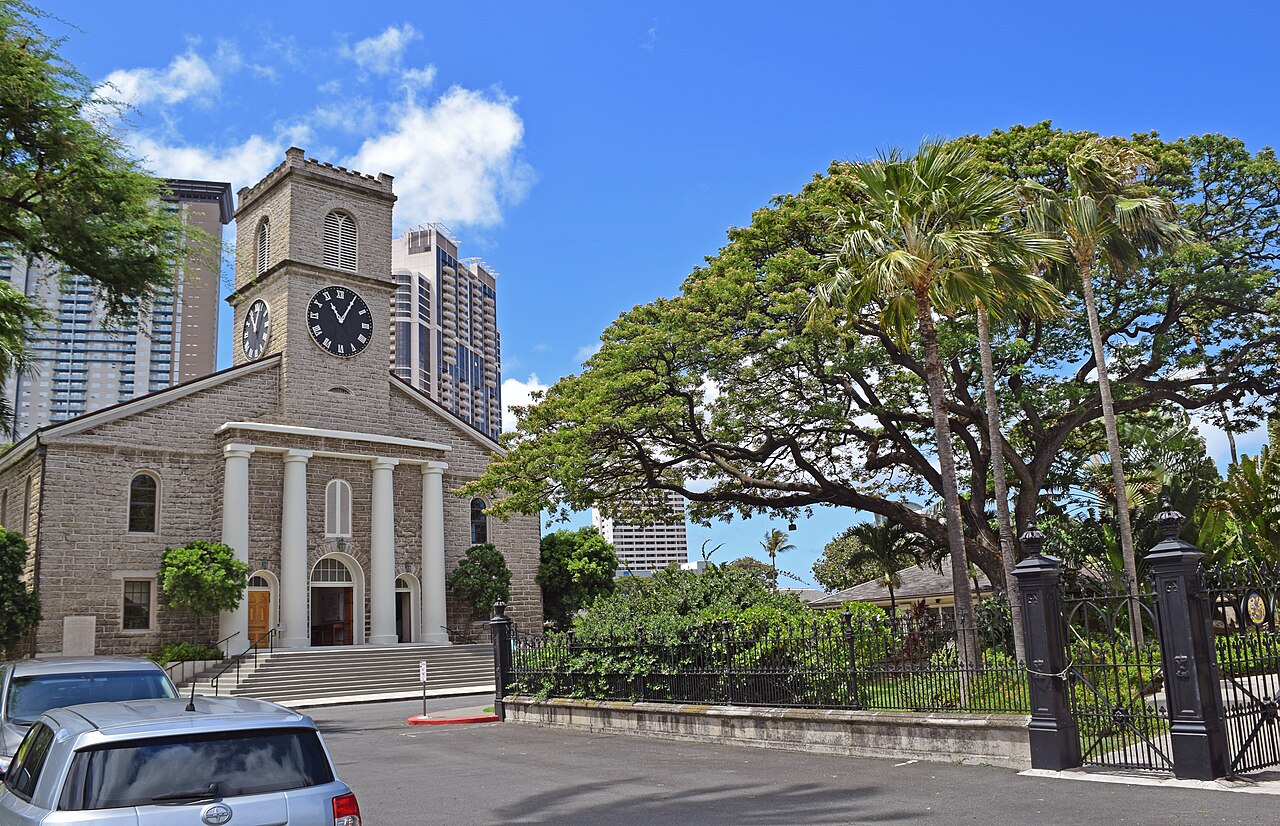
18 min walk
Kawaiahaʻo Church
- Must see
- Place of worship
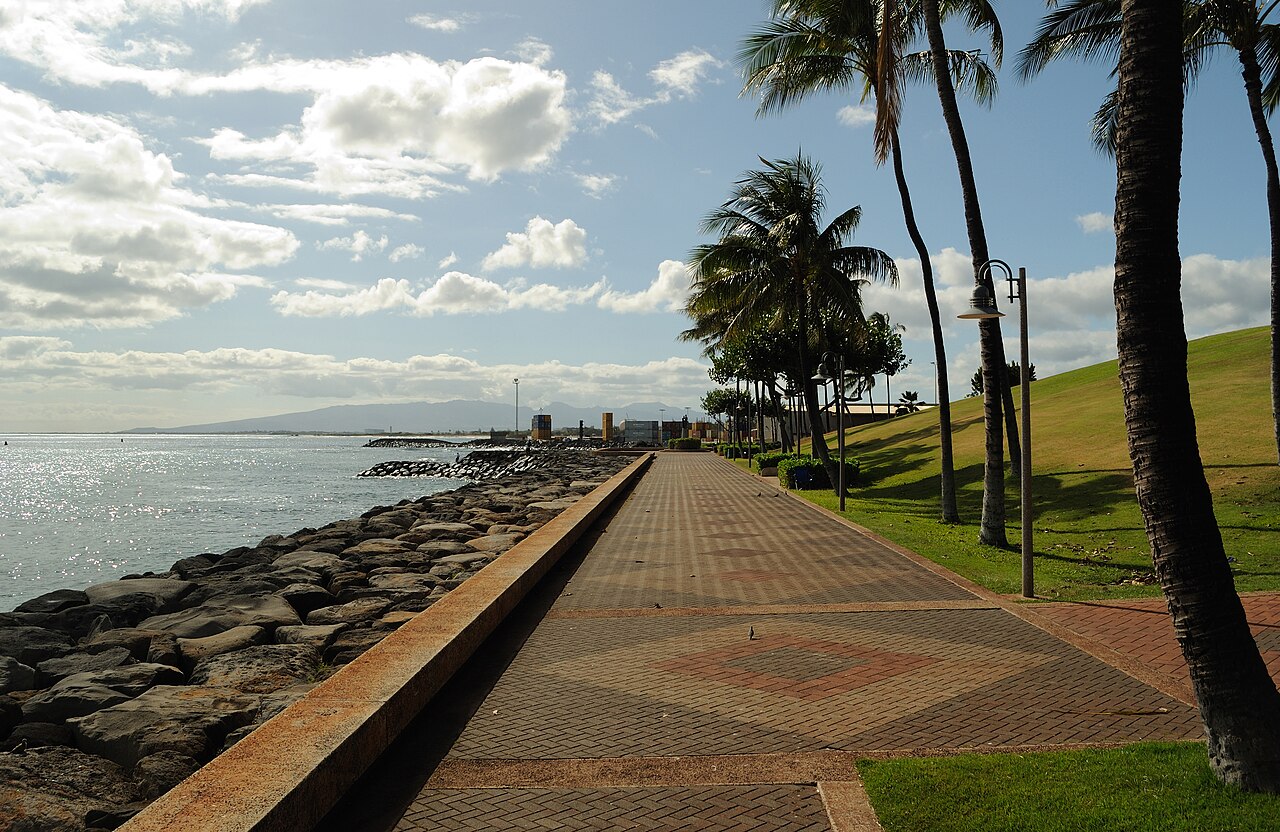
Nature site · Honolulu
| Monday | 05:00 – 19:00 |
|---|---|
| Tuesday | 05:00 – 19:00 |
| Wednesday | 05:00 – 19:00 |
| Thursday | 05:00 – 19:00 |
| Friday | 05:00 – 19:00 |
| Saturday | 05:00 – 19:00 |
| Sunday | 05:00 – 19:00 |
Parsed from OpenStreetMap opening hours on 2026-09-09.
Kakaʻako Waterfront Park is an open coastal park in Honolulu’s Kakaʻako district. Built on reclaimed industrial land, it gives visitors a broad Pacific outlook and a direct connection with the shoreline. The park is closely associated with Point Panic, a bodysurfing break known for powerful surf when conditions are active. Its character is spacious and exposed: ocean, grass, paved walking areas, and views toward Diamond Head replace the dense streetscape found farther inland. It works well as a short waterfront pause or as part of a longer Kakaʻako walk. Kakaʻako Waterfront Park is an urban waterfront park located in the Kakaʻako district of Honolulu, Oʻahu. These are distinct but adjacent waterfront areas in the Kakaʻako district. Kakaʻako Waterfront Park is specifically associated with Point Panic and the open parkland documented under OSM way/147224769.
Checked 2026-08-26 · Source
The park contains open grassy areas, paved paths, and oceanfront viewpoints. From the shoreline, visitors can watch changing surf at Point Panic, look toward Diamond Head, and see vessels moving across the Pacific. Shade is limited because the park is exposed to the coast. Kakaʻako’s murals and street art lie in nearby blocks and can extend the outing beyond the park itself, but they are separate from the waterfront grounds. The compact layout makes orientation straightforward, with the main appeal coming from sea views, open space, and the active shoreline.
Checked 2026-08-26 · Source
Allow thirty minutes for a simple perimeter walk and time at the ocean viewpoints. One to two hours suits visitors who want to sit on the grass, watch Point Panic, photograph the coast, or stay through sunset. The park itself is compact, so longer visits usually involve combining it with nearby Kakaʻako streets, murals, or other waterfront areas. The open setting encourages pauses rather than intensive sightseeing. Carrying the visit into the surrounding district can turn a brief coastal stop into part of a half-day urban walk.
Checked 2026-08-26 · Source
Sunset is a natural time to visit because the open waterfront creates an unobstructed horizon and changing evening colour. Early or late visits also reduce the intensity of the tropical sun, although the coast remains exposed throughout the day. Point Panic’s surf activity changes with swell direction and size, with south and southwest swells commonly associated with stronger summer conditions. Wind can cool the park while making the waterfront feel more exposed. Choose your timing around the experience you want: sea views, surfers, walking, or sunset.
Checked 2026-08-26 · Source
Kakaʻako Waterfront Park is a public outdoor space with no ticketed attraction described in the place record. The visit is therefore centred on open access to the parkland and shoreline rather than an admission procedure. Costs connected with parking, food, transport, or activities elsewhere in Kakaʻako are separate from the park itself. Special events or commercial uses may follow different arrangements, but they are not part of an ordinary walk through the waterfront grounds. Treat the park as a free coastal stop within a Honolulu day.
Checked 2026-08-26 · Source
The park sits in Kakaʻako south of Ala Moana Boulevard and east of downtown Honolulu. The surrounding street grid connects it with central Honolulu, while TheBus serves the wider district and requires a walk onward to the waterfront. Bicycling through Kakaʻako is practical via city streets and nearby bike infrastructure. Drivers should plan for the realities of a developing urban neighbourhood, including limited nearby parking and a walk from the place where the vehicle is left. Rideshare and taxi journeys can reach the surrounding roads before the final walk.
Checked 2026-08-26 · Source
The shoreline deserves attention before the views do. Point Panic can produce powerful waves, strong currents, and slippery rocks, making the water unsuitable for casual entry. Stay back from breaking surf and keep children close near the coast. Limited shade means sun protection and water matter even during a short visit. Wind and passing showers can change comfort quickly. After dark, visibility may be lower, while construction and traffic in the surrounding Kakaʻako district can alter walking routes. Keep valuables secure in the open urban setting.
Checked 2026-08-26 · Source
Kakaʻako Waterfront Park is well suited to wide coastal compositions. The open horizon, Pacific water, passing vessels, Point Panic surf, and Diamond Head create distinct subjects without dense foreground clutter. Sunset gives the shoreline warm colour, while morning light can produce a cleaner, evenly lit seascape. Photographers should protect equipment from salt spray, sand, and wind. Action images are possible when bodysurfers use the break, but keep a safe distance from the water. Nearby Kakaʻako murals offer a contrasting urban subject during the same outing.
Checked 2026-08-26 · Source
It is known for open Pacific views, its coastal parkland, and the nearby Point Panic bodysurfing break.
Point Panic is associated with powerful surf, so inexperienced visitors are better served by watching from a safe position.
A quick walk takes about thirty minutes, while sunset, photography, and time on the grass can fill one to two hours.
The grass and open space can suit families, but children need close supervision near the powerful coastal surf.
Yes. Nearby Kakaʻako streets and murals can extend the waterfront visit into a longer neighbourhood walk.
Bring sun protection and water, and protect cameras or phones from wind, sand, salt spray, and sudden showers.
Loading the interactive map…
The interactive map could not be loaded.
Last updated:
Source: OpenStreetMap contributors, Wikidata ·