

_(cropped).jpg)
.jpg)


6 min walk
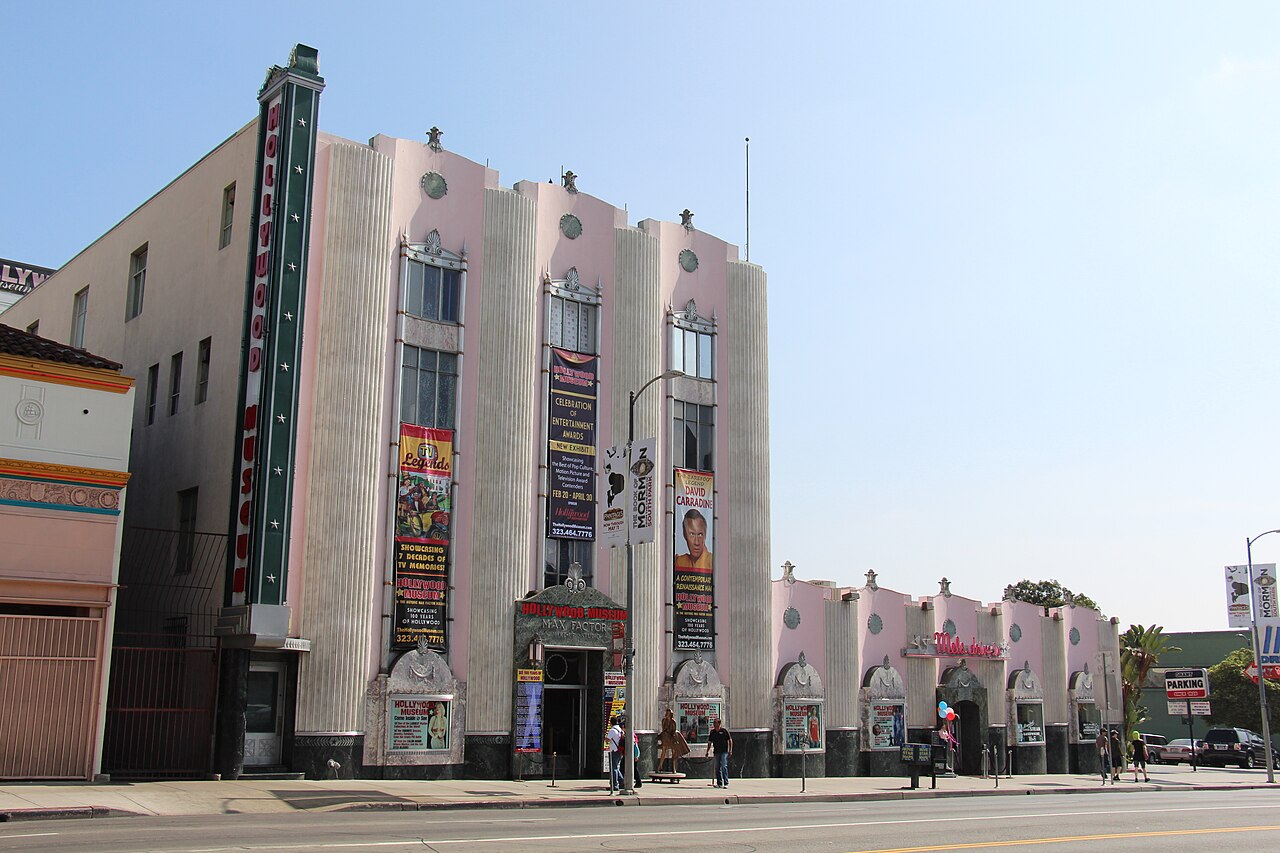
Hollywood Museum
- High
- Museum
Historic monument · Los Angeles
| Monday | 00:00 – 23:59 |
|---|---|
| Tuesday | 00:00 – 23:59 |
| Wednesday | 00:00 – 23:59 |
| Thursday | 00:00 – 23:59 |
| Friday | 00:00 – 23:59 |
| Saturday | 00:00 – 23:59 |
| Sunday | 00:00 – 23:59 |
Checked 2026-08-31 · Source
| Per person | Free entry |
|---|
Checked 2026-08-31 · Source
Read from the OpenStreetMap access tags; anything not listed has no tag recorded.
Set the group type to family in the planner and the day window contracts to about three quarters of a solo day.
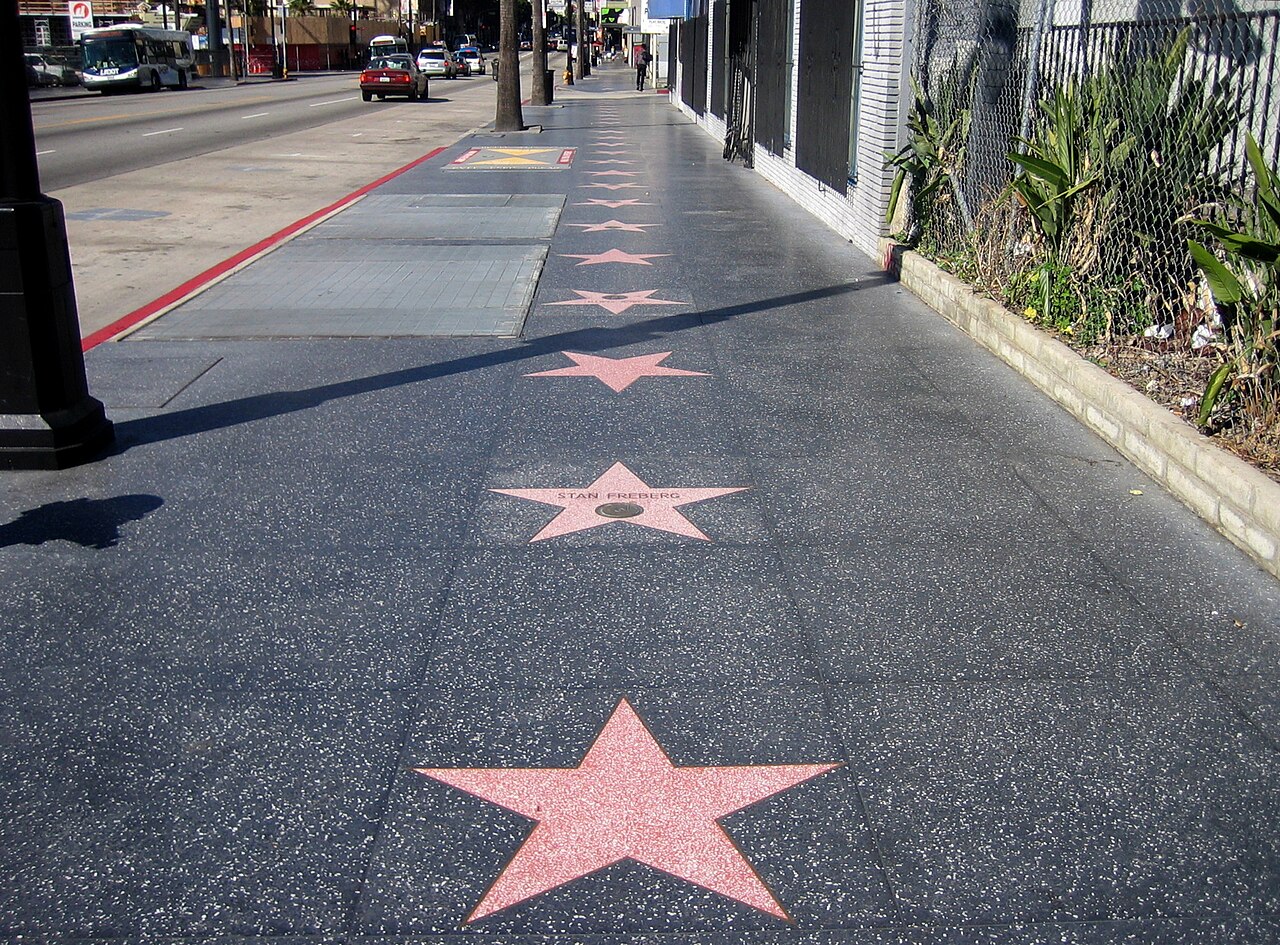
The Hollywood Walk of Fame is a free, internationally recognised streetscape embedded with more than 2,700 brass stars honouring achievements in entertainment. Stretching along Hollywood Boulevard and Vine Street, it was created in 1958 as a permanent tribute to artists and professionals in film, television, music, radio, and live performance. The stars form a public monument managed by the Hollywood Chamber of Commerce. Visitors encounter names of celebrities from multiple eras and disciplines, making it a symbolic centre of American popular culture and one of Los Angeles's most visited attractions.
Checked 2026-08-31 · Source
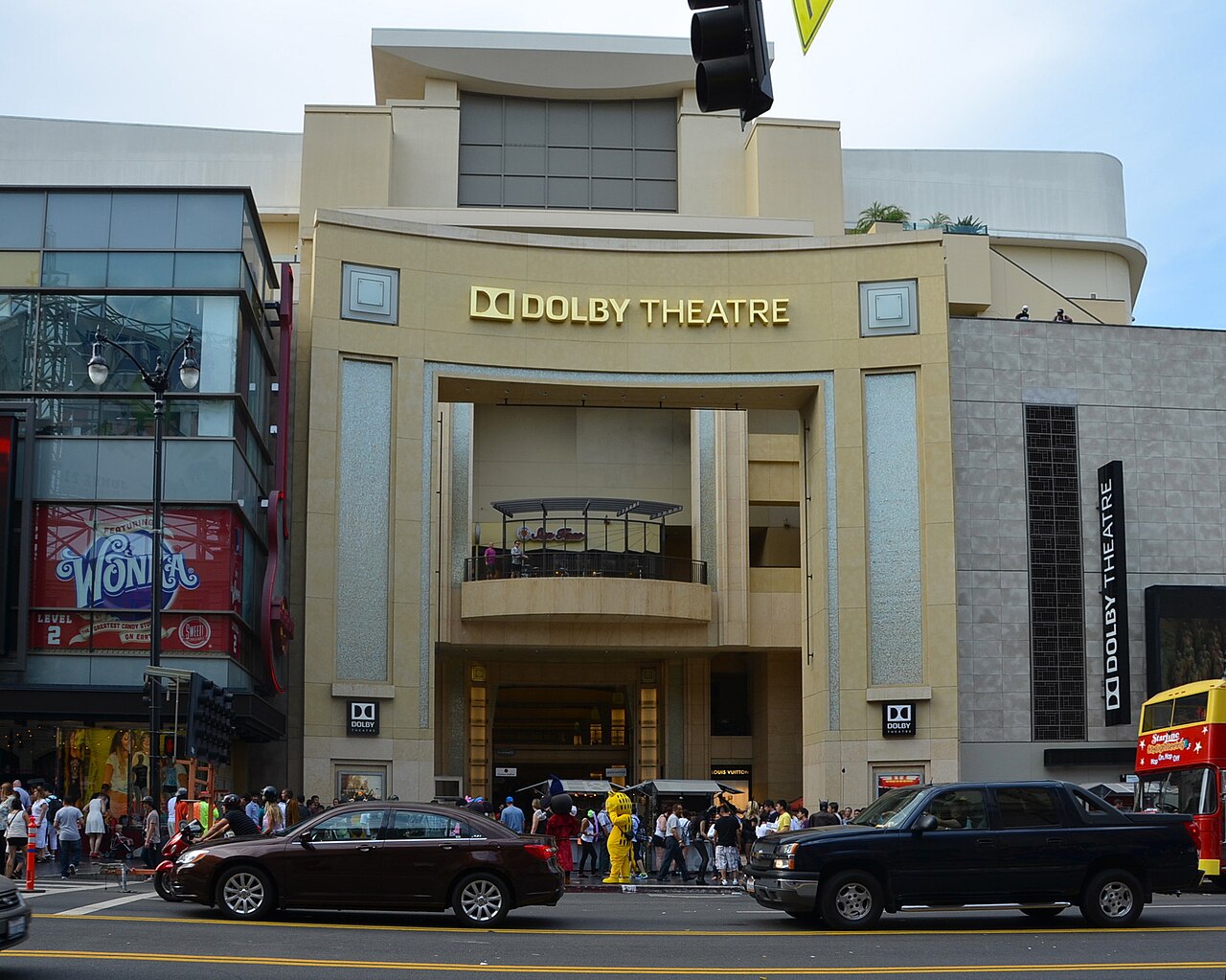
The Walk of Fame consists of terrazzo and brass stars set into the pavement, each bearing a celebrity name and emblem indicating their category of entertainment. Five category symbols represent motion pictures, television, music, radio, and live theatre. Stars continue to be added through annual selection ceremonies. The surrounding Hollywood Boulevard area includes the TCL Chinese Theatre, the Dolby Theatre, and various entertainment venues. Street performers and costumed characters frequently occupy the sidewalks, though these are independent operators unaffiliated with official management.
Checked 2026-08-31 · Source

A complete walk of the full Hollywood Walk of Fame extends approximately 1. 3 miles along Hollywood Boulevard from Gower to La Brea, plus a short segment on Vine Street between Sunset and Yucca. Most visitors spend between one and two hours walking portions of the route, reading names, and photographing specific stars. Those seeking particular celebrities should consult the official online star locator in advance, as individual stars are distributed without alphabetical or chronological organisation. Extended visits incorporating nearby attractions naturally require additional time.
Checked 2026-08-31 · Source
Daily: 24 hours; the attraction occupies public sidewalks rather than an enclosed venue. No regular closure days. Individual sections may be temporarily restricted for star ceremonies or City works, and ceremony dates are subject to change. The Hollywood Walk of Fame operates as a public sidewalk accessible at all hours. The area experiences heaviest foot traffic during midday and weekend periods. Morning visits typically offer thinner crowds and cooler temperatures. Evening hours provide illuminated streetscapes and active nightlife surroundings. Annual star ceremonies occur periodically throughout the year, though specific scheduling requires advance verification through official channels. Weather in Los Angeles remains generally favourable year-round, though summer afternoons can become uncomfortably warm for extended pavement walking.
Checked 2026-08-31 · Source
Free. No ticket or admission charge is required to visit the Walk of Fame; official star ceremonies also have a free public viewing area. No admission fee exists for walking the Hollywood Walk of Fame or viewing the stars. The attraction functions as a public thoroughfare without controlled entry points. Costs may arise from parking in surrounding commercial lots or garages, from purchasing souvenirs at nearby retailers, or from voluntary tips to street performers. Star ceremonies are free public events when scheduled. Visitors should bring no expectations of paid amenities directly associated with the Walk itself, as the experience is fundamentally self-directed and unstructured.
Checked 2026-08-31 · Source
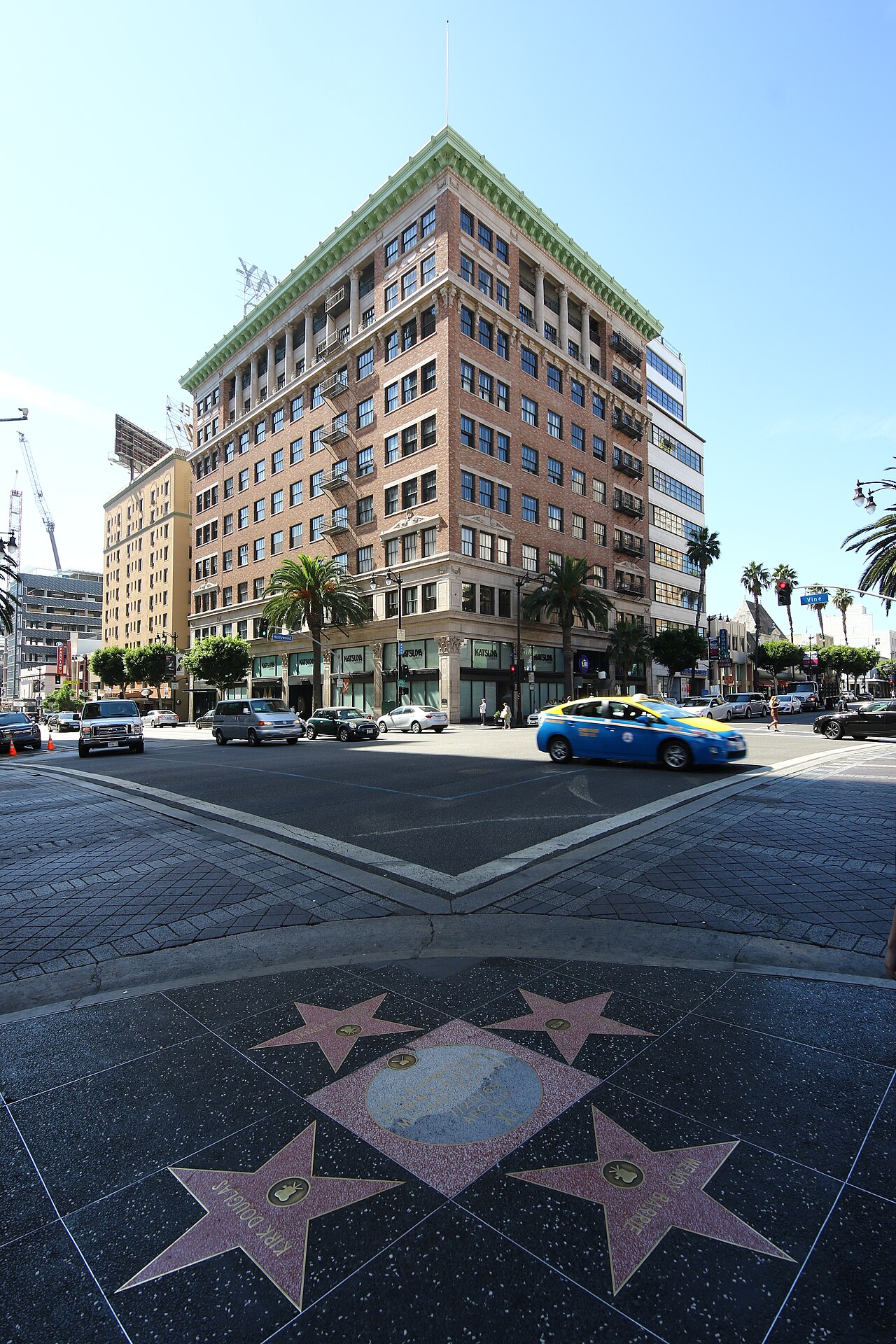
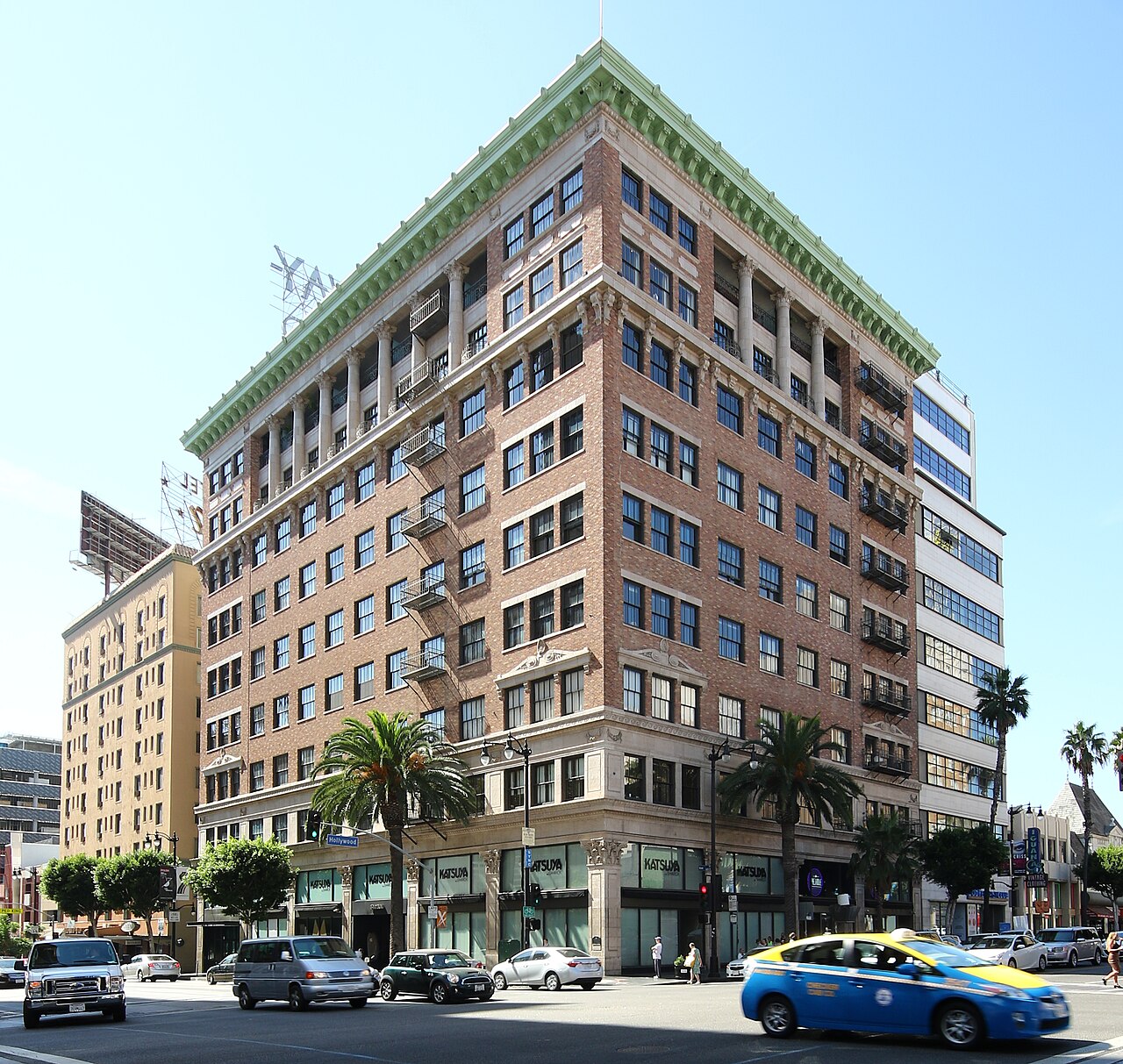
LA Metro's B Line serves Hollywood/Highland and Hollywood/Vine stations, both directly on the Walk of Fame corridor. Hollywood/Highland is convenient for the western-central section near Highland Avenue; Hollywood/Vine serves the eastern section around Vine Street. Metro's current timetable also lists Hollywood/Western farther east on Hollywood Boulevard. The Hollywood Walk of Fame occupies Hollywood Boulevard between Gower Street and La Brea Avenue, with an additional Vine Street section. The Hollywood/Vine and Hollywood/Highland Metro B Line stations provide rail access within walking distance. Multiple bus routes serve the corridor. Driving visitors encounter limited street parking and numerous commercial parking structures with variable rates. Rideshare services offer practical alternatives given traffic congestion common to the Hollywood area. Pedestrian navigation is straightforward once reaching the boulevard, with stars visible continuously along the pavement in both directions.
Checked 2026-08-31 · Source
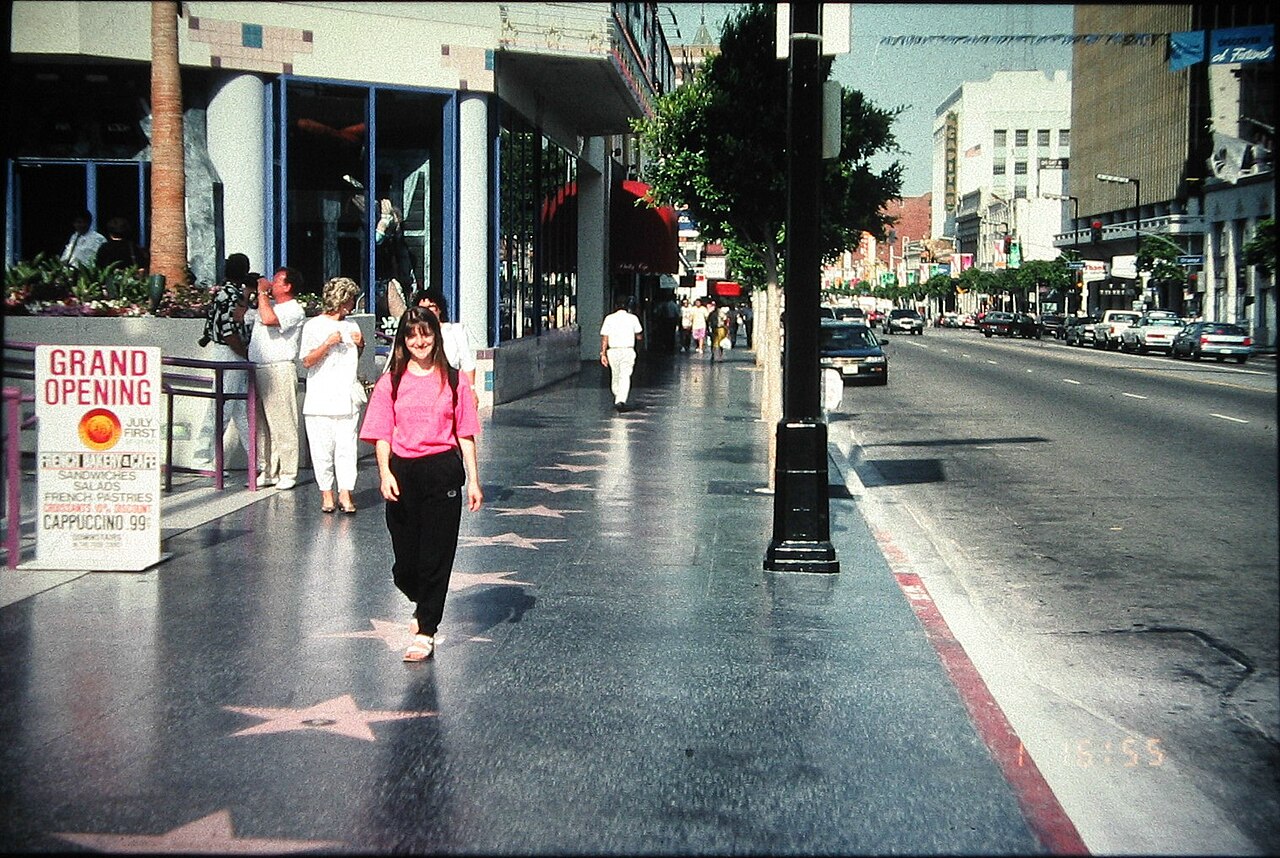
The stars are embedded in street-level public sidewalks, with no separate building entrance or visitor staircase. The route extends approximately 1. 3 miles along Hollywood Boulevard and 0. 4 miles along Vine Street. Los Angeles City identifies congestion and outdated infrastructure on parts of these sidewalks, so step-free conditions and available clear width can vary by block. Ceremonies and street works can temporarily narrow or redirect the usable sidewalk route. Street performers and individuals in costume solicit tips aggressively in high-traffic areas; interactions are voluntary and unregulated by official management. Crowded conditions create opportunities for pickpocketing and distraction theft. The pavement itself presents trip hazards where stars are uneven or damaged. Intense sun exposure affects walkers during midday hours without shade cover. Some surrounding blocks experience higher crime rates after dark, warranting standard urban precautions. Costumed characters are not officially licensed or background-checked.
Checked 2026-08-31 · Source
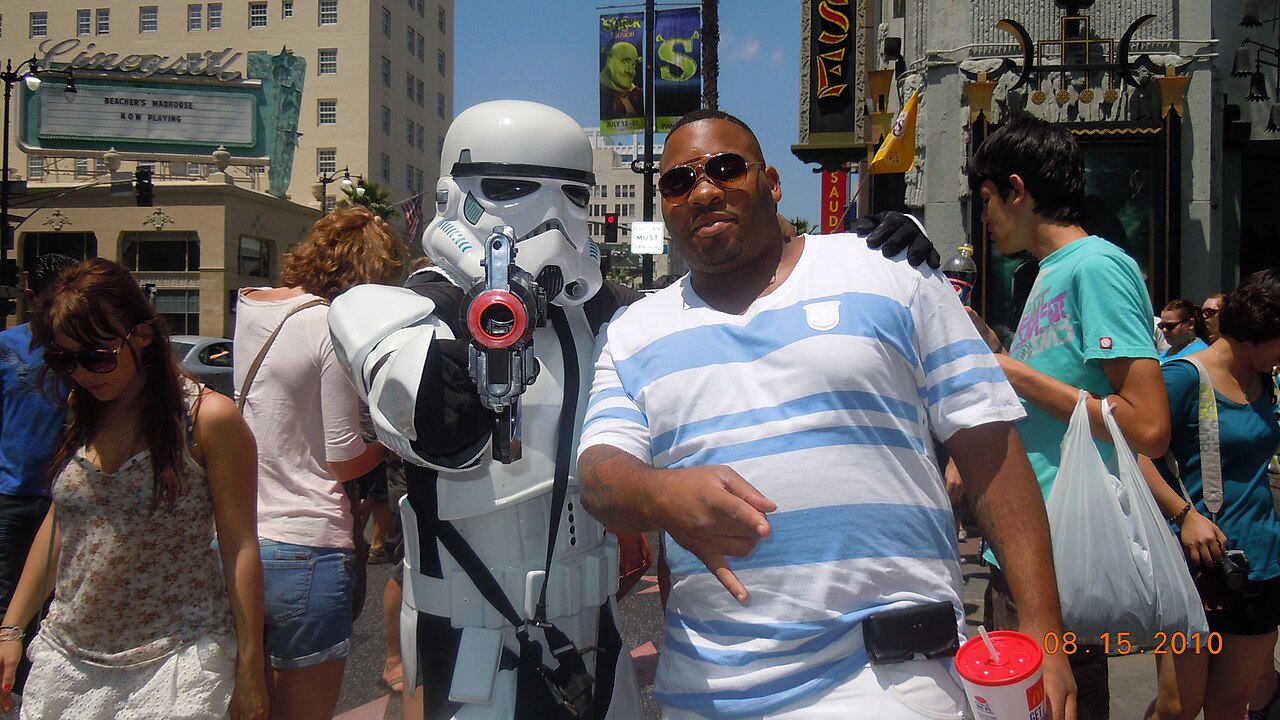
Photography of stars and streetscape is unrestricted as a public space. Individual star photographs require kneeling or positioning on active pavement, necessitating awareness of surrounding pedestrian traffic. Night photography benefits from street lighting and illuminated signage, though tripod use may obstruct walkways and attract security attention from adjacent private properties. Commercial or filmed productions require permits through appropriate city offices. Self-portraits with specific stars are standard visitor practice. Respectful conduct around other photographers and ongoing ceremonies is expected. No dedicated viewpoints or elevated perspectives exist; all photography occurs at street level.
Checked 2026-08-31 · Source
It runs along Hollywood Boulevard from Gower Street to La Brea Avenue and along Vine Street from Sunset Boulevard to Yucca Street.
The official Walk of Fame FAQ reports more than 2,800 stars.
The stars are made from terrazzo and brass.
They are oriented so pedestrians walking in either direction can read and see them easily.
The official Walk of Fame Star Directory and Star Map provide each honoree's star location.
Yes. Ceremonies have a free public viewing area with no ticket or admission charge; the standard ceremony runs from 11:30 a.m. to 12:15 p.m., and chairs and step ladders are not permitted in the audience area.
Loading the interactive map…
The interactive map could not be loaded.

Last updated:
Source: OpenStreetMap contributors, Wikidata ·