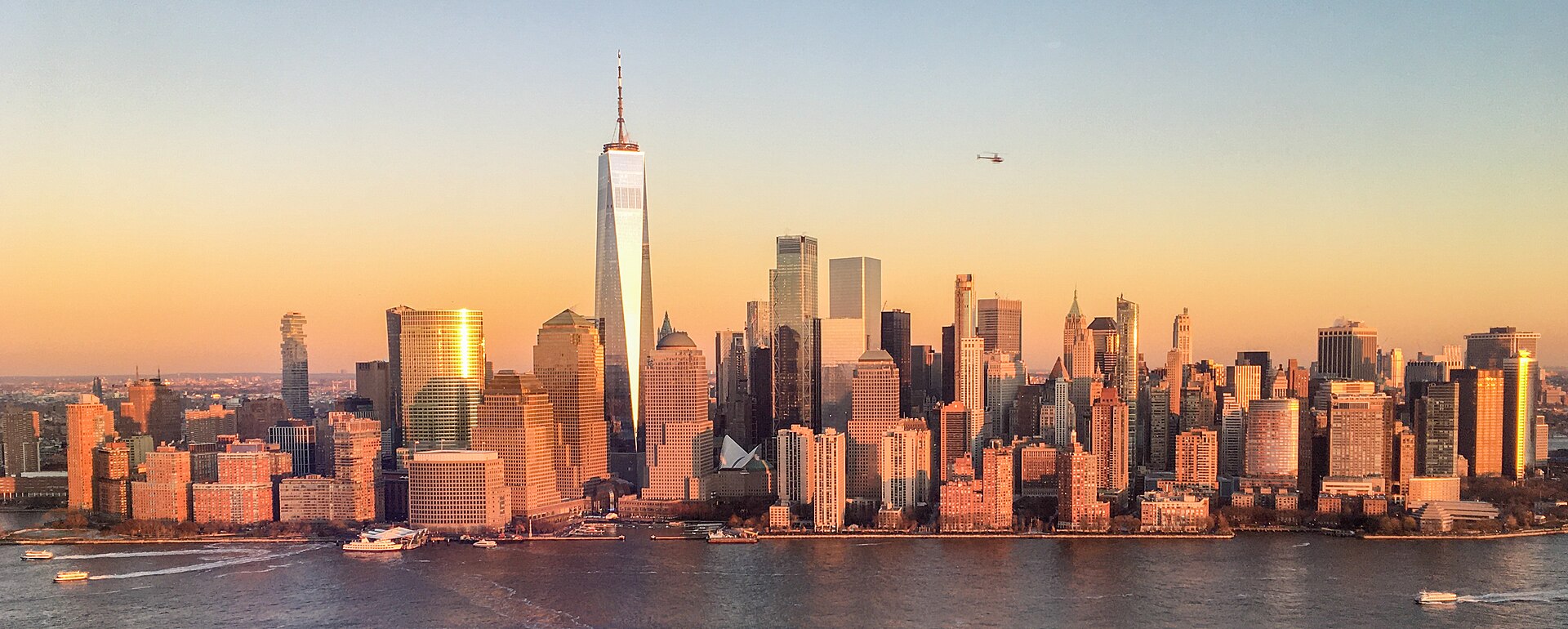
A photograph of New York

City guide · United States

New York

New York City spans five boroughs, but most first visits concentrate on Manhattan and selected parts of Brooklyn, Queens and the Bronx. Manhattan itself is a lo...

Photograph · Fred Hsu on en.wikipedia · CC BY-SA 4.0

13,079 Places
Suggested stay
5-6 days
Getting around
Subway, bus, ferry and walking

Turn this list into a plan

Set your days, your pace and the hours you actually want to be out. The planner works around closing days and travel time, and leaves room to eat.

Plan New York

Reviewed by Elena Voss · Roavina Travel Editor

New York City spans five boroughs, but most first visits concentrate on Manhattan and selected parts of Brooklyn, Queens and the Bronx. Manhattan itself is a long island of distinct districts, so a day should move north or south rather than zigzagging across the map. The subway is the essential connector and runs around the clock, while walking is the best way to understand each neighbourhood once you arrive.

Checked 2026-08-26

Practical information

Language spoken
English is the principal language; no federal official language
National practical orientation; regional and minority languages may also be used
Dialling code
+1
International calling code; local area and mobile prefixes still apply
Currency
United States dollar (USD)
Use the official local currency; card acceptance varies by place
Emergency number
911
Use only for an emergency; tourist assistance may use a separate number
Plug type
Type A and B · 120 V
Check that chargers support the recorded voltage before using an adapter
Tap water
Not recorded
Water quality is regulated locally; check the current notice for the destination

Planning a visit

September · September cools to a 76.2°F average maximum and 62.3°F minimum in Central Park, a strong early-autumn balance.

  1. January: viable with meaningful trade-offs
  2. February: viable with meaningful trade-offs
  3. March: good time to visit
  4. April: best time to visit
  5. May: best time to visit
  6. June: good time to visit
  7. July: viable with meaningful trade-offs
  8. August: viable with meaningful trade-offs
  9. September: best time to visit — current month
  10. October: best time to visit
  11. November: good time to visit
  12. December: viable with meaningful trade-offs

Sources

Top things to see

Ranked by importance — sitelinks, pageviews and heritage status, not editor preference.

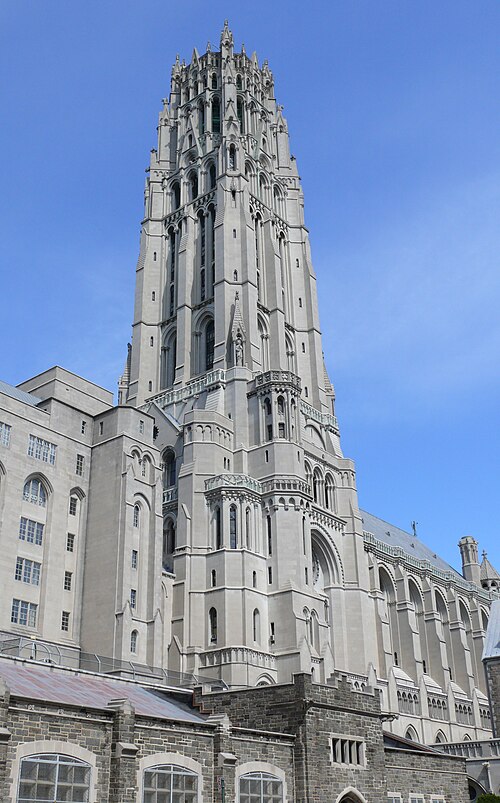
  1. Riverside Church Riverside Church
    32 30 min

    Riverside Church

    Riverside Church is an interdenominational church in Morningside Heights, Manhattan. The structure features Gothic Revival architecture and stands as a prominent landmark near the Hudson River.

    • Must see
    • Place of worship
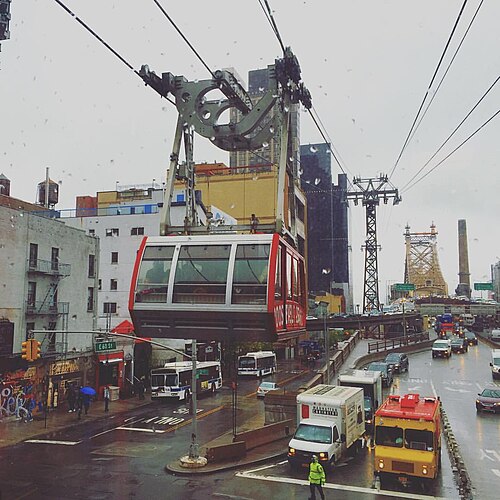
  2. Roosevelt Island Tramway Roosevelt Island Tramway
    33 1 hour

    Roosevelt Island Tramway

    The Roosevelt Island Tramway is an aerial tramway in New York City. It spans the East River, connecting Roosevelt Island to Manhattan. The system operates as a public transit option alongside the subway.

    • High
    • Nature site
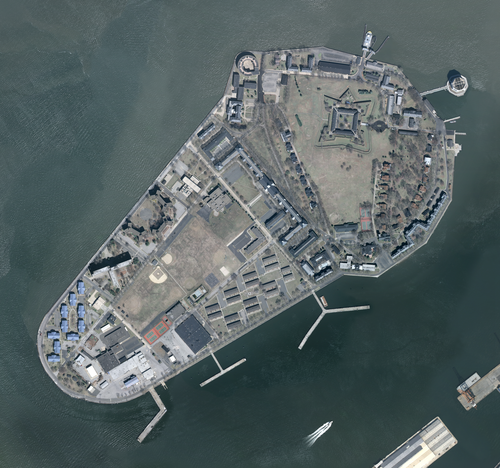
  3. Governors Island Governors Island
    34 1 hour

    Governors Island

    Governors Island is a 172-acre island in New York Harbor, situated approximately 800 yards south of Manhattan. The island has served multiple historical functions, including as a military base for the U.S.

    • High
    • Nature site
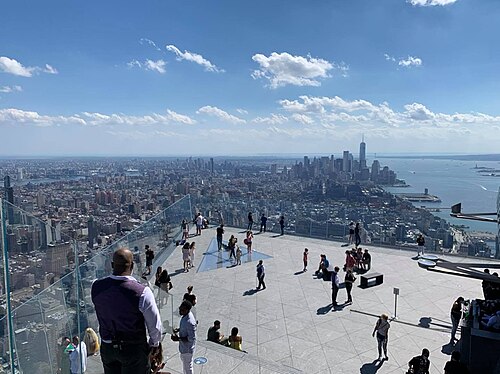
  4. Edge Edge
    35 20 min

    Edge

    Edge is an outdoor observation deck high above Hudson Yards on Manhattan’s West Side. Its platform projects outward from the skyscraper, creating a floating sensation above the city.

    • High
    • Viewpoint
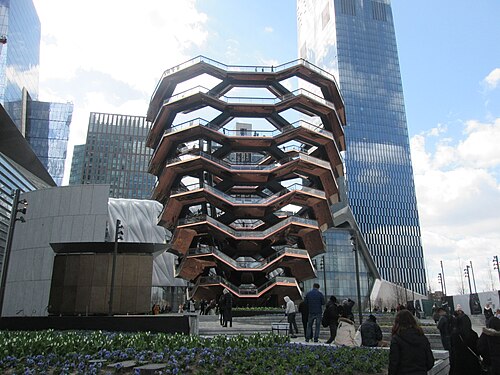
  5. Vessel Vessel
    36 1 hour

    Vessel

    Vessel is a honeycomb-like landmark in Hudson Yards on Manhattan’s far West Side. Designed by Thomas Heatherwick, it is formed from an interconnected network of staircases rising above the surrounding plaza.

    • High
    • Art and culture venue
  6. Hudson Yards Hudson Yards
    37 45 min

    Hudson Yards

    Hudson Yards is a neighborhood and real estate development on Manhattan's West Side in New York City. Built over a working rail yard, it represents one of the largest private real estate developments in United States history.

    • High
    • Market
  7. Chelsea Market Chelsea Market
    38 45 min

    Chelsea Market

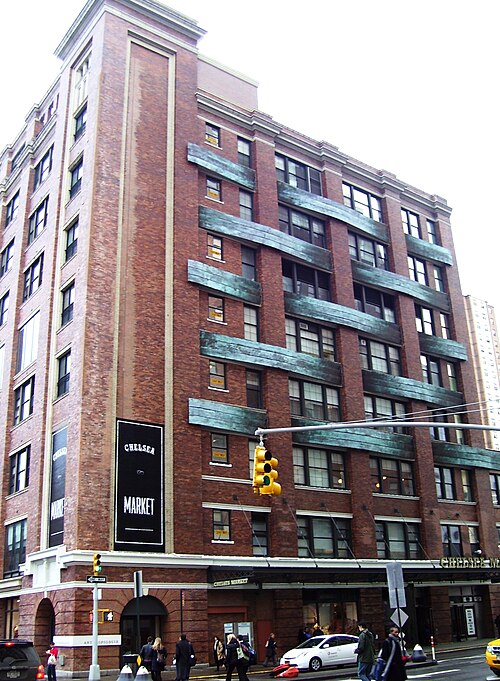
    Chelsea Market is an indoor food hall and shopping destination in Manhattan’s Chelsea neighbourhood. It occupies the ground floor of the former Nabisco factory complex, a setting connected with the invention of the Oreo cookie.

    • High
    • Market
  8. Little Island @Pier55 Little Island @Pier55
    39 1 hour

    Little Island @Pier55

    Little Island

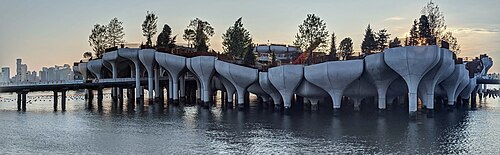
    Little Island at Pier 55 is an artificial island park in the Hudson River, connected to Manhattan's West Side. The structure sits on tulip-shaped concrete pilings rising from the water, creating an elevated landscape above the river.

    • High
    • Nature site
  9. Socrates Sculpture Park Socrates Sculpture Park
    40 1 hour

    Socrates Sculpture Park

    Socrates Sculpture Park is an outdoor museum and public park located in Long Island City, Queens. Established on a former landfill site along the East River, it occupies waterfront land with views of the Manhattan skyline.

    • High
    • Nature site
  10. Flushing Meadows–Corona Park Flushing Meadows–Corona Park
    41 1 hour

    Flushing Meadows–Corona Park

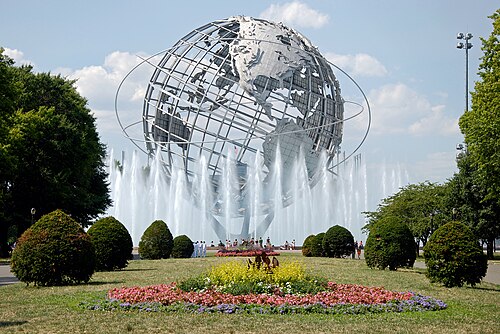
    Flushing Meadows-Corona Park

    Flushing Meadows-Corona Park is a large public park in the northern part of Queens, New York City. It was created for the 1939 New York World's Fair and later hosted the 1964 World's Fair.

    • High
    • Nature site
  11. Stonewall National Monument Stonewall National Monument
    42 45 min

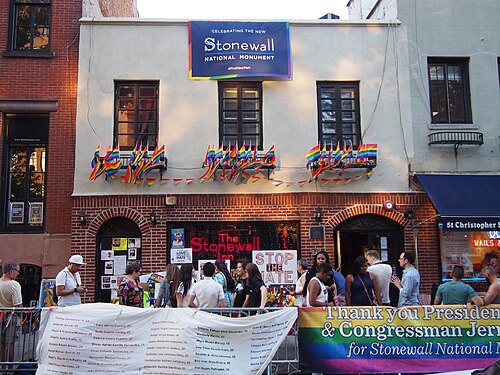
    Stonewall National Monument

    Stonewall National Monument commemorates the 1969 Stonewall Uprising, a pivotal event in LGBTQ rights history. Located in Greenwich Village, Manhattan, the monument encompasses Christopher Park and the surrounding streets where demonstrations occurred.

    • Notable
    • Historic monument
  12. Union Square Union Square
    43 1 hour

    Union Square

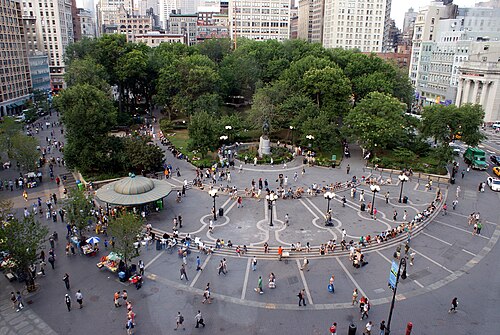
    Union Square Park

    Union Square Park is a historic public park in Manhattan, New York City. It functions as a significant gathering space at the intersection of Broadway and Fourth Avenue, extending from 14th to 17th Streets.

    • Notable
    • Nature site
  13. Madison Square and Madison Square Park Madison Square and Madison Square Park
    44 1 hour

    Madison Square and Madison Square Park

    Madison Square Park

    Madison Square Park is a public park in the Flatiron District of Manhattan, New York City. The park occupies approximately 6.2 acres at the intersection of Fifth Avenue and Broadway at 23rd Street.

    • Notable
    • Nature site
  14. Gramercy Park Gramercy Park
    45 1 hour

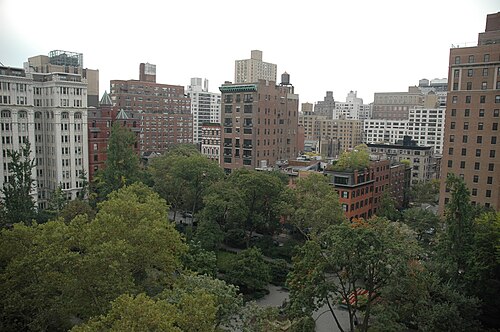
    Gramercy Park

    Gramercy Park is a private, fenced green space in Manhattan’s Gramercy neighborhood. Established in 1831, it is surrounded by historic townhouses and apartment buildings.

    • Notable
    • Nature site
  15. Brooklyn Bridge Park Brooklyn Bridge Park
    46 1 hour

    Brooklyn Bridge Park

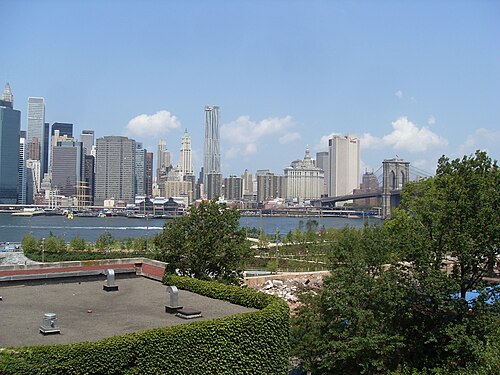
    Brooklyn Bridge Park is a public park on the Brooklyn waterfront, spanning the East River shoreline beneath and adjacent to the Brooklyn Bridge.

    • Notable
    • Nature site
  16. Domino Park Domino Park
    47 1 hour

    Domino Park

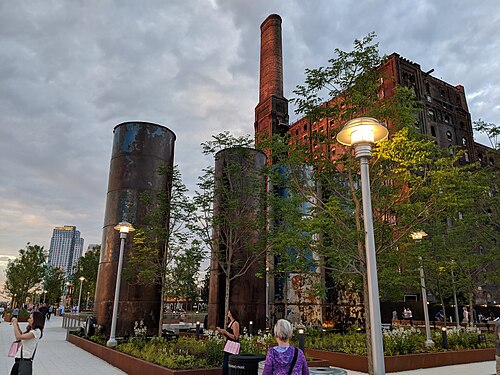
    Domino Park is a public waterfront park in Brooklyn, New York City. It occupies a portion of the former Domino Sugar refinery site along the East River in the Williamsburg neighborhood.

    • Notable
    • Nature site
  17. Sailors' Snug Harbor Sailors' Snug Harbor
    48 1 hour

    Sailors' Snug Harbor

    Snug Harbor Cultural Center and Botanical Garden

    Sailors' Snug Harbor is a historic cultural complex on Staten Island, New York City. Founded in 1801 as a retirement home for aged sailors, it has evolved into the Snug Harbor Cultural Center and Botanical Garden.

    • Notable
    • Nature site
  18. Fort Tryon Park Fort Tryon Park
    49 1 hour

    Fort Tryon Park

    Fort Tryon Park is a public park in Upper Manhattan, set on elevated ground above the Hudson River and the New Jersey Palisades. Designed by Frederick Law Olmsted Jr.

    • Notable
    • Nature site
  19. Wave Hill Wave Hill
    50 45 min

    Wave Hill

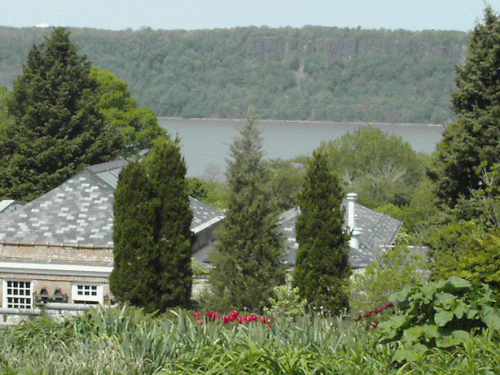
    Wave Hill is a public garden and cultural center in the Bronx, New York City. It occupies a 28-acre site overlooking the Hudson River and Palisades.

    • Notable
    • Historic monument
  20. Pelham Bay Park Pelham Bay Park
    51 1 hour

    Pelham Bay Park

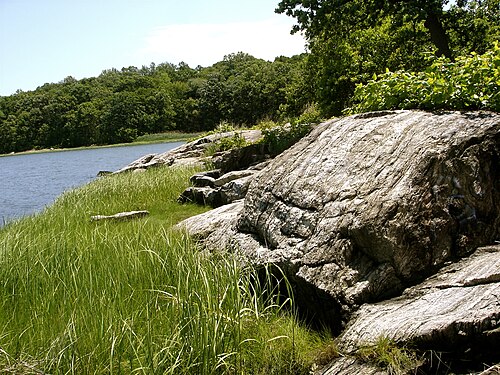
    Pelham Bay Park is a municipal park located in the Bronx borough of New York City. It occupies a significant portion of the northeastern Bronx, encompassing diverse landscapes including woodland, marshland, and coastal areas along Long Island Sound.

    • Notable
    • Nature site
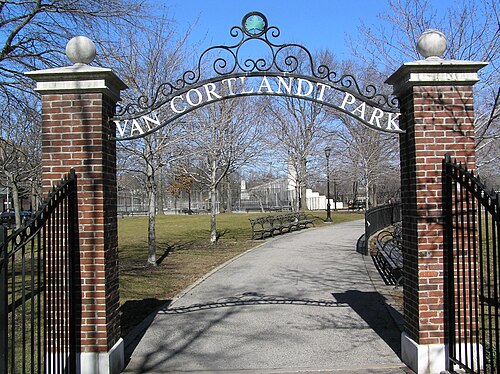
  21. Van Cortlandt Park Van Cortlandt Park
    52 1 hour

    Van Cortlandt Park

    Van Cortlandt Park is a major public park in the Bronx borough of New York City. It ranks among the largest parks in the city by land area.

    • Notable
    • Nature site
  22. Randalls Island Park
    53 1 hour

    Randalls Island Park

    Randall's Island Park is a public park situated on Randall's Island in the East River, between Manhattan, the Bronx, and Queens. The island forms part of Manhattan Community District 11.

    • Notable
    • Nature site
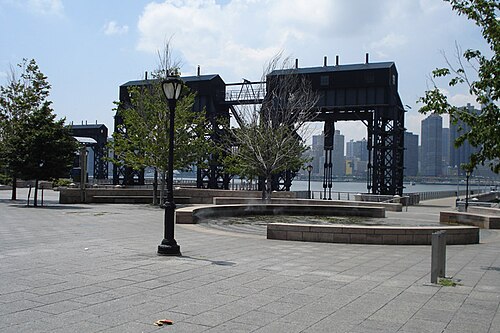
  23. Gantry Plaza State Park Gantry Plaza State Park
    54 1 hour

    Gantry Plaza State Park

    Gantry Plaza State Park is a public park on the East River waterfront in Long Island City, Queens, New York City. The park occupies a former industrial site where gantry cranes once loaded and unloaded rail car floats and barges.

    • Notable
    • Nature site

Source: OpenStreetMap contributors, Wikidata ·

How the city is laid out

Manhattan is organised broadly from Downtown to Midtown and Uptown. Lower Manhattan holds the Financial District and the harbour; Greenwich Village, SoHo and the Lower East Side sit above it; Midtown contains Times Square, the theatre district and the main rail terminals; Central Park separates the Upper East and Upper West Sides. Brooklyn's waterfront neighbourhoods face Lower Manhattan, Queens extends east beyond the East River, the Bronx begins north of Manhattan, and Staten Island is reached across the harbour. Give outer-borough destinations their own geographic blocks.

Checked 2026-08-26

Getting around

Use the subway for long moves and walk within neighbourhoods. New York City Tourism describes subways and buses as inexpensive, fast and operating 24 hours, while NYC Ferry connects waterfront districts and the Staten Island Ferry provides a separate harbour crossing. Service changes are common outside weekday peaks, so check the MTA route status before a late-night or weekend journey. Express and local trains may share platforms but stop at different stations; confirm both the route letter or number and the direction before boarding.

Checked 2026-08-26

Common questions

How many days does New York City need?

Five to six days suit a first visit. Four days can cover Manhattan's main zones, while the additional time makes room for Brooklyn, Queens or the Bronx without reducing each neighbourhood to a station stop.

When is the best time to visit New York City?

April through June and September through October generally provide comfortable walking weather and useful daylight. Summer can be hot and humid, while winter conditions can shorten outdoor sightseeing days.

Does the New York subway run all night?

Yes, the system operates 24 hours, but an individual line may be rerouted or run less frequently overnight and on weekends. Check live service status before relying on a specific late connection.

Should a first visit stay in Manhattan?

Manhattan is the simplest base for a short first visit because its subway hubs connect directly to the greatest concentration of sights. Brooklyn and Queens bases also work when they are close to a direct subway line.

How should sightseeing days be grouped?

Keep Lower Manhattan together, pair Midtown with the theatre district, and give Central Park and the adjacent museums a separate block. Brooklyn waterfront areas combine naturally with Lower Manhattan by subway or ferry.