
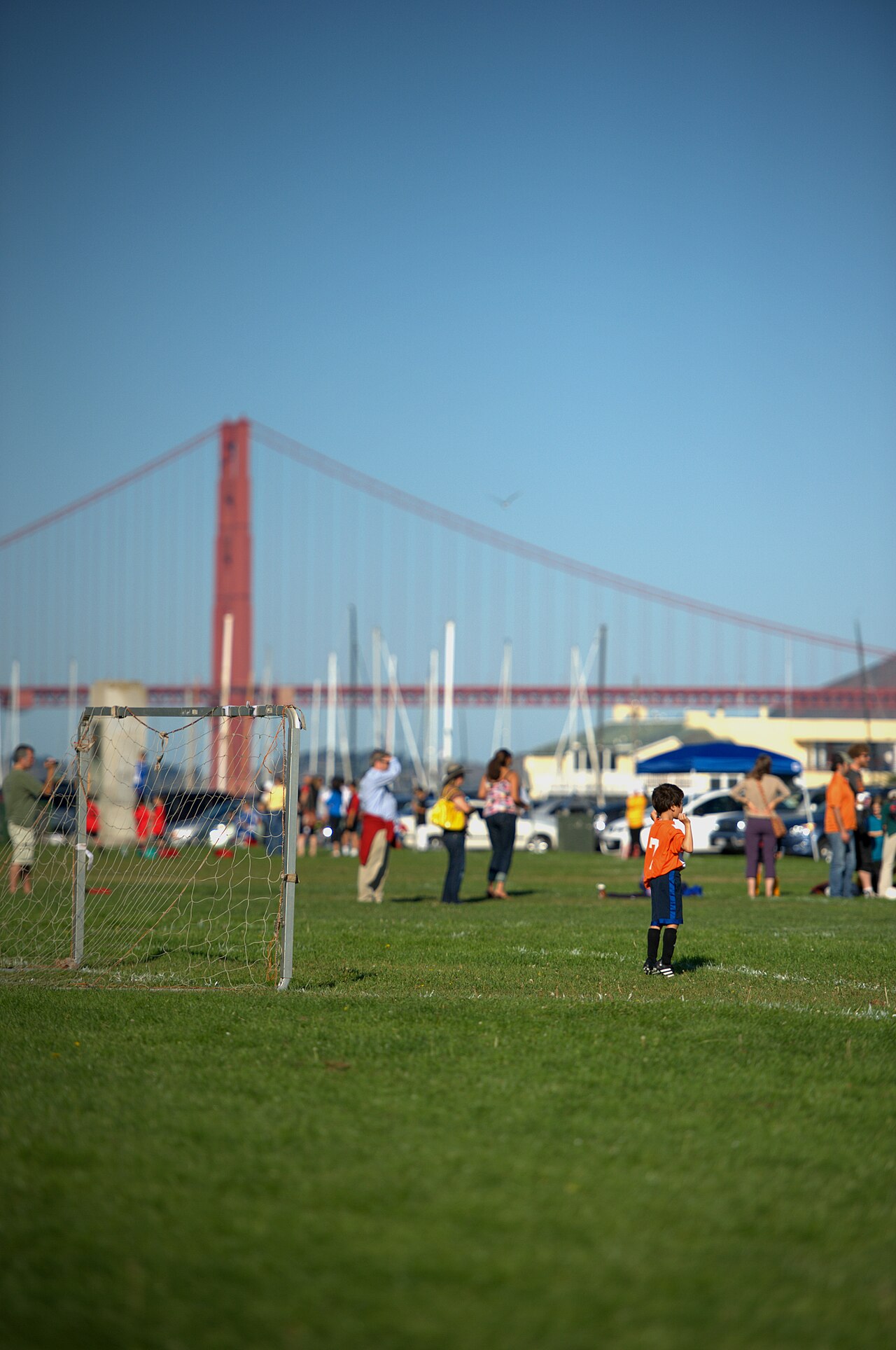
3 min walk
Marina Green
- Must see
- Nature site
Art and culture venue · San Francisco
| Per person | Free entry |
|---|
Checked 2026-08-31 · Source
Read from the OpenStreetMap access tags; anything not listed has no tag recorded.
Set the group type to family in the planner and the day window contracts to about three quarters of a solo day.
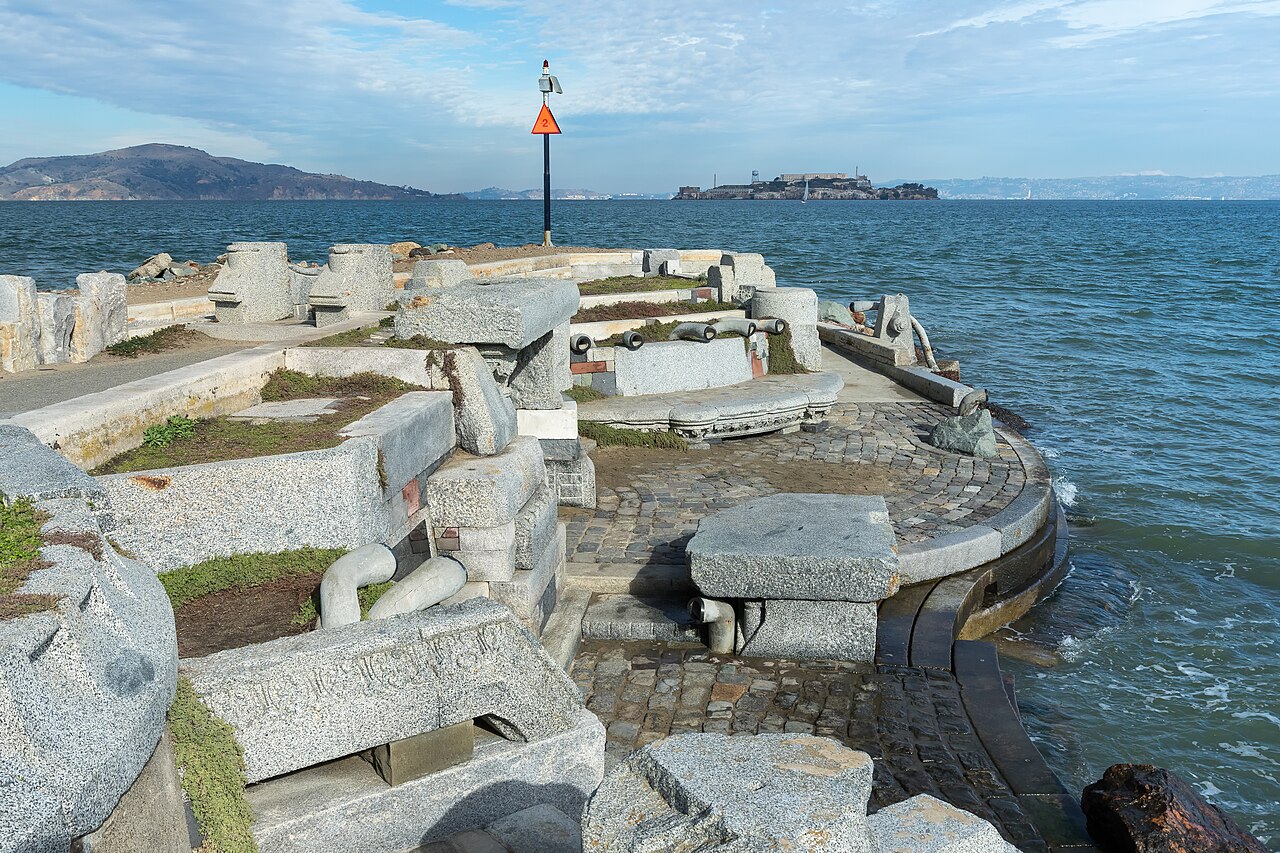
The Wave Organ is a public sound sculpture situated on a jetty in the Marina District of San Francisco. Created by artists Peter Richards and George Gonzales, it harnesses the movement of San Francisco Bay tides to produce acoustic effects through a system of pipes and concrete structures. The installation extends into the water, using the natural tidal action to create resonant, gurgling, and whistling sounds. It represents an intersection of art, nature, and engineering, inviting visitors to experience the bay's rhythms through an auditory lens rather than visual spectacle alone.
Checked 2026-08-26
The sculpture comprises numerous PVC and concrete pipes of varying lengths and diameters embedded within the jetty's stone construction. These pipes terminate at different elevations, creating an organ-like arrangement where each pipe responds differently to wave action. Some openings are at water level, while others sit higher, capturing air displacement and water movement distinctly. Stone seating areas are integrated into the structure, allowing listeners to position themselves at various points. The materials have weathered over years of saltwater exposure, contributing to the site's evolving acoustic character and textured appearance.
Checked 2026-08-26
A visit to the Wave Organ typically requires thirty to sixty minutes, though duration depends significantly on tidal conditions and individual interest. The experience is inherently unhurried; meaningful listening demands patience as wave patterns fluctuate. Low tide may produce minimal sound, while higher tides generate more pronounced effects. Visitors often combine this stop with Marina Green or Crissy Field nearby. There are no guided tours or structured activities, so pacing remains entirely self-directed. Return visits at different tidal states can yield noticeably different acoustic experiences worth comparing.
Checked 2026-08-26
The Wave Organ's effectiveness varies with tidal cycles, making timing consequential for visitor experience. Higher tides generally produce more active sound production. Sunrise and sunset visits offer atmospheric lighting alongside potential acoustic activity. Weather conditions including wind and wave height also influence performance. Visitors should consult tide tables before planning, recognizing that the sculpture's artistic purpose depends on natural variables beyond scheduling convenience. Seasonal variations in tidal range may affect consistency. Check the operator's own site for the travel date before relying on a schedule or fare.
Checked 2026-08-26
The Wave Organ appears to function as free public art without admission controls. No ticketing infrastructure is visible at the site. Visitors should not expect payment requirements, though this assessment derives from observable public access conventions rather than verified official policy. The surrounding Marina District offers paid parking in some areas, which may constitute incidental costs. No donation boxes or membership programs were evident. As with many San Francisco public artworks, accessibility without financial barrier aligns with municipal cultural objectives, though verification remains advisable. Check the operator's own site for the travel date before relying on a schedule or fare.
Checked 2026-08-26
The Wave Organ sits at the eastern end of the Marina Green jetty, extending into San Francisco Bay. Reachable by foot from Marina Boulevard, the site lacks dedicated transit stops immediately adjacent. Muni bus routes serve the broader Marina District, requiring walking distance. Cycling along the waterfront path provides alternative access. Parking exists along Marina Green but availability fluctuates with recreational demand and weather. The jetty surface consists of uneven stones and concrete, presenting accessibility considerations. Signage directing visitors is minimal; locating the sculpture's terminus requires proceeding to the jetty's furthest point.
Checked 2026-08-26
The jetty surface comprises irregular stones with gaps and varying heights, creating trip hazards particularly when wet or during low-light conditions. No guardrails separate visitors from bay water at the structure's edge. Tidal action can produce unexpected wave spray. The remote terminus lacks emergency call boxes or consistent cellular coverage. Night visiting without illumination presents risks given terrain irregularities. No staff presence or security patrols were apparent. Weather changes including fog and wind occur rapidly. Visitors should wear appropriate footwear, carry layers for temperature shifts, and inform others of their whereabouts when exploring this isolated waterfront extension.
Checked 2026-08-26
The Wave Organ presents distinctive photographic subjects combining industrial materials, water movement, and expansive bay views encompassing the Golden Gate Bridge and Alcatraz. Early morning and late afternoon light enhance textural details of weathered concrete and stone. Long exposures can capture water motion around pipe openings. The site's isolation reduces pedestrian interference in compositions. No photography restrictions were evident, though tripod use on uneven surfaces requires stability awareness. Drone operation would require FAA compliance and consideration of nearby flight paths. The sculpture's muted palette and geometric forms suit monochrome treatment, while color captures atmospheric bay conditions effectively.
Checked 2026-08-26
No. The Wave Organ's sound production depends entirely on tidal conditions and wave action. During low tide or calm water periods, minimal or no sound may be audible. Visitors seeking active acoustic experiences should consult tide tables and plan around higher tidal ranges when water movement through the pipe system increases.
The Wave Organ was created by artist Peter Richards in collaboration with sculptor and master stone mason George Gonzales. It was installed in 1986 with support from the Exploratorium museum, where Richards was employed as an artist in residence at the time of the project's development.
The Wave Organ occupies public space without apparent gates or controlled access, suggesting nighttime physical access is possible. However, the jetty surface presents significant trip hazards in darkness, with no lighting infrastructure and minimal nearby illumination. Cautious visitor judgement advises against unlit visits due to safety considerations.
The Wave Organ uses PVC and concrete pipes of varying lengths embedded in the jetty structure. As tides rise and waves move against the installation, water and air displacement through these pipes creates resonant acoustic effects including gurgling, whistling, and deep rumbling tones, with each pipe responding differently based on its dimensions and position.
The Wave Organ presents accessibility challenges. The jetty surface consists of irregular stones with gaps and varying heights, creating uneven terrain throughout the approach and at the sculpture itself. No smooth pathways or ramps were evident. Visitors using wheelchairs, walkers, or with balance concerns should assess conditions carefully before attempting access.
Not recorded pending review. The Wave Organ sits at the isolated terminus of a jetty extending into San Francisco Bay. The broader Marina Green area nearby may offer some amenities, but immediate proximity to the sculpture itself includes no visible structures for restrooms, food service, or shelter. Visitors should prepare accordingly.
Loading the interactive map…
The interactive map could not be loaded.
Last updated:
Source: OpenStreetMap contributors, Wikidata ·