_-_Karl-Marx-Hof.JPG)
2 min walk · Döbling
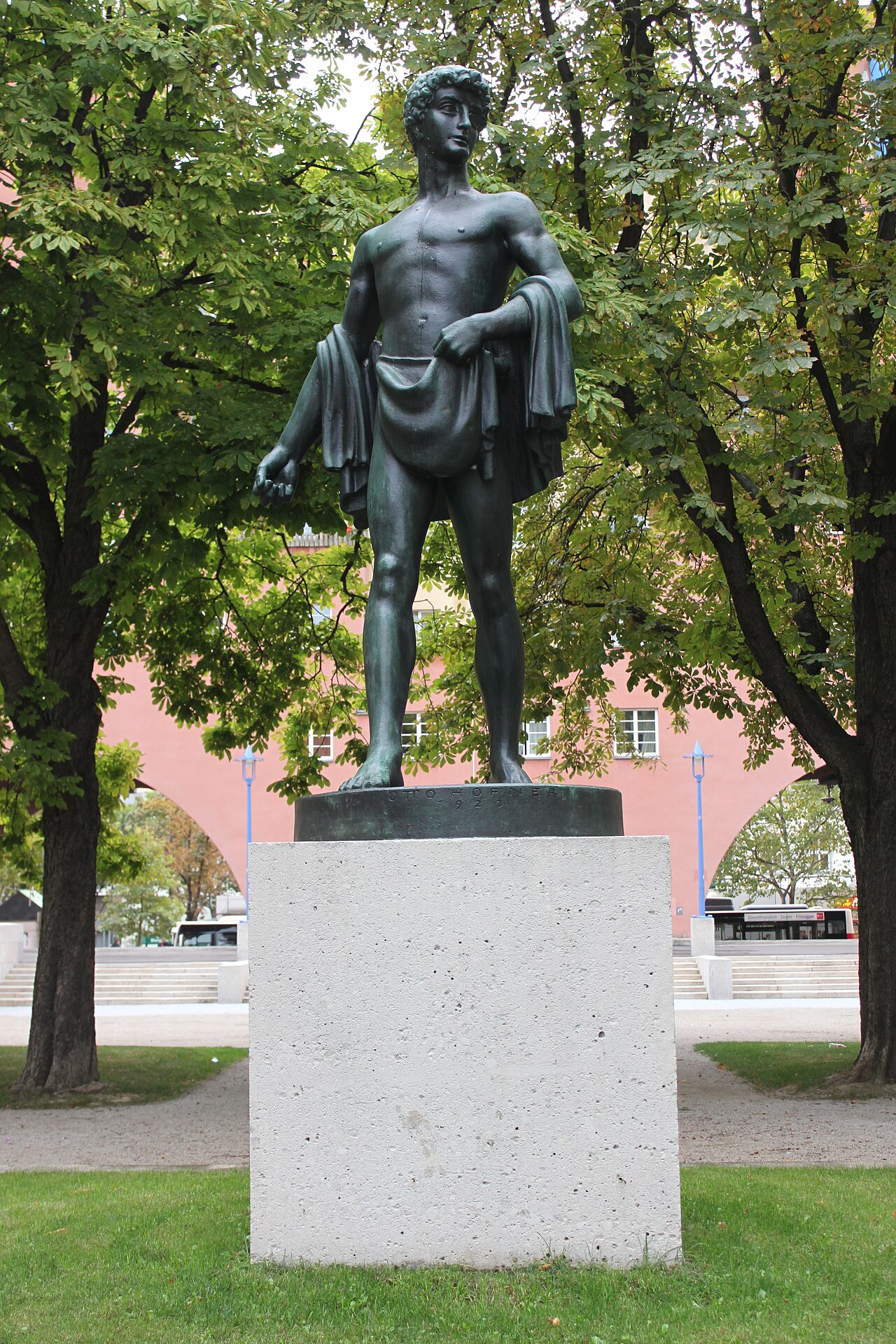
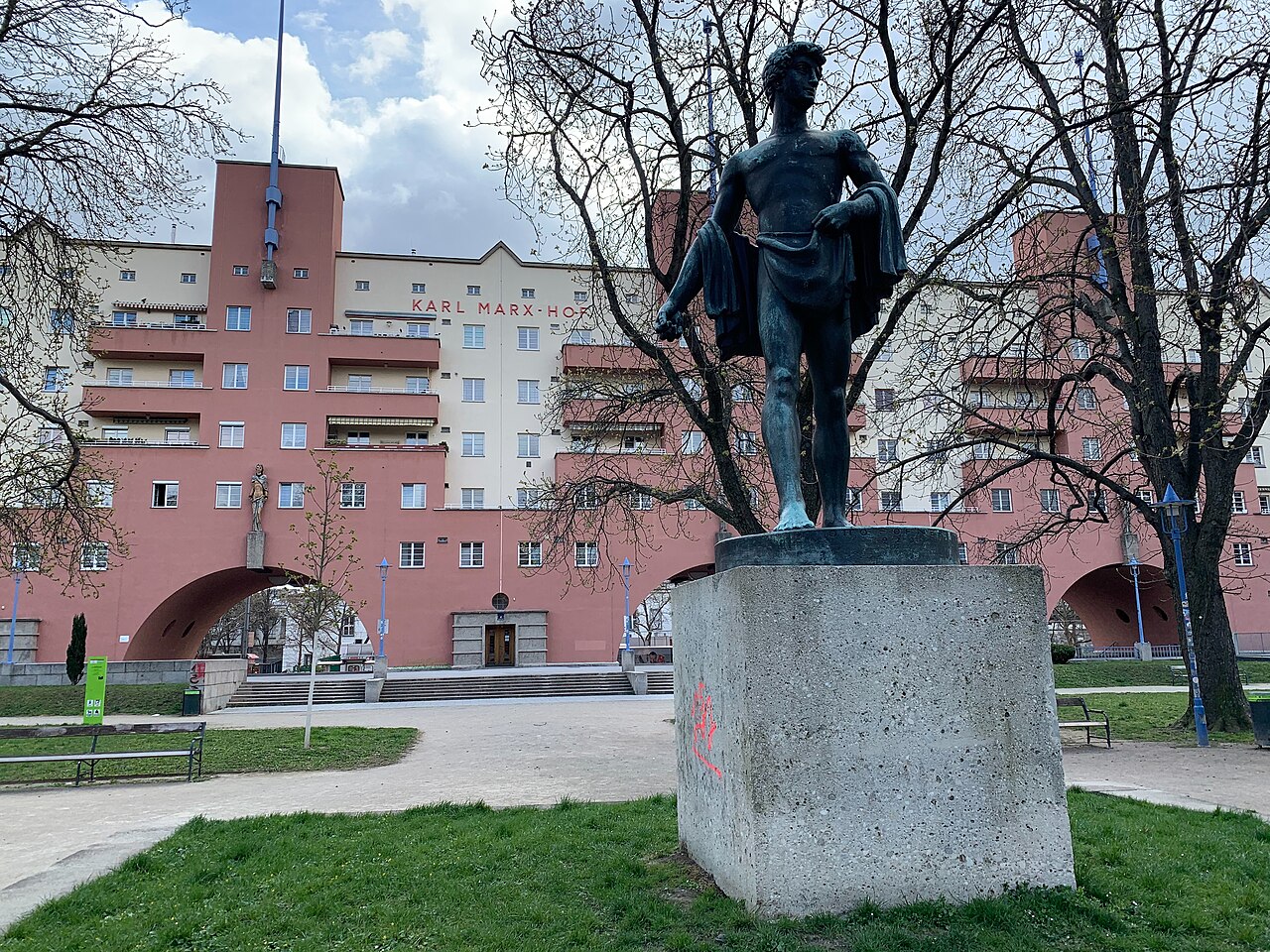
Sämann 1920 Otto Hofner Karl-Marx-Hof
- Notable
- Art and culture venue
Language · 11 published
Historic monument · Döbling, Vienna
Karl-Marx-Hof
Reviewed by Elena Voss · Roavina Travel Editor
This place is a Attraction. It was established in 1930. It was designed by Karl Ehn. It is built of concrete. It carries the Listed objects in Austria heritage designation.
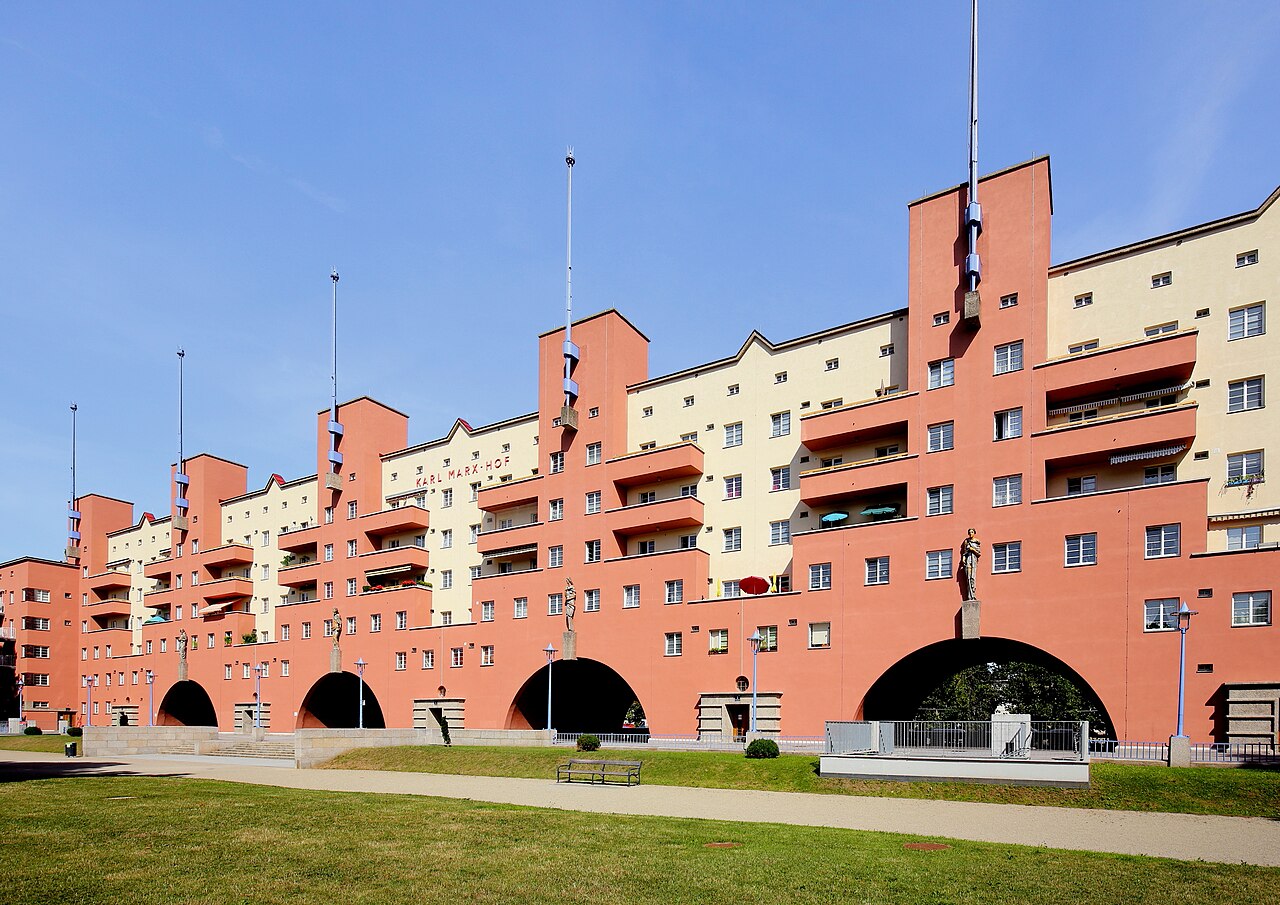
Karl-Marx-Hof is a block of council flats 1,100 m long, and it is one of the longest single residential buildings in the world.
Karl Ehn, a pupil of Otto Wagner's, built it between 1927 and 1930 in Döbling. It holds 1,382 apartments of 30 to 60 m² across 156,000 m², and housed about 5,000 people.
It was built by Red Vienna — the Social Democratic city government's housing programme, funded by the Breitner tax, a steeply progressive levy on luxury.
In February 1934, during the Austrian civil war, insurgents barricaded themselves inside and were shelled until they surrendered. The building still carries that history more prominently than its architecture.
Checked 2026-08-23 · Source
Flats, and everything the residents of 1930 were meant to need without leaving.
The complex was built with laundries, baths, kindergartens, a library, doctors' surgeries and commercial units. Only about a fifth of the 156,000 m² is built on; the rest is courtyard and garden, which was the argument — light, air and space, at council rents.
The Waschsalon, one of the original communal laundries, is now a museum of Red Vienna and is the only part of the complex a visitor can go inside.
The Nazis renamed the building Heiligenstädter Hof; it took its own name back in 1945. It was repaired in the 1950s and renovated between 1989 and 1992.
Checked 2026-08-23 · Source
An hour, of which the walk is most.
Walking the length of the façade takes twenty minutes at an ordinary pace, which is the fact that makes the scale real. Photographs do not.
The Waschsalon museum takes forty minutes and explains the housing programme, the tax that paid for it and the 1934 fighting.
Heiligenstadt and the wine villages of Grinzing and Nussdorf are north of here, so this fits into an afternoon that ends in a Heuriger.
Beethoven lived in Heiligenstadt and wrote the Heiligenstadt Testament there; the house is a short walk from the station and is a separate half hour.
Checked 2026-08-23 · Source
Daylight, and on a day the Waschsalon is open — its hours are limited and it is not open every day.
The building is residential and can be walked past at any hour; the courtyards are semi-public and are used by the people who live there.
The red and ochre render is at its best in low sun, morning or late afternoon.
The gardens between the blocks are worth more in spring and summer than in winter, when the bare courtyards make the density of the plan obvious in a way the planting hides.
Checked 2026-08-23 · Source
Walking past and through the courtyards costs nothing.
The Waschsalon museum charges admission; current rates are not published on the sources this page uses and are not reproduced here, and its opening hours are limited.
There is no access to the apartments, and there is no tour of the complex.
Checked 2026-08-23 · Source
The 19th district, Döbling, in Heiligenstadt, north of the city centre.
Heiligenstadt is the northern terminus of U-Bahn line U4 and also an S-Bahn station; the building is directly opposite the station exit and is impossible to miss.
The U-Bahn has five lines and 109 stations over 83.9 km, running from about 05:00 to 01:00 and all night at weekends.
Checked 2026-08-23 · Source
Five thousand people live here. The courtyards are their gardens, the balconies are their homes, and photographing into windows is the intrusion to avoid.
There is no visitor entrance to the building itself; only the Waschsalon museum can be entered.
The Waschsalon has limited hours and is not open daily.
The complex is genuinely long — 1,100 m — and walking to the far end and back takes longer than anyone expects.
The bullet damage from 1934 is not signposted and most of what visitors point at as bullet holes is later repair work.
Checked 2026-08-23 · Source
The great arched gateway on the Heiligenstädter Straße, with the flagpoles and the sculpted figures, is the photograph, and it takes afternoon light.
The full 1,100 m cannot be photographed from the ground and there is no elevated position; the long oblique view down the façade from either end is the closest anything gets.
The colour — deep red against ochre — is what makes the building read, and it flattens badly in midday sun.
Photographing into the flats is not acceptable.
Checked 2026-08-23
1,100 m, which makes it one of the longest single residential buildings in the world. Walking its length takes about twenty minutes.
Karl Ehn, a pupil of Otto Wagner's, between 1927 and 1930, for the Red Vienna housing programme funded by the Breitner tax.
It holds 1,382 apartments of 30 to 60 m² and housed about 5,000 people. Only about a fifth of the 156,000 m² site is built on.
During the Austrian civil war insurgents barricaded themselves inside and were shelled until they surrendered.
Only into the Waschsalon, one of the original communal laundries, now a museum of Red Vienna. Its hours are limited and it is not open daily. The apartments are private.
Laundries, baths, kindergartens, a library, doctors' surgeries and commercial units — everything the residents of 1930 were meant to need without leaving.
Loading the interactive map…
The interactive map could not be loaded.
Last updated:
Source: OpenStreetMap contributors, Wikidata ·