_-_Kirche_am_Steinhof_(7).JPG)
2 min walk · Penzing
Steinhof memorial
- Notable
- Museum
Language · 11 published
Museum · Penzing, Vienna
Otto-Wagner-Kirche
Reviewed by Elena Voss · Roavina Travel Editor
Read from the OpenStreetMap access tags; anything not listed has no tag recorded.
Set the group type to family in the planner and the day window contracts to about three quarters of a solo day.
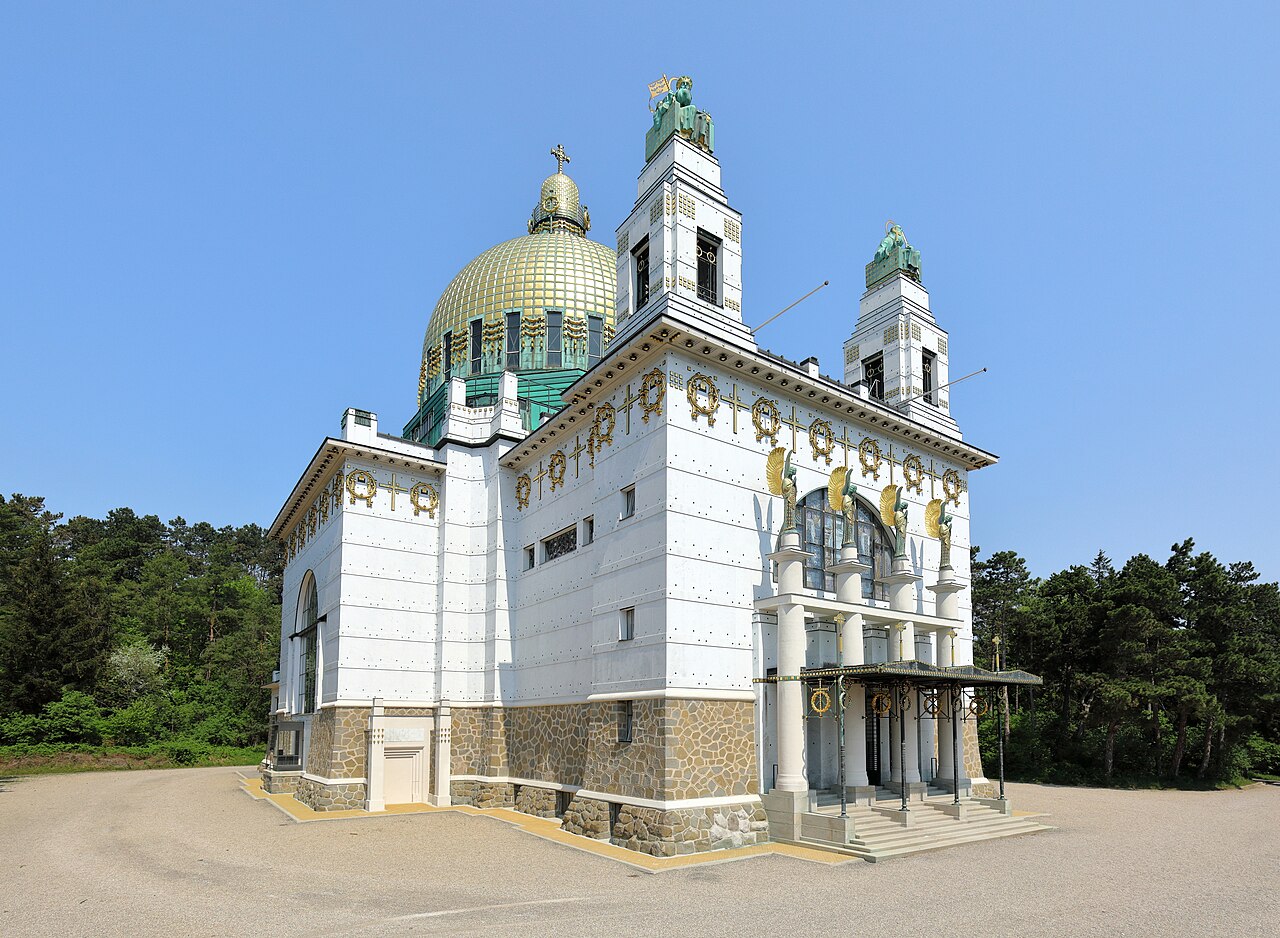
This place is a Museum. It was established in 1907. It was built in the Art Nouveau architecture style. It was designed by Otto Wagner. It is built of Carrara marble. It carries the Listed objects in Austria heritage designation.
Kirche am Steinhof is Otto Wagner's Art Nouveau church, built in 1904-1907 as the chapel of the Niederösterreichische Landes-Heil- und Pflegeanstalt für Nerven- und Geisteskranke — the psychiatric hospital on the Steinhof hill, now the Klinik Penzing site — and dedicated to St Leopold. It sits at the top of the hospital's pavilion grounds and is visible across much of western Vienna for its gilded copper dome, which earned it the local nickname of the golden cabbage.
Wagner designed the church's every practical detail around its patients: the floor slopes gently toward drains for ease of cleaning, pew ends are rounded to prevent injury, side chapels give staff sightlines to agitated patients, and the confessionals and pews were built with safety rather than tradition as the first brief. The interior carries stained glass by Koloman Moser and sculpture by Othmar Schimkowitz and Richard Luksch, making it one of the fullest single collaborations of the Vienna Secession's artists on one building.
It is widely regarded as Wagner's masterpiece and one of the most significant Art Nouveau churches in Europe, and it remains a consecrated church on the grounds of an active hospital rather than a converted museum building.
Checked 2026-08-24 · Source
The nave is a single wide room under the gilded dome, lit through Koloman Moser's stained-glass windows depicting saints in flattened, Secession-era colour fields rather than traditional figurative glasswork. The altar and side chapels carry sculpture by Othmar Schimkowitz and angels by Richard Luksch, and the pews, confessionals and holy-water fonts throughout were designed to Wagner's own safety specification for a psychiatric patient congregation — rounded pew ends, no sharp fittings, and a floor built to slope for washing down rather than for acoustics or aesthetics alone.
Checked 2026-08-24 · Source
A guided visit inside runs to the length of the tour offered on site, typically under an hour; the exterior and the walk up through the hospital's pavilion grounds to reach the church adds another fifteen to twenty minutes each way, since the church sits at the top of a hill above the hospital's lower gate.
Checked 2026-08-24 · Source
The church keeps limited public opening hours rather than daily museum-style hours, tied to guided tours and to religious services; this guide does not record a specific weekly schedule here because it has changed between seasons in the past and a printed time risks being stale — check the current tour schedule before travelling out to the Steinhof grounds, since it is a distance from the city centre and not a stop to arrive at speculatively.
Checked 2026-08-24 · Source
A guided tour of the interior is typically the way the church is visited rather than free walk-in access, and this guide does not record a current tour price here since it was not verified against the operator's own page at the time of writing; the exterior and the hospital grounds around the church are accessible without a ticket.
Checked 2026-08-24 · Source
The Steinhof grounds sit in Penzing, the 14th district, on a hill west of the city centre. The nearest public transport is bus line 48A or 47A to a stop on the hospital grounds, connecting to the U3 or U4 further into the city; from the bus stop it is a further uphill walk through the hospital pavilions to reach the church at the top. The distance from the Ring — around eight kilometres — makes this a dedicated half-day excursion rather than a stop folded into a walk through the Innere Stadt, and a visitor without a car should budget forty-five minutes to an hour each way from the city centre door to door.
Checked 2026-08-24 · Source
The church sits inside the grounds of an active psychiatric hospital, so visitors should keep to the paths intended for them and treat the grounds as a place of care, not a tourist park. Access to the interior is normally by guided tour only rather than by free roaming, and turning up outside a scheduled tour or service usually means the interior stays closed. Photography inside during an active service is inappropriate; photography of the dome and exterior from the grounds is unrestricted.
Checked 2026-08-24 · Source
The dome is the defining shot, best caught from lower on the hospital grounds where the gilded copper reads against the sky and the wooded hillside behind it; late afternoon sun catches the gilding directly. Inside, the stained glass is the subject worth the time, but photography there depends entirely on what the guided tour in progress permits, since flash and tripods are generally inappropriate in a working church.
Checked 2026-08-24 · Source
For its gilded copper dome, which is visible from a wide stretch of western Vienna and reads as a bright golden dome against the wooded hillside behind it.
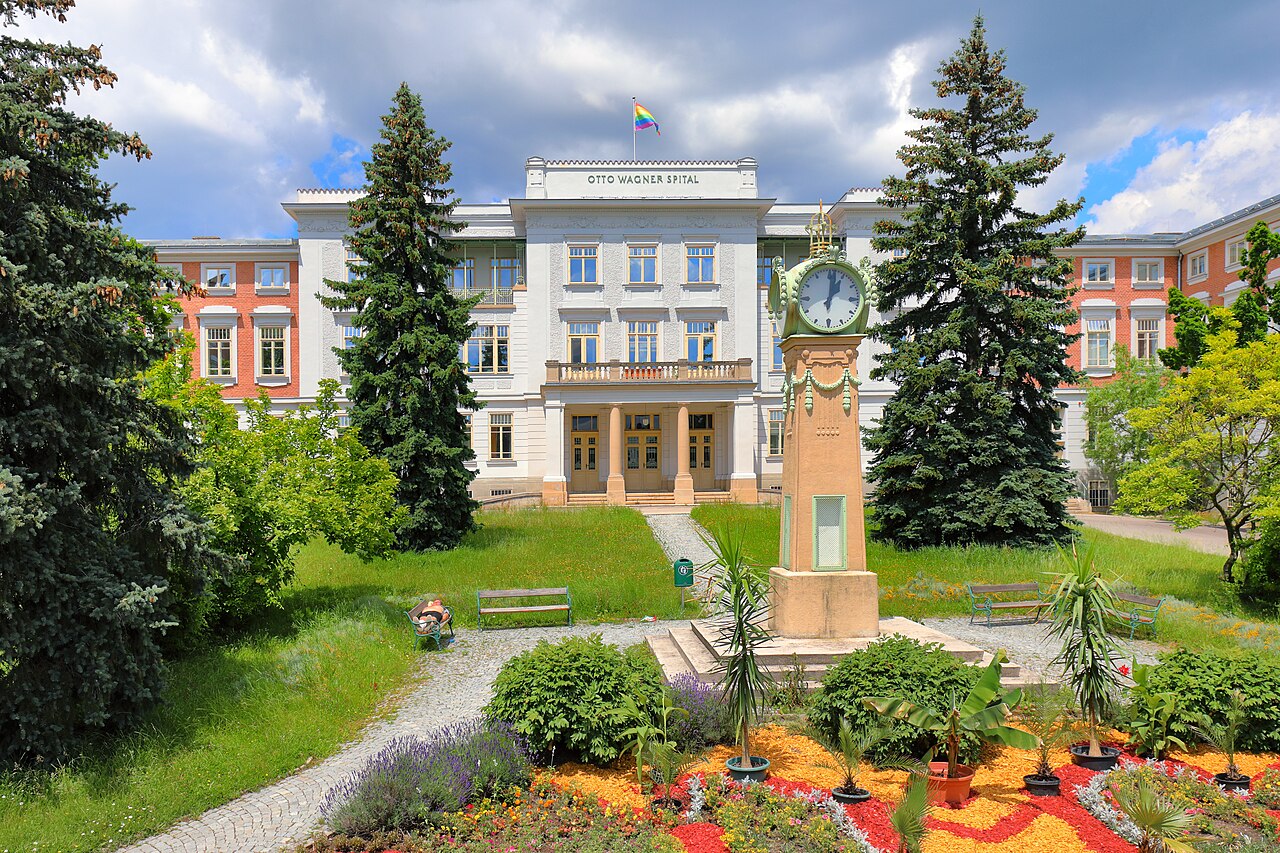
It sits on the grounds of what is now the Klinik Penzing site, the successor to the historic psychiatric hospital it was built for, and it remains a consecrated church rather than a converted museum.
Interior access is normally by guided tour rather than free walk-in visiting, so a visit is best planned around the published tour schedule rather than a spontaneous stop.
Koloman Moser, a leading figure of the Vienna Secession, designed the stained-glass windows depicting saints in the flattened colour fields characteristic of the movement.
Otto Wagner sloped the floor for washing, rounded every pew end against injury, and gave staff clear sightlines into the side chapels, treating patient safety as a design requirement rather than an afterthought.
Bus line 48A or 47A reaches the Steinhof hospital grounds, connecting to the U3 or U4 further into central Vienna; from the bus stop it is an uphill walk through the hospital pavilions to the church.
Loading the interactive map…
The interactive map could not be loaded.
Last updated:
Source: OpenStreetMap contributors, Wikidata ·