
1 min walk · Innere Stadt
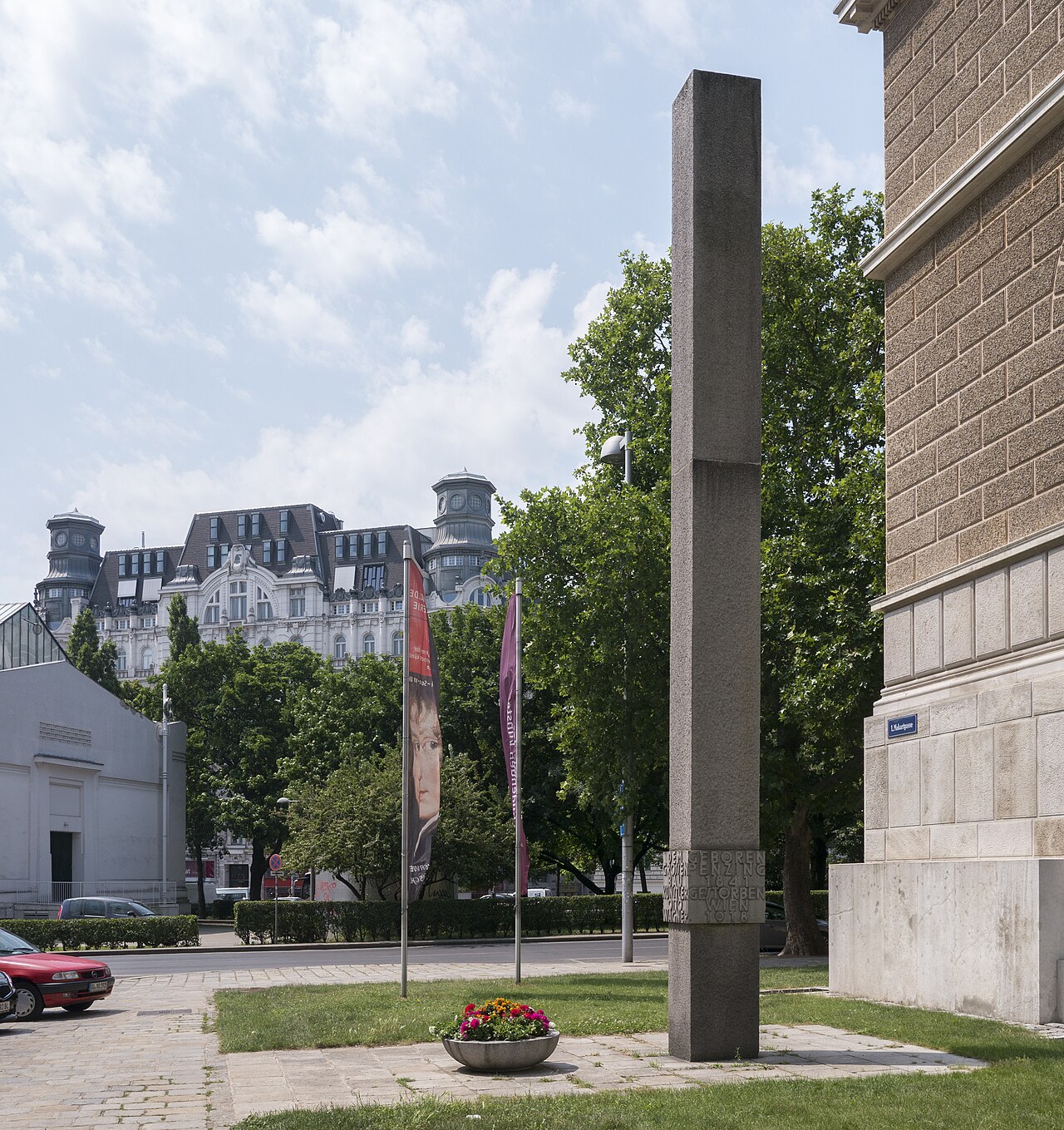
Otto-Wagner-Denkmal, Akademie
- High
- Historic monument
Language · 11 published
Museum · Innere Stadt, Vienna
Secession
Reviewed by Elena Voss · Roavina Travel Editor
| Monday | Closed |
|---|---|
| Tuesday | 10:00 – 18:00 |
| Wednesday | 10:00 – 18:00 |
| Thursday | 10:00 – 18:00 |
| Friday | 10:00 – 18:00 |
| Saturday | 10:00 – 18:00 |
| Sunday | 10:00 – 18:00 |
Checked 2026-08-31 · Source
Read from the OpenStreetMap access tags; anything not listed has no tag recorded.
Set the group type to family in the planner and the day window contracts to about three quarters of a solo day.
This place is a Museum. It was established in 1897. It was built in the Art Nouveau architecture style. It was designed by Joseph Maria Olbrich. It carries the Listed objects in Austria heritage designation.
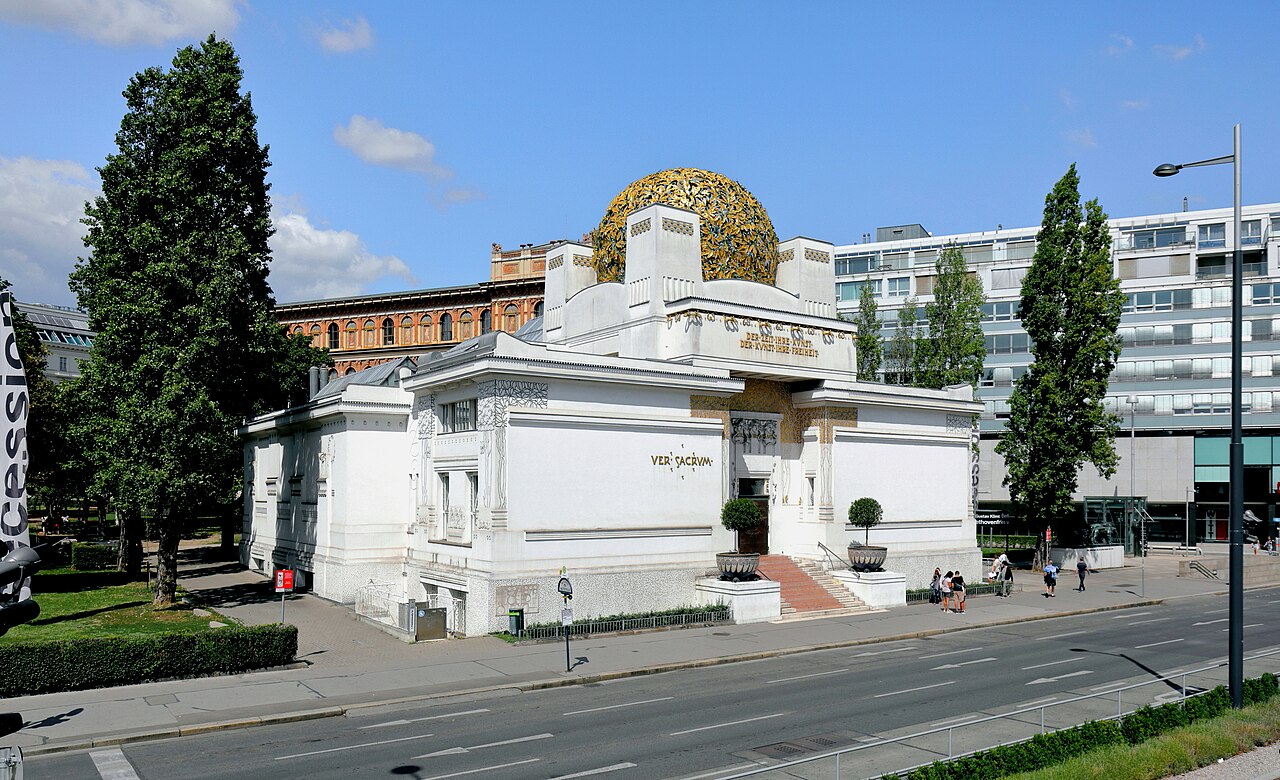
Vienna’s Secession Building is the purpose-built headquarters of an artist association that broke from established institutions in 1897. Joseph Maria Olbrich designed the white exhibition hall in 1897–98. Its gilded laurel-leaf dome gave it the Viennese nickname “golden cabbage.” Three gorgons above the entrance represent painting, sculpture and architecture. The motto, “Der Zeit ihre Kunst. Der Kunst ihre Freiheit,” declares the group’s artistic independence. The compact structure is therefore both an architectural landmark and a statement about artists controlling their own exhibition space.
Checked 2026-09-02 · Source
The lower floor contains Gustav Klimt’s Beethoven Frieze in a room built for its display. Klimt painted the work in 1902 for a single Secession exhibition; it was intended to be destroyed afterwards but survived and is now the building’s permanent artistic anchor. The frieze runs around three walls, so visitors encounter it as a continuous sequence rather than a single framed painting. Upstairs, the building still functions as an artist-run exhibition hall for contemporary art. Those exhibitions change, so the Secession is not a fixed Klimt museum. Admission connects one preserved historic work with the institution’s continuing contemporary programme.
Checked 2026-09-02 · Source
Allow about 45 minutes for a focused visit. The Beethoven Frieze takes roughly 20 minutes because it occupies a compact basement room viewed along the walls. Allow another 15 to 25 minutes for the changing exhibition upstairs, depending on the installation and your interest. The building also rewards a few extra minutes outside to examine the dome, entrance motto and white façade. Because the Secession stands beside Karlsplatz and close to the Naschmarkt, it works well as a short stop within a central walking route. Visitors following Vienna’s modernist landmarks may choose to extend the outing beyond the building itself.
Checked 2026-09-02 · Source
The recorded operator schedule is Tuesday to Sunday, 10:00–18:00, with Monday closed. A weekday visit may make the intimate Beethoven Frieze room easier to view before the upper exhibition becomes busy. The contemporary programme changes, and installation periods can affect what is available beyond the permanent frieze. For the exterior, direct sunlight helps the gilded laurel dome read as gold, while softer light preserves detail in the pale façade. Plan around the published timetable rather than assuming that a central cultural venue is open every day. The day’s complete experience depends partly on the exhibition currently installed upstairs.
Checked 2026-09-02 · Source
The recorded operator admission is €13 per person. The ticket is intended for the complete Secession visit, combining the permanent Beethoven Frieze downstairs with the changing contemporary exhibition upstairs when that programme is open. The upper galleries are an active exhibition space, not a permanent collection of Klimt works, so the balance of the visit changes from one show to another. Visitors interested mainly in the Secession movement should understand that the ticket includes both historical and contemporary material. The operator’s ticket page is the relevant source for the recorded rate and visit conditions.
Checked 2026-09-02 · Source
The Secession stands on Friedrichstraße in Vienna’s 1st district, at the corner of Karlsplatz and beside the Naschmarkt. Karlsplatz is the simplest public-transport destination: U-Bahn lines U1, U2 and U4 serve the station. The Secession exit from the station passage brings visitors almost to the building, with a walk of about two minutes. The location makes it easy to combine the visit with Karlsplatz, the Karlskirche or the Naschmarkt. Vienna’s U-Bahn generally runs from about 05:00 to 01:00, with all-night weekend service; disruptions and engineering works can change the journey.
Checked 2026-09-02 · Source
Expect a working exhibition hall rather than a comprehensive museum of the Secession movement or a dedicated Klimt collection. The Beethoven Frieze is downstairs and can be missed by visitors who follow only the upper-gallery route. Monday is the recorded weekly closure, and installation work may affect the contemporary exhibition. Operator information records limited step-free access and limited pushchair access, although toilets and accessible toilets are available. Photography conditions may differ between the façade, frieze room and temporary exhibitions, so follow the notices at the entrance. The basement room can feel constrained when several visitors arrive together.
Checked 2026-09-02 · Source
The exterior is the strongest photographic subject: Olbrich’s white volume, entrance inscription and gilded laurel dome form a compact composition. The Friedrichstraße corner gives a clear angle where the dome separates against the sky. Direct sunlight makes the gilding appear golden, while softer light reveals more detail in the pale walls. A tighter view of the motto over the door gives the façade a stronger sense of purpose than a distant record shot. Inside, the Beethoven Frieze is displayed in a dim purpose-built room. Photography rules can differ by area, so read the posted notices and follow current exhibition restrictions.
Checked 2026-09-02 · Source
It is a sphere of gilded laurel leaves crowning Joseph Maria Olbrich’s 1897–98 building. Its distinctive rounded form led Viennese residents to call it the “golden cabbage.”
“Der Zeit ihre Kunst. Der Kunst ihre Freiheit” means “to every age its art, to every art its freedom.” It is the Secession’s motto and expresses its artistic independence.
Yes. It is permanently displayed in the lower-floor room built for it. Klimt painted it in 1902 for a single exhibition, and it survived although it was originally intended to be destroyed.
No. It is an artist-run exhibition hall for contemporary art with a changing programme. Klimt’s Beethoven Frieze is its one permanent historic work, so the visit combines a specific masterpiece with current exhibitions.
Karl Wittgenstein financed its construction. He was the father of philosopher Ludwig Wittgenstein.
Plan for about 45 minutes: roughly 20 minutes for the Beethoven Frieze and another 15 to 25 minutes for the changing exhibition upstairs. Add time for the exterior and nearby Karlsplatz.
Loading the interactive map…
The interactive map could not be loaded.
Last updated:
Source: OpenStreetMap contributors, Wikidata ·