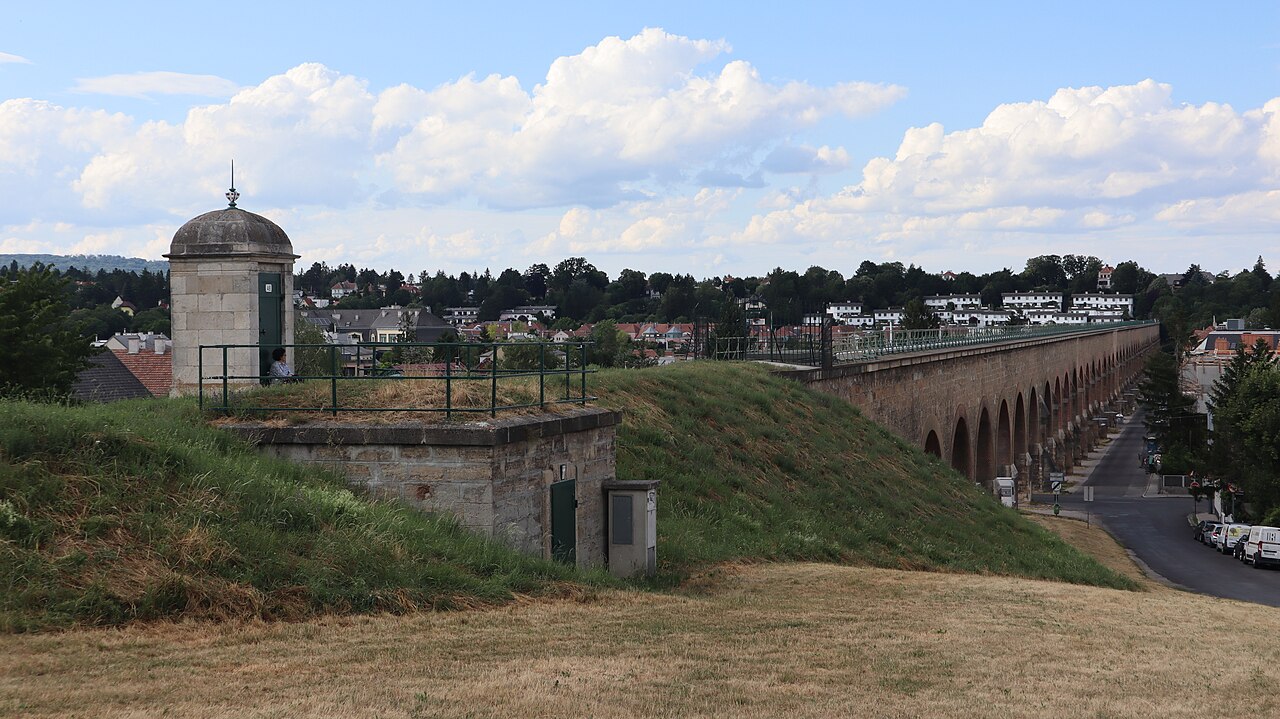
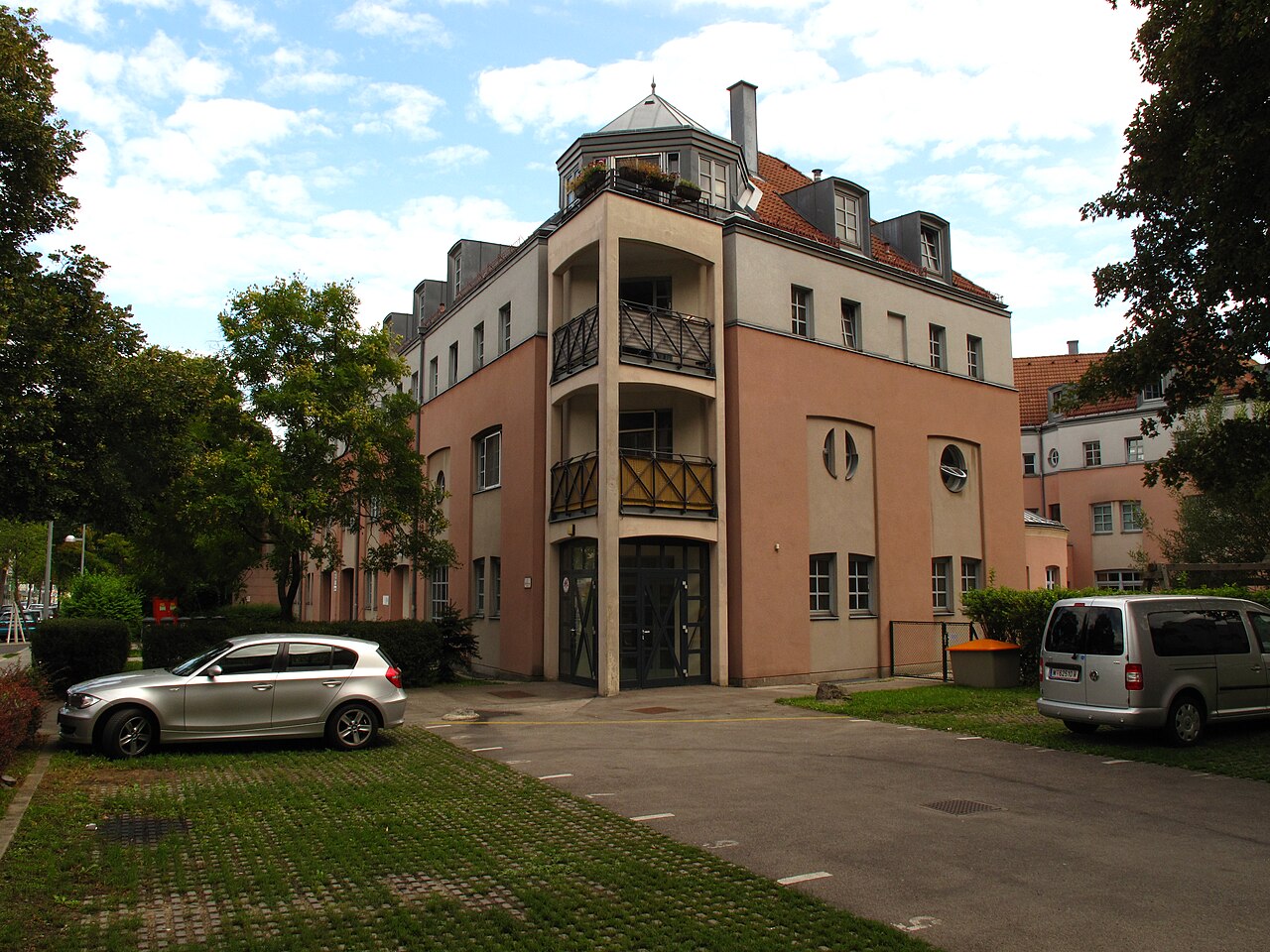
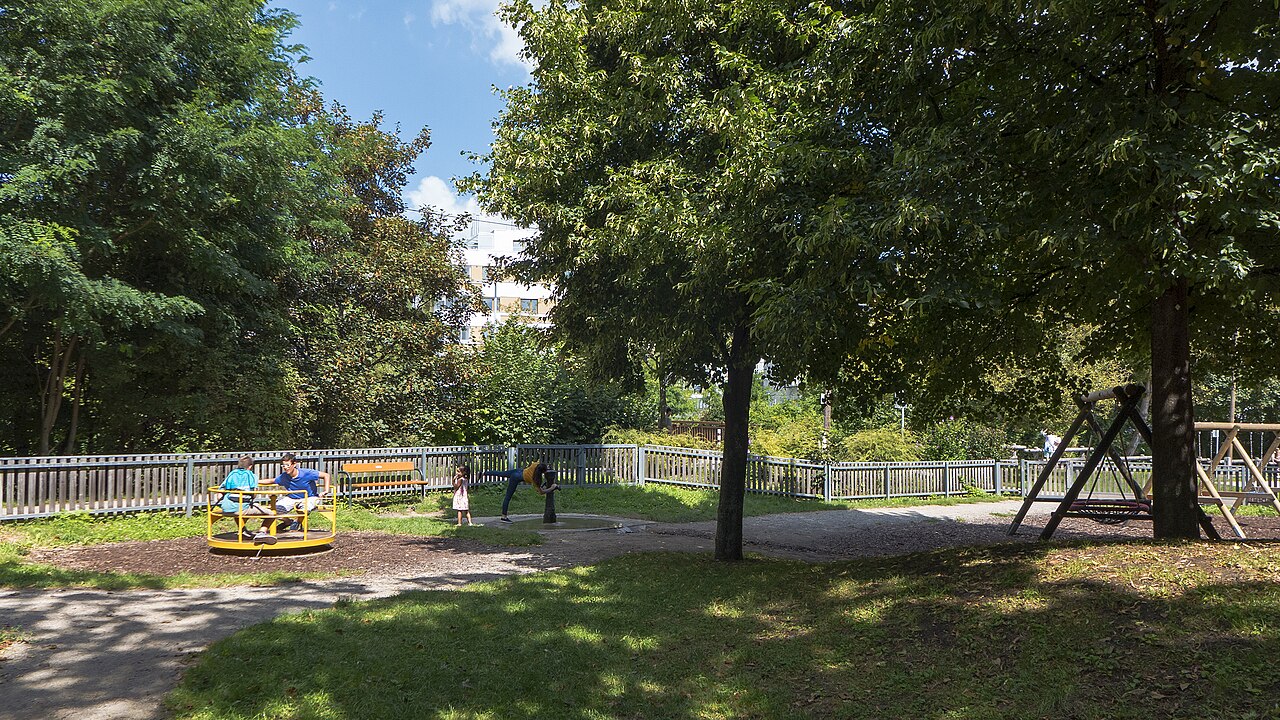
The Liesing Aqueduct, known locally as Aquädukt Liesing, is a historic water-bridge structure in Vienna’s twenty-third district, Liesing. It belongs to the city’s wider history of water-management and public engineering, showing how infrastructure can become part of an urban landscape. This is an outdoor point of interest rather than an enclosed museum. Travellers come to see the structure itself, understand its practical purpose, and place it within the southern Viennese district around it. Its appeal is especially strong for visitors who enjoy engineering heritage, historic masonry, and quieter places beyond central Vienna’s best-known monuments.
The Liesing Aqueduct is experienced from outside. Its visible elements include the water channel and the supporting architectural structure that carries it across the landscape. Stonework and functional form provide the main details to study, while the surrounding Liesing district supplies the broader setting. There is no interior exhibition route described for visitors, so the stop is about reading the construction as infrastructure rather than entering a collection of rooms. Look closely at the relationship between the aqueduct, roads, paths, and nearby urban or semi-urban scenery. The contrast between practical engineering and everyday neighbourhood life is part of the site’s character.
A focused visit to the Liesing Aqueduct generally suits a short stop of around fifteen to thirty minutes. That time allows travellers to observe the structure, take photographs, and appreciate how the historic water infrastructure sits within Liesing. Visitors with a strong interest in engineering or architectural detail may linger longer, especially if they enjoy examining masonry and surrounding views. The aqueduct also works as one point in a wider walk through Vienna’s southern district. Build the day around the broader route rather than expecting a large visitor complex with several indoor galleries or programmed activities.
Because the Liesing Aqueduct is an outdoor structure visible from public spaces, daytime is the most useful period for a visit. Spring through autumn usually offers more comfortable conditions for walking and makes the surrounding landscape easier to enjoy. Winter can provide a quieter atmosphere, but cold, damp, or slippery conditions may reduce comfort. Seasonal changes also alter vegetation and the visual frame around the aqueduct. Choose a time that gives enough daylight for careful observation and photography. The stop is particularly well suited to travellers building a district-focused day away from Vienna’s busiest central attractions.
The Liesing Aqueduct is an outdoor infrastructure feature visible from public thoroughfares, and the guide describes no ticketing infrastructure or visitor centre at the site. Travellers can therefore treat external observation as a complimentary part of a Liesing walk rather than as a paid attraction. The value comes from the structure’s engineering character and historical relationship with Vienna’s water systems. Keep the visit separate from any unrelated transport or parking costs incurred while reaching the district. No ticket purchase is needed for the simple act of viewing the aqueduct from accessible public surroundings.
The Liesing Aqueduct lies in Vienna’s southern Liesing district. Travellers can reach the wider area through Vienna’s public transport network, including regional rail and bus connections, then continue on foot from the most convenient stop for the mapped location. A private vehicle or bicycle can also form part of a southern-district route, but the aqueduct itself should be approached through lawful public access. The best itinerary pairs it with nearby walking rather than treating it as a central-city landmark. Use the map position to plan the final pedestrian section and allow extra time for the district’s less central setting.
Take care around roads and any uneven ground near the Liesing Aqueduct. The structure is an engineering monument, not a managed playground, and visitors should remain in public areas rather than climb or approach unstable edges. Rain, mud, standing water, and winter conditions can make outdoor paths less comfortable. The guide describes no confirmed accessibility arrangement, so travellers with mobility needs should consider the specific approach and surface before committing to the stop. Keep clear of nearby residences and traffic, and do not block access while observing or photographing the aqueduct.
The Liesing Aqueduct rewards photographs that combine engineering detail with its Viennese surroundings. Use daylight to show the masonry and the practical form of the water bridge, then step back for wider views that place the structure within Liesing’s urban and semi-urban landscape. Detail images can emphasise texture, joints, and the contrast between historic construction and modern surroundings. Early or late daylight may give the stonework more depth, while overcast conditions can soften hard contrast. Work from public areas, keep tripods and equipment out of circulation routes, and never climb the structure for a higher viewpoint.
It is a historic water-bridge structure in Vienna’s Liesing district and part of the city’s public water-management heritage.
How is the Liesing Aqueduct visited?
The aqueduct is an outdoor structure viewed from public spaces, with the water channel, supporting masonry, and surrounding district forming the experience.
How long should I spend at the Liesing Aqueduct?
A focused stop of about fifteen to thirty minutes suits most visitors, with extra time available for a wider walk through Liesing.
Does the Liesing Aqueduct require a ticket?
The site has no described ticketing infrastructure or visitor centre, so external observation can be included as a complimentary stop.
Where is the Liesing Aqueduct?
It is in Vienna’s twenty-third district, Liesing, in the southern part of the city.
What can I photograph at the Liesing Aqueduct?
Photograph the historic masonry, the water-bridge form, and the way the engineering structure sits within Liesing’s surrounding landscape.
Nothing non-essential is set before you choose, in regions where consent is required. If you decline, ads still appear and analytics is switched off entirely.