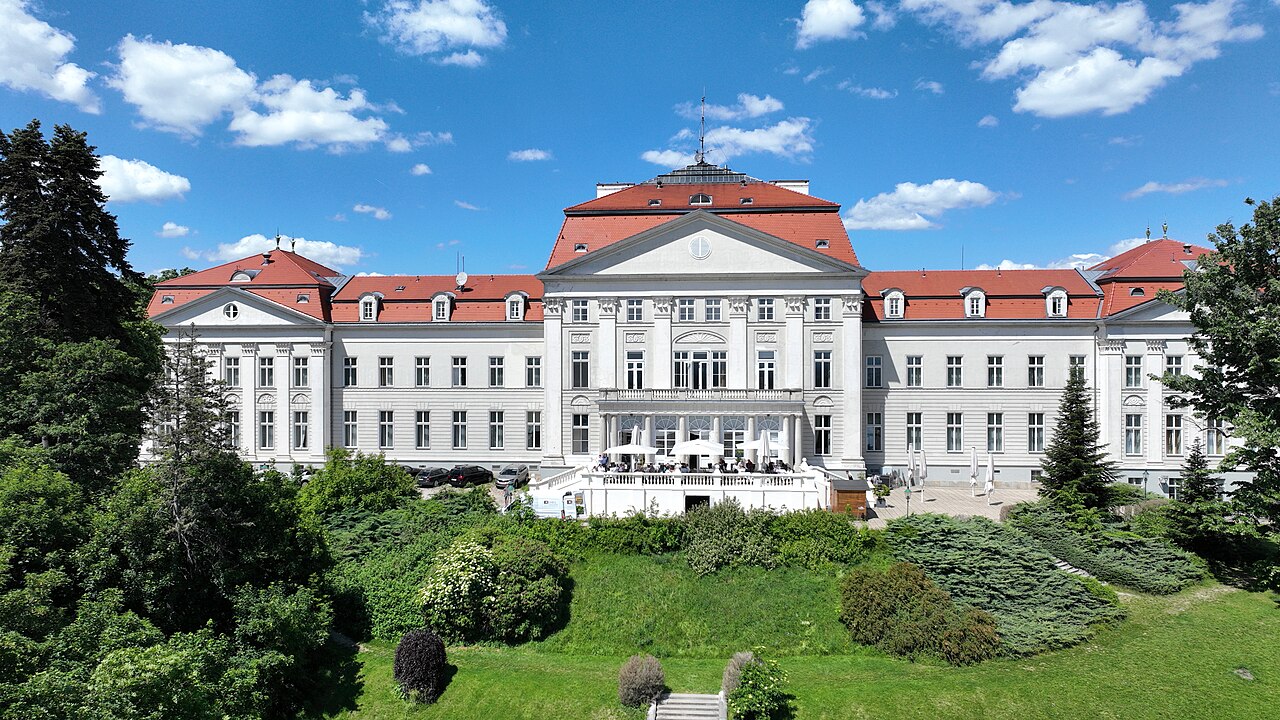
Schloss Wilhelminenberg sits on a wooded hill above Ottakring, Vienna's 16th district, built in the 1730s for Field Marshal Guido Starhemberg and later named for Archduchess Wilhelmine, who owned it in the nineteenth century. Through the twentieth century it changed use several times: a Habsburg residence, then from 1948 a state-run girls' boarding school, the Bundeserziehungsanstalt, which became the subject of a formal Vienna city investigation into decades of abuse of its residents. The building operates today as a hotel with function rooms, run under a long-term lease, and the hilltop grounds around it remain open to the public. A hotel with function rooms, on a hilltop above Ottakring with public grounds and one of Vienna's widest city views.
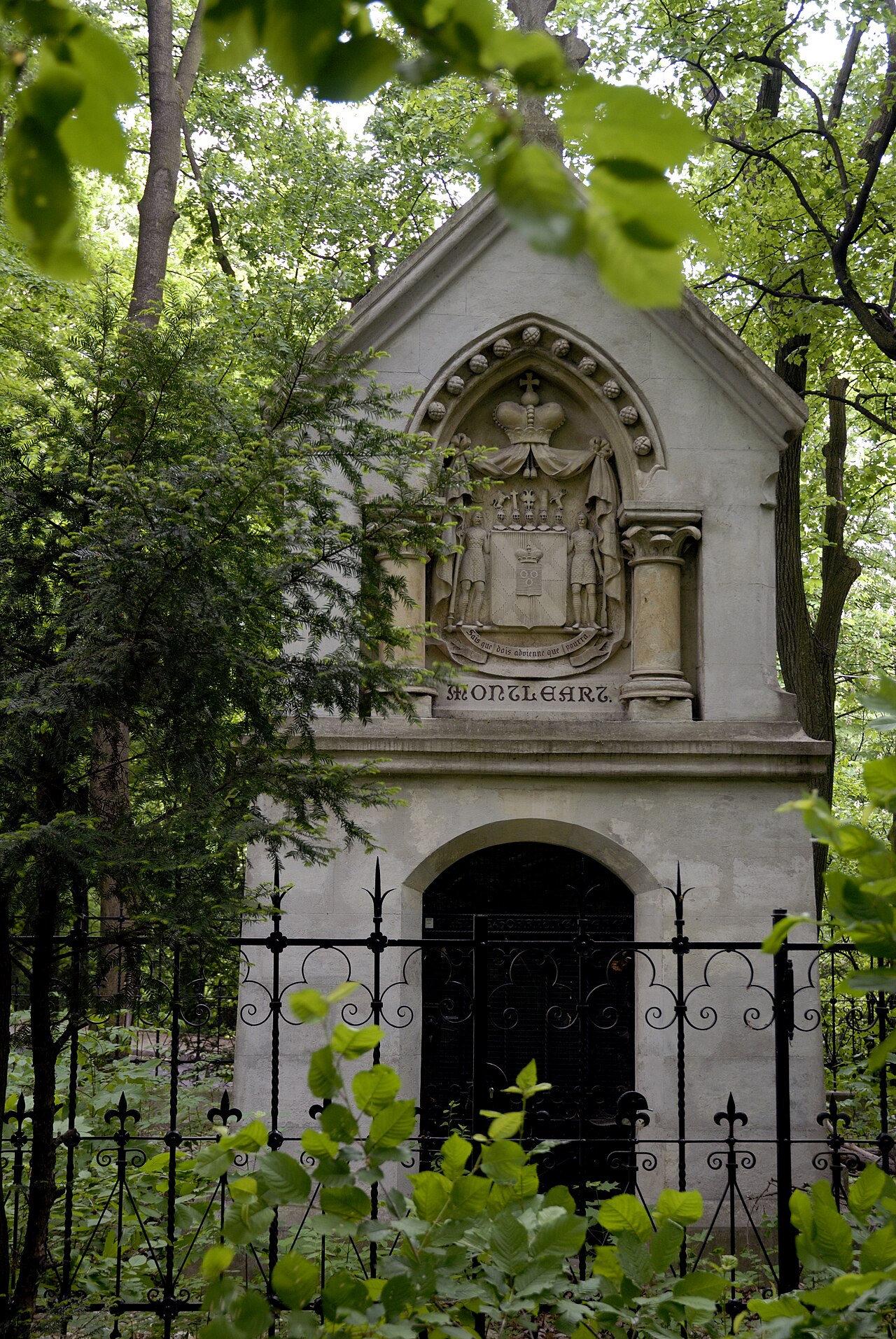
The palace itself is largely hotel rooms and event spaces now, so there is no museum circuit to walk — the reason to come up the hill is the site, not a room-by-room interior. The terrace in front of the main façade opens onto one of the widest unobstructed views over Vienna available from within the city limits, taking in the Innere Stadt's spires and, on a clear day, reaching well past the Danube. The surrounding Wilhelminenberg park keeps its formal eighteenth-century layout in parts, with older trees than most of Vienna's other hill parks, and paths lead off from the terrace down through mixed woodland toward the neighbouring Sandleiten estate. A small chapel and several outbuildings from the school era stand off to one side of the main block, not part of the hotel and not open to visitors.
Thirty to forty-five minutes covers the terrace, the immediate grounds and the view; there is no ticketed interior to extend the visit. Anyone combining it with a walk through the wider Wilhelminenberg and Sandleiten woodland paths should allow two hours or more, since the trail network connects toward the Wienerwald without a clear single loop back.
Late afternoon gives the clearest light across the city for the view from the terrace, with the sun behind the visitor rather than into it. The hill is exposed and the terrace has little shelter, so a clear, dry day matters more here than at most Vienna sights — haze or low cloud removes the entire reason to come up. Autumn mornings, once any overnight mist has burnt off, often give the sharpest long-distance visibility of the year.
The grounds and terrace are free and open to the public; there is no admission fee to reach the viewpoint. The hotel rooms and function spaces inside are commercial bookings and are not part of a sightseeing visit, and a room or table has to be reserved in advance like any other hotel stay. The park immediately around the palace carries no gate and no opening or closing time posted, unlike a formal city park.
Bus 46B runs from Ottakring U-Bahn station (U3) up to a stop close to the palace gates; the climb on foot from the valley below is steep and takes about thirty minutes. There is limited on-site parking for hotel guests and function visitors, but no dedicated public visitor car park, so anyone driving up should expect to look for street parking on the surrounding residential streets. A taxi from the Innere Stadt takes roughly fifteen to twenty minutes depending on traffic on the climb.
The building's use as a state institution and the abuse investigation into that period are part of its recent history and are documented in Austrian press coverage rather than on any sign at the site itself. The terrace and surrounding paths have no barrier along some drop-offs, which matters with children. Outside hotel operating hours the palace forecourt can feel deserted, and the woodland paths around it are unlit after dark. The bus service up the hill runs less frequently in the evening, so anyone planning a sunset visit should check the return timetable before walking up rather than after.
The view from the terrace is the shot, and it is at its best in the last hour before sunset, when the low sun picks out St. Stephen's spire and the Danube Tower against the rest of the skyline. The palace façade itself, a plain eighteenth-century block rather than an ornamented one, photographs better as a foreground frame for the view than as a subject on its own.
Nothing non-essential is set before you choose, in regions where consent is required. If you decline, ads still appear and analytics is switched off entirely.
_-_Schloss_Wilhelminenberg_(a).JPG)